
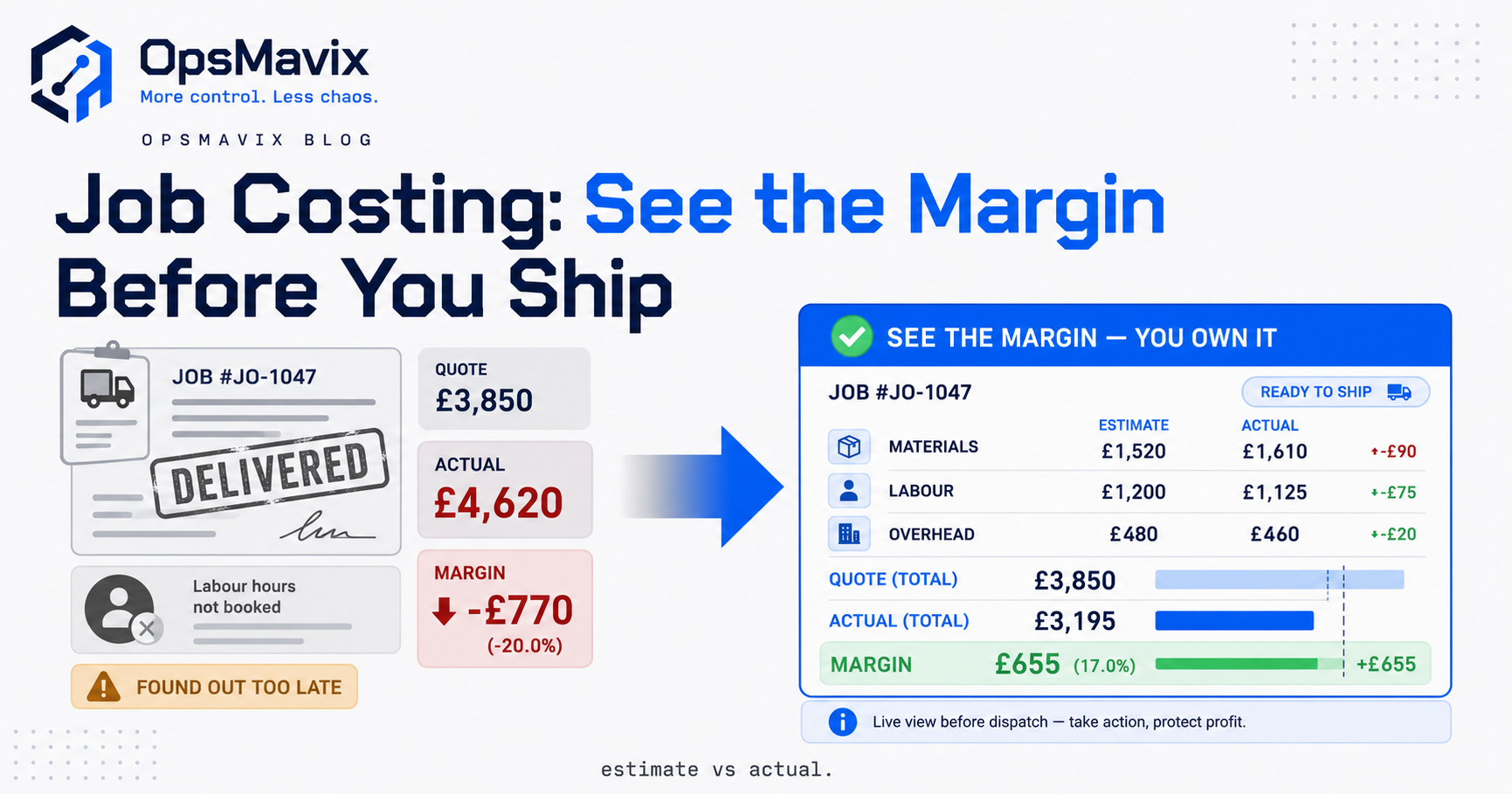
What Is Job Costing? Tracking the True Cost of Every Job
What is job costing? It's tracking the actual cost of one specific job — its direct materials, direct labour and share of overhead — so you can hold what the job really cost against what you quoted. Here's the concept, the three cost components, and why the estimate-vs-actual gap is the whole point.
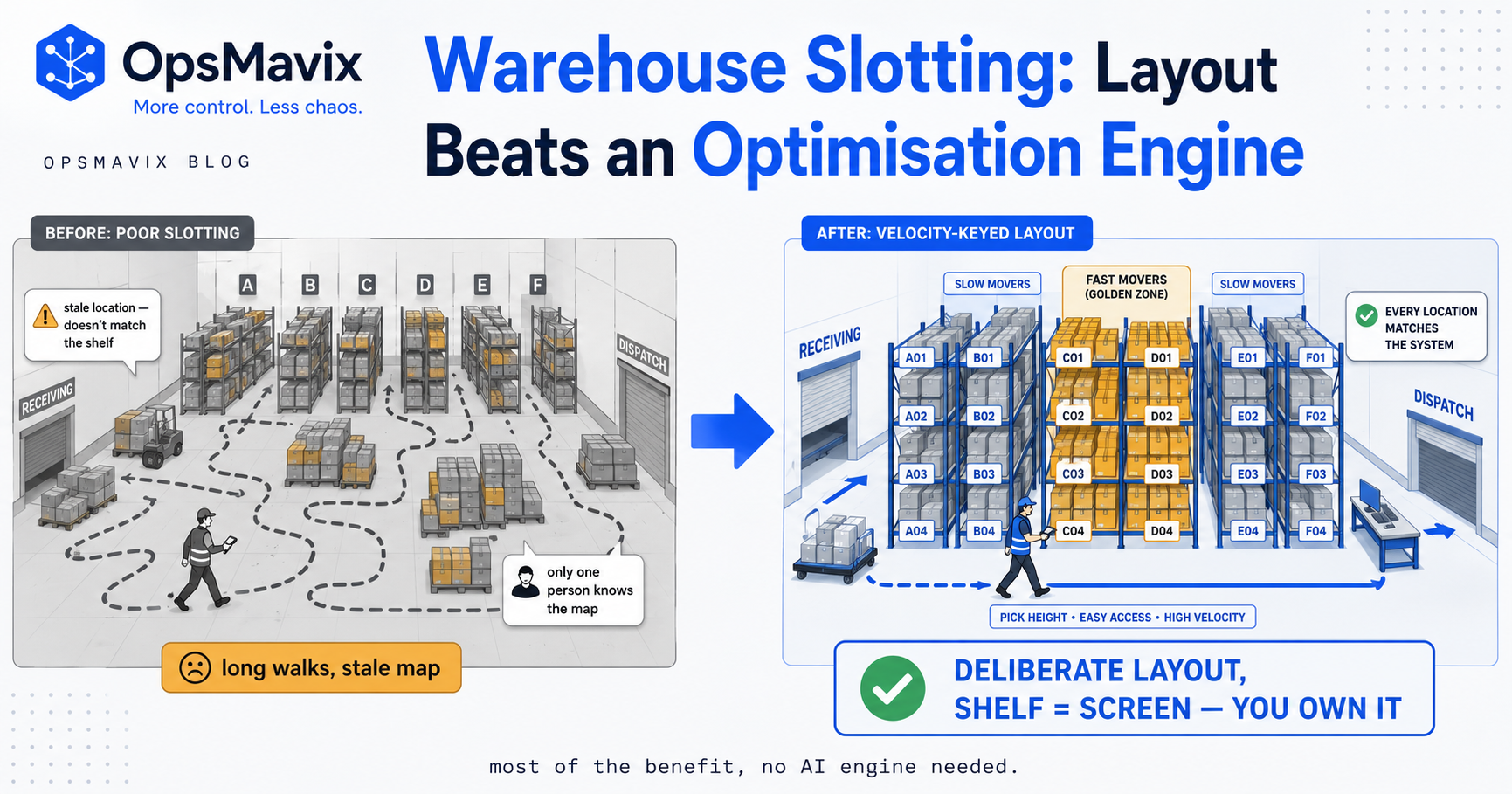
Warehouse Slotting: Do You Actually Need Slotting Optimisation?
Warehouse slotting is the practice of deciding where each SKU lives so pickers walk less, work stays balanced, and fast movers sit within easy reach. This post explains the principles behind it, how enterprise WMS vendors sell slotting as an AI optimisation engine, and the honest line for a growing warehouse: most of the benefit comes from a deliberate location layout keyed to real pick frequency — no dedicated slotting module required.

Warehouse Automation: Types, Costs and a Practical UK SME Guide
Which warehouse tasks should you automate first? Compare software and equipment, understand the costs, and use a worked payback example to plan a practical pilot.
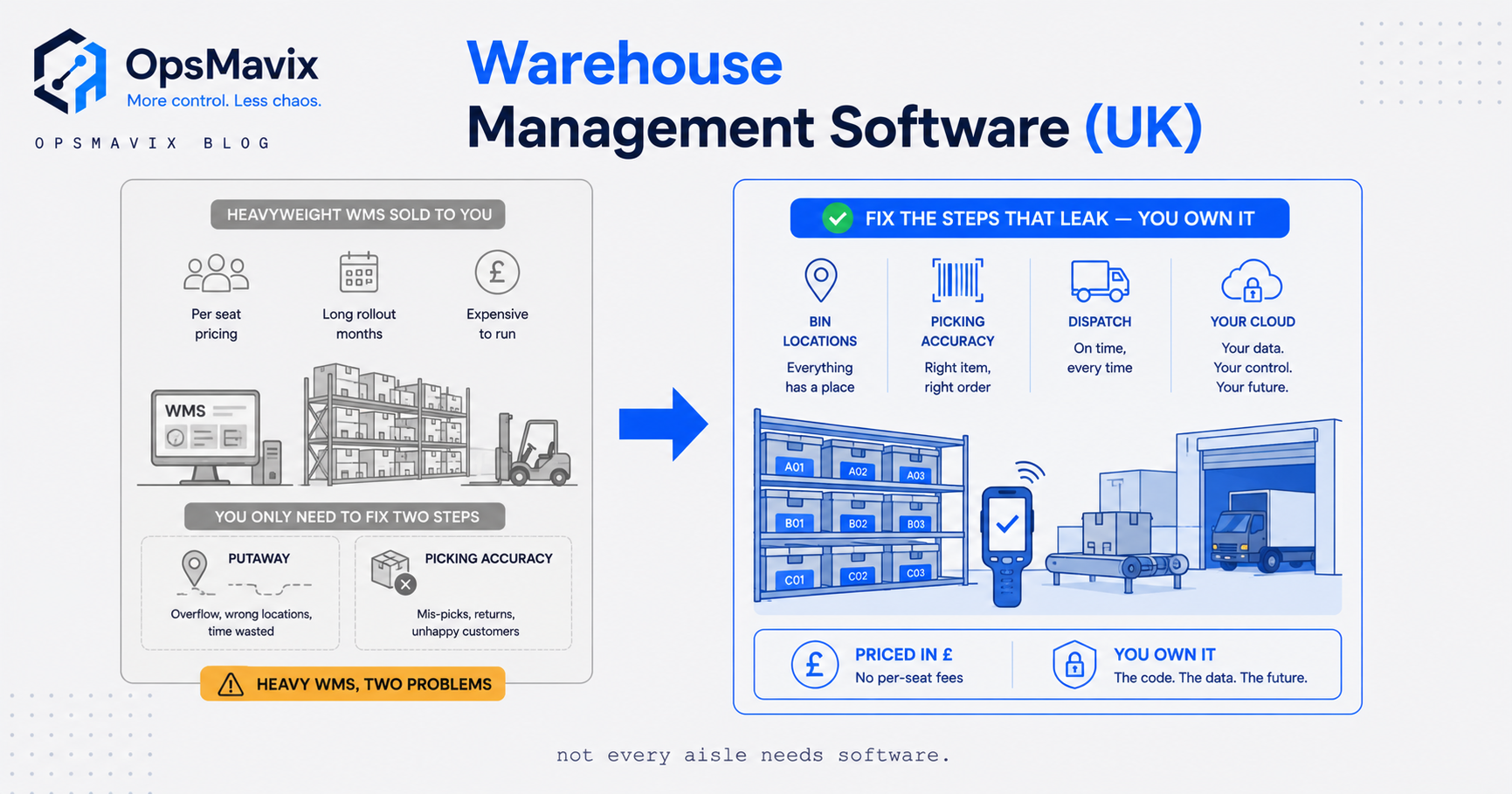
Warehouse Management Software UK: What Fits a Growing Operation
A practical look at warehouse management software in the UK for growing operations: what it does for picking, put-away and bin locations, and why a right-sized owned system often beats a full enterprise WMS for a business that has outgrown spreadsheets and disconnected tools.
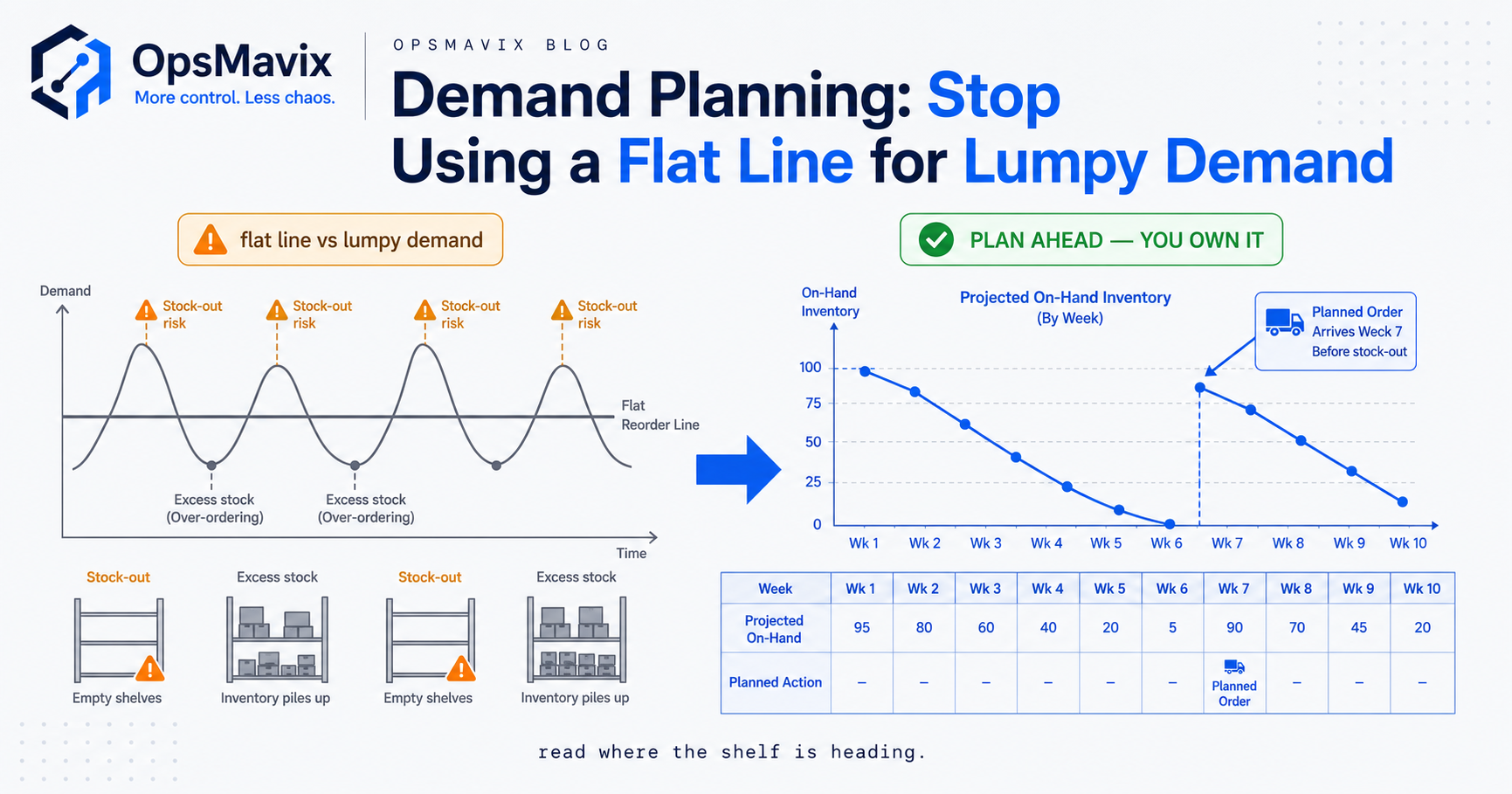
Time-Phased Order Point (TPOP): Reordering for Lumpy Demand
A time-phased order point (TPOP) swaps one static reorder level for a forward, week-by-week view of projected demand, on-hand and planned receipts — the same logic behind DRP. It earns its keep when demand is lumpy or seasonal, where a flat reorder point either stocks out or over-orders. When you need it, and when a basic ROP is the right call.
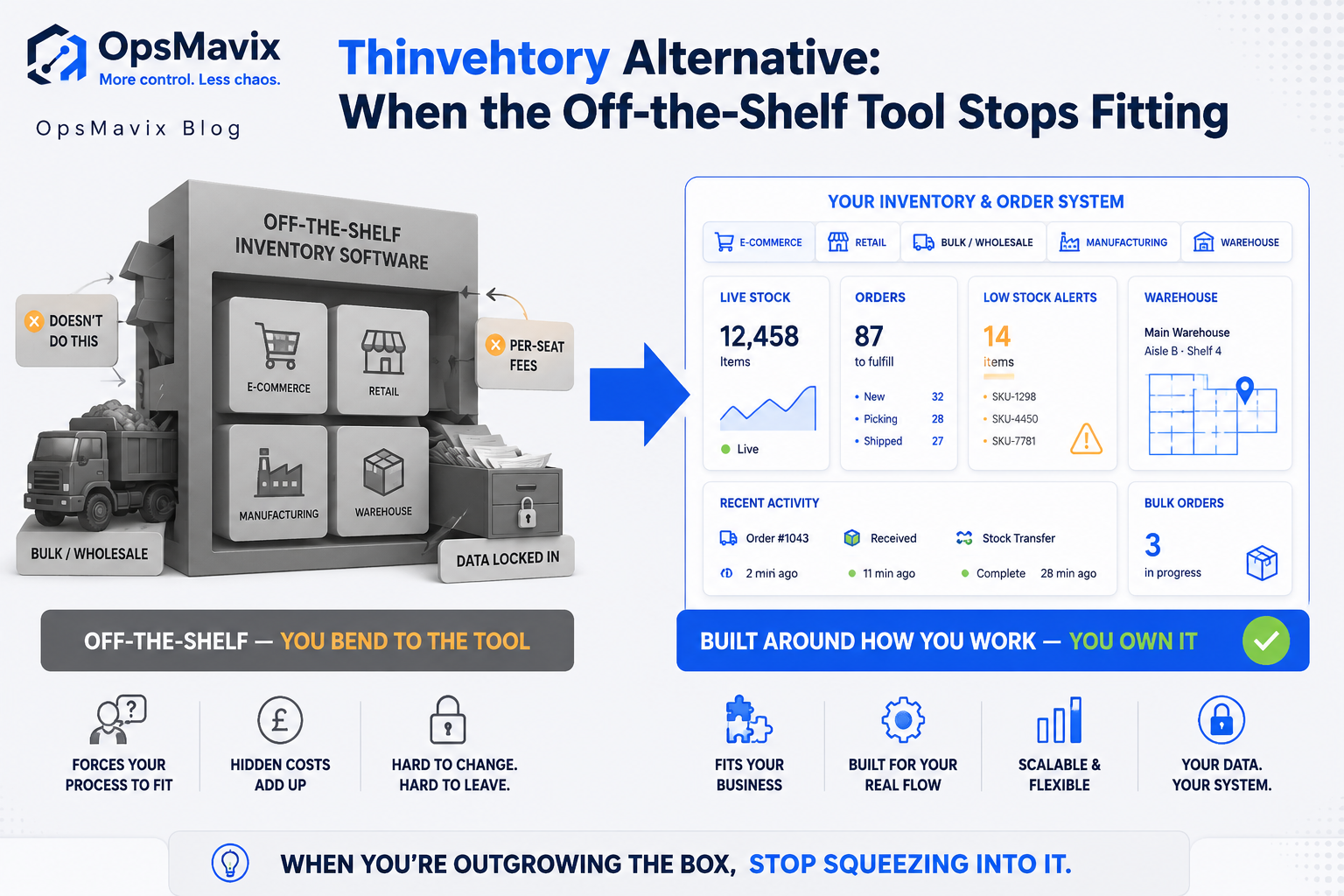
Thinventory Alternative: When a Growing Operation Outgrows the Template
A Thinventory alternative is what you look for once an off-the-shelf inventory and order tool stops bending to how you actually run — extra channels, a bulk side, a warehouse quirk it has no field for. This post is fair about what these tools do well, honest about the ceiling you hit, and clear on what a system built around your own process changes instead.
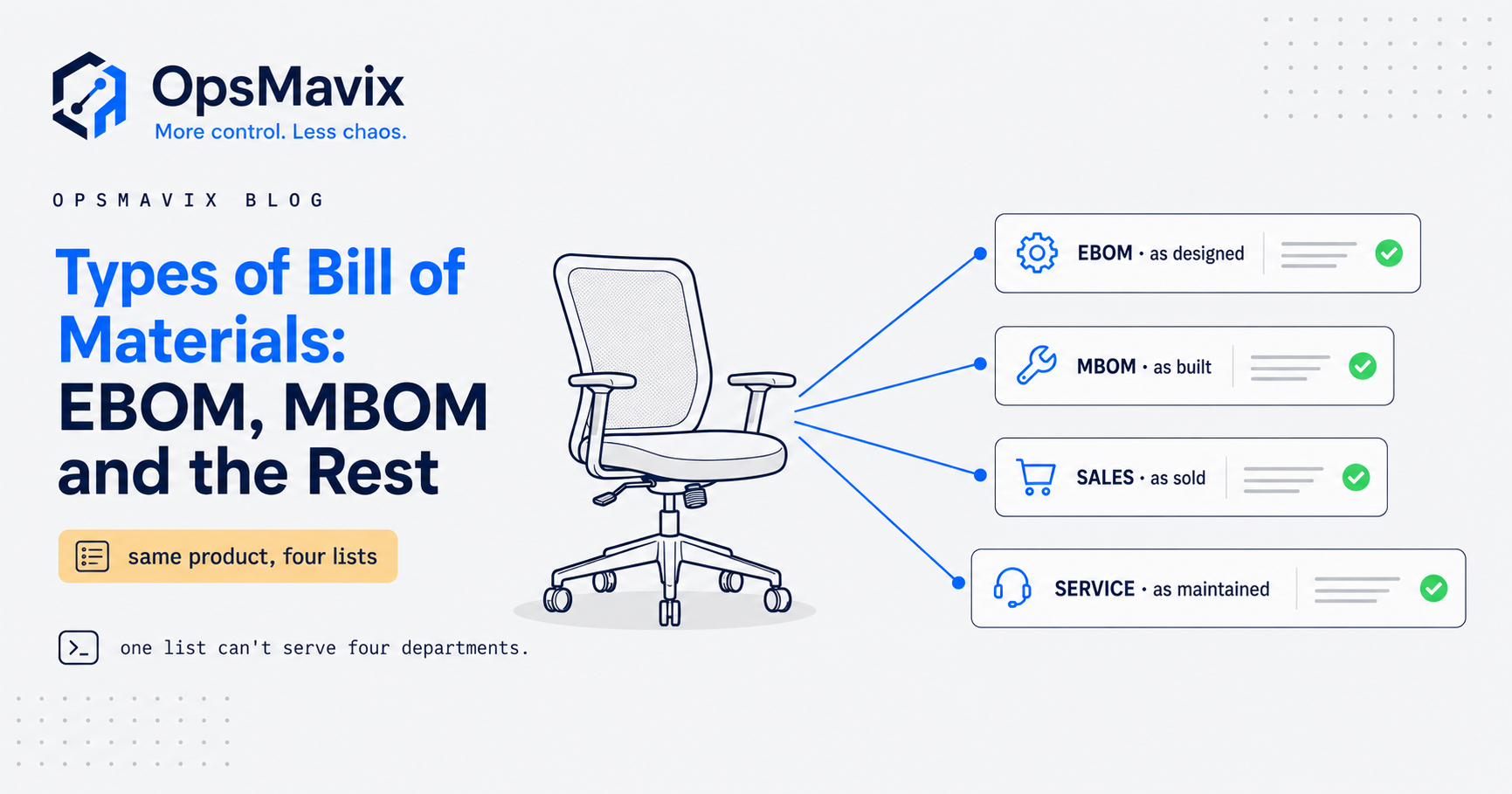
Types of Bill of Materials: EBOM, MBOM, SBOM and the Rest, Explained
There is no single bill of materials — engineering, manufacturing, sales, service, template, assembly and planning BOMs all describe the same product for different jobs. This guide defines each type, names its owner, and says plainly which ones a growing UK manufacturer needs and which are enterprise decoration.
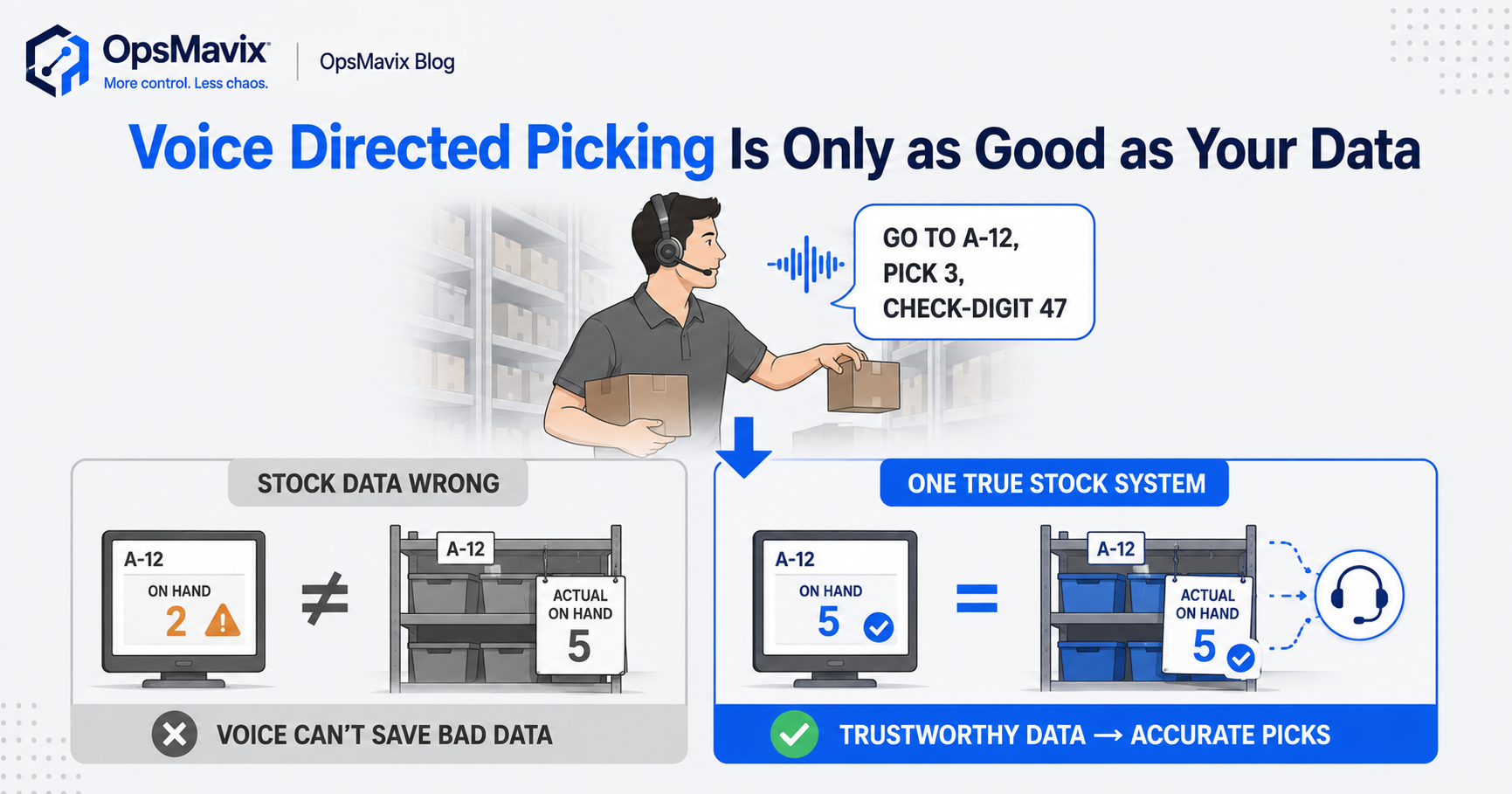
Voice Directed Picking System: How Pick-by-Voice Works
A voice directed picking system reads order locations and quantities into a picker's headset and has them speak check-digits back to confirm — hands-free, eyes-free, no paper sheet. Here's plainly how pick-by-voice works, its honest pros and cons, when it's actually worth it, and the part nobody sells you: voice is only as accurate as the stock system feeding it.
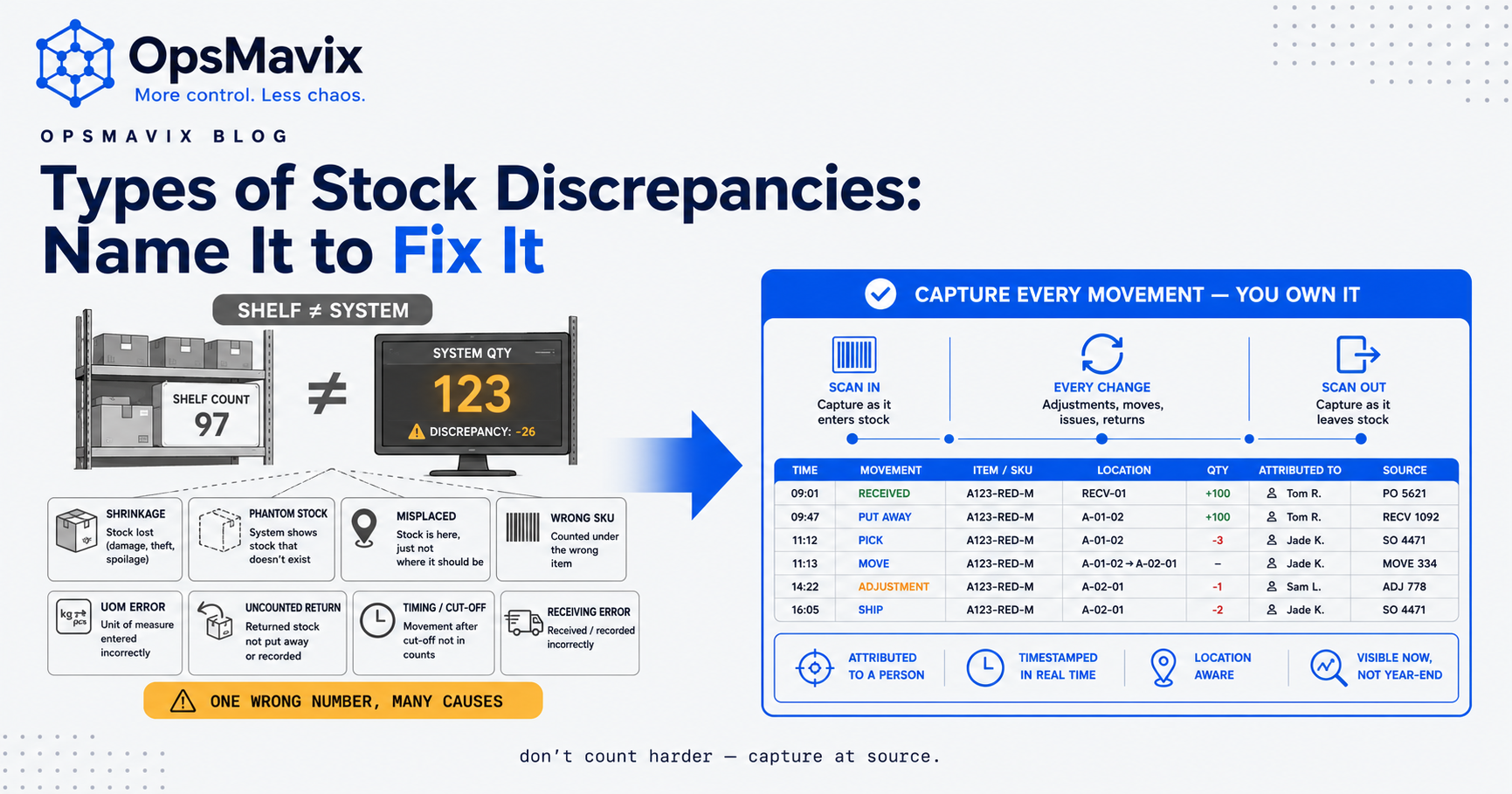
Types of Stock Discrepancies (and What Causes Each One)
A stock discrepancy is when the recorded quantity doesn't match the physical quantity on the shelf. This post names the common types of stock discrepancies — shrinkage, overage, phantom stock, misplaced and mislabelled stock, unit-of-measure errors, uncounted returns, timing errors and receiving errors — and gives the typical cause of each and how it's caught or prevented.