
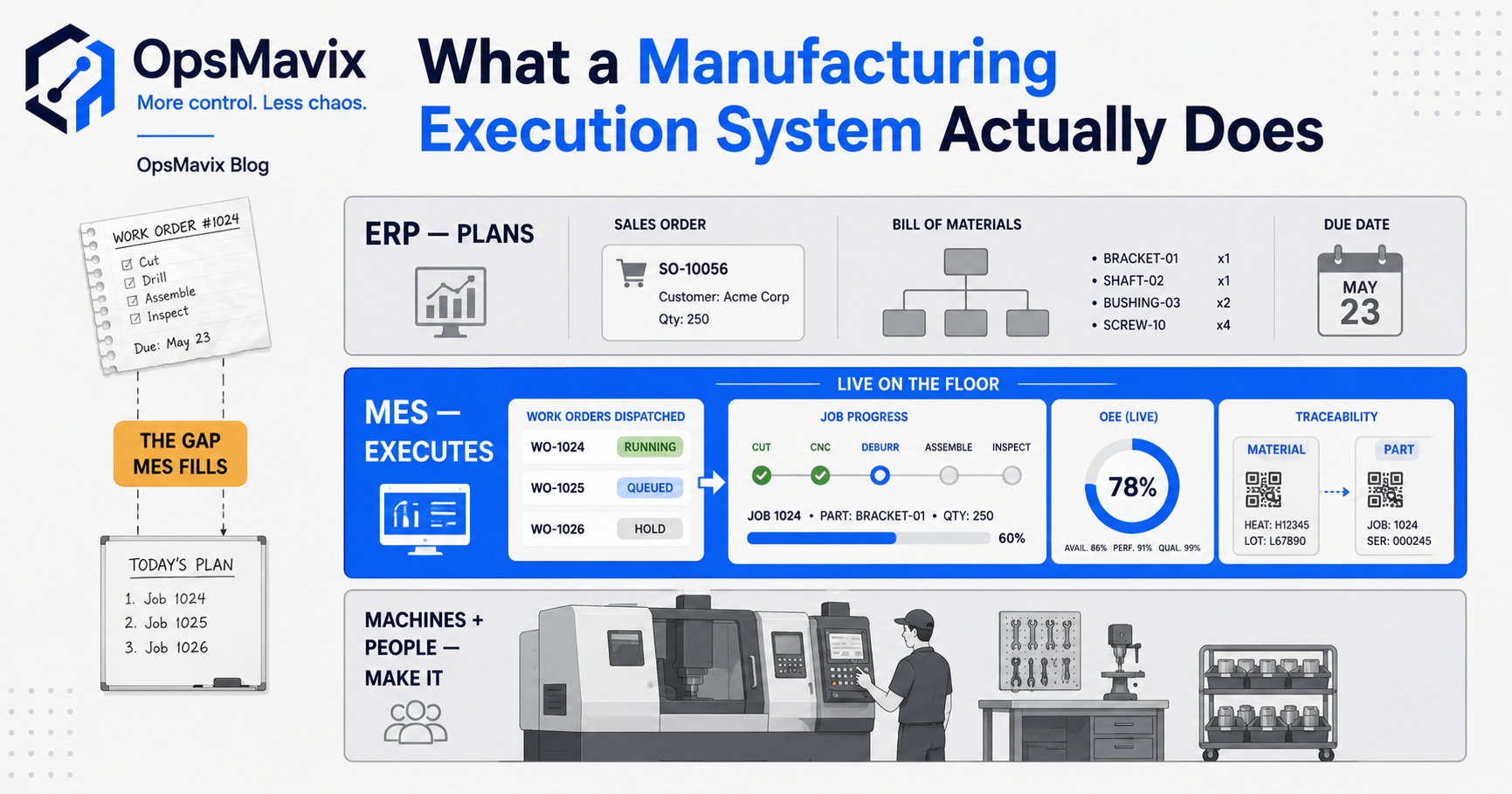
What a Manufacturing Execution System (MES) Actually Does — and When You Need One
A manufacturing execution system (MES) sits between your ERP and your machines, running and tracking work on the floor in real time. Here's what an MES genuinely does, the symptoms small and mid manufacturers feel (no live view, paper travellers, double entry, no traceability), and the honest question of when you need a full MES versus a right-sized system built around your floor.
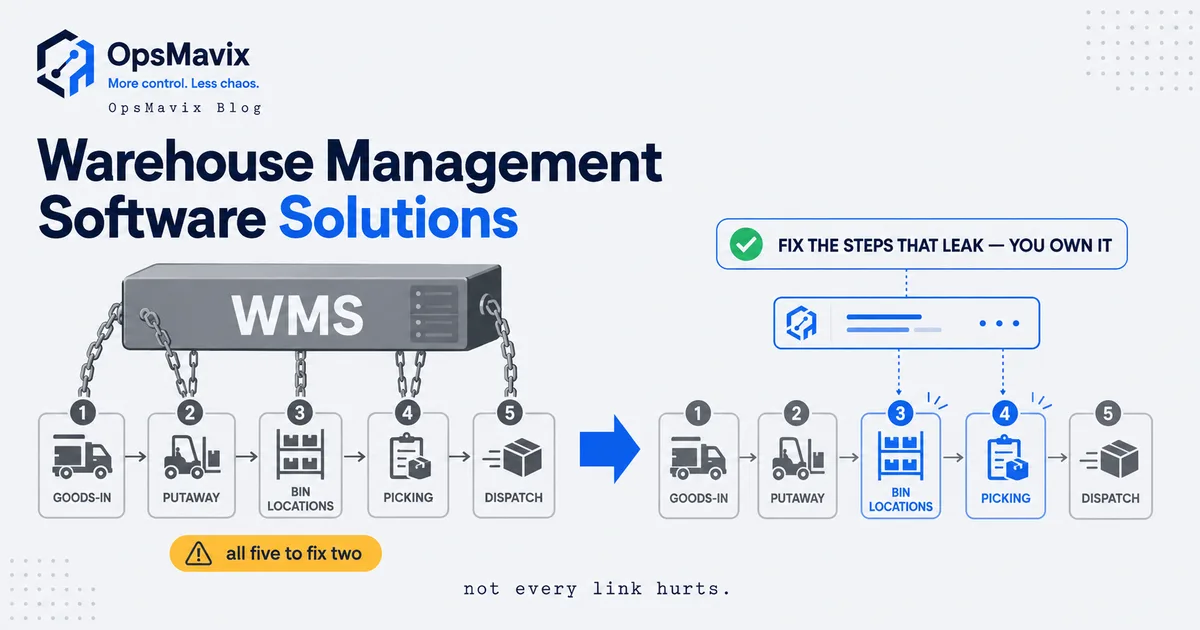
Warehouse Management Software Solutions: What They Actually Cover, and When You Only Need Part of One
Warehouse management software solutions govern five physical steps — goods-in, putaway, bin locations, directed picking and dispatch. Most growing UK warehouses only trip on two or three of them, yet get sold the whole enterprise stack. This guide breaks down what each tier actually covers and when a right-sized system you own beats renting a WMS forever.
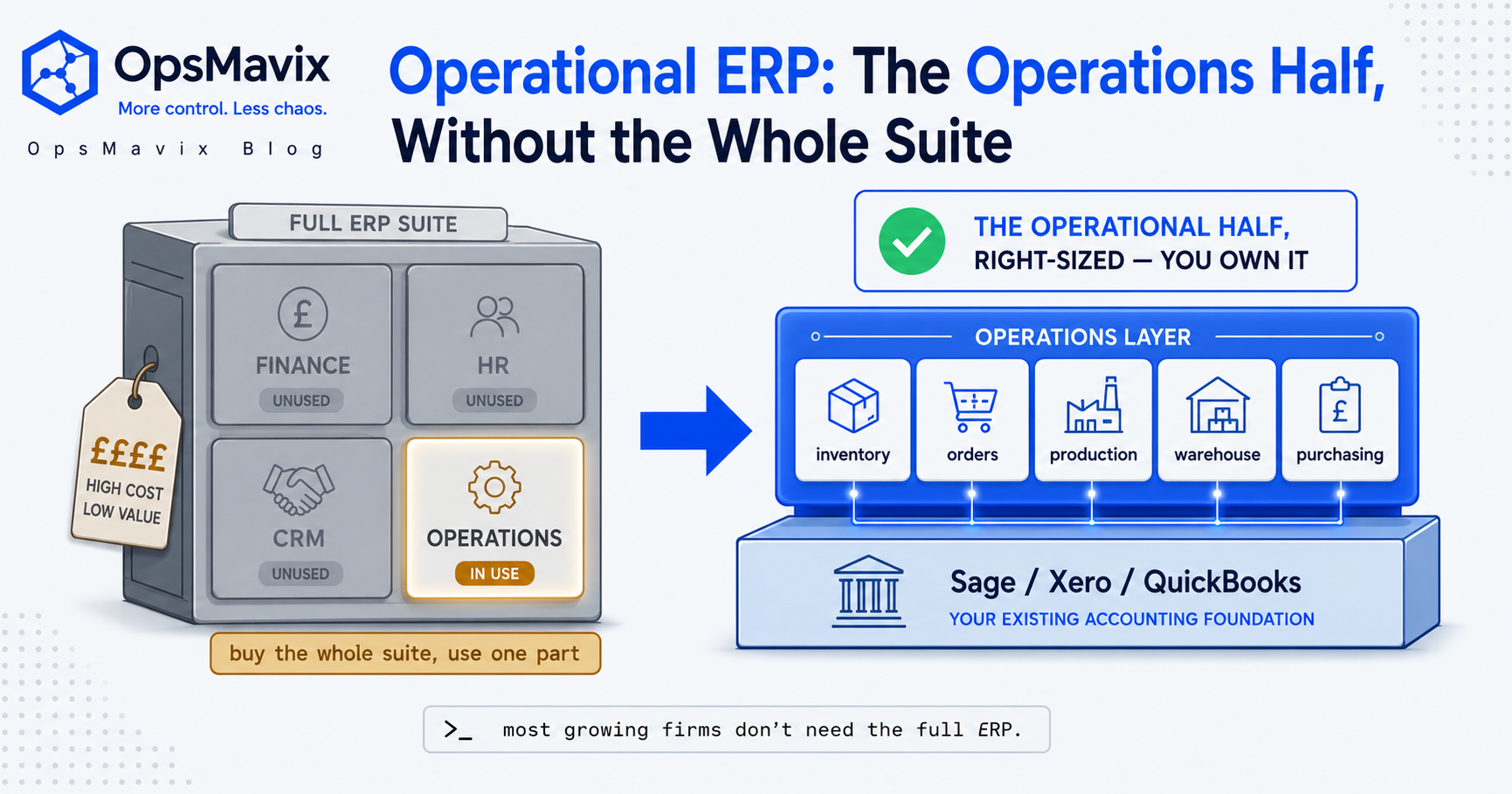
What Is Operational ERP? (And Why Most Growing Businesses Don't Need the Whole Thing)
Operational ERP is the operations half of an ERP system — the inventory, orders, production, warehouse and procurement capability, as opposed to the finance and accounting core most people picture when they hear "ERP". This post defines operational ERP as a category, walks the functions it actually covers, and gets to the buying decision underneath the term: most growing businesses need the operational capability, not a full finance suite with modules bolted on.
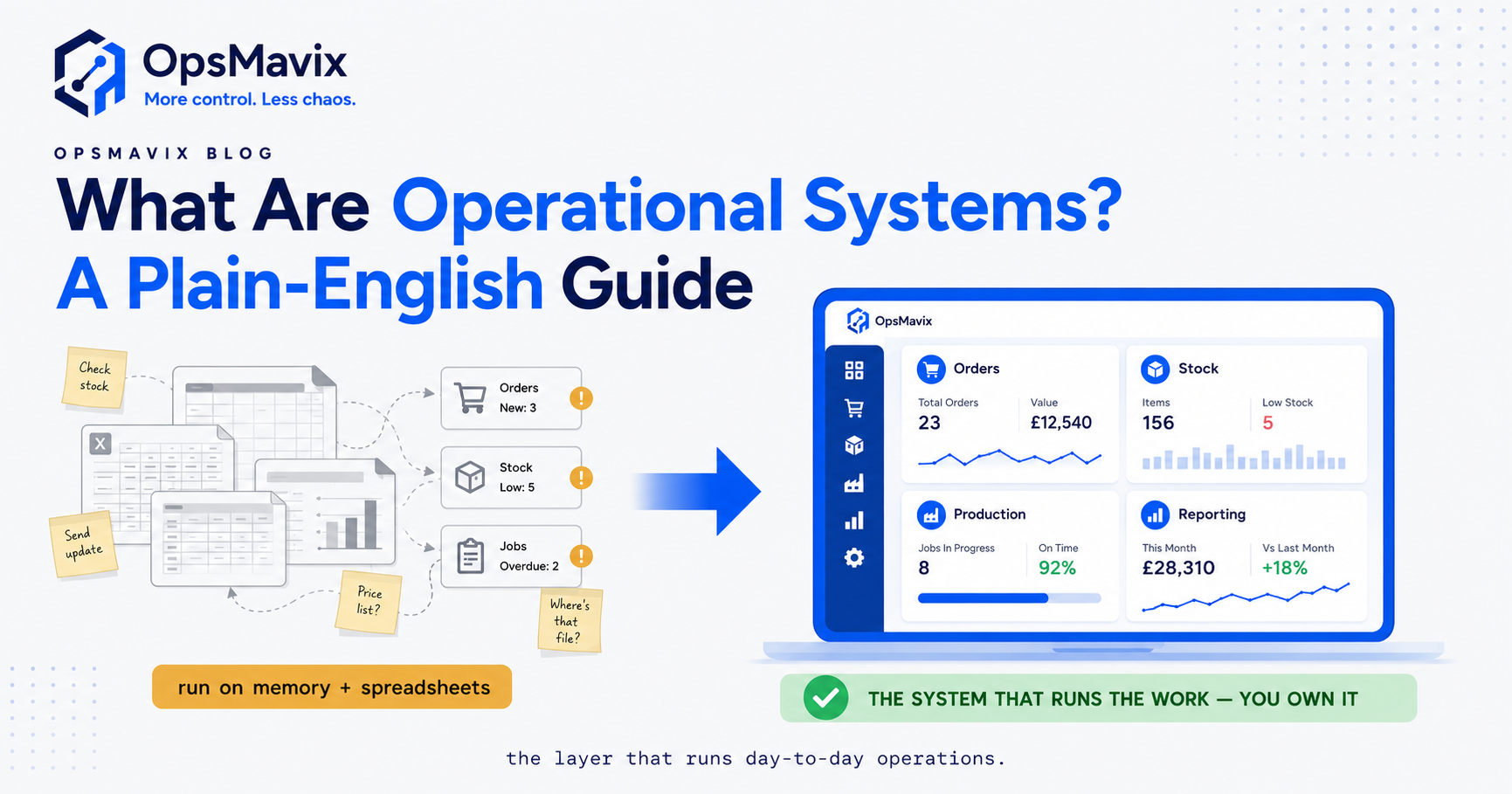
What Are Operational Systems? A Plain-English Guide for Growing Businesses
Operational systems are the software that runs your day-to-day work, tracking orders, stock, production and reporting in one shared place. This guide explains what one is, with plain examples, and how it differs from a spreadsheet and from a full ERP.
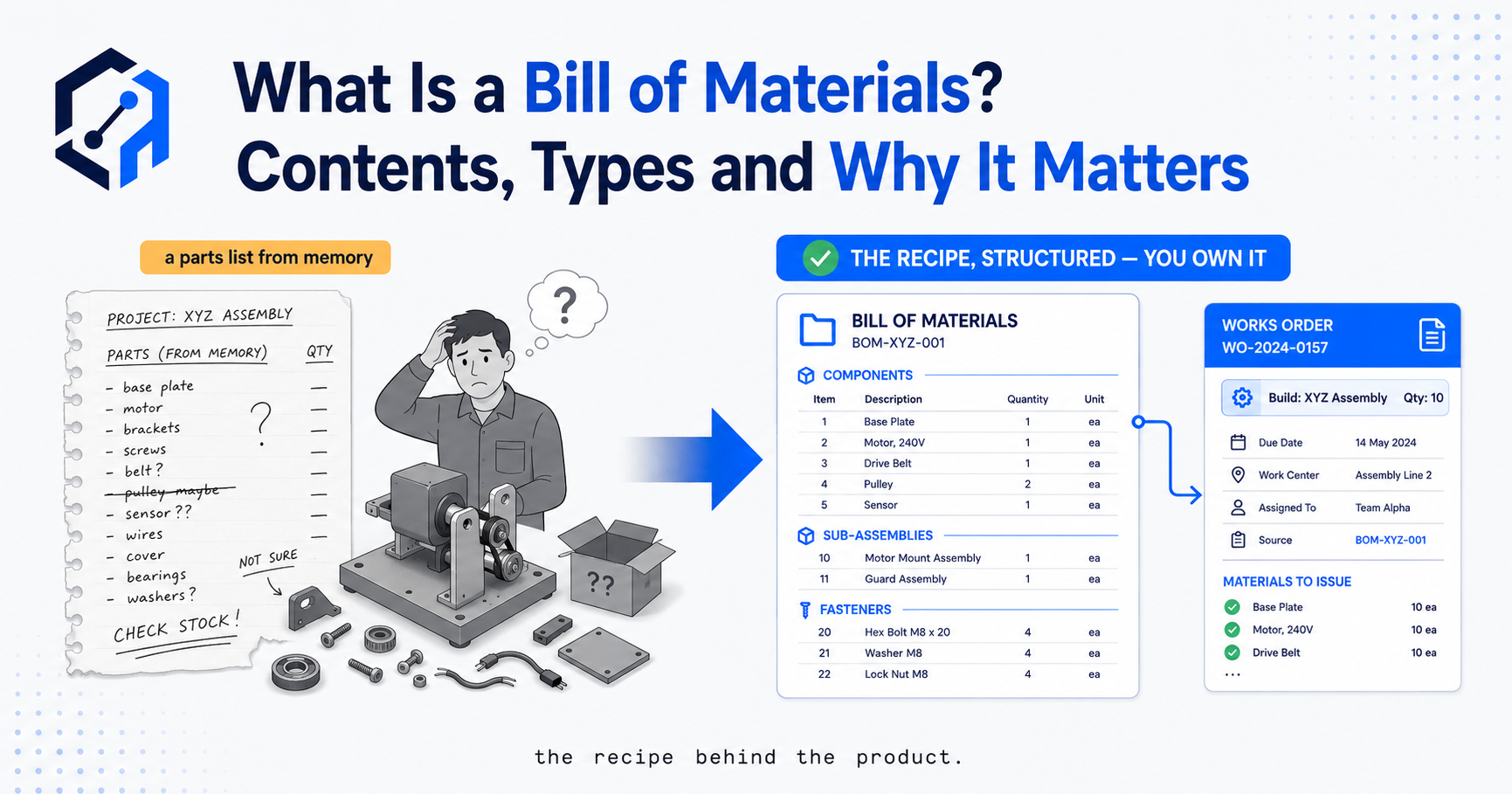
What Is a Bill of Materials? A Plain-English Guide for Growing Manufacturers
A bill of materials (BOM) is the master list of every component, sub-assembly and quantity needed to build one finished product. This guide breaks down what a BOM contains, the different types, and why an accurate one is the difference between a smooth build and a stalled production line.
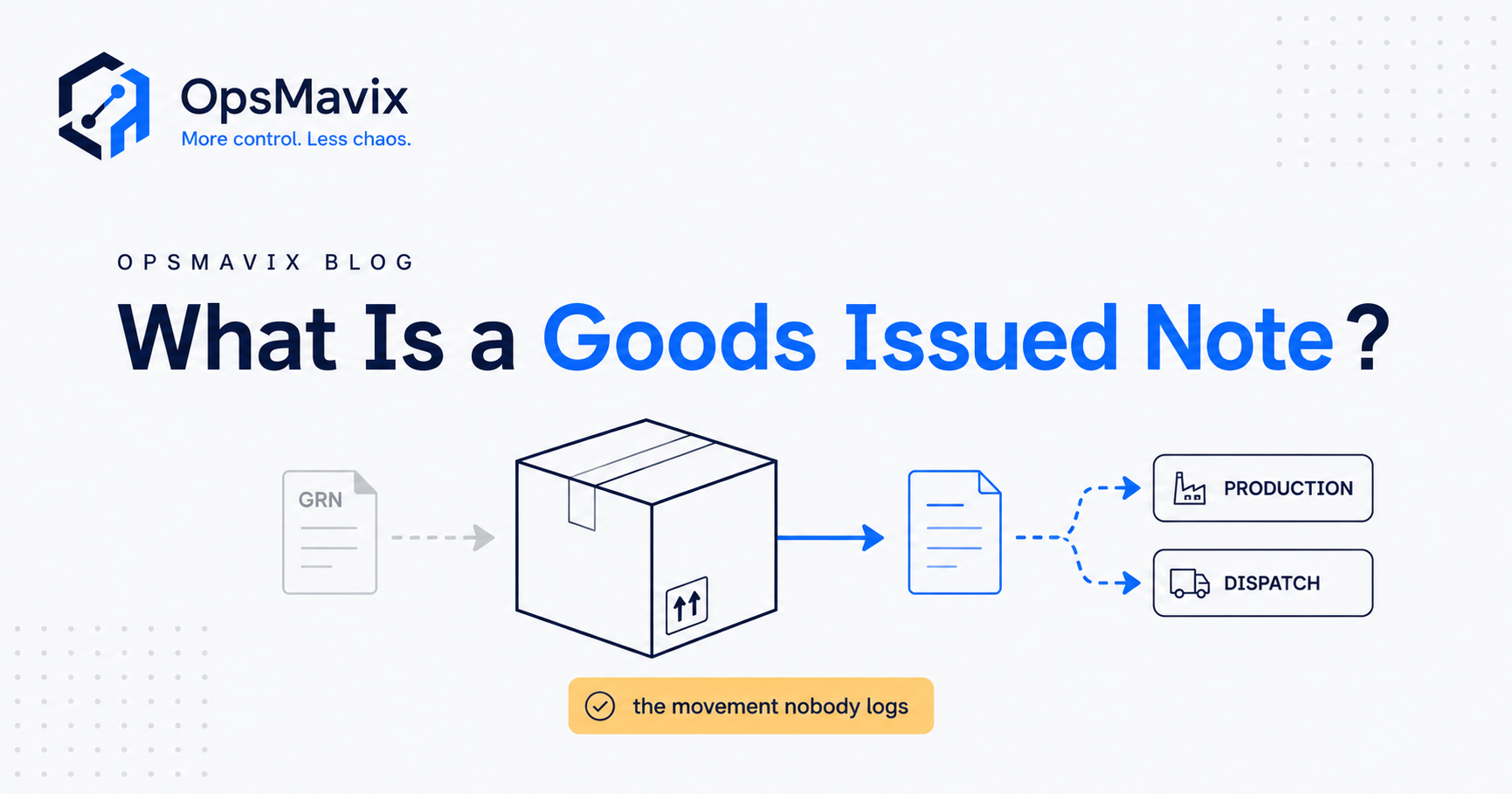
What Is a Goods Issued Note (GIN)? Definition and Uses
A goods issued note is the record of stock leaving your business — issued to production, picked for dispatch, or drawn for internal use. This guide covers what goes on a GIN, how it differs from a GRN and a delivery note, and why untracked issues are the single biggest reason your stock figure never matches the shelf.
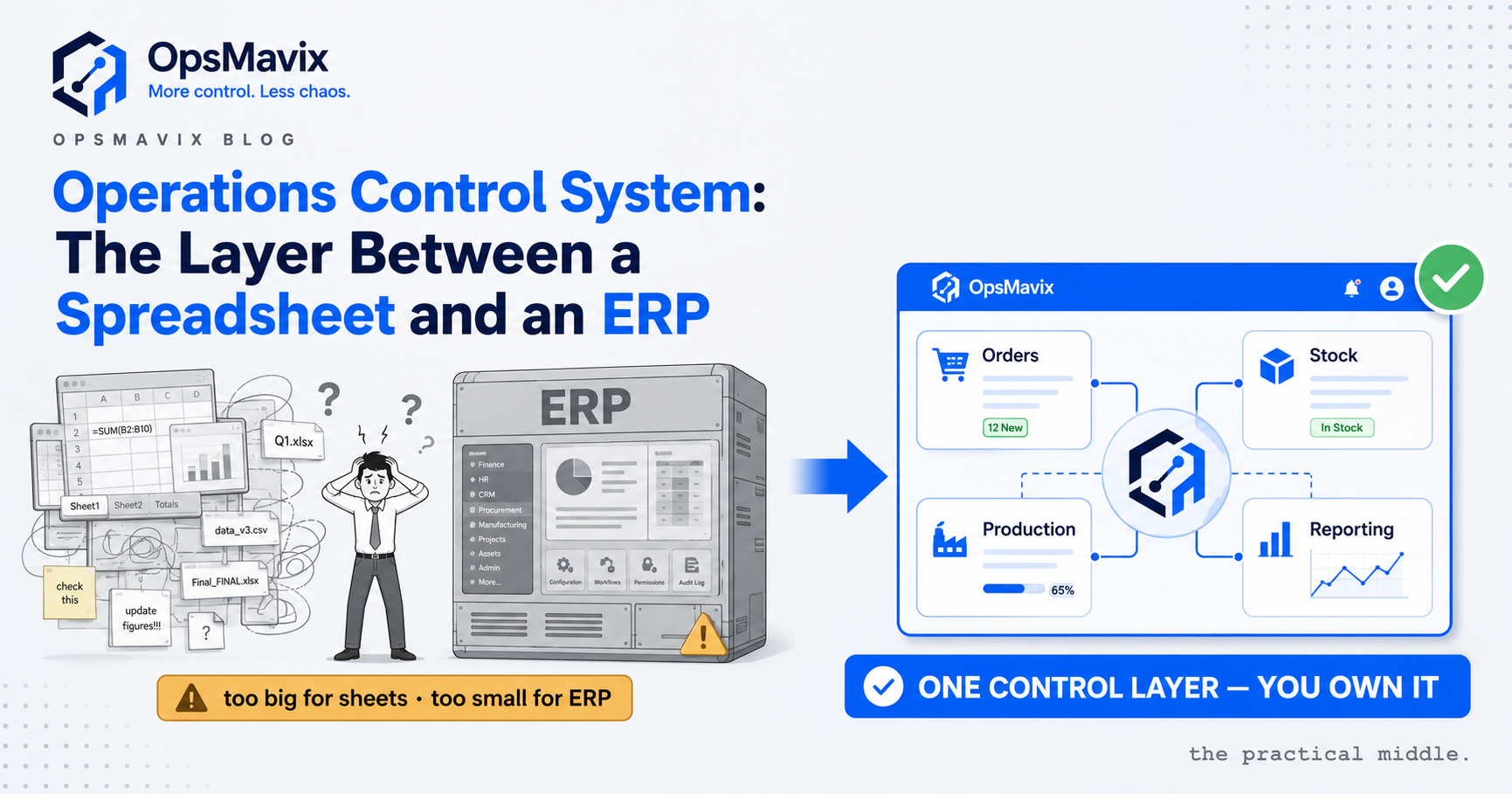
What an Operations Control System Actually Is (and When You Need One)
An operations control system is the working layer that connects inventory, orders, purchasing and production into one place your team actually runs the business from. It sits between the spreadsheets you have outgrown and the ERP you are not ready for. Here is what it does, when you need one, and how to decide.
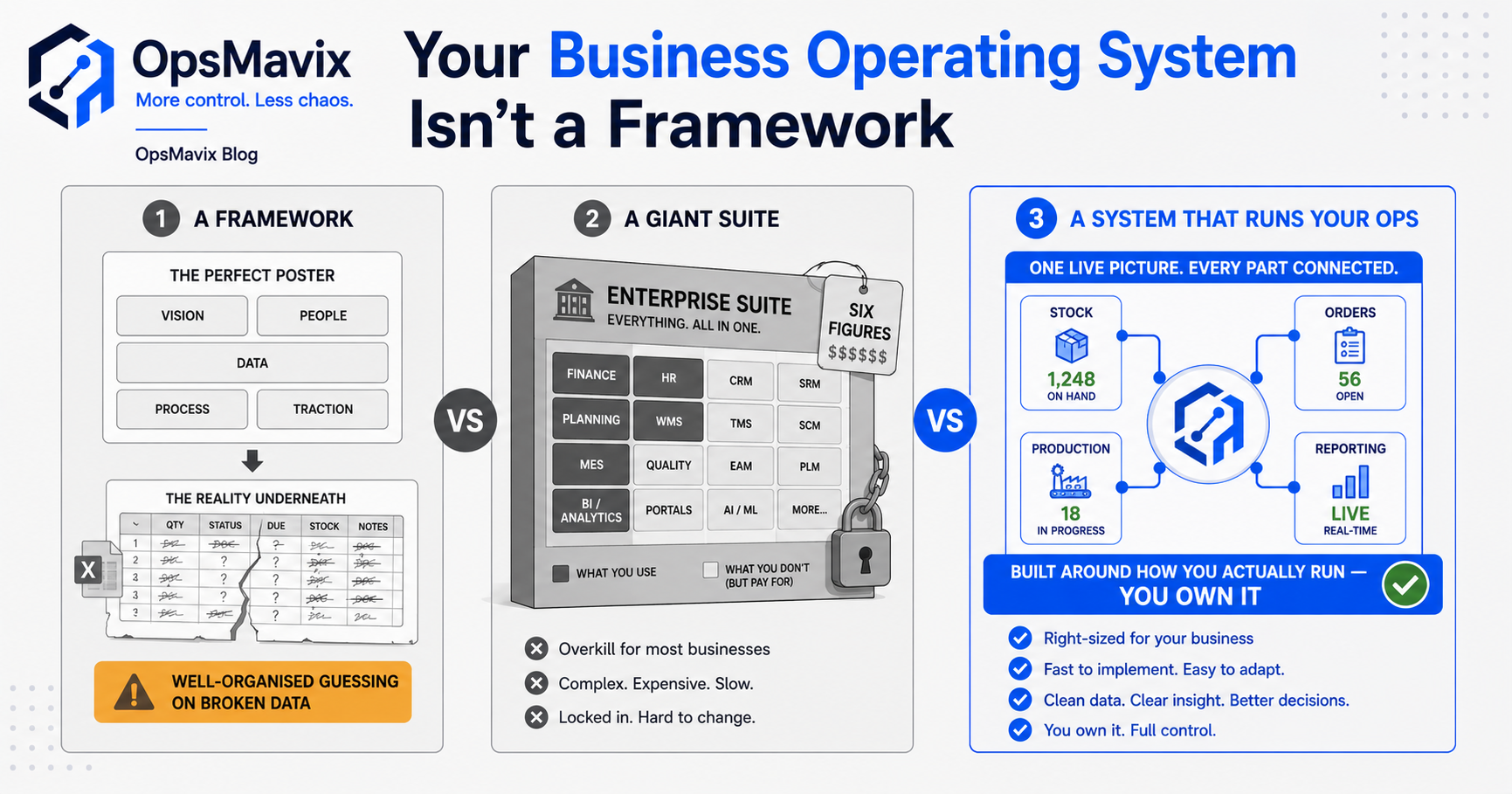
What a Business Operating System Really Is (Framework vs Software)
Business operating system" means two completely different things — a management framework like EOS, and a giant enterprise software suite. Most growing businesses need neither in full. Here's the honest breakdown, and what actually runs your operation day to day.
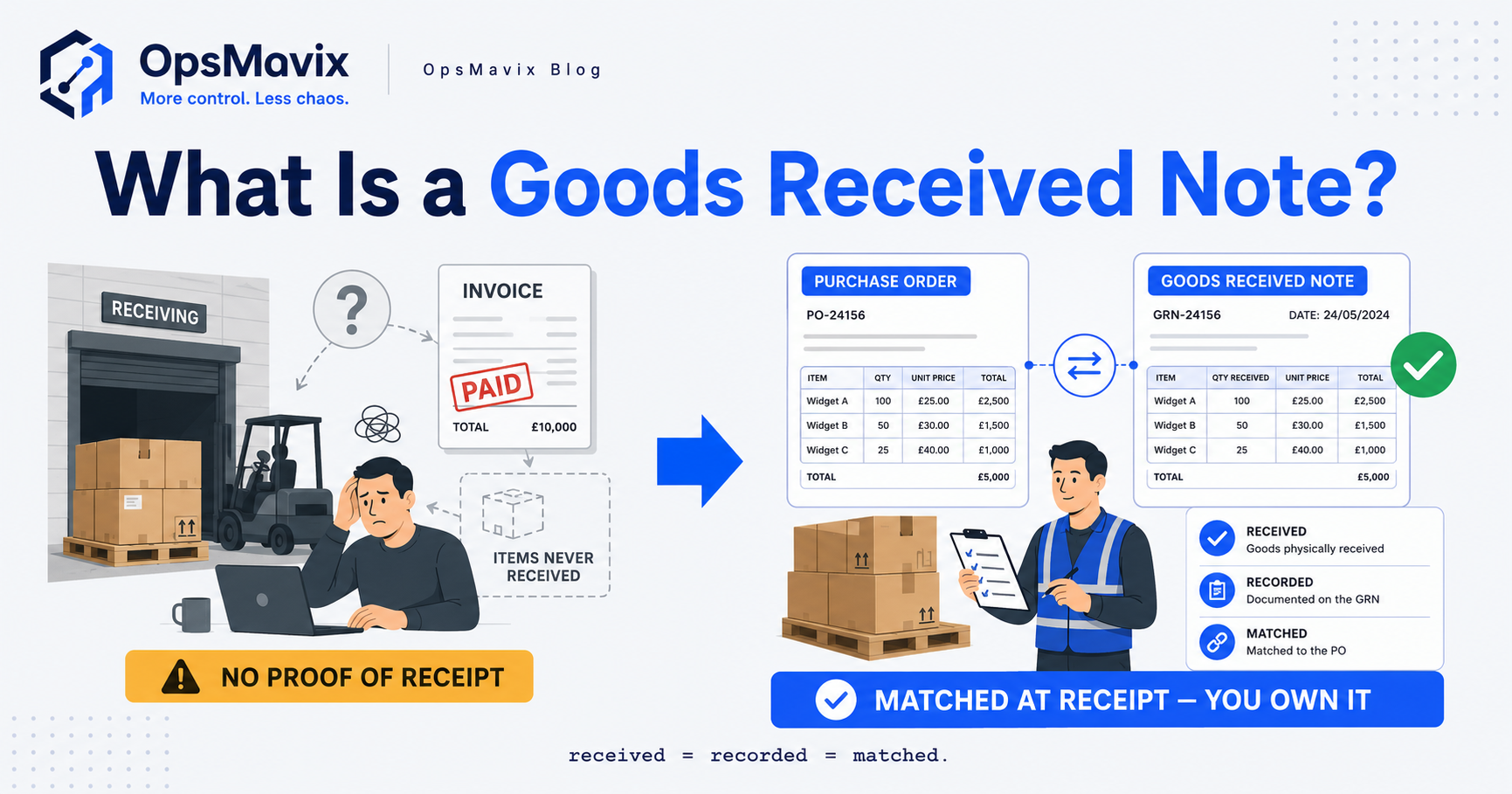
What Is a Goods Received Note (GRN)? A Practical Guide
A goods received note is the buyer's own record of what physically turned up against a purchase order — not what was ordered, not what the supplier says was sent. This guide covers what goes on a GRN, how it feeds three-way matching, and why the document quietly fails on spreadsheets and email.