
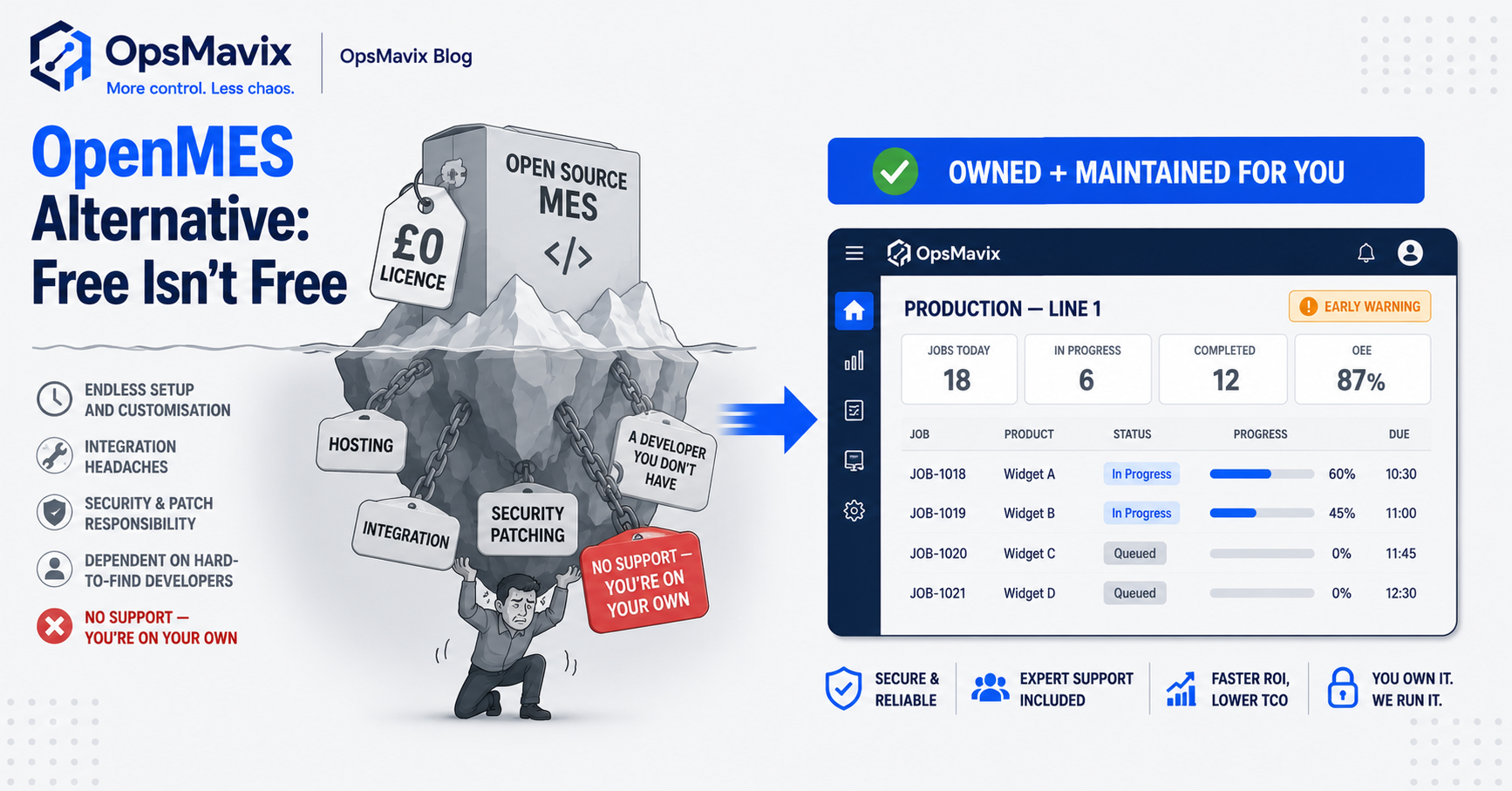
OpenMES Alternative: When Free Open-Source MES Isn't Actually Free
Open-source MES like OpenMES has no licence fee — which is exactly why the real cost hides. Here's where the bill actually lands (a developer you don't have, hosting, support you own), when it genuinely fits, and what a right-sized built-for-you production system does that DIY can't.
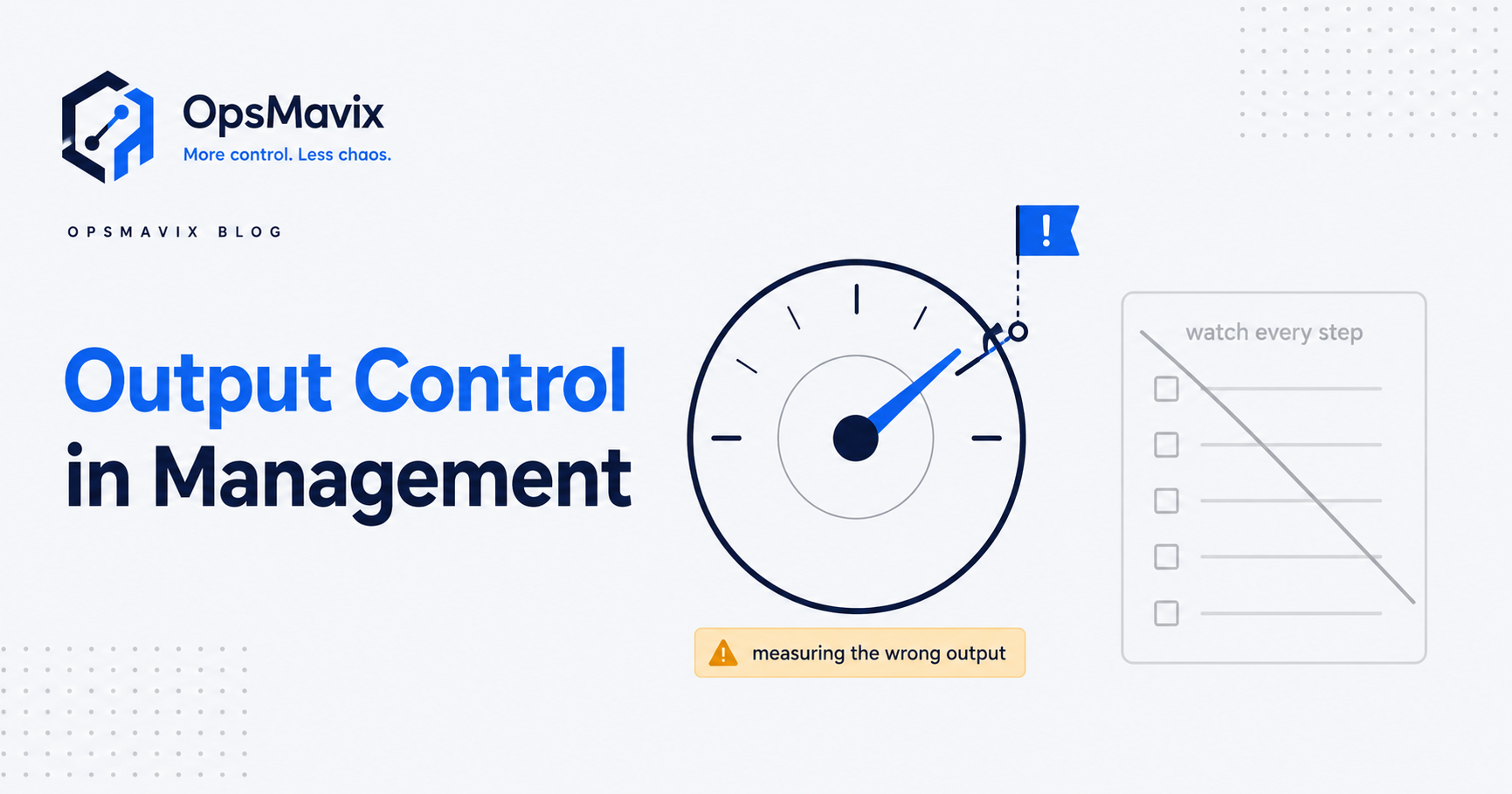
Output Control in Management: What It Is and How to Apply It
Output control is managing by measurable results rather than by supervising every step. This guide defines it, sets it against behaviour and input control, shows where it fits in operations — targets, KPIs, exception thresholds — and covers the trap that ruins it: measuring the wrong output. Then it looks at what it takes to make output control live rather than a monthly spreadsheet post-mortem.
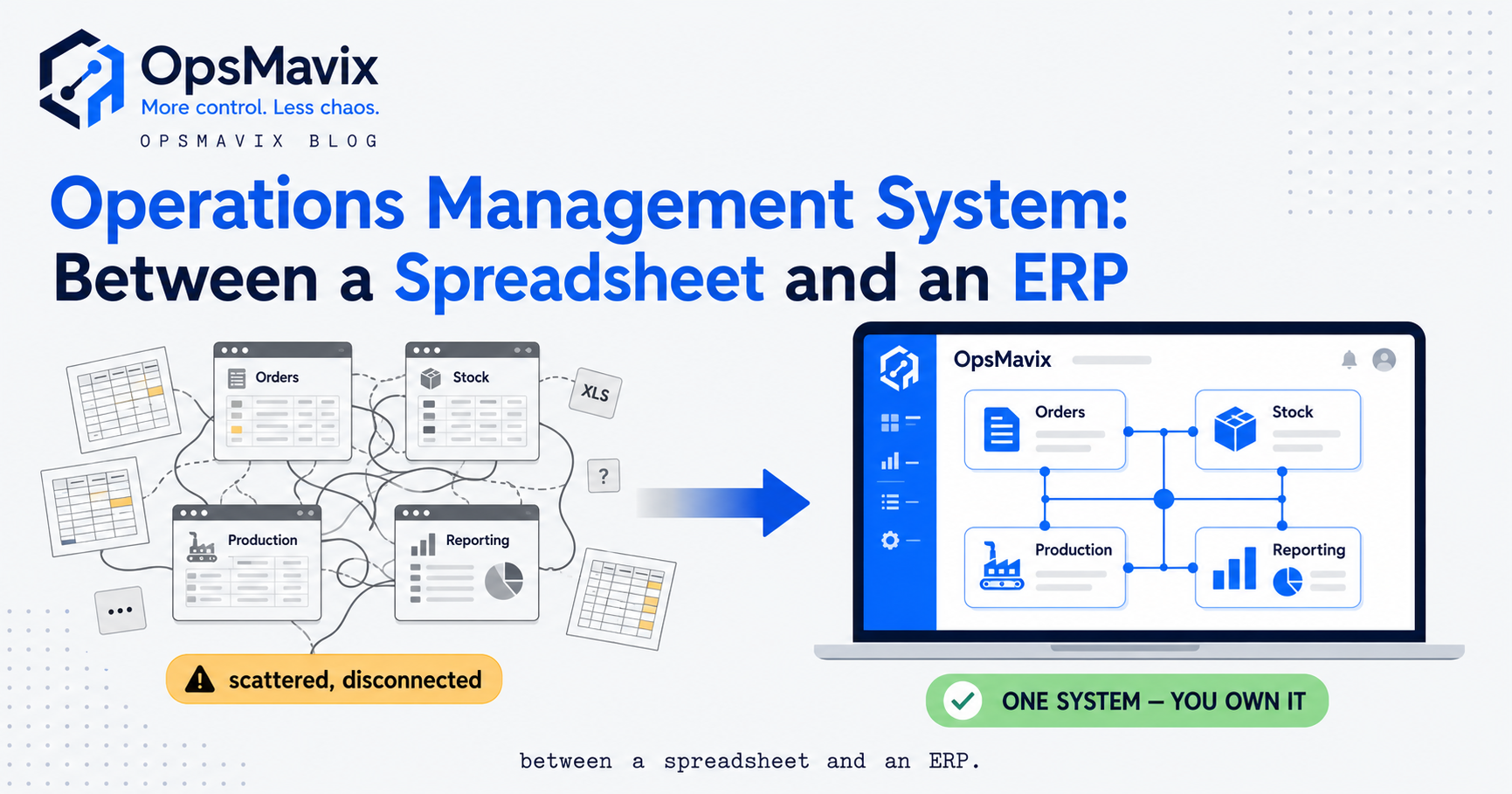
Operations Management System: What It Is and How to Choose One
An operations management system is the software that actually runs your day-to-day operations — orders, stock, production and reporting — in one place, instead of scattered across spreadsheets and apps that don't talk. This post is about choosing one: what it should cover, where the line sits against a full ERP, and how to pick a right-sized system without over-buying.
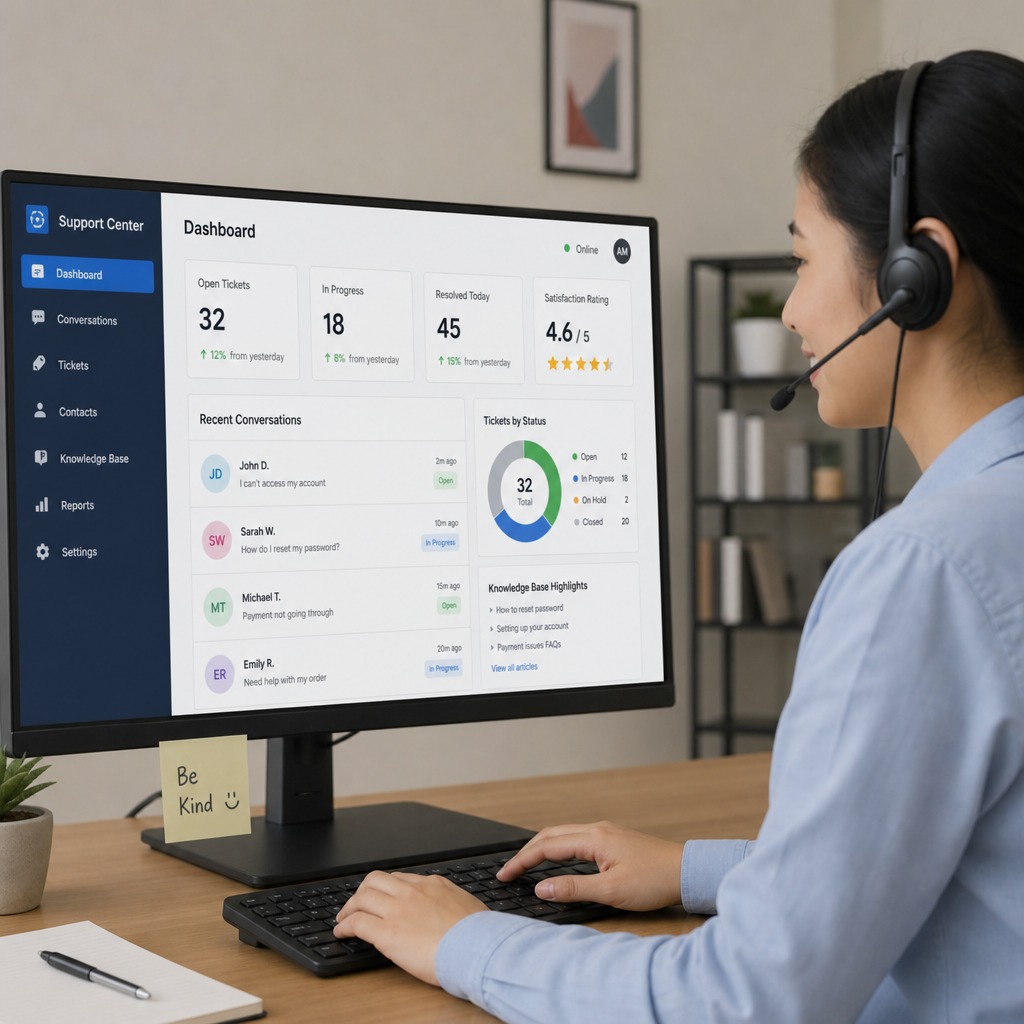
Optimizing Customer Service with Technology
Discover how technology revolutionizes customer service by enhancing response times, personalizing experiences, and improving team efficiency. Upgrade your customer service strategies today
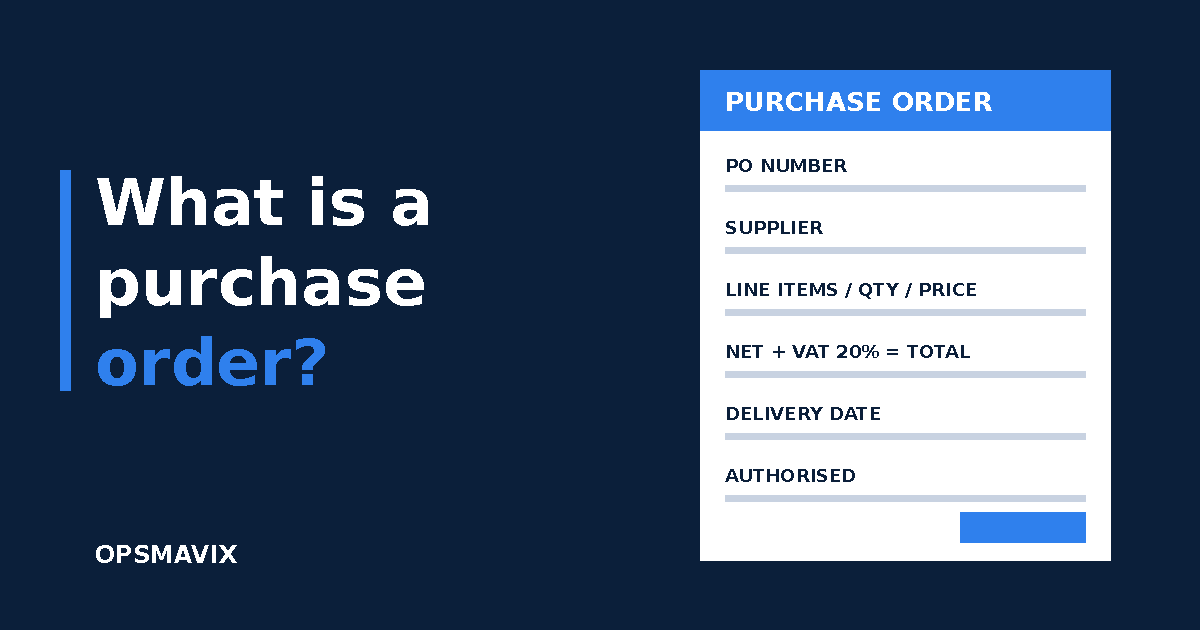
What Is a Purchase Order? Meaning, Example and Process (UK)
A purchase order is the buyer's numbered, authorised instruction to a supplier to supply set items at agreed quantities, prices and terms. Here's what goes on one, a worked UK example with VAT, and how the PO process runs from need to payment.
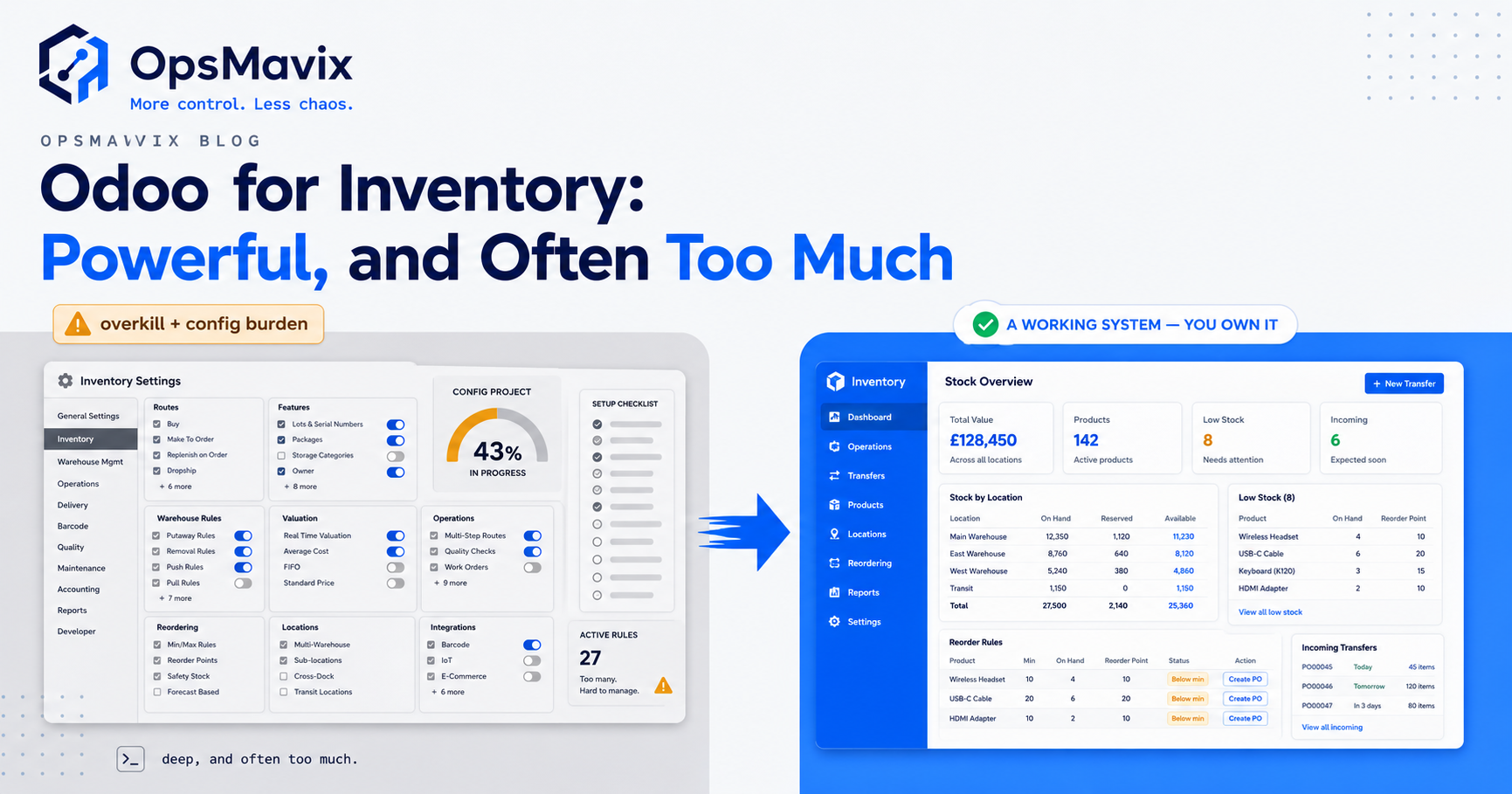
Odoo for Inventory: Powerful, and Often Too Much
Odoo Inventory is a genuinely deep stock and warehouse module — routes, putaway rules, multi-step flows, reordering, lot and serial tracking, the lot. The trouble for a smaller business isn't capability, it's fit: you inherit a configuration project instead of a working system, get warehouse-grade depth where you needed a clear count, and awkward gaps where your operation is actually specific. Here's what Odoo Inventory really does, where it overshoots an SME, and what a right-sized stock system does instead.
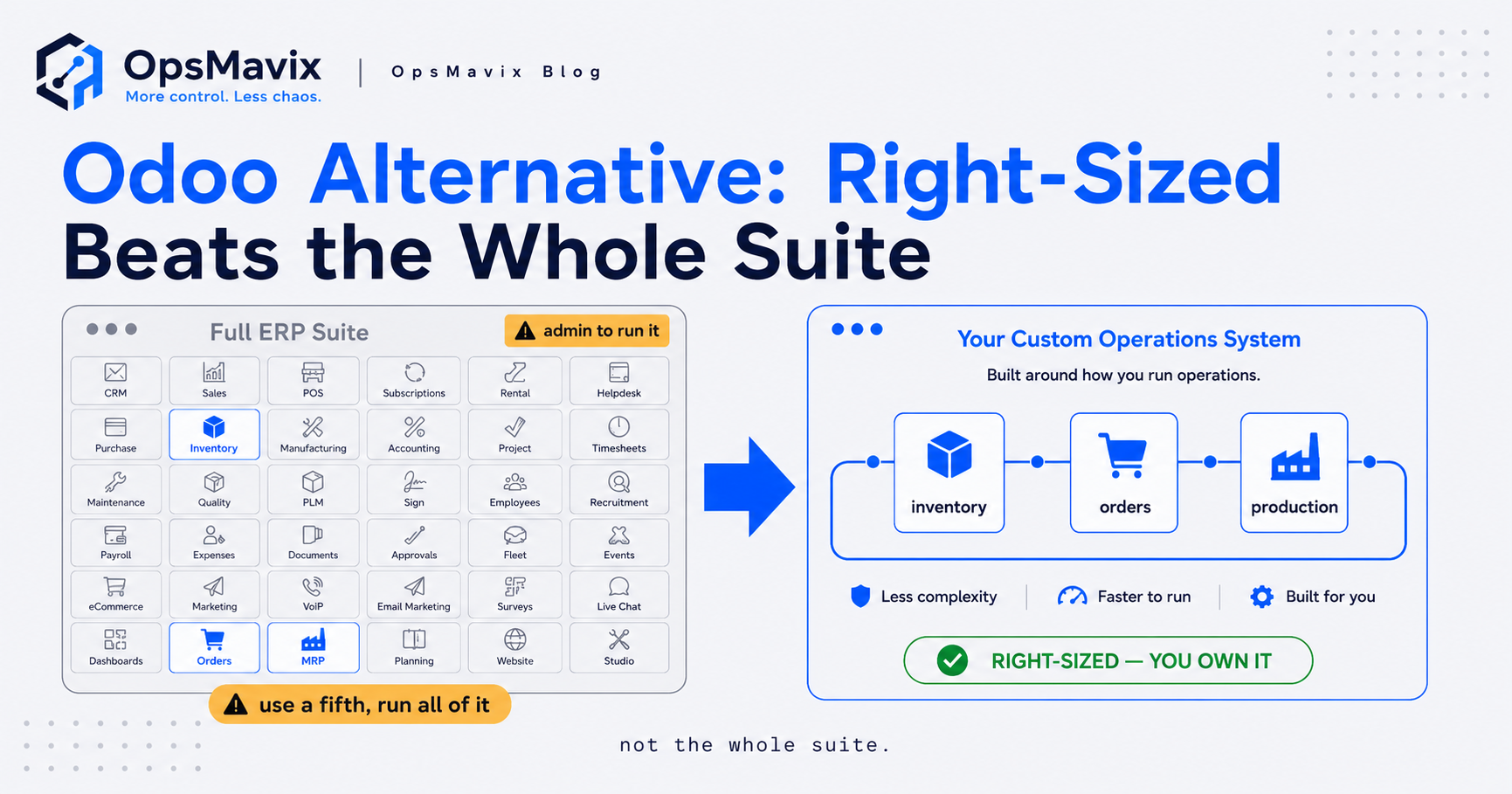
Odoo Alternative UK: Right-Sized Beats the Whole Suite
An Odoo alternative isn't a cheaper version of the same thing — it's a different answer to the question. Odoo gives you a suite of dozens of apps, most of which you'll never switch on, plus the admin of running them. A focused custom operations system covers what you actually do without the suite overhead. Here's where Odoo genuinely fits, the run-cost most buyers miss, and how to decide.
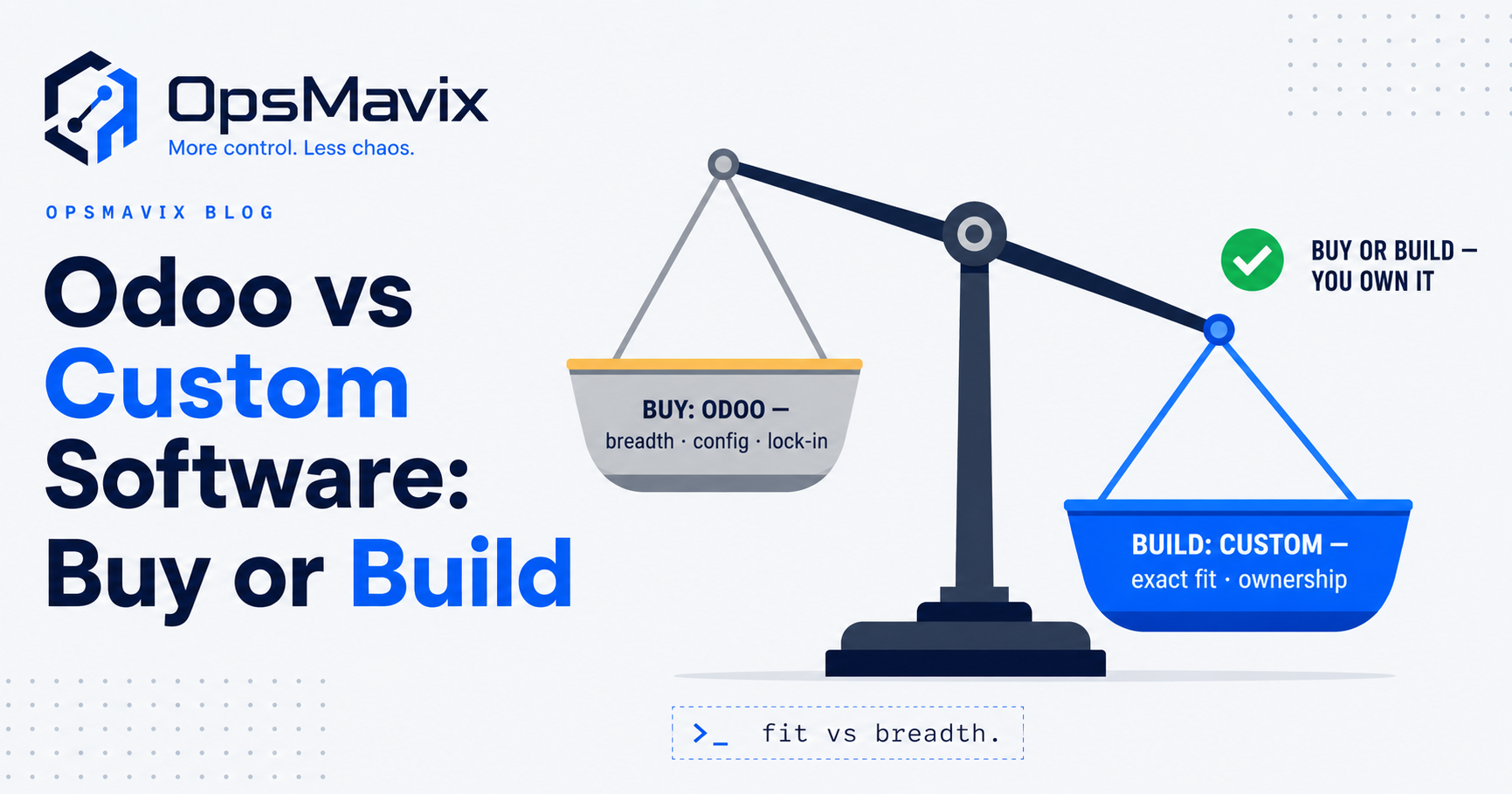
Odoo vs Custom Software: The Buy-or-Build Decision
Odoo vs custom software isn't a fight between a good tool and a bad one — it's a trade between breadth you buy and fit you build. Odoo gives you a huge, mature suite and an ecosystem behind it; a custom operations system gives you an exact match to how you work and outright ownership. Here's an honest framework for the buy-or-build call — what each genuinely wins on, the costs and risks over time, and how to decide without over-buying or over-building.
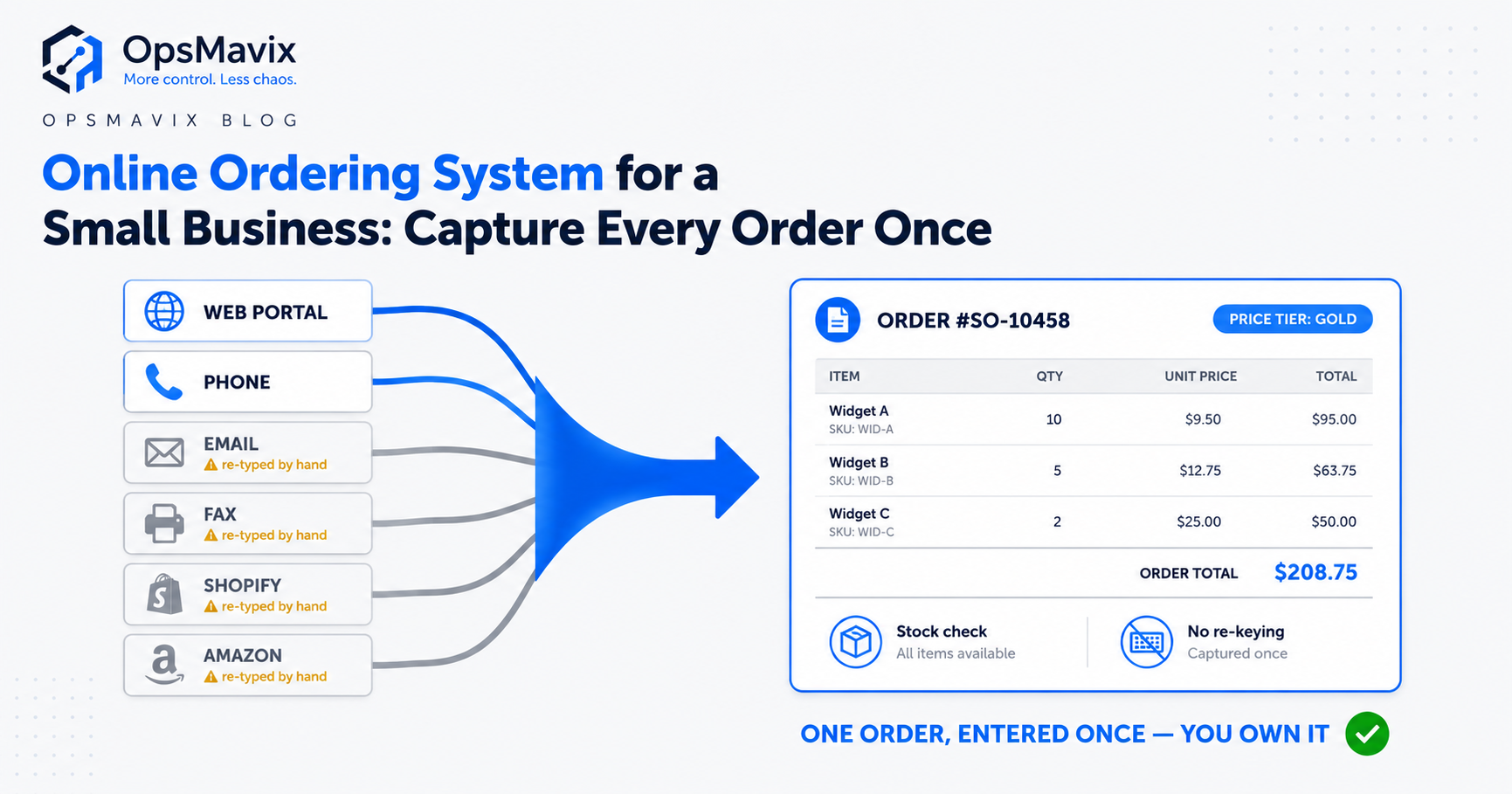
Online Ordering System for a Small Business: What It Actually Needs to Do
An online ordering system for a small business isn't a checkout button — it's the layer that captures orders once, accurately, across every channel your customers actually use. Here's what it does, what to look for, where off-the-shelf bends you out of shape, and the re-keying and overselling leaks a right-sized one closes.