
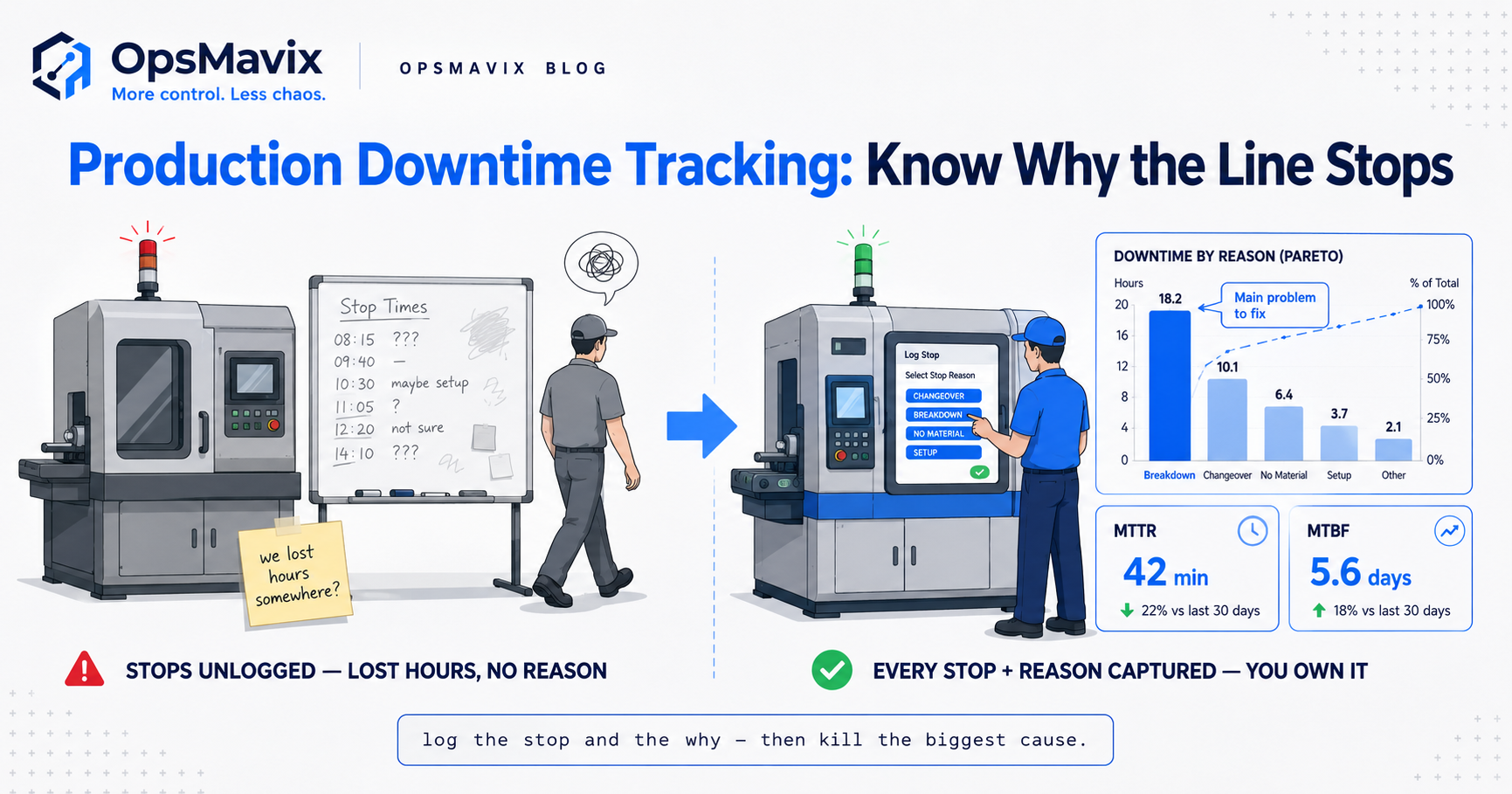
Production Downtime Tracking: Catching Every Stop Before It Costs You
Production downtime tracking is the discipline of logging every machine stop, why it happened, and how long it lasted — as it happens, not from memory. Most shops guess. Here's how to capture real stop reasons, split planned from unplanned, read MTBF and MTTR in plain terms, and turn the data into a Pareto of causes you can actually fix.
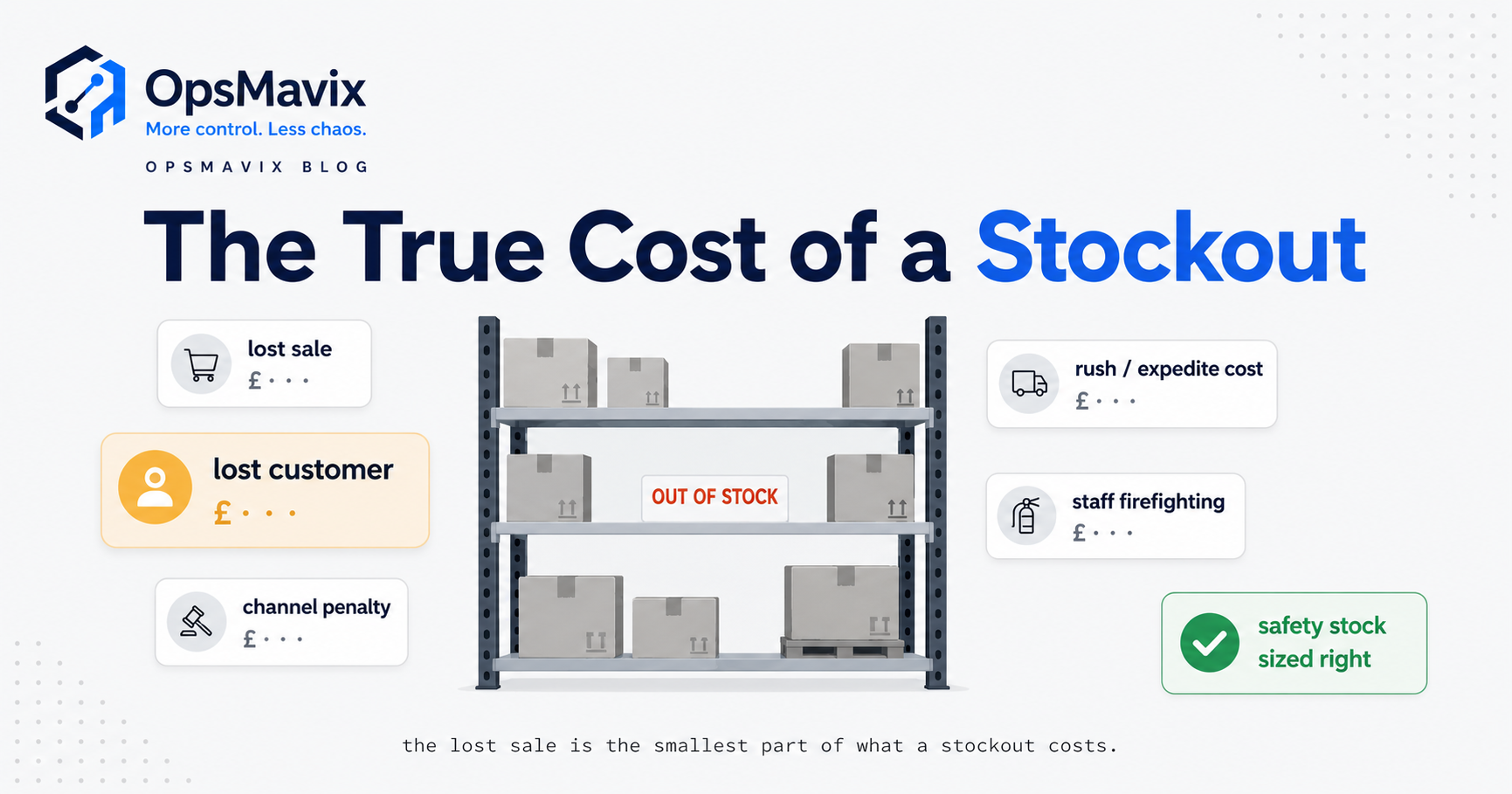
The True Cost of a Stockout (and How to Stop Overselling)
A stockout does not cost you one sale. It costs the margin on that sale, sometimes the customer for good, a dent in your marketplace ranking, a rush-freight bill to recover, and hours of staff firefighting. This guide breaks the full cost down into five parts, gives you a simple £ framework to estimate it for your own business, separates a true stockout from a phantom-stock oversell, and lays out the operational fixes.
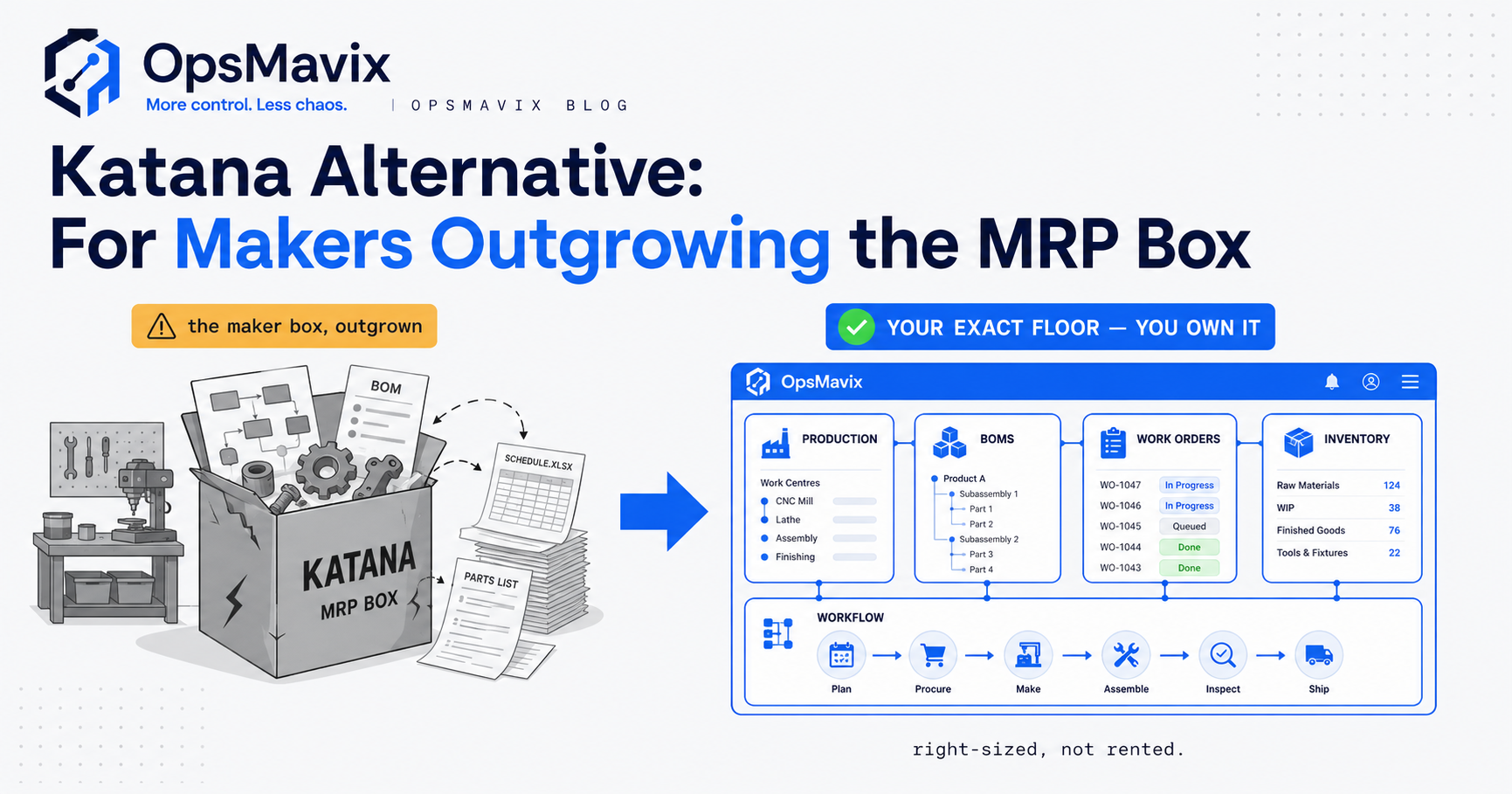
The Right Katana Alternative When Your Ops Outgrow a Maker MRP
The best Katana alternative depends on why you are leaving. If Katana feels too rigid for how your shop floor actually works, the answer is usually a right-sized operations system you own, not another MRP with the same ceiling.
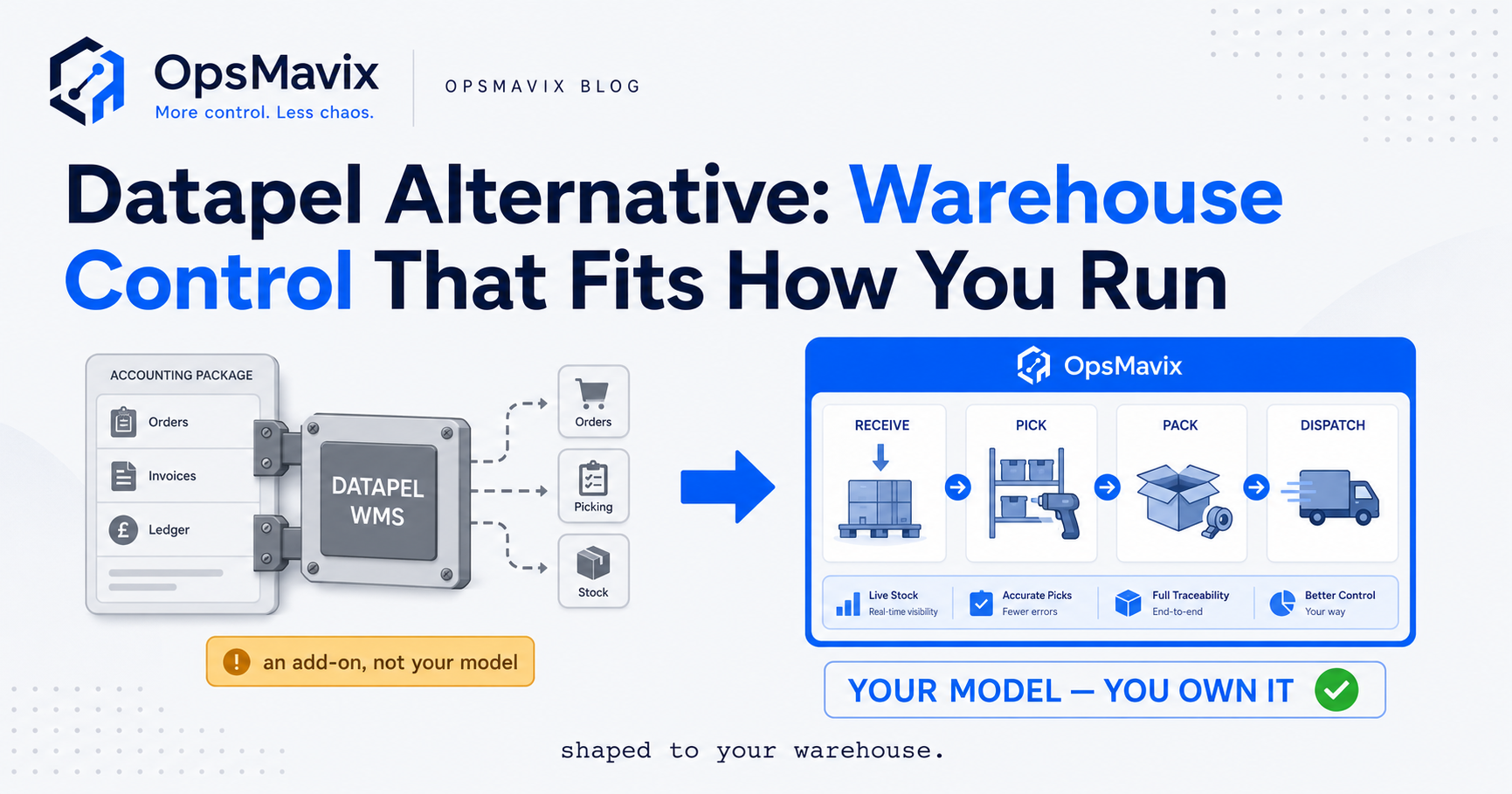
The Practical Datapel Alternative for UK Operations Teams
The best Datapel alternative depends on whether you need a warehouse management system bolted onto your accounts, or a single operations system that fits how your business actually runs. Datapel is a strong AU-built WMS with deep Xero and MYOB ties. But if your leak is in orders, purchasing and reporting rather than bin-level warehouse control, a right-sized operations system usually fits better.
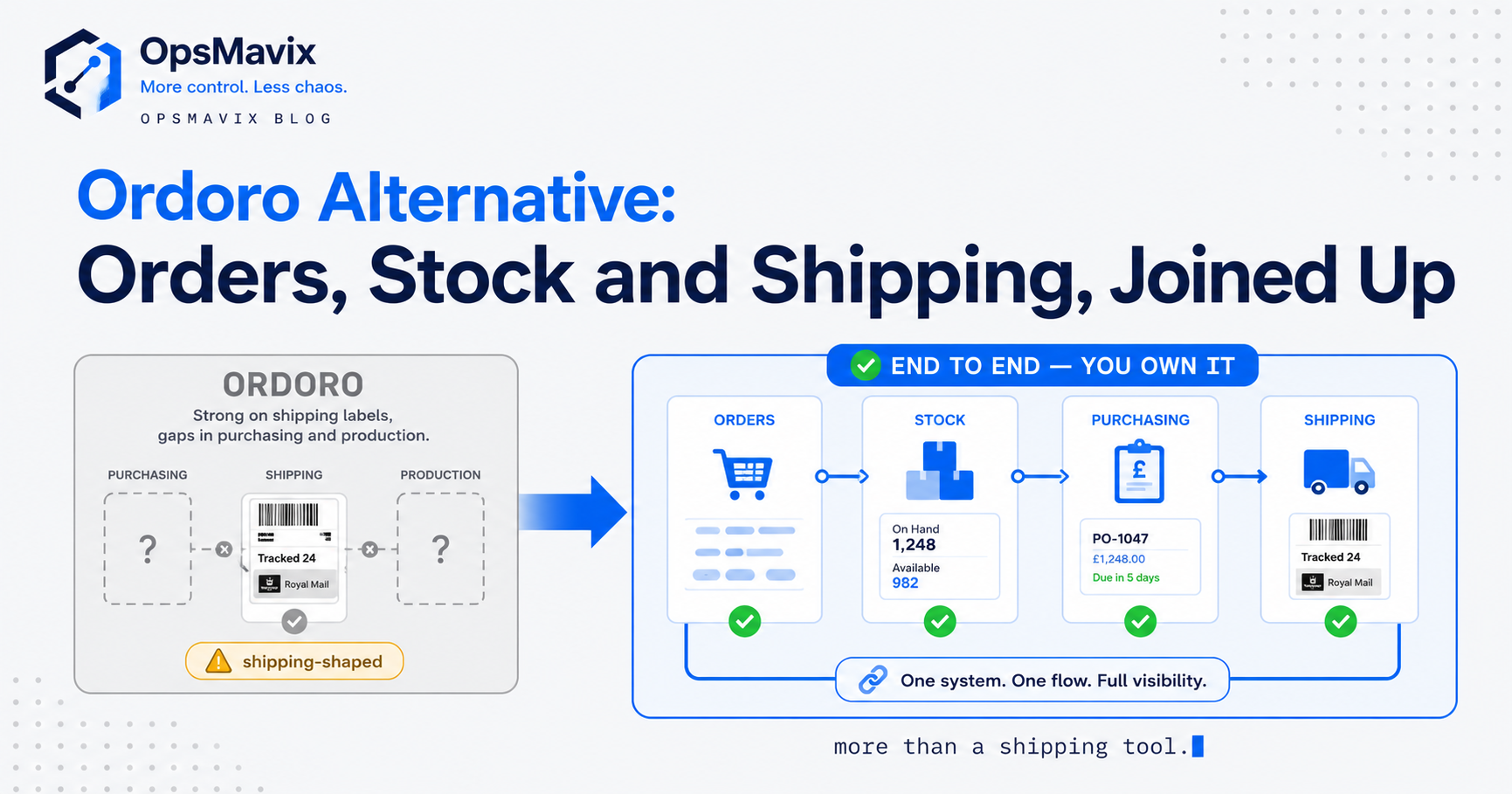
The Ordoro Alternative: Orders, Stock and Shipping Joined Up
Ordoro is genuinely strong shipping-and-inventory software with real dropshipping depth. But if your real leak is purchasing, production and reporting drifting apart from the pack bench, the best Ordoro alternative isn't another labels tool — it's one operations system shaped to how you actually run.
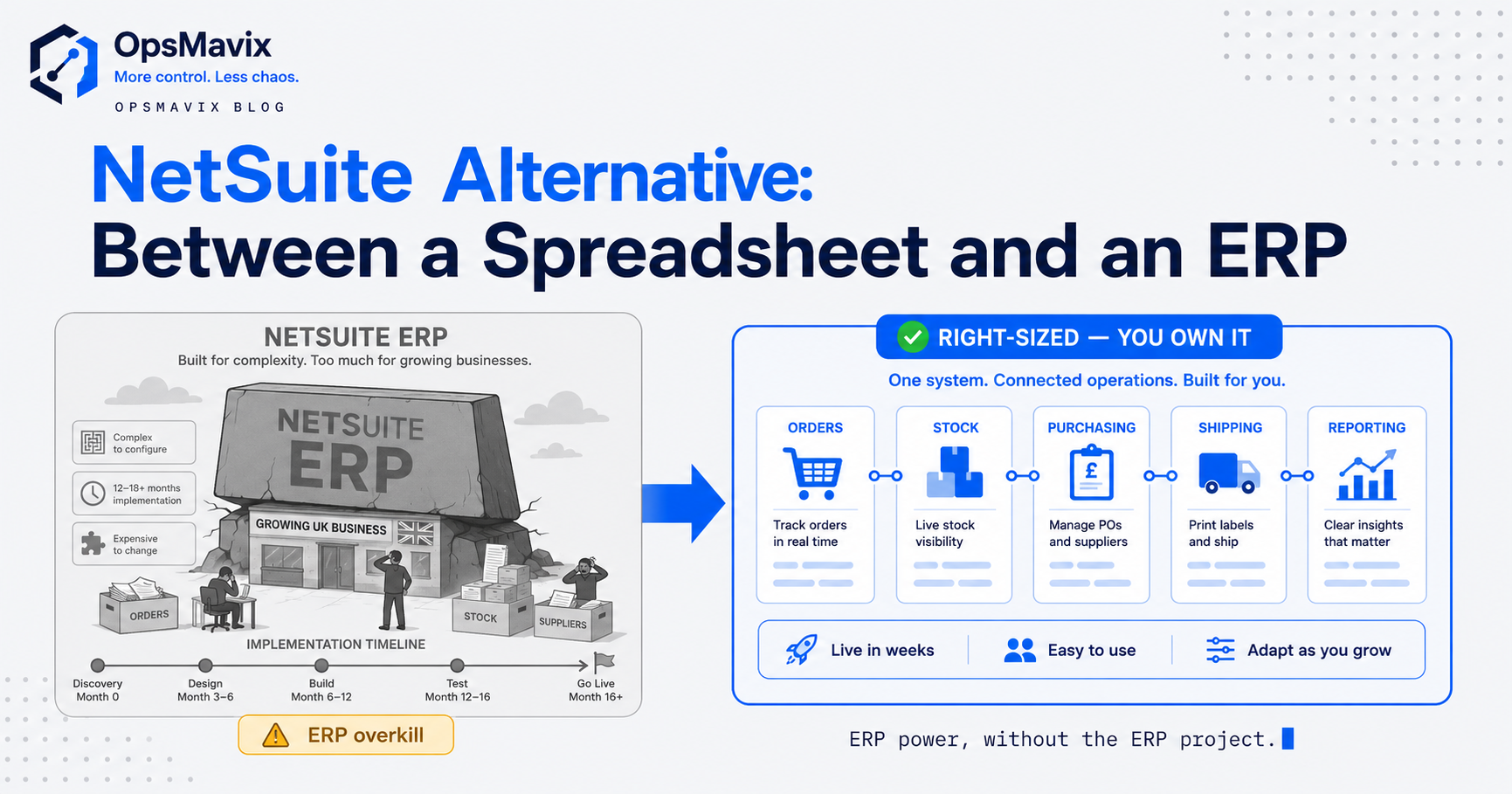
The NetSuite Alternative Between a Spreadsheet and an ERP
Most businesses hunting for a NetSuite alternative have outgrown spreadsheets but are nowhere near needing a full ERP. This is the honest case for the right-sized middle: one owned operations system shaped to how you already work, instead of a platform you spend two years growing into.
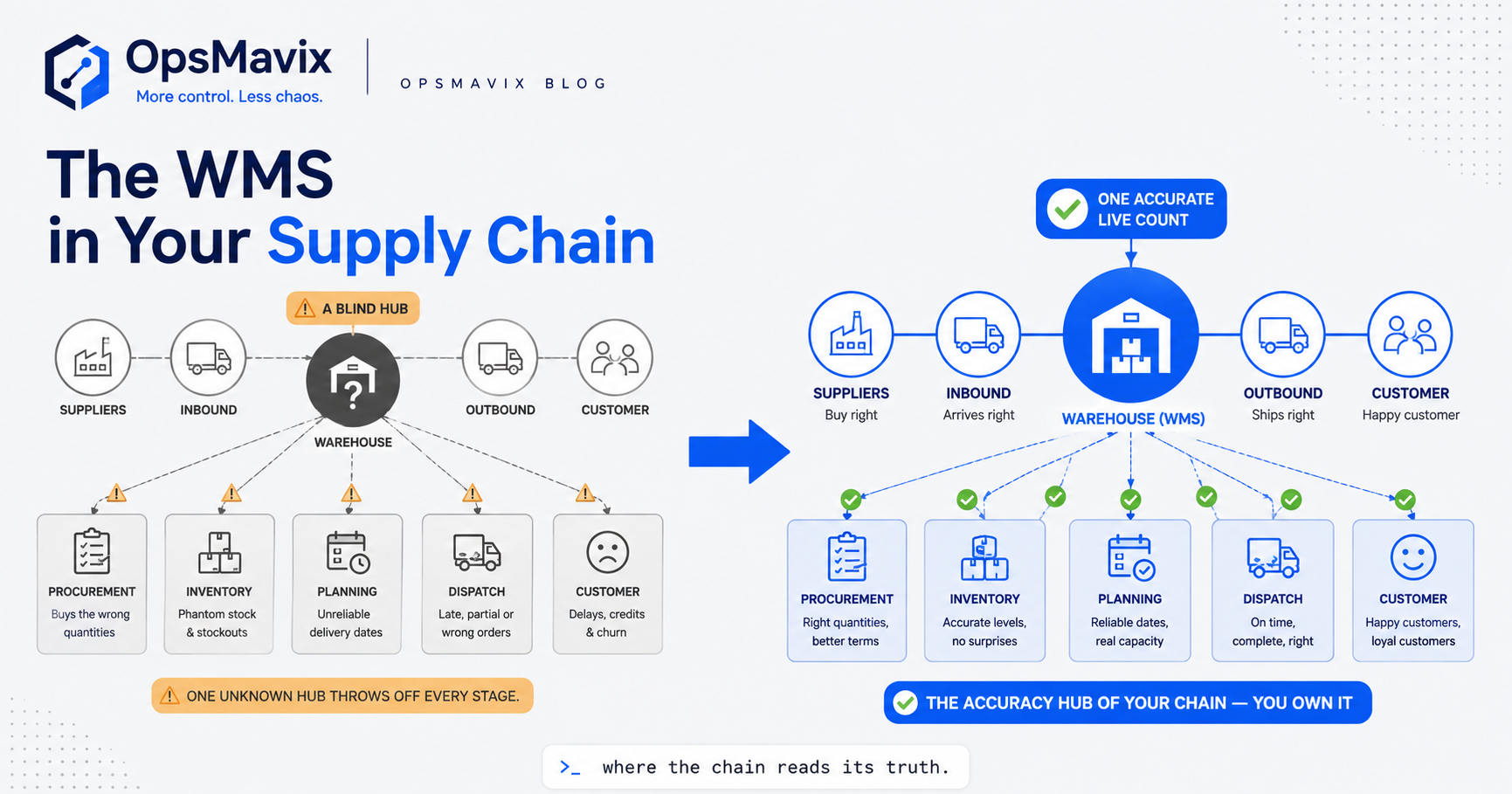
The Warehouse Management System in the Supply Chain: Where It Sits and Why It Matters
A warehouse management system in the supply chain is the point where physical stock and digital records are meant to agree, and where the truth for every stage upstream and down is decided. This guide shows where the WMS sits in the end-to-end chain, why it is the accuracy hub, and how a right-sized owned system fixes it for businesses that have outgrown spreadsheets and disconnected tools.
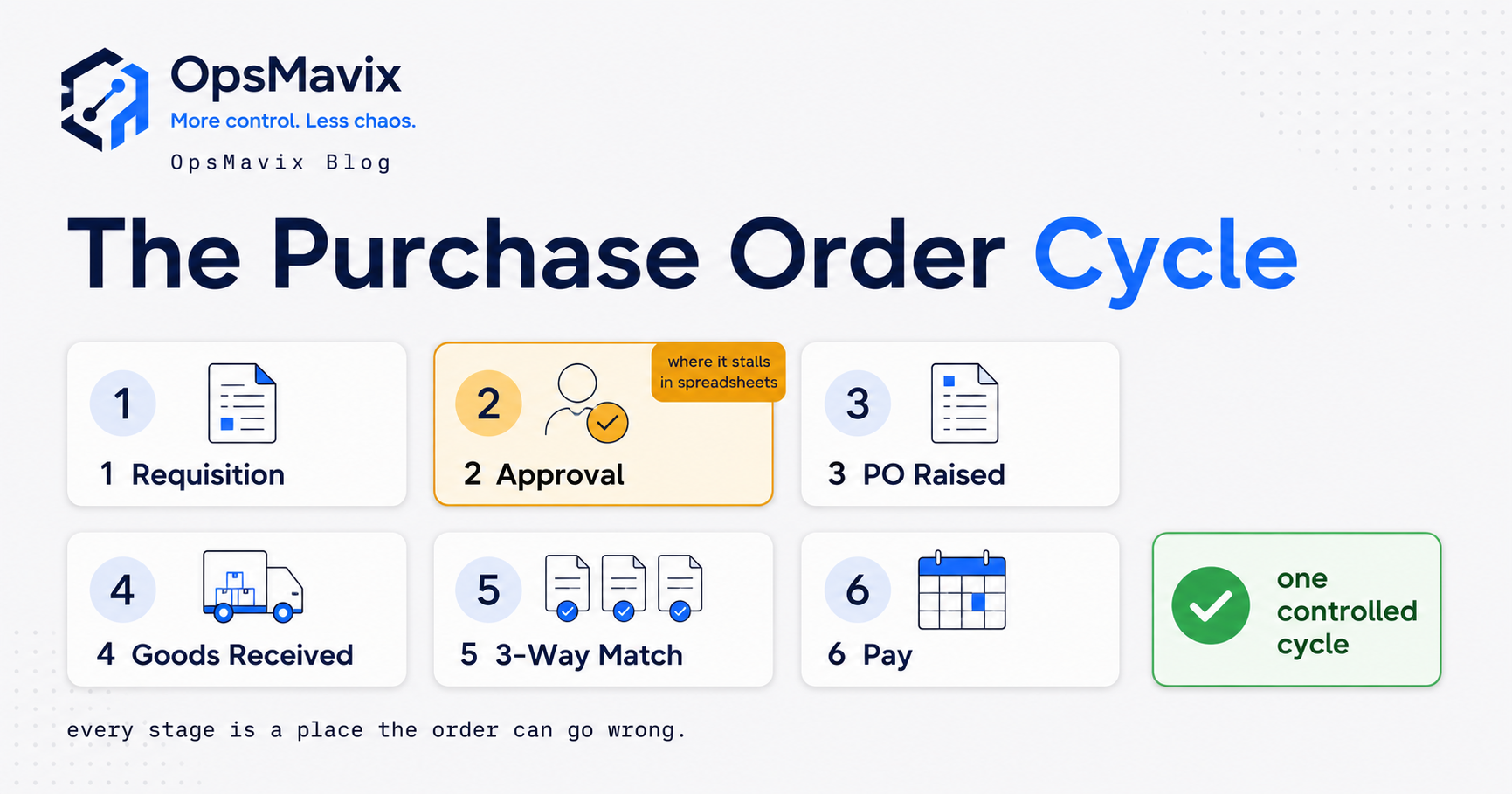
The Purchase Order Cycle, End to End (Procure-to-Pay)
The purchase order cycle runs from the moment someone identifies a need to the moment the order is paid and closed — requisition, approval, PO raised, sent to supplier, goods received, three-way match, invoice, payment, close. This guide walks every stage end to end, explains what each one is for and who owns it, shows exactly where each stage breaks when it lives in email and spreadsheets — missed approvals, wrong quantities, unmatched invoices — and how an owned system controls the whole cycle from one view instead of nine disconnected steps.
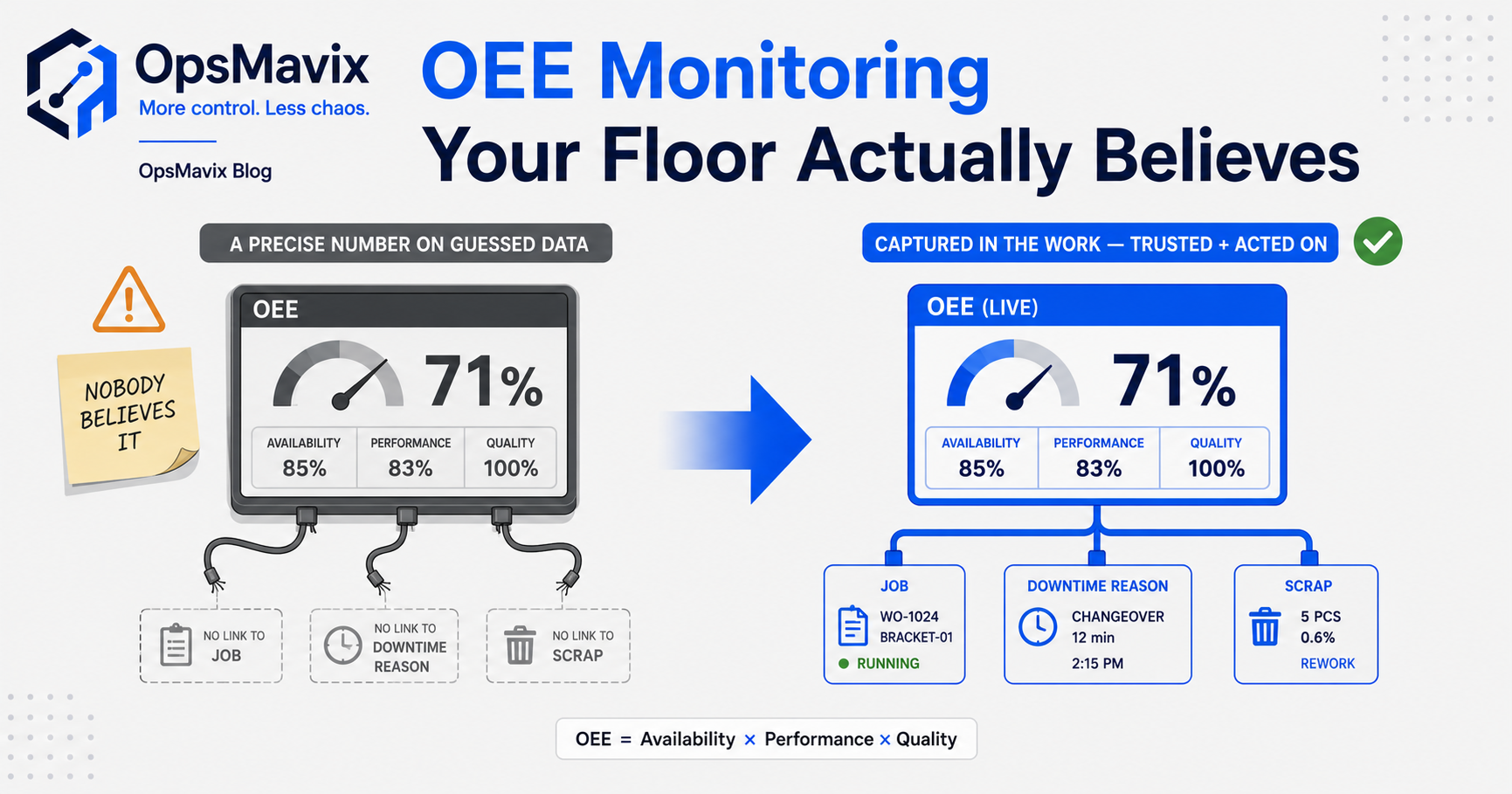
OEE Monitoring for Small Manufacturers: Making the Number Mean Something
OEE monitoring is sold as a dial that tells you how well your machines are running. The catch nobody mentions: a number your floor doesn't trust is worse than no number, because people make decisions on it. Here's what OEE actually measures, why most standalone OEE platforms become another ignored dashboard, and how to capture it inside the work your team already does.