
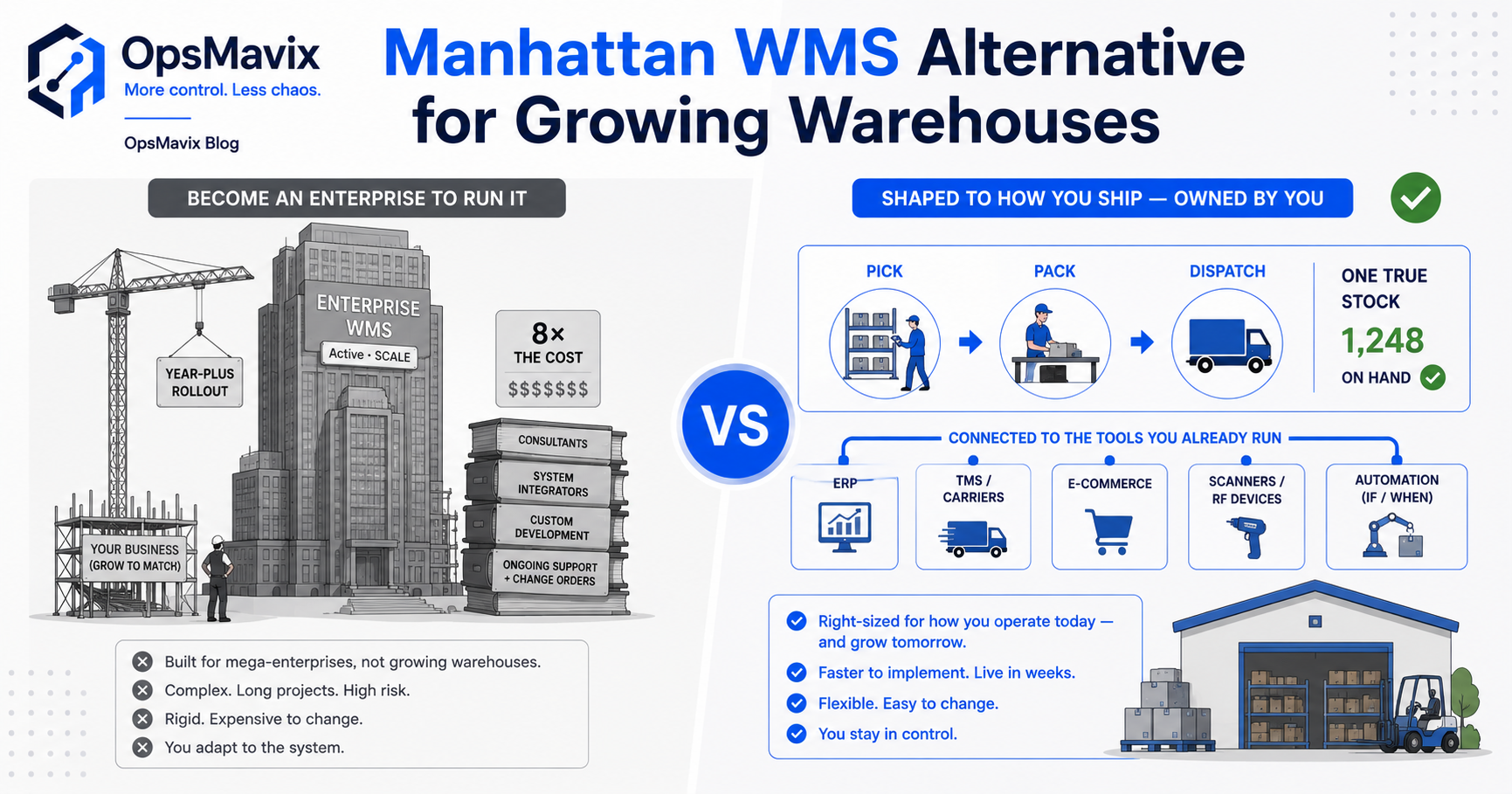
Manhattan Warehouse Management System Alternative: Right-Sized For You
A Manhattan warehouse management system is enterprise-grade — built for the largest distributors and 3PLs. The depth is real, and so is the price, the year-plus implementation, and the org you have to become to run it. Here's what Manhattan WMS is built for, the signs it's overkill for a growing operation, and what a right-sized system you own does instead.
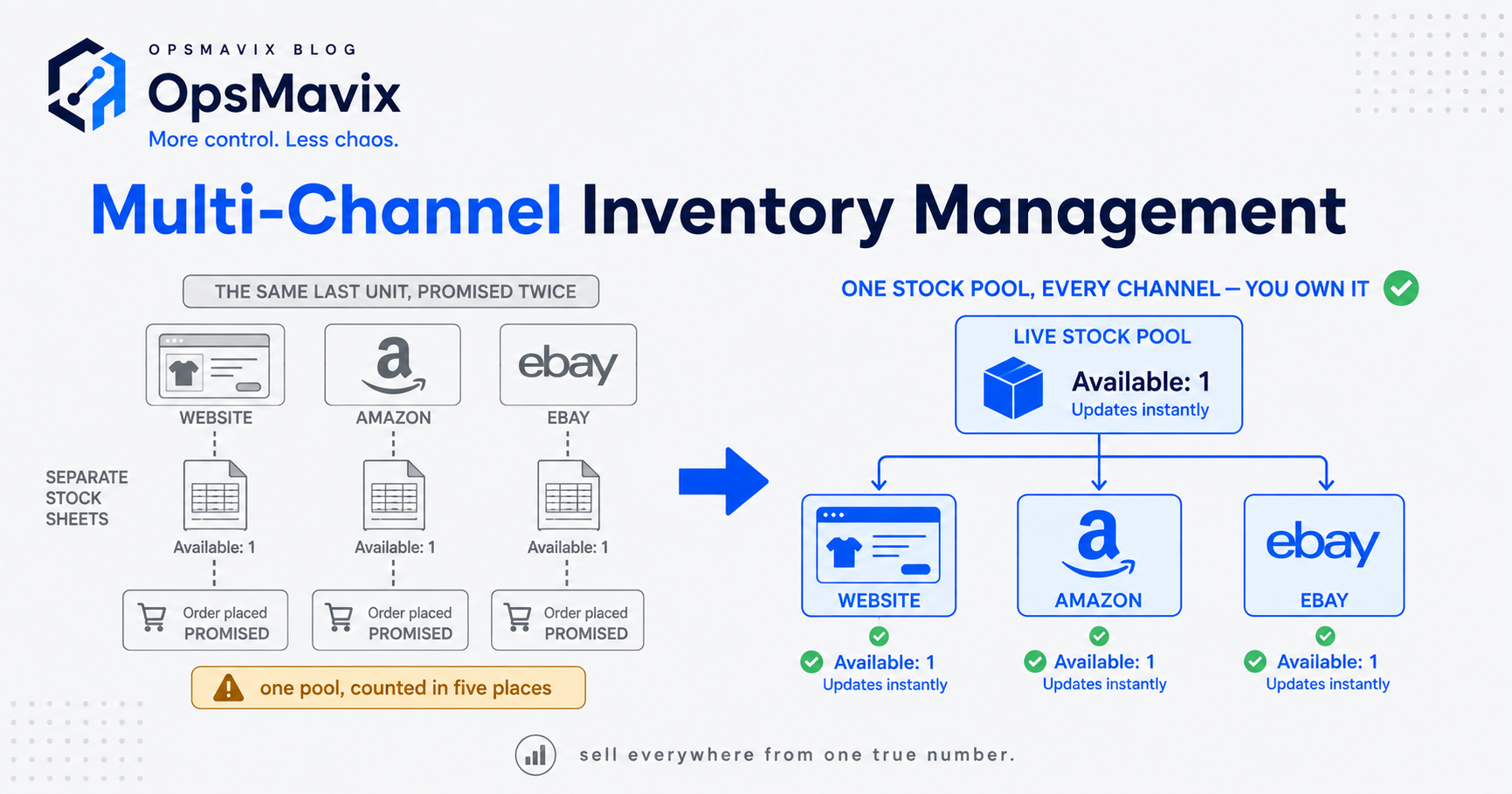
Multi-Channel Inventory Management: How to Run One Stock Pool Across Every Channel
Multi-channel inventory management is the practice of running every sales channel — your website, marketplaces, retail and wholesale — off one live stock figure instead of separate counts you reconcile by hand. This guide shows UK product businesses how to close the double-sell window without buying a bloated platform you'll never fully use.
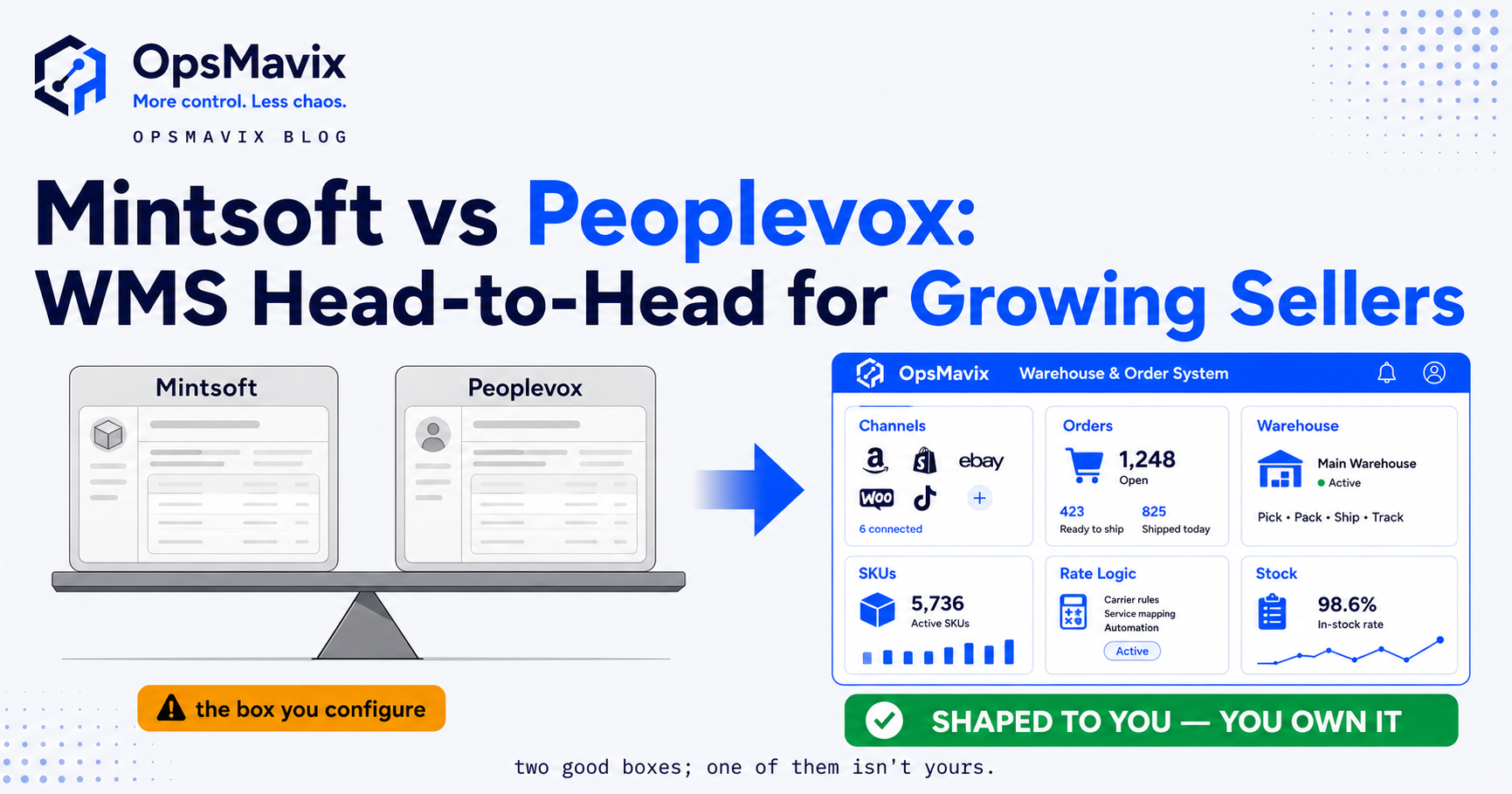
Mintsoft vs Peoplevox: Which Warehouse System Fits How You Actually Ship?
Mintsoft suits multi-client 3PLs and cost-conscious ecommerce warehouses; Peoplevox targets high-growth D2C brands that live and die by pick accuracy. Here is how the two differ on ownership, pricing shape and where each one stops.
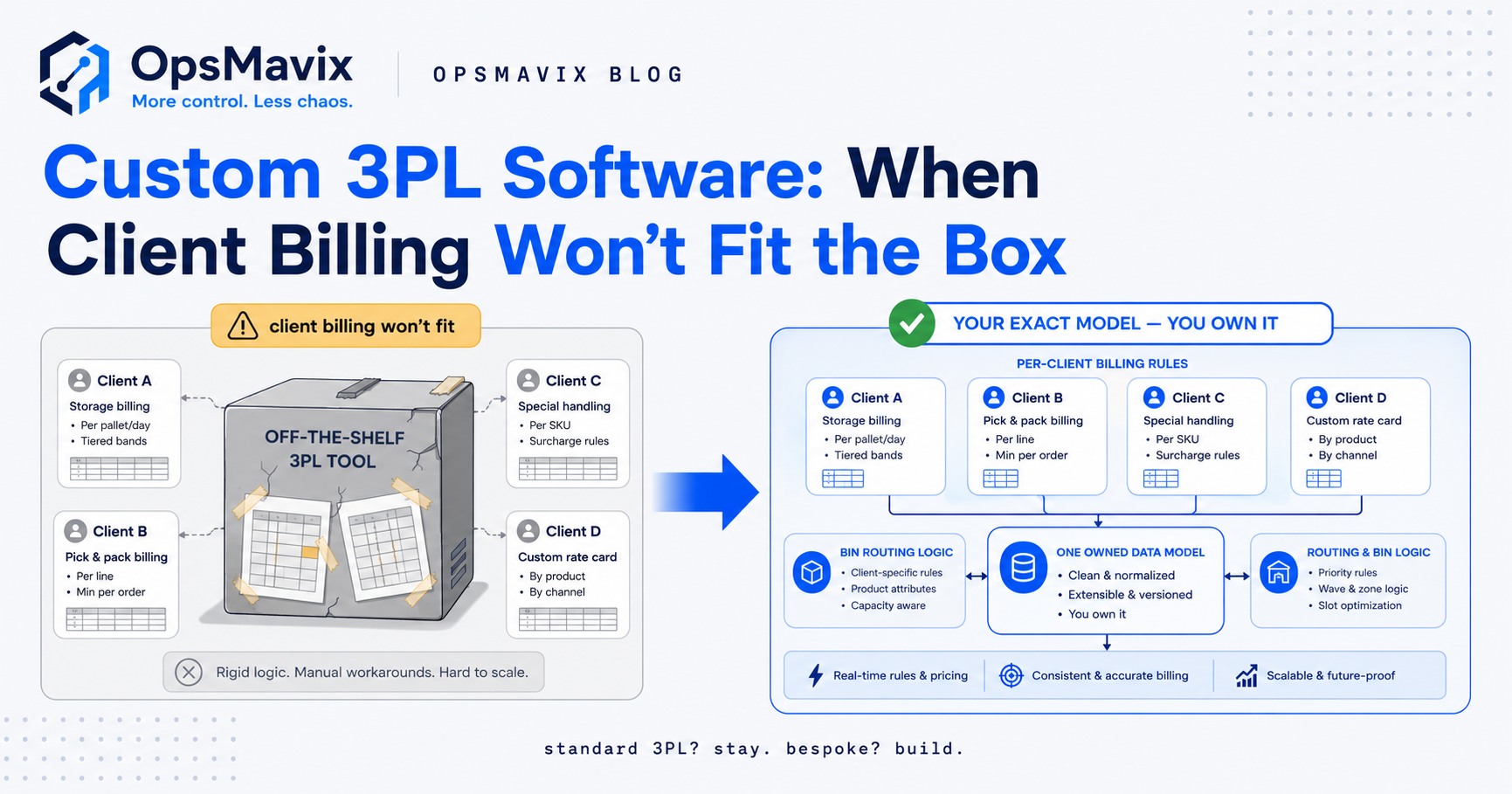
Mintsoft for 3PL: Where It Fits, and Where 3PLs Outgrow It
Mintsoft is built for 3PL and fulfilment work, and for a standard multi-client operation it fits well. The strain shows when a growing 3PL has client-billing rules the tool can't model, per-order costs that bite at volume, or reporting a client wants that won't come out. Here's where Mintsoft is genuinely the right call, and where owning your exact billing and bin logic wins instead.
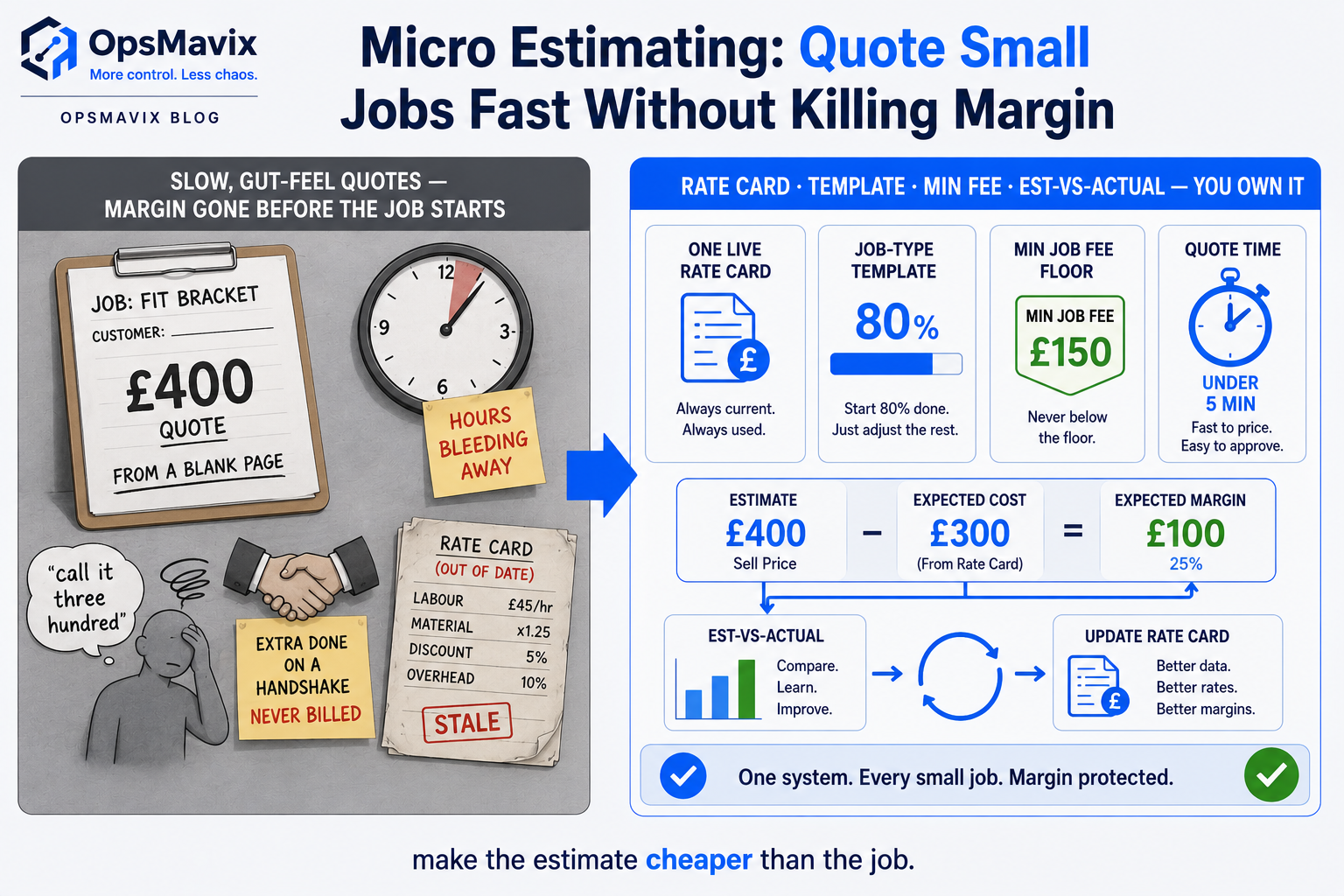
Micro Estimating: How to Quote Small Jobs Fast Without Killing the Margin
Micro estimating is the discipline of pricing small, frequent or repeat jobs fast — using standard rates, templates and unit costs so a £400 job doesn't need a £150 quote to win it. It's not a piece of software; it's a method for making the estimate cheaper than the work, protecting margin on the jobs most businesses quietly lose money on. Here's how the method actually runs, and the point where a spreadsheet stops being enough and a system earns its place.
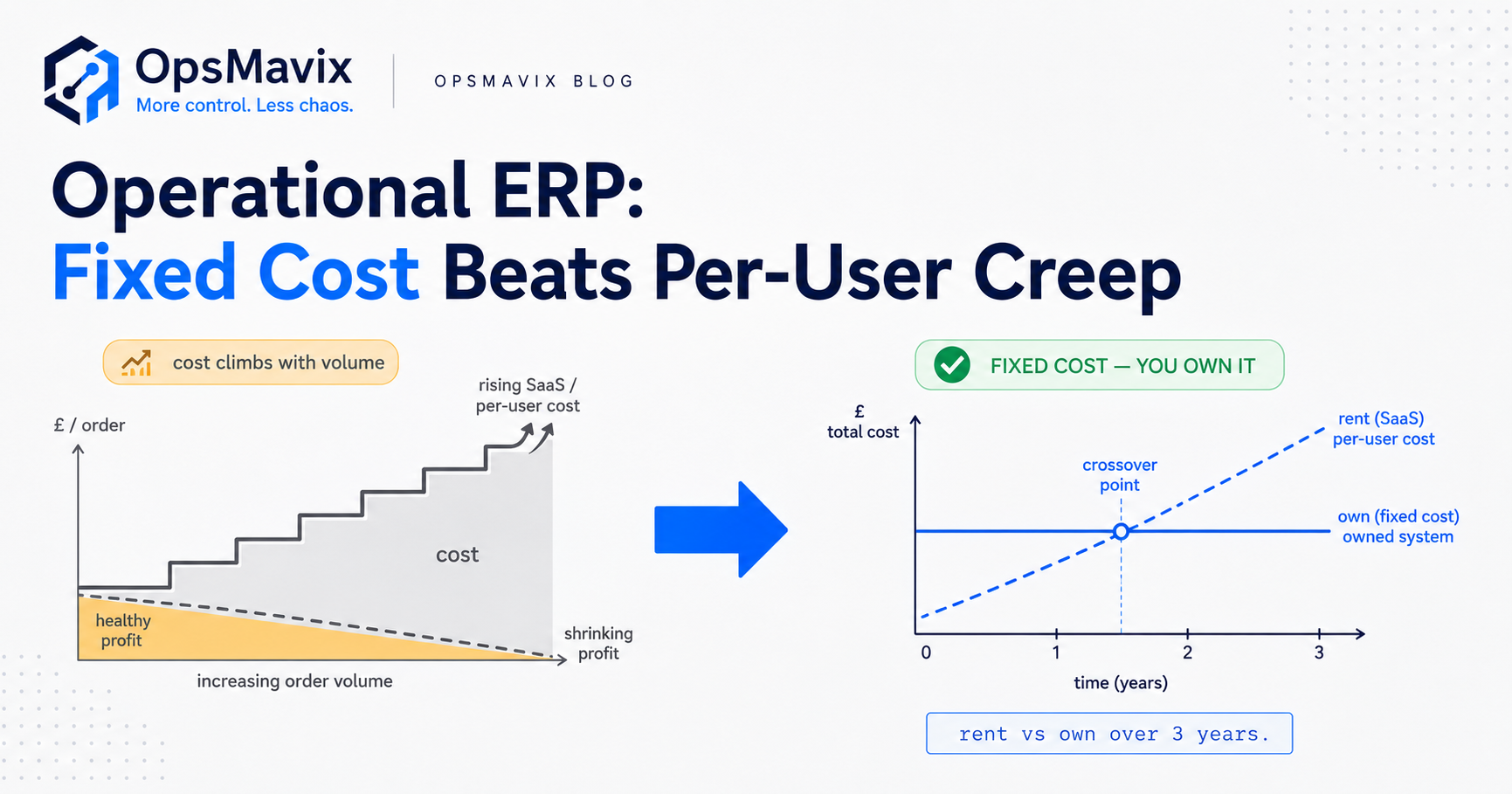
Mintsoft Pricing: What It Really Costs as You Scale
Mintsoft pricing is built around throughput — priced by order volume, banded tiers and paid modules rather than a flat licence — so the model stays cheap at low, steady volume and quietly turns a growing 3PL's success into a rising bill. Here's how the pricing structure actually works, the costs that never show on the headline quote, why per-order pricing fights a fulfilment operation as it scales, and the three-year point where a fixed-cost system you own becomes the cheaper answer than the one you rent.
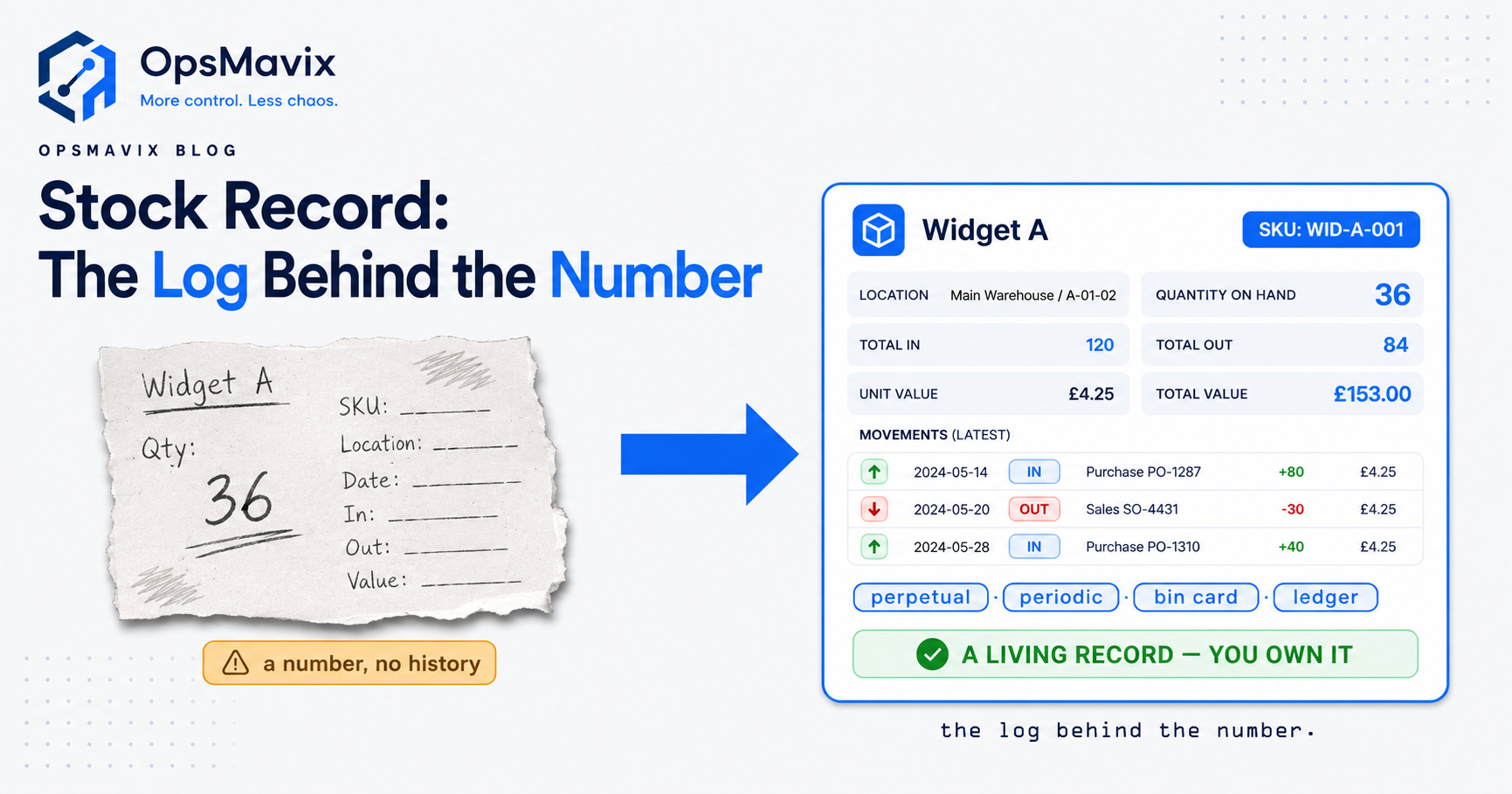
What Is a Stock Record? Contents, Types and Why It Matters
What is a stock record? It's the per-item log of what you hold, how it has moved, and what it's worth. Here's what a good stock record contains, the main types (perpetual vs periodic, the stock record card, bin card and stock ledger) and where most fall short of the shelf.
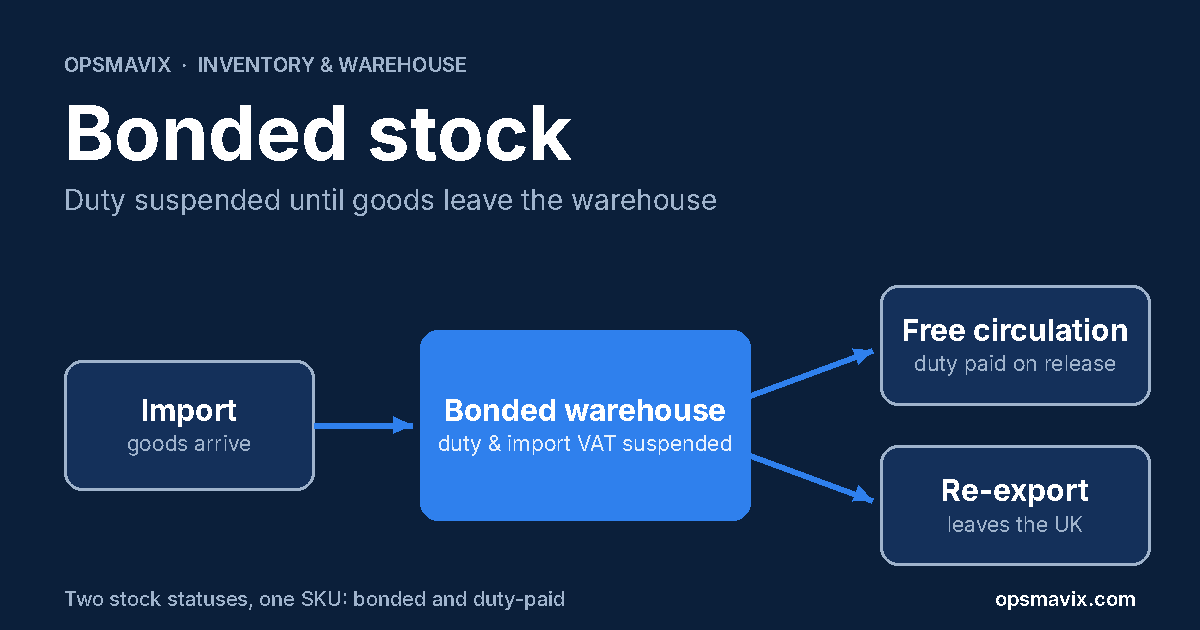
Bonded Stock: How Bonded Warehouses Work for UK Importers
Hold imported goods with duty suspended without losing control of stock. A UK guide to bonded stock, HMRC warehouse records and a worked GBP example.
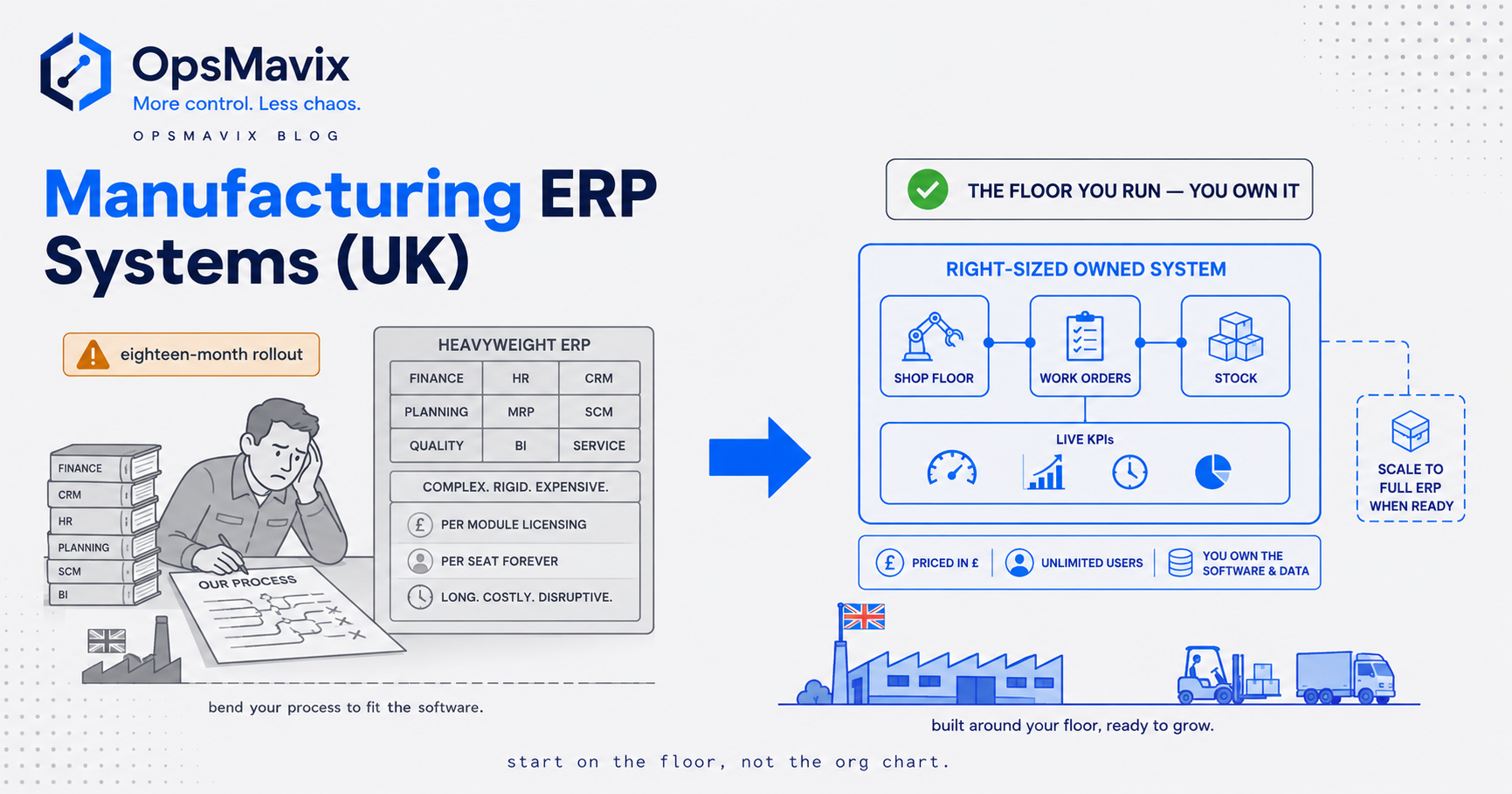
Manufacturing ERP Systems UK: Fit Before Features
A practical UK buyer's guide to manufacturing ERP systems: MRP, BOM, scheduling and the overbuy trap. Written for the shop that is outgrowing spreadsheets but not sure it needs a full ERP to fix a few floor-level problems.