
Micro Estimating: How to Quote Small Jobs Fast Without Killing the Margin
Micro estimating is the discipline of pricing small, frequent or repeat jobs fast — using standard rates, templates and unit costs so a £400 job doesn't need a £150 quote to win it. It's not a piece of software; it's a method for making the estimate cheaper than the work, protecting margin on the jobs most businesses quietly lose money on. Here's how the method actually runs, and the point where a spreadsheet stops being enough and a system earns its place.
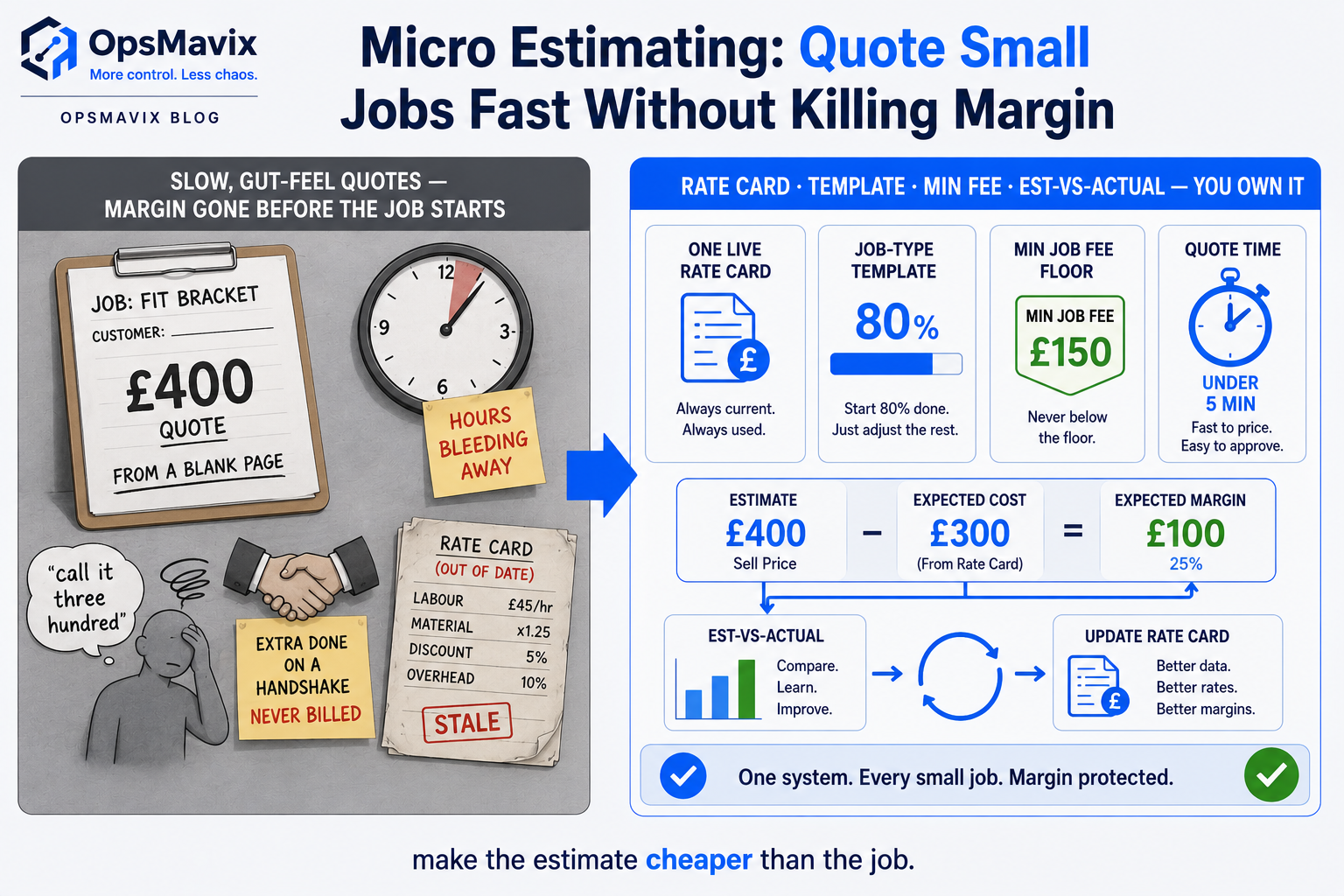
Micro estimating is the discipline of pricing small, frequent or repeat jobs fast — building the quote from pre-set rates, templates and unit costs instead of working each one up from scratch. The goal is blunt: make the estimate cost less than the job is worth. A £400 job can’t carry a £150 quote and still make money, so the whole method is about speed and repeatability without losing the margin. That’s a different thing from the software brand of the same name — you’ll find a “Micro Estimating” quoting product for machinists — but the discipline underneath applies to any business quoting a steady stream of small work: trades, installs, print, fabrication, repairs, service calls, fit-outs.
This post is about the method, not a tool roundup. If you want the landscape of packages, that’s quoting and estimating software. Here we’re on how to actually estimate small jobs quickly and profitably — the standard rates, the templates, the minimum fee, the estimate-versus-actual loop that keeps you honest — and the specific point where a spreadsheet stops holding it and a right-sized system earns its keep.
Key Takeaways
- Micro estimating is a method, not a product: pricing small and repeat jobs from standard rates and templates so the quote is fast and the margin survives.
- Small jobs are where margin quietly bleeds — the estimating time eats a bigger share of a small job’s value, so slow, bespoke quoting loses money on exactly the work you do most.
- The core moves: a rate card of standard unit costs, reusable templates for your common job types, a minimum job fee, and a target of a few minutes per estimate.
- Speed without a feedback loop is just fast guessing — every micro estimate has to meet its actual cost afterwards, or the rates drift out of date and the margin goes with them.
- A spreadsheet runs micro estimating fine until version-sprawl, stale rates and no estimate-versus-actual make it a liability — that’s the switch point, not the price of a licence.
What “Micro Estimating” Actually Means (Two Meanings, One That Matters to You)
Search the term and you’ll mostly hit a software brand — precision quoting software aimed at machine shops and fabricators, cycle-time calculators and process planning. That’s a real product for a real niche. But the reason most people reach for the phrase is the underlying job: estimating small work, at volume, without it swallowing your day.
That’s the meaning worth your attention. Micro estimating as a discipline is what a business does when it quotes twenty small jobs for every one big project — and can’t afford to build each quote from a blank page. It’s the standard-rate, template-driven, do-it-in-minutes approach to pricing work small enough that a slow estimate destroys the economics before the job even starts. Whether you buy a tool for it or run it in a sheet is a later question. First you need the method.
Why Small Jobs Are Where Margin Actually Leaks
Most businesses pour their care into the big quotes and wing the small ones. It feels rational — the big job is where the money is. It’s also backwards. A two-hour estimate on a £50k project is a rounding error. That same two hours spent quoting a £600 repair is the job’s whole margin, gone before you’ve lifted a tool.
Small jobs leak in three quiet ways. The estimating time is disproportionate to the job value, so unpriced admin eats the profit. The prices get guessed — “call it three hundred” — because doing it properly feels like overkill, and the guess is usually low. And the extras never get added: a small job grows a bit on site, the change gets done on a handshake, and it’s never billed because it wasn’t worth writing up. Across a year of small jobs, that quietly adds up to real money walking out the door.
The contrarian point OpsMavix will stand behind: your small jobs deserve more estimating discipline than your big ones, not less — because that’s where slow, sloppy, gut-feel quoting does the most damage per pound. Micro estimating is how you give them that discipline without giving them the time.
The Method: Making the Estimate Cheaper Than the Job
Micro estimating works by pre-deciding everything you can, so the estimate becomes assembly, not calculation. Four moving parts.
1. A rate card of standard unit costs
Build the prices once. Labour by the hour or half-day at your real loaded cost, common materials at current supply price, standard call-out or mobilisation, the typical add-ons. Now a quote is picking line items off a known list, not recalculating from raw inputs every time. The rate card is the spine of the whole method — get it right and every estimate inherits accuracy for free.
2. Templates for your common job types
You don’t quote infinite variety. You quote a dozen recognisable shapes of job with variations. Turn each into a template — the standard lines already in place, so you fill quantities and tweak, not build from blank. A boiler swap, a small fit-out, a standard print run, a bracket batch: each starts 80% done. This is where the minutes come from.
3. A minimum job fee
Below a certain size, no job is worth doing at your normal rate because fixed costs — the visit, the setup, the admin — swamp it. Set a floor and hold it. A minimum job fee stops you quoting yourself into loss-making tiny work, and it kills the temptation to undercharge just because the job feels small.
4. A speed target
If a micro estimate takes more than a few minutes, the method isn’t working — the rate card or the templates aren’t doing their job. Speed isn’t a nice-to-have here; it’s the entire point. The estimate has to cost less than the margin it’s protecting, or you’ve reinvented the slow quote you were trying to escape.
Speed Without a Feedback Loop Is Just Fast Guessing
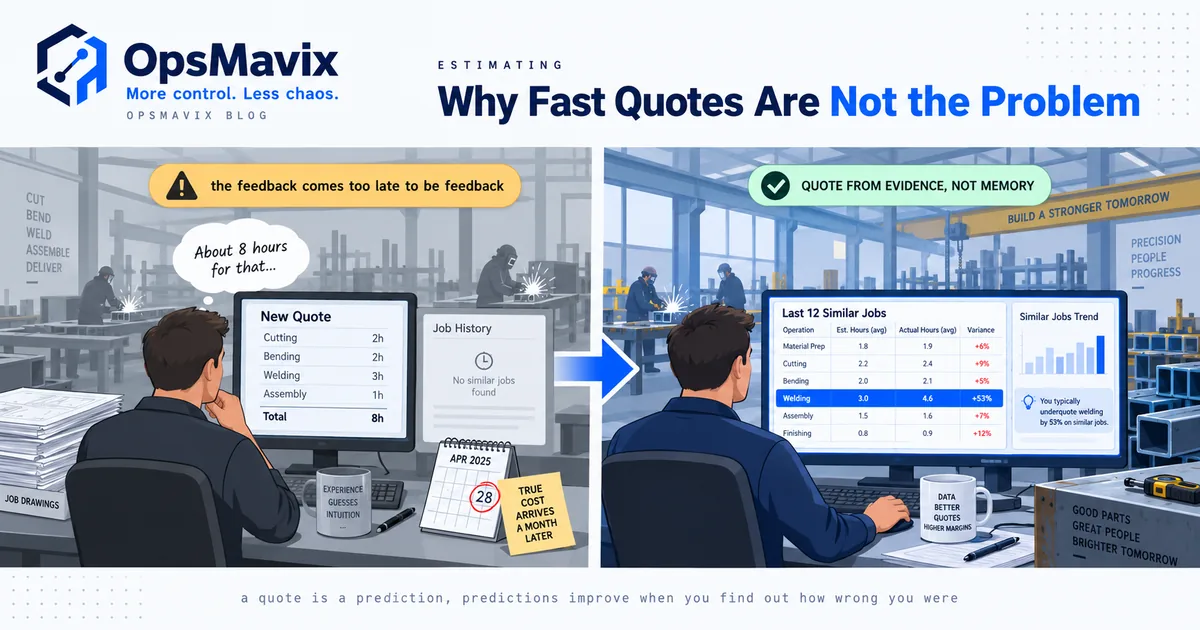
Here’s the trap that catches everyone who gets the fast part right: rates go stale. Your loaded labour cost creeps. Supply prices move. The template that made money last year now quietly loses it, and because the estimate is fast and confident, nobody notices until the year’s numbers come in thin.
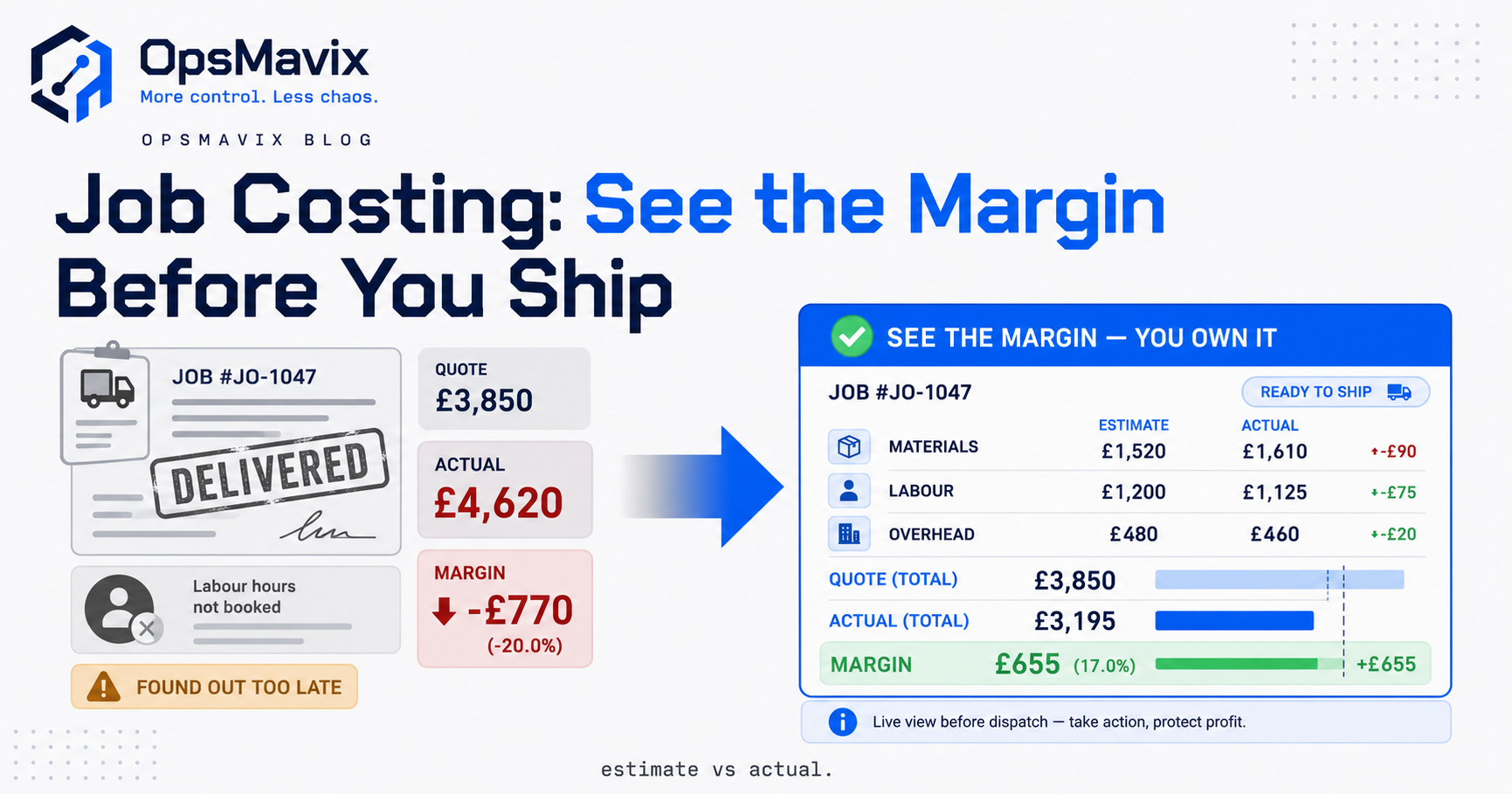
The fix is the estimate-versus-actual loop. Every micro estimate has to meet what the job actually cost — planned hours against logged hours, quoted materials against what got used. Do that and two things happen: your rate card stays true because reality keeps correcting it, and you find out which job types are underpriced instead of guessing. This is exactly where micro estimating stops being a quoting trick and becomes a margin system — and it’s the same loop that job costing software and project profitability tracking are built around. A fast estimate with no actual behind it is a decision you never checked.
When a Spreadsheet Stops Being Enough
A spreadsheet runs micro estimating perfectly well at first — a rate card tab, a template tab, done. Don’t over-buy before you need to. The honest switch point isn’t a price threshold; it’s when the spreadsheet starts costing you more than it saves.
You’ve hit it when: nobody’s sure which version of the rate card is current, so quotes go out on last year’s prices. When two people quoting off two copies price the same job differently. When the estimate lives in the sheet but the actual cost lives in the accounts and the two never meet, so estimate-versus-actual is a manual reconciliation nobody does. When a small job’s extras get lost between the quote and the invoice. That’s not a spreadsheet doing its job — it’s a spreadsheet that’s become a liability, and the leak now has a number on it.
A right-sized system fixes the specific failure, not “estimating” in the abstract. One live rate card everyone quotes from, so prices can’t drift per-person. Templates that produce a consistent estimate in minutes. The estimate carried through to the actual so the loop closes automatically, feeding the project profitability view that shows which job types make money and which you should stop quoting cheap. You own it, sized to how you actually quote — not an enterprise estimating suite built for someone ten times your size, and not a 47-tab spreadsheet only one person understands.
When to Keep It Simple (the Honest Bit)
Micro estimating doesn’t always need building. If you quote a handful of small jobs a week, your prices are stable, and one person owns the rate card, a clean spreadsheet is the right tool — stay there. The method matters more than the machinery: a disciplined rate card and a minimum fee in Excel beats a fancy estimating tool used sloppily every time.
Build the system when the volume, the number of people quoting, or the pace of price changes makes the spreadsheet a source of errors rather than a shortcut — and when the estimate-versus-actual loop is worth automating because you’re leaving real money on small jobs you can’t see. Switch when the leak outgrows the fix, not before.
FAQ
What is micro estimating?
Micro estimating is the method of pricing small, frequent or repeat jobs quickly using standard rates, templates and unit costs, rather than building each quote from scratch. The aim is to make the estimate cost less than the job’s margin — fast enough that quoting a £400 job doesn’t eat the profit, consistent enough that the price is still right. There’s also a software brand called Micro Estimating aimed at machine shops, but the discipline applies to any business quoting a steady flow of small work.
How do you estimate small jobs quickly without losing accuracy?
Pre-decide everything you can. Build a rate card of standard unit costs — loaded labour, common materials, call-out — so a quote is picking line items, not recalculating. Turn your common job types into templates that start 80% complete. Set a minimum job fee so tiny work can’t quote below cost. Then keep it accurate with an estimate-versus-actual loop, so real job costs correct your rates before they drift. Speed comes from the templates; accuracy comes from the feedback.
What is a minimum job fee and why does it matter?
A minimum job fee is a price floor below which you won’t take a job, because fixed costs — the visit, the setup, the admin — swallow the margin on very small work. It matters because small jobs feel like they should be cheap, and that instinct pushes you to undercharge into a loss. Holding a floor stops the smallest jobs from being the ones that quietly cost you money.
When should I move from a spreadsheet to an estimating system?
Move when the spreadsheet starts causing errors instead of saving time: nobody’s sure which rate card is current, different people quote the same job differently, or the estimate never meets the actual cost so you can’t tell which job types make money. Until then, a disciplined spreadsheet is fine — the method matters more than the tool. Build the system when the leak from stale prices and blind estimate-versus-actual is worth more than the cost of fixing it.
How OpsMavix Can Help
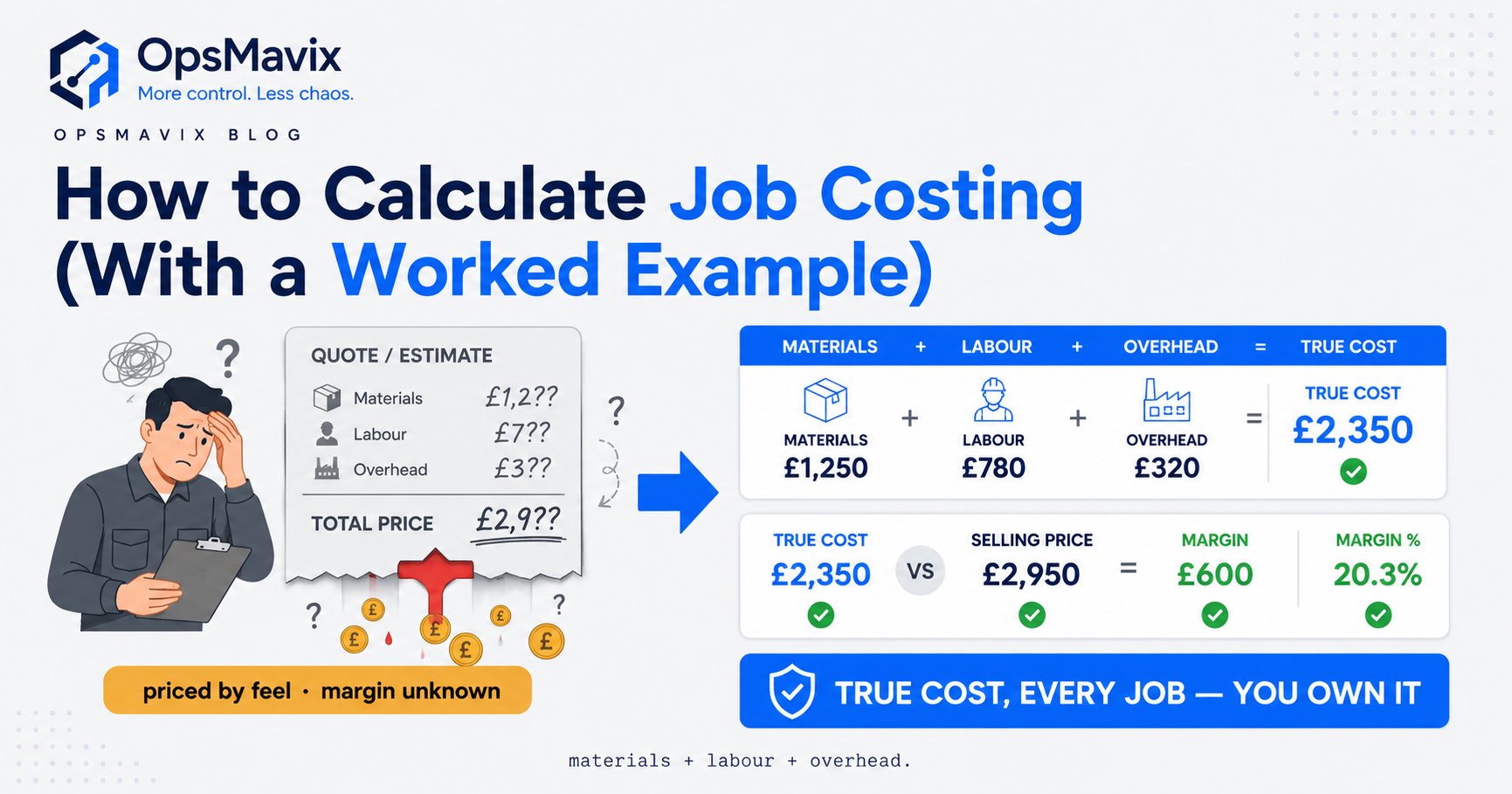
OpsMavix builds right-sized systems for businesses stuck in the gap — too messy for a spreadsheet, not ready for an enterprise estimating suite. For micro estimating that means the parts you actually run: one live rate card everyone quotes from so prices can’t drift, templates that turn your common job types into a consistent estimate in minutes, a minimum job fee that holds, and the estimate-versus-actual loop that carries each quote through to what the job really cost — so your standard prices stay true and you can see which small jobs make money. It joins to job costing and rolls up into the same planned-versus-actual view project profitability tracking brings together. You own it, sized to how you quote — no per-seat penalty, nothing a vendor can switch off.
If you’re quoting small jobs by gut and a rate card you haven’t touched in a year, start by seeing where the estimating actually leaks. Book a Free Operations Leak Audit and we’ll map where slow quotes, stale rates and unbilled extras cost you margin today, what it’s worth to close, and whether a disciplined spreadsheet or a right-sized system is the honest fit for how you quote now.
Keep reading
Getting value from OpsMavix? Add us as a preferred source on Google — you'll see more of our operations content in your AI Overviews, AI Mode and Search.