
Mintsoft Competitors: The 3PL & Multichannel OMS Landscape (and Where a Build Fits)
Mintsoft competitors split into a few camps — 3PL fulfilment platforms like Fulfillor, multichannel order tools like Linnworks and Veeqo, and the heavier enterprise tier of OrderWise and full ERP/WMS suites. This is an even-handed map of who each one suits and where it stops, a straight Fulfillor vs Mintsoft comparison, when a 3PL should stay on Mintsoft versus look elsewhere, and where a custom build fits for operations that have outgrown the box.
Mintsoft competitors fall into a few clear camps, and knowing which camp you’re shopping in matters more than any single feature list. Mintsoft is a UK cloud order and warehouse system, now part of the Access Group, built largely for third-party logistics providers (3PLs) and multichannel sellers — it packages order management, stock sync and warehouse fulfilment into one product. The tools people compare it against aren’t all the same kind of thing: some are pure 3PL fulfilment platforms, some are multichannel listing-and-order layers, and some are heavier enterprise systems that do far more than fulfilment. Line them up as if they were interchangeable and you’ll pick badly.
This post maps the landscape honestly. We’ll walk the main named rivals — Fulfillor, Linnworks, Veeqo, Mintsoft itself, and the enterprise tier of OrderWise and full ERP/WMS suites — by who each suits, what it’s good at, and where it stops. We’ll do a straight Fulfillor vs Mintsoft comparison, cover when a 3PL should stay on Mintsoft versus look elsewhere, and end on the third option most roundups skip: a system built around how you actually take orders and move stock, for operations that have outgrown the box. No fake pricing, no invented feature claims — just where each fits.
Key Takeaways
- Mintsoft competitors sit in three camps — 3PL fulfilment platforms (Fulfillor), multichannel order/inventory tools (Linnworks, Veeqo), and the enterprise tier (OrderWise and full ERP/WMS suites) — so “best alternative” depends on which camp your problem is in.
- Fulfillor vs Mintsoft is a 3PL-versus-3PL fight: both are aimed at fulfilment operations that bill clients, so the deciding factors are onboarding, client-billing depth, integrations you actually need, and total cost as you scale.
- Linnworks and Veeqo are the multichannel camp, not 3PL platforms — strong for a seller syncing marketplaces and shipping, weaker if your real job is running a warehouse for other people’s stock.
- The OrderWise-and-enterprise-suite tier is the top answer — broad and powerful, right when you genuinely need full ERP-grade breadth, overkill (and heavy to run) when you don’t.
- A 3PL stays on Mintsoft when its template matches how you bill and fulfil; it looks elsewhere when client billing, odd intake, or volume-banded pricing that climbs as you scale start fighting the operation.
- The third option is a build — a system shaped to your channels, pricing and flow that you own outright — for businesses patching a packaged tool’s gaps with spreadsheets.
The Mintsoft Competitor Landscape, in Three Camps
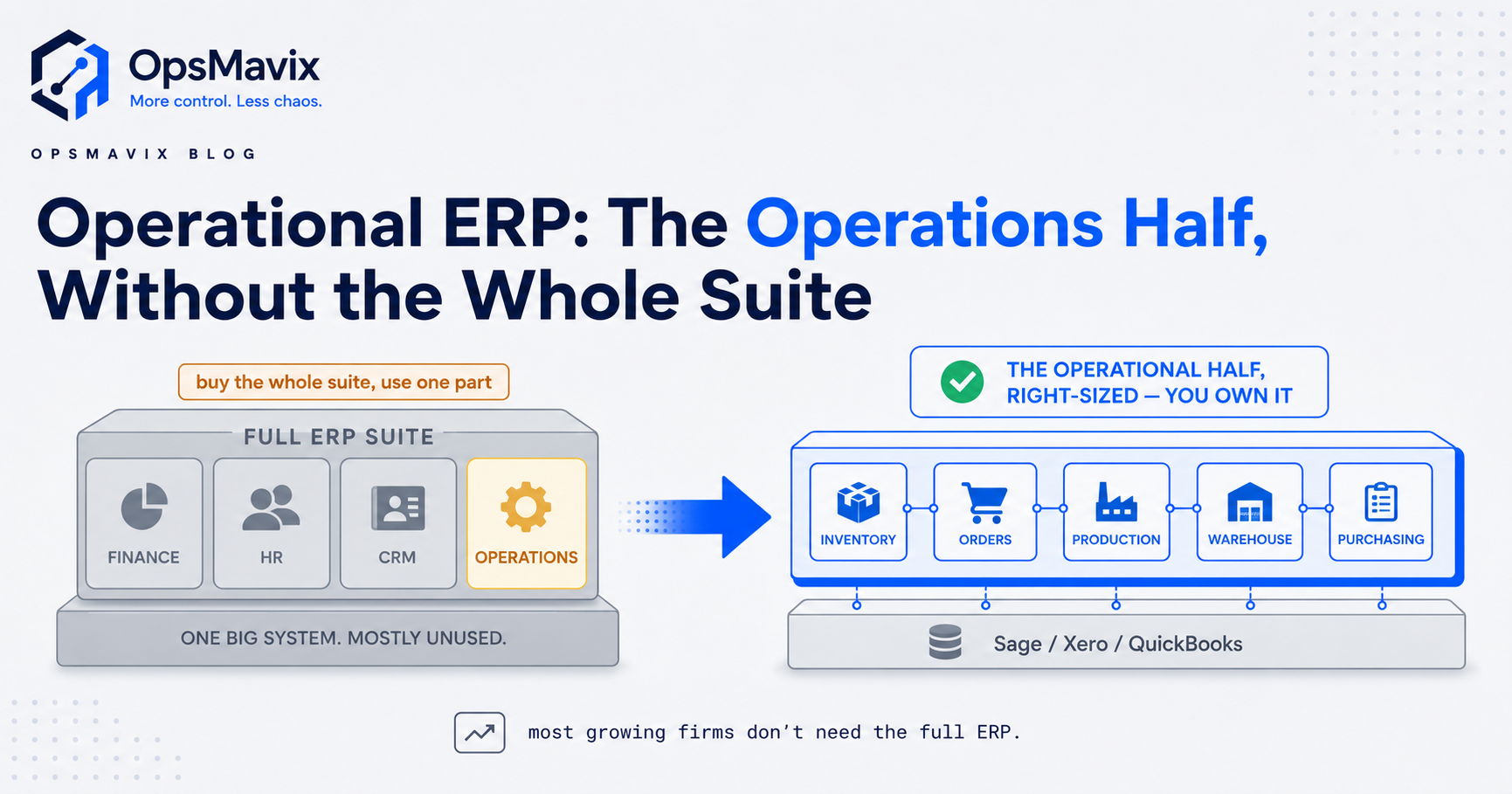
Before comparing names, sort the market. The first camp is 3PL fulfilment platforms — software whose core job is running a warehouse that fulfils orders for other businesses, with client accounts, storage and pick-fee billing, and multi-client stock separation. Mintsoft lives largely here, and so does Fulfillor. If you’re a logistics provider, this is your camp.
The second camp is multichannel order and inventory tools — software whose core job is a seller taking orders across marketplaces and their own store, keeping stock synced, and pushing dispatch. Linnworks and Veeqo sit here. They overlap with the 3PL camp at the edges (both touch orders and stock) but they’re built for the seller, not the fulfilment provider. The third camp is enterprise systems — OrderWise and comparable full ERP/WMS suites — broad platforms that fold order and warehouse management into a much larger operational or ERP-grade suite. The mistake that wastes weeks of evaluation is comparing a camp-one tool to a camp-three tool on price, or expecting a camp-two seller tool to run a camp-one 3PL. Name your camp first.
Mintsoft Itself — What It Is and Who It Suits
Start with the incumbent, fairly. Mintsoft gives 3PLs and multichannel sellers a packaged, cloud-based way to take orders across marketplaces and stores, keep stock synced, and run warehouse pick-and-ship from one place, with the client-billing and integration breadth a fulfilment operation needs. As part of the Access Group it sits alongside a wider stack, which matters if you want other Access products to join up. For a 3PL whose billing and fulfilment fit its shape, or a multichannel seller whose channels and dispatch match the template, it does a genuine job — and replacing working software you fit cleanly is its own kind of leak.
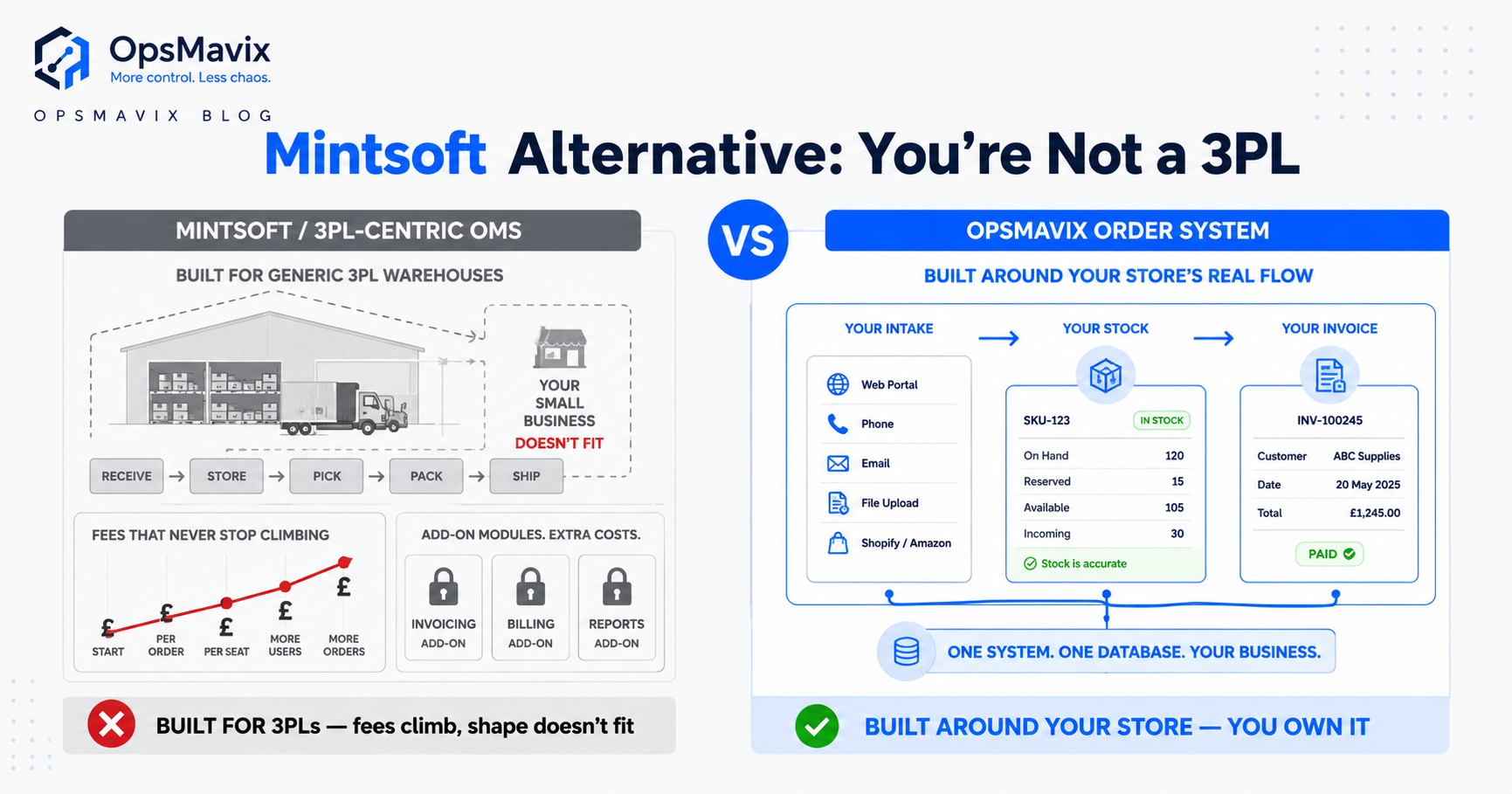
Where it stops is the edge of that template. When your intake doesn’t arrive as tidy marketplace feeds, when a customer-specific price tier or a bundle drawn from several SKUs has no clean home, or when volume-banded pricing that climbs as you scale starts taxing the volume you worked to win, the fit frays. That’s the exact terrain of the single-tool question, covered in depth in our Mintsoft alternative piece; here we’re mapping the whole field around it rather than one swap.
Fulfillor vs Mintsoft (the 3PL Head-to-Head)
This is a comparison buyers commonly weigh, because it’s a like-for-like fight: both Fulfillor and Mintsoft are aimed at 3PL and fulfilment operations that manage stock and orders for client businesses. Fulfillor is a cloud warehouse and 3PL platform built around the same core needs — multi-client inventory, order and fulfilment workflow, billing for storage and handling, and marketplace/courier integrations. Neither is exotic; they’re two products chasing the same buyer, which is why the decision comes down to fit and cost rather than category.
So judge them on the things that separate similar tools. Onboarding and setup effort — how fast you can get clients, SKUs and channels live without a long implementation. Client-billing depth — whether the storage, pick-fee and surcharge model matches how you actually invoice, because a 3PL lives or dies on getting client bills right. Integrations you genuinely use — not the length of the list, but whether your specific marketplaces, couriers and accounting tool are covered cleanly. Support and reliability — an order desk can’t wait days on a ticket. And total cost as you scale, because volume-banded or per-client pricing that looks fine at launch can climb into the thing you resent. Run a real pilot with your own orders through both; a demo with clean sample data hides exactly the quirks that will bite you.
Linnworks — the Multichannel Order Layer
Linnworks is a different camp, and worth understanding as such. It’s a UK multichannel order and inventory management platform aimed at sellers who list across marketplaces (Amazon, eBay, and the like) and their own store, and want orders and stock centralised so channels don’t drift apart. Its strength is breadth of channel connections and the order-processing workflow around them — it’s built for the seller juggling listings, not the 3PL billing clients for storage.
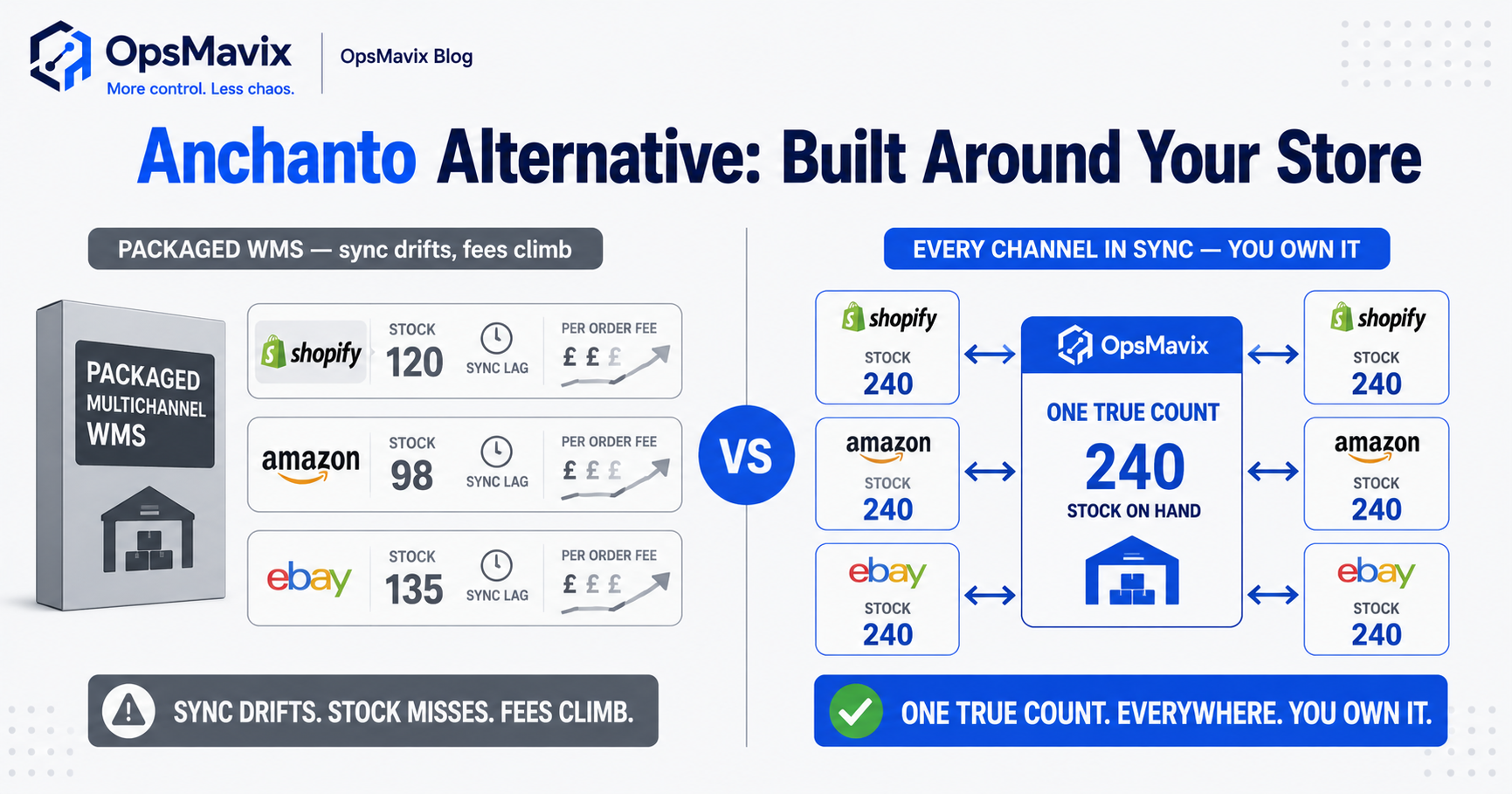
That’s also its ceiling relative to Mintsoft. If your real job is running a warehouse for other businesses’ stock, a seller-focused multichannel tool isn’t shaped for client accounts and fulfilment billing. And like any packaged sync tool, its promise holds while the sync holds — when two channels both sell the last unit and the numbers diverge, you’re back to the drift that no amount of listing power fixes. That overselling problem has its own deep-dive in how to stop overselling on Shopify, Amazon and eBay. Linnworks suits a multichannel seller who fits its shape; it’s the wrong camp for a fulfilment provider.
Veeqo — the Amazon-Owned Option
Veeqo is the other well-known name in the multichannel camp, and it comes with a distinctive wrinkle: it’s owned by Amazon, which shifted its model and pricing after the acquisition. It handles multichannel inventory and, notably, shipping — connecting a seller’s channels and streamlining dispatch and courier rates. For a smaller multichannel seller who wants order sync and shipping in one place, that bundle is attractive, and the Amazon backing changes the commercial picture from the subscription norm.
The trade-offs are the ones that come with any platform you don’t control, sharpened by ownership. Being inside Amazon’s ecosystem is a strength if that’s where you live and a consideration if you’d rather not tie your fulfilment tooling to a marketplace you also compete on. And like Linnworks, it’s a seller’s tool, not a 3PL platform — it’s not built to run client-billed fulfilment. Feature direction and pricing sit with the owner, not you, which is the standing reality of any packaged option in this camp. Veeqo suits a multichannel seller comfortable in Amazon’s orbit; it’s not the answer for a logistics provider.
The OrderWise and Enterprise-Suite Tier
At the top of the landscape sit the enterprise systems — OrderWise (owned by Forterro) and comparable full-suite platforms that fold order and warehouse management into much broader operational or ERP-grade functionality: purchasing, manufacturing, accounting integration, deeper stock control. When you genuinely need that breadth — multiple sites, complex supply, functions well beyond fulfilment — this tier is the right answer, and stepping up to it is a legitimate move, not a failure.
The honest caution is weight. Enterprise systems bring implementation projects, ongoing cost, and a surface area far larger than a focused fulfilment operation needs. Buying the enterprise tier to solve a fulfilment-shaped problem means paying for — and running — a great deal you’ll never touch, and the implementation can stall on its own complexity. This is the classic over-correction from a tool that felt too small: leaping straight to the tool that’s too big. The middle ground between the outgrown box and the enterprise suite is exactly where most operations actually belong, and it’s the terrain covered in B2B order management for wholesalers.
When a 3PL Runs on Mintsoft vs Looks Elsewhere
For a 3PL specifically, the decision has a clean line. Stay on Mintsoft when its template matches how you operate: you bill clients for storage and fulfilment in a way its model supports, your intake arrives as structured channel feeds, your integrations are covered, and the pricing still rewards you as volume grows. If that’s you, it’s doing the job it was built for, and churn for its own sake is a leak — switching working software costs time, data migration and retraining you won’t get back cheaply.
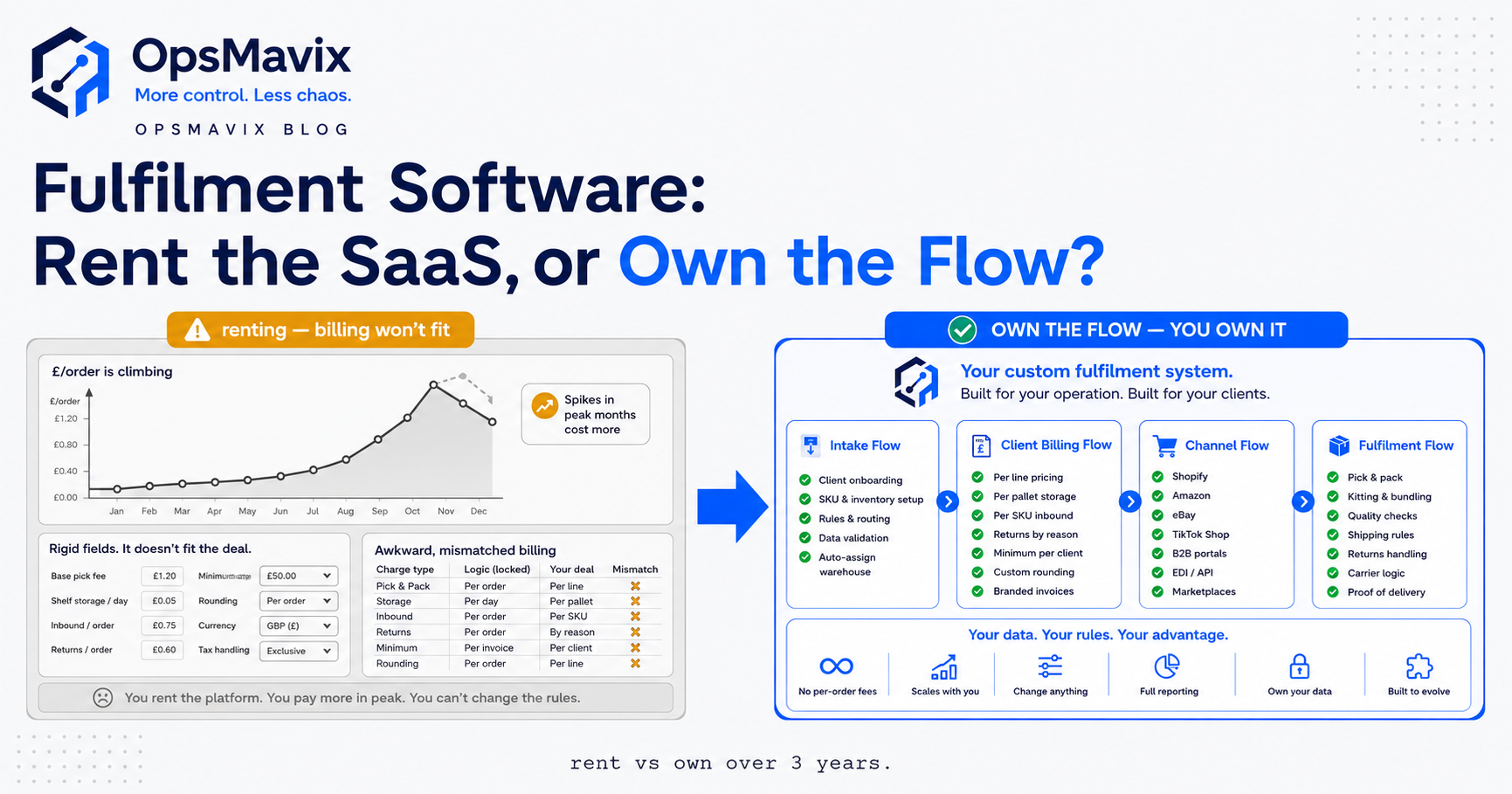
Look elsewhere when the platform starts fighting the operation. The tells are consistent: a client-billing model that doesn’t match how you actually invoice, so you patch it with a spreadsheet on the side; intake that arrives by email, phone or a client portal the product has no clean field for; odd cases — special tiers, bundles, pre-orders — that need workarounds every time; and volume-banded pricing that climbs faster than the value as you scale, so you feel taxed for growing. When those become your normal week rather than the exception, you’ve outgrown the template, not the category — and the choice is another packaged tool in the same camp, or a system built around your actual flow. For a 3PL, the “mintsoft 3pl” question is really: does the box still fit the way we run, or are we bending the operation to fit the box?
The Landscape at a Glance
| Option | Camp | Best fit | Where it stops |
|---|---|---|---|
| Mintsoft | 3PL / multichannel platform | 3PLs and sellers who fit the template | Odd intake, tiers/bundles, pricing that climbs with volume |
| Fulfillor | 3PL fulfilment platform | 3PLs wanting a Mintsoft-class alternative | Same camp — decide on onboarding, billing depth, cost |
| Linnworks | Multichannel seller tool | Sellers syncing marketplaces + store | Not built for client-billed 3PL fulfilment |
| Veeqo | Multichannel seller tool (Amazon-owned) | Smaller sellers wanting sync + shipping | Marketplace-owned; not a 3PL platform |
| OrderWise and enterprise suites | Enterprise suite | Multi-site, ERP-grade breadth | Heavy and costly for a fulfilment-only need |
| Built-for-you system | Custom | Operations patching gaps with spreadsheets | Not an off-the-shelf quick start |
The Third Option: a Build for Those Who’ve Outgrown the Box
Every roundup treats this as a choice between packaged tools. It usually is — until none of them fit without a spreadsheet propping up the gaps. When you’re patching a platform month after month because your intake, pricing or fulfilment has quirks the product can’t hold, the real alternative isn’t another box in the same camp; it’s a system built around how you actually take orders and move stock, that you own outright. Orders entered once off whatever they arrive on — fax, email, phone, portal — and validated against your real catalogue so wrong amounts can’t slip through. Customer-specific price tiers built into the flow, not held in someone’s head. One true stock figure every channel reads from, so a sale anywhere updates the count everywhere and you stop overselling what you don’t have.
The point isn’t that packaged tools are bad — it’s that a build is right-sized to your operation instead of a template you bend to. It sits deliberately between the outgrown box and the heavy enterprise suite: the part of an OMS you’ll actually use, shaped to your flow, with no bill that climbs as you scale and nothing a vendor can reprice or switch off. For a smaller operation that just needs orders taken cleanly, an online ordering system for small business is the lighter end of the same idea; for stock that keeps drifting between channels and the shelf, custom inventory systems are the spine. A build is the third option precisely for the businesses none of the boxes fit.
FAQ
Who are the main Mintsoft competitors?
They split into three camps. In the 3PL fulfilment camp, Fulfillor is the closest like-for-like — a cloud warehouse/3PL platform aimed at the same buyer. In the multichannel seller camp, Linnworks and Veeqo (the latter owned by Amazon) centralise orders and stock across marketplaces and stores. At the enterprise end, OrderWise (owned by Forterro) and comparable full suites fold fulfilment into much broader ERP-grade functionality. Which is the real competitor depends entirely on whether your problem is 3PL fulfilment, multichannel selling, or full-suite operations.
Fulfillor vs Mintsoft — how do I choose?
Both are 3PL fulfilment platforms chasing the same buyer, so the category doesn’t decide it — fit does. Compare onboarding speed and setup effort, how well each one’s client-billing model matches how you actually invoice for storage and handling, whether your specific marketplaces and couriers are cleanly integrated, support responsiveness, and total cost as your volume scales. Run a real pilot pushing your own orders through both; sample data hides the quirks that decide it in practice.
Is Mintsoft good for a 3PL?
Yes, when its template matches how you operate — client billing its model supports, structured intake, the integrations you need, and pricing that still rewards you as you grow. It’s built substantially for 3PLs, so for many it’s a solid fit. You look elsewhere when client billing doesn’t match how you invoice, intake arrives in forms the product can’t hold, odd cases need constant workarounds, or volume-banded pricing climbs faster than the value. At that point the box no longer fits how you run.
Are Linnworks and Veeqo the same kind of tool as Mintsoft?
Not quite. Linnworks and Veeqo are multichannel seller tools — built for a business selling across marketplaces and its own store, centralising orders and stock and (for Veeqo) shipping. Mintsoft leans more toward 3PL fulfilment, with client accounts and storage/pick-fee billing. They overlap on orders and stock but answer different questions: one is for the seller, the other for the fulfilment provider. Buy for the question you’re actually asking.
When should I build a custom system instead of picking one of these?
When you’ve outgrown the box: you keep spreadsheets alongside the platform to cover price tiers, bundles or odd order channels; your stock drifts between channels and the shelf; you’re re-keying orders the product can’t take cleanly; and volume-banded pricing rises faster than the value as you grow. That’s the signal your operation has passed the template, not that you’re running it badly — and a system shaped to your flow, owned by you, closes the gap the packaged tools keep reopening.
How OpsMavix Can Help
OpsMavix builds multichannel inventory systems and wholesale order management shaped to how you actually take orders and move stock — orders entered once off fax, email, phone or a portal and validated so wrong amounts can’t ship, customer price tiers built into the flow, and one true stock figure mirrored live across every channel so you can’t sell what you don’t have. It sits between the packaged box you’ve outgrown and the enterprise suite that’s too heavy: the part of an OMS you’ll actually use, right-sized to your operation, with no bill that climbs as you scale and nothing a vendor can switch off, because you own it.
If you’ve mapped the Mintsoft competitors and none of them fit without a spreadsheet holding the gaps together, that middle ground is exactly what we build. Book an Operations Leak Audit and we’ll map where your order intake, stock sync and fulfilment break down today, what it’s costing you, and whether a build is genuinely the honest fit — or whether one of the boxes still does the job. We’ll tell you straight.
Keep reading
Getting value from OpsMavix? Add us as a preferred source on Google — you'll see more of our operations content in your AI Overviews, AI Mode and Search.