
Commercial Invoice: What It Is and What to Put on One (UK)
What a commercial invoice is, when UK importers and exporters need one, what goes in each field, how VAT and Incoterms appear, and a worked export example.
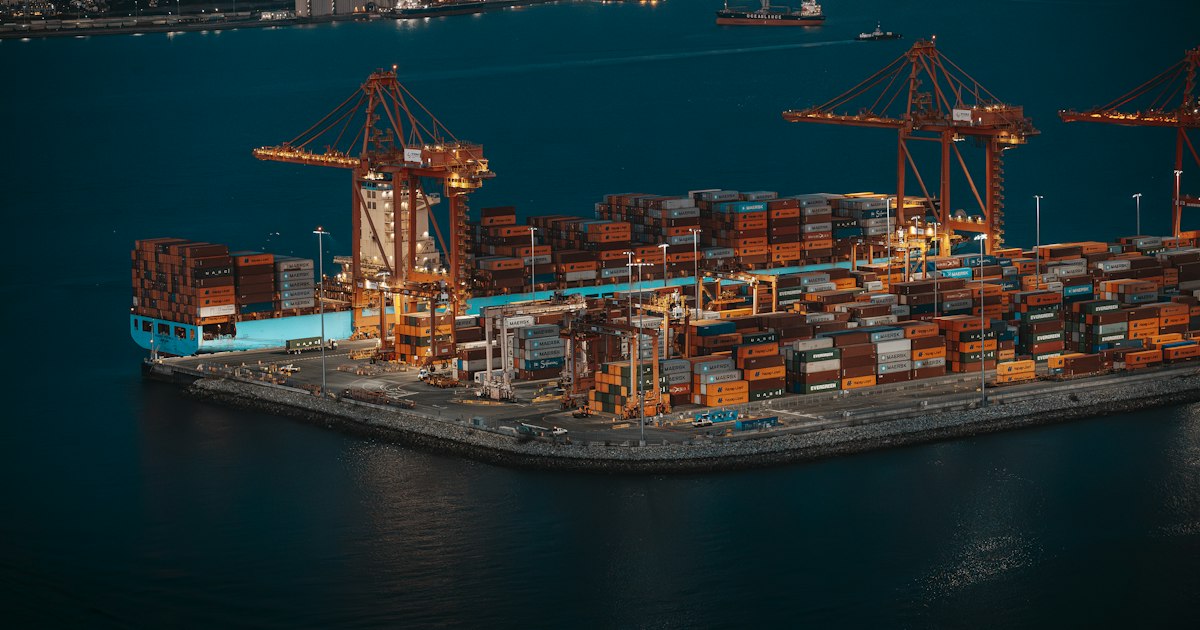
A commercial invoice is the seller’s invoice for goods that cross a customs border. It tells customs and the carrier who sold what to whom, what the goods are, where they were made and what they are worth. Those details feed the customs declaration, which decides the duty and import VAT.
This is general information from HMRC, government and carrier pages checked on 26 November 2026, not customs or tax advice. Rules vary by product and destination, so check with your customs agent or carrier.
What is a commercial invoice?
It is the invoice an exporter raises when it sells goods to a buyer in another customs territory, with detail a domestic invoice does not need. FedEx’s UK guidance calls it the main document customs agencies use for import control, valuation and duty (FedEx UK).
Customs use it for three things:
- Value. For UK imports, the customs value is normally the price paid or payable, which HMRC calls Method 1. HMRC says to use the seller’s invoice as evidence of that price (valuation Method 1).
- Classification. The description lets the declarant choose the commodity code, which sets the duty rate (commodity codes).
- Origin. Where the goods were made decides whether a lower duty rate under a trade agreement can be claimed (proof of origin).
When do you need a commercial invoice?
- Exporting from Great Britain to any country outside the UK, including the EU. The government’s export step by step says the completed invoice and any licences or certificates must travel with the goods. An export declaration must be submitted and cleared before the goods leave.
- Importing into Great Britain. Your supplier raises it. Your agent needs it to declare the commodity code and value, and the import step by step says you must keep records of commercial invoices and customs paperwork.
- Great Britain to Northern Ireland. HMRC says declarations are needed when goods are brought into Northern Ireland from Great Britain, with simplified processes for businesses authorised under the UK Internal Market Scheme (Northern Ireland guidance). Parcels to consumers need no customs declaration when moved by a carrier in the UK Carrier Scheme (parcels guidance). Ask your carrier which document it wants. Goods moving directly from Northern Ireland to the EU need no declarations.
Carriers add their own rules. UPS’s UK guide says you cannot ship overseas without one (UPS guide, PDF). FedEx UK says one is required for all international shipments that are not documents. Post is different: follow your postal operator’s instructions.
What a commercial invoice must contain
We could not find a government page that prescribes a layout or a full list of mandatory fields. What the rules do fix is the data a customs declaration needs and the evidence HMRC expects you to hold. The table marks each field as:
- Declaration: data HMRC says the customs declaration needs.
- VAT evidence: detail VAT Notice 703 requires in the evidence for zero-rating an export.
- Carrier: asked for by DHL, UPS or FedEx in their UK guidance.
| Field | Why customs or the carrier wants it | Status |
|---|---|---|
| Seller and buyer: names, addresses, contacts | The declaration names the consignor and consignee. Zero-rating evidence must identify supplier and customer | Declaration, VAT evidence, Carrier |
| EORI numbers | You need a GB EORI number to move goods into or out of Great Britain. FedEx UK asks for both parties’ numbers on the invoice | Holding one: legal requirement. Printing it on the invoice: Carrier |
| Invoice number and date | Ties the invoice to the order, the declaration and the payment | Best practice, Carrier |
| Description of goods | Drives classification. Notice 703 requires an accurate, full description. DHL wants what each item is, what it is made of and what it is for | Declaration, VAT evidence, Carrier |
| Commodity code | Must be on the declaration. UPS strongly recommends one for every line | Declaration. On the invoice: Carrier |
| Country of origin | Decides whether a preferential duty rate can be claimed. It is where the goods were made, not where they ship from | Carrier. Essential for a preference claim |
| Quantity, weights, number of packages | The declaration covers the type, amount and packaging of the goods | Declaration, VAT evidence, Carrier |
| Unit value, total value, currency | Exports: the selling price, or market value if not sold, with freight and insurance shown separately. Imports: evidence of the price paid | Declaration, VAT evidence, Carrier |
| Incoterm and named place | Shows who pays freight, insurance and duty. HMRC requires a delivery terms code on declarations valued under Method 1 | Declaration (imports), Carrier |
| Reason for export | Sale, sample, gift, repair or return. It tells customs how to treat the goods | Carrier |
| Declaration and signature | UPS’s form has a declaration statement with the shipper’s signature and date. A statement on origin is needed to claim preference under the UK-EU deal | Carrier. Origin statement: needed for preference |
Commercial invoice vs proforma vs VAT invoice vs packing list
| Document | What it is | Role at customs | Role for VAT |
|---|---|---|---|
| Commercial invoice | The seller’s invoice for goods sold across a border | Source of the declaration data and evidence of value | A copy is evidence of supply when zero-rating an export |
| Proforma invoice | An advance version sent before a sale, or used where nothing is being sold | DHL describes a customs invoice as either commercial or proforma. For a real sale, the commercial invoice is the evidence of price | HMRC says it cannot be used to reclaim VAT |
| VAT (sales) invoice | The invoice HMRC requires for standard-rated or reduced-rated supplies to VAT-registered customers | None by itself | The buyer’s evidence for reclaiming UK VAT. Not required for zero-rated supplies |
| Packing list | The shipper’s list of what is in each carton, with weights and dimensions | Lets customs check the packed goods match the invoice. FedEx UK says some countries require one | One of the documents Notice 703 lists as evidence of supply |
Many exporters use one document for both jobs: the sales invoice with customs details added. See purchase order vs invoice for where it sits in the order flow.
How VAT appears on export and import invoices
Exports. Notice 703 says exported goods can be zero-rated only if you meet its conditions. For most exports, the goods must leave the UK within three months of the time of supply. Within the same three months you must obtain and keep evidence of supply and either official or commercial evidence of export.
- Official evidence: an export declaration that has generated a departure confirmation.
- Commercial evidence: a transport document, such as an authenticated waybill or a fully completed CMR note.
- Evidence of supply: the order, the copy export sales invoice, the packing list or proof of payment.
So the commercial invoice supports zero-rating but does not prove export. If you miss the deadline or the evidence is unsatisfactory, you must account for VAT at the UK rate.
On the invoice, show VAT at 0%. The government’s VAT guide says zero rate still means charging VAT, at 0%. VAT Notice 700 adds that if one VAT invoice mixes zero-rated and other items, the zero-rated ones must be clearly shown with a separate total.
Imports. Duty and import VAT are based on the customs value. Under Method 1 that is the price paid or payable, with delivery costs up to the UK border included. The value for import VAT starts from the customs value, then adds any duty and incidental costs such as transport and insurance to the first UK destination.
These figures feed your landed cost calculation. HMRC says the customs value must still be declared when goods enter a customs warehouse. See what a bonded warehouse is, how bonded stock works and our review of customs warehouse software.
Incoterms: who pays what
Incoterms are eleven three-letter trade terms published by the International Chamber of Commerce. The current set is Incoterms 2020. HMRC’s summary notes they are not set by HMRC. They divide the tasks, costs and risks of delivery between seller and buyer. Seven work for any mode of transport (EXW, FCA, CPT, CIP, DAP, DPU, DDP) and four are for sea and inland waterway (FAS, FOB, CFR, CIF). Write the term with its named place, for example “DAP Lyon”. Our guide to Incoterms for UK importers takes all eleven rules one by one from the buying side.
At one end is EXW: the seller only makes the goods available at its premises and does not load them or clear them for export. Under FOB the seller delivers on board the vessel and the buyer bears the costs from there. Under CPT and CFR the seller pays carriage to the named destination, and CIP and CIF add insurance bought by the seller. Under DAP the seller bears the risks of bringing the goods to the named place. At the far end is DDP: the seller bears all costs and risks, clears the goods for export and import, and pays the duty. One VAT warning: when the buyer collects ex-works, Notice 703 sets a high standard of evidence for zero-rating.
How to complete a commercial invoice, step by step
- Start from the sales order. Pull the seller, buyer and delivery details from it.
- Add both EORI numbers, plus any tax ID your carrier asks for.
- Describe each line in plain words: what it is, what it is made of and what it is used for.
- Add the commodity code for each line from the UK Trade Tariff. HMRC notes only the first six digits are used worldwide.
- State the country of origin for each line. Add a statement on origin only if you hold evidence that the goods qualify.
- Enter quantities, unit prices, line totals and the currency. Show freight and insurance as separate lines.
- Add the Incoterm and named place, the reason for export, the number of packages and the weights. Take the last two from the packing list.
- Sign and date it, then send it to your carrier. File a copy with the transport document and the export declaration reference.
A worked example
Hypothetical. The businesses and figures are illustrative. The codes are six-digit subheadings checked in the UK Trade Tariff on 26 November 2026. A real declaration needs the full code.
A Leeds catering-supplies wholesaler sells to a restaurant supplier in Lyon, France, on DAP Lyon terms. Invoice CI-2041 is dated 26 November 2026 and priced in sterling.
| Line | Description | Code | Origin | Qty | Unit price | Total |
|---|---|---|---|---|---|---|
| 1 | Porcelain dinner plates, 27 cm, white glazed, for restaurant use | 6911 10 | United Kingdom | 200 | £4.50 | £900.00 |
| 2 | Stainless steel stock pots with lids, 20 litre, for commercial kitchens | 7323 93 | China | 60 | £38.00 | £2,280.00 |
| Goods total | £3,180.00 | |||||
| Freight to Lyon | £240.00 | |||||
| Insurance | £15.00 | |||||
| UK VAT at 0% (export) | £0.00 | |||||
| Invoice total | £3,435.00 |
The invoice also shows both parties’ addresses and EORI numbers, “Reason for export: sale”, and “25 cartons on 2 pallets, net 384 kg, gross 449 kg”, matching the packing list.
What each party does with it:
- The forwarder uses it to make the UK export declaration. Freight and insurance are listed separately, as the export guidance asks.
- The seller zero-rates the sale, provided the goods leave within three months and it holds the evidence: the departure confirmation or signed CMR, plus the order and a copy of the invoice.
- Origin differs by line. If the UK-made plates meet the rule of origin in the UK-EU trade deal, the seller can add a statement on origin, quoting its EORI number as the exporter reference, so the buyer can claim the preferential rate (HMRC guidance). The Chinese-made pots must be clearly excluded from it.
- The buyer handles the French import. In HMRC’s summary, DDP is the term where the seller clears goods for import and pays the duty. This sale is DAP, so the buyer’s broker declares the import and pays any VAT and duty under EU rules, which this guide does not cover.
Common mistakes that delay shipments
- Vague descriptions. DHL says words like “parts” or “samples” are not acceptable. Notice 703 rejects vague or contradictory descriptions.
- Undervaluing. Notice 703 says an accurate value must be shown, not a lower or higher one. UPS warns that customs may hold a parcel if the value looks wrong, and that even a free sample has a value.
- The wrong commodity code. Often copied from an overseas supplier without checking the UK tariff.
- A missing EORI number. HMRC warns of delays and extra costs, such as storage.
- A mismatch with the packing list or waybill. FedEx UK says the details on the air waybill must match the invoice.
How long to keep commercial invoices
- Customs: at least four years. HMRC’s valuation guidance says to keep documents for at least four years. A statement on origin must also be kept for four years.
- VAT: at least six years. HMRC’s trade records guidance treats commercial and transport documents as part of your VAT records.
In practice, keep each commercial invoice for six years, filed with its transport document and declaration reference. For sea freight, that transport document is usually a bill of lading, the receipt the carrier issues for the goods.
FAQs
What is a commercial invoice?
The seller’s invoice for goods sold across a customs border. It lists the parties, the goods, their origin and their value, and the customs declaration is built from it.
Is a commercial invoice the same as a VAT invoice?
Not automatically. A VAT invoice must show the details HMRC lists in VAT Notice 700. A commercial invoice must carry the customs details. One document can do both jobs if it includes both sets.
What is the difference between a commercial invoice and a proforma invoice?
A commercial invoice records a real sale. A proforma is sent before a sale is final, or covers goods that are not being sold.
Do I need a commercial invoice to send goods to the EU?
Yes. Sales from Great Britain to the EU are exports. They need an export declaration, and the invoice must travel with the goods.
How many copies of a commercial invoice do I need?
It depends on the carrier. UPS’s UK guide says to attach three printed copies. FedEx UK says three copies, or none if you upload the documents electronically.
How OpsMavix can help
OpsMavix does not file customs declarations and is not a customs agent. You still need a forwarder, carrier or declaration software for that. Where we can help is the data behind the invoice.
- A custom build can generate commercial invoices and packing lists from order data, with the commodity code, country of origin and weight held on the product record, so both documents always agree. OpsMavix builds wholesale order management systems at a fixed price in writing, from £4,950 for a first system, live in about 30 days. You pay half to start and half when it works, with no per-seat fees, and you own the code, data and hosting. A working wholesale demo, built for a client and anonymised, is live here.
- OpsMavix ERP covers stock, orders, purchasing and the books from £99.99 a month (Core) for the whole company, with no per-user fees. It is not built for export paperwork: there is no multi-currency, and we do not claim a commercial invoice feature. It is new, with no customer stories yet. See whether OpsMavix is right for you.
Talk to us about where your export data lives now.
Keep reading

Getting value from OpsMavix? Add us as a preferred source on Google — you'll see more of our operations content in your AI Overviews, AI Mode and Search.