
Incoterms Explained for UK Importers: DAP, DDP, FCA, EXW
All 11 Incoterms 2020 rules in plain English for UK importers: who pays carriage, where risk passes, DAP vs DDP and import VAT, and a landed cost example.
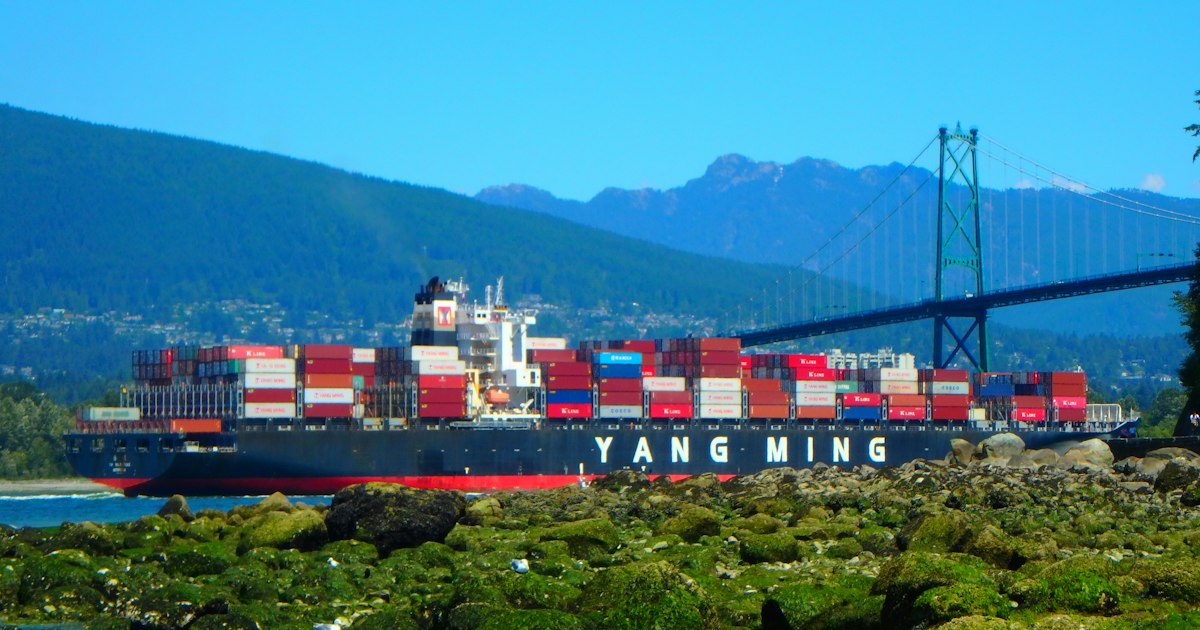
Incoterms are eleven three-letter trade terms that say who arranges and pays for carriage, where the risk of loss passes from seller to buyer, and who clears the goods for export and import. For a UK importer, the term on the purchase order decides which freight, insurance and duty costs sit inside the supplier’s price and which arrive later as separate bills.
Incoterms® is a registered trademark of the International Chamber of Commerce (ICC), and the ICC’s published Incoterms® 2020 rules are the authority. This guide explains them in our own words and does not reproduce the rule text. Using the name does not imply any association with or approval by the ICC. It is general information checked on 26 November 2026, not legal, customs or tax advice.
What are Incoterms?
The ICC describes the Incoterms rules as standards used in international and domestic contracts for the delivery of goods. They were first published in 1936, and the current edition, Incoterms 2020, came into force on 1 January 2020. HMRC’s summary notes that they are not set by HMRC. Seven rules work for any mode of transport and four are for sea and inland waterway only.
The ICC Academy’s article on what Incoterms do not cover is just as useful:
- They cover the split of costs, the point where risk transfers, and each side’s duties on delivery, carriage, insurance and customs formalities.
- They do not cover when ownership passes, the price, how or when you pay, the governing law or what happens if either side breaks the contract. Those belong in the contract of sale.
- They only apply if they are written into the contract or purchase order.
Incoterms 2020: all 11 rules in one table
| Rule | Transport | Where risk passes to the buyer | Who pays main carriage | Who pays import duty and VAT |
|---|---|---|---|---|
| EXW Ex Works | Any mode | At the seller’s premises, before loading | Buyer | Buyer |
| FCA Free Carrier | Any mode | When handed to the buyer’s carrier at the named place | Buyer | Buyer |
| CPT Carriage Paid To | Any mode | When handed to the seller’s carrier at origin | Seller | Buyer |
| CIP Carriage and Insurance Paid To | Any mode | When handed to the seller’s carrier at origin | Seller, plus insurance | Buyer |
| DAP Delivered at Place | Any mode | At the named destination, ready for unloading | Seller | Buyer |
| DPU Delivered at Place Unloaded | Any mode | At the named destination, once unloaded | Seller | Buyer |
| DDP Delivered Duty Paid | Any mode | At the named destination, ready for unloading | Seller | Seller clears import and pays duty. Agree VAT in writing |
| FAS Free Alongside Ship | Sea only | Alongside the vessel at the port of shipment | Buyer | Buyer |
| FOB Free on Board | Sea only | On board the vessel at the port of shipment | Buyer | Buyer |
| CFR Cost and Freight | Sea only | On board the vessel at the port of shipment | Seller | Buyer |
| CIF Cost, Insurance and Freight | Sea only | On board the vessel at the port of shipment | Seller, plus insurance | Buyer |
The 11 Incoterms rules, one by one
Incoterm EXW: Ex Works
Under the Ex Works incoterm the seller only makes the goods available at its premises. It does not load them or clear them for export. You arrange and pay for all carriage, clear both export and import, and pay UK duty and import VAT. Risk is yours before the goods are loaded.
FCA incoterms: Free Carrier
The FCA incoterms meaning is that the seller hands the goods, cleared for export, to the carrier you nominate at a named place, and risk passes there. If that place is the seller’s premises, the seller loads your vehicle. On FCA terms you pay the main carriage, clear import and pay duty and VAT. The ICC says the 2020 edition also lets the parties agree that your carrier will issue an on-board bill of lading to the seller.
CPT incoterms: Carriage Paid To
The seller books and pays carriage to the named destination and clears export. Risk still passes to you early, when the goods are handed to the seller’s carrier at origin. You clear import and pay duty and VAT.
CIP incoterms: Carriage and Insurance Paid To
CIP works like CPT, but the seller must also insure the goods for your benefit. The ICC says Incoterms 2020 raised the required cover under CIP to the level of Institute Cargo Clauses (A). You clear import and pay duty and VAT.
DAP incoterms: Delivered at Place
Under DAP incoterms the seller arranges and pays carriage to the named place in the UK and carries the risk until the goods arrive there, ready for unloading. The seller clears export. You unload, clear import and pay duty and import VAT.
DPU incoterms: Delivered at Place Unloaded
DPU is DAP plus unloading: the seller delivers only once the goods are unloaded at the named place. It replaced the old DAT rule. You clear import and pay duty and VAT.
DDP incoterms: Delivered Duty Paid
Under DDP incoterms the seller carries all the cost and risk to the named place, clears the goods for export and import, and pays the duty. You only unload. It looks simplest, but read the import VAT section below first.
FAS incoterms: Free Alongside Ship
For sea freight only. The seller clears export and places the goods alongside your nominated vessel at the port of shipment, where risk passes. You pay for loading, freight, import clearance, duty and VAT.
FOB incoterms: Free on Board
For sea freight only. The seller clears export and delivers the goods on board the vessel you nominate, and risk passes on board. You pay the freight, clear import and pay duty and VAT.
CFR incoterms: Cost and Freight
For sea freight only. The seller pays the freight to the named UK port, but risk passes when the goods are on board at the port of shipment. You insure the voyage if you want cover, clear import and pay duty and VAT.
CIF incoterms: Cost, Insurance and Freight
CIF is CFR plus insurance bought by the seller. HMRC’s summary warns that the seller only has to obtain minimum cover, so agree more or insure separately. You clear import and pay duty and VAT.
DAP vs DDP for a UK buyer
Under DAP you are the importer. Your customs agent makes the declaration under your EORI number and you pay the duty. If you are VAT registered you can use postponed VAT accounting, which HMRC describes as declaring and recovering import VAT on the same VAT Return, so it never leaves your bank account.
Under DDP the seller is meant to clear import and pay the duty. The trouble is the VAT:
- HMRC’s manual says import VAT may only be claimed by the owner of the goods.
- HMRC’s import VAT guidance says you need the import VAT statement as evidence to claim it.
- VAT Notice 702 says the import VAT certificate goes to the person whose VAT registration number is on the import declaration.
So if the overseas seller or its agent is named on the declaration, the evidence is not in your name. You can end up with import VAT built into the price that nobody on your side can reclaim. The alternative is a seller registered for UK VAT that charges you VAT on a proper invoice. The government’s VAT registration guide says a business based outside the UK must register if it supplies goods to the UK.
Before you agree DDP, ask who will be named as importer, whose EORI and VAT numbers go on the declaration, and how the VAT will reach you. HMRC’s postponed accounting guidance says that where a supplier arranges the import on your behalf, you must agree with the supplier how import VAT will be accounted for and give them your EORI number. If the answers are vague, buy DAP. Ask your accountant about your own case.
EXW vs FCA: why FCA is usually the safer choice
Under EXW the buyer is responsible for export clearance in the seller’s country. The ICC Academy’s EXW or FCA comparison says this can cause complications for both parties and strongly encourages traders to consider FCA where goods cross a border. A small UK importer is rarely set up to act as exporter in China or Turkey.
FCA fixes this without taking control of the freight away from you. The seller clears export and loads at its own premises, or delivers to your forwarder’s terminal. You still choose the carrier and pay the freight.
How the Incoterm changes landed cost
Hypothetical. The business, costs and 4% duty rate are illustrative. Look up the real rate for your goods in the UK Trade Tariff.
A Manchester importer buys 2,000 steel drinks bottles from a factory near Shenzhen, shipped by sea to Felixstowe. Whichever term is used, the same costs exist:
| Cost | Amount |
|---|---|
| Goods, 2,000 × £6.00 ex works | £12,000.00 |
| Haulage to the port and export clearance | £420.00 |
| Origin terminal handling and loading | £180.00 |
| Sea freight to Felixstowe | £1,450.00 |
| Marine insurance | £65.00 |
| Customs value (everything above) | £14,115.00 |
| Duty at 4% of the customs value | £564.60 |
| UK port handling | £210.00 |
| UK haulage to the warehouse | £390.00 |
| Customs clearance fee | £75.00 |
| Total landed cost | £15,354.60 |
| Landed cost per unit | £7.68 |
HMRC’s delivery costs guidance says the customs value includes transport and insurance up to the UK border. The term only moves each cost between the supplier’s invoice and your own bills:
| Term quoted | Supplier’s invoice | Price per unit | Freight and fees you pay | Duty you pay | Landed cost per unit |
|---|---|---|---|---|---|
| EXW factory | £12,000.00 | £6.00 | £2,790.00 | £564.60 | £7.68 |
| FCA port terminal | £12,420.00 | £6.21 | £2,370.00 | £564.60 | £7.68 |
| FOB Yantian | £12,600.00 | £6.30 | £2,190.00 | £564.60 | £7.68 |
| CFR Felixstowe | £14,050.00 | £7.03 | £740.00 | £564.60 | £7.68 |
| CIF Felixstowe | £14,115.00 | £7.06 | £675.00 | £564.60 | £7.68 |
| DAP Manchester | £14,715.00 | £7.36 | £75.00 | £564.60 | £7.68 |
| DDP Manchester | £15,354.60 | £7.68 | £0.00 | In the price | £7.68 |
Two lessons. First, a £6.00 EXW quote and a £7.36 DAP quote are the same deal, so never compare suppliers on unit price alone. Second, DDP only matches if the VAT works. The value for import VAT here is £15,354.60, and VAT at the standard rate of 20% is £3,070.92. Under DAP a VAT-registered buyer postpones and recovers it. If a DDP seller pays it and builds it into the price, and you hold no evidence to reclaim it, your cost rises by £1.54 a unit to £9.21.
On DAP and DDP quotes, ask for UK delivery costs to be shown separately on the invoice. HMRC allows UK transport costs to be left out of the customs value only if they can be distinguished. For the full method, see our guide to landed cost calculation.
What to put on the purchase order
- The rule, the named place and the edition: for example “FCA Yantian Container Terminal, Shenzhen, Incoterms 2020”. HMRC’s summary advises naming the exact point, because risk passes there.
- Who insures the goods and to what level.
- Payment terms and when ownership passes. The Incoterm does not set either.
- Who is the importer and how import VAT will be accounted for.
- The documents you need: the commercial invoice, the packing list and the type of bill of lading, because that decides how the goods are released to you.
- The ship date and expected arrival, so the order feeds your lead time and pre-sold stock can be planned for cross docking.
Your customs agent needs the term too. HMRC requires a delivery terms code on declarations valued by transaction value. See what a purchase order is for the other fields.
Common mistakes
- Using FOB for containers. The ICC Academy’s note on the 2020 changes says FOB should not normally be used for container shipments and points sellers to FCA.
- Assuming the party paying freight carries the risk. Under CPT, CIP, CFR and CIF the seller pays the carriage, but the ICC Academy’s guide to C and D rules confirms the transit risk is the buyer’s.
- A vague named place. “DAP UK” does not say where delivery happens.
- Comparing quotes on different terms without adding the missing costs.
- Agreeing DDP without asking about import VAT.
- Using retired terms. DAT became DPU in 2020.
FAQs
What are Incoterms?
Incoterms are eleven standard trade terms published by the ICC. Each one sets who pays for carriage, where risk passes and who handles export and import clearance. They do not set the price, payment terms or ownership.
What does the DAP incoterm mean?
DAP means Delivered at Place. The seller pays carriage and carries the risk to the named place. The buyer unloads, clears import and pays duty and import VAT.
What is the difference between DAP and DDP incoterms?
Under DAP the buyer clears import and pays duty and VAT. Under DDP the seller clears import and pays the duty. For a UK buyer, DAP usually makes import VAT easier to recover.
What is the FCA incoterms meaning?
FCA means Free Carrier. The seller clears the goods for export and hands them to the buyer’s carrier at a named place, where risk passes to the buyer.
Is the Ex Works incoterm a good choice for importers?
Rarely. Ex Works leaves the buyer responsible for loading and export clearance in the seller’s country. The ICC Academy encourages traders to consider FCA for cross-border sales.
How OpsMavix can help
OpsMavix does not book freight, file customs declarations or advise on which Incoterm to use. Your forwarder, customs agent and accountant do that.
- A custom build can record the Incoterm and named place, landed cost, shipment documents and expected arrival dates against each purchase order, so unit costs include freight and duty. The scope is agreed per project. OpsMavix builds inventory systems at a fixed price in writing, from £4,950 for a first system and live in about 30 days. You pay half to start and half when it works, with no per-seat fees, and you own the code, data and hosting. See pricing.
- OpsMavix ERP covers stock with bins, counts, labels and barcodes, orders, purchasing and the books, from £99.99 a month (Core) with no per-user fees. It has no multi-currency and one stock location, so it does not fit if you need supplier invoices in dollars or euros handled inside the system. Its posting rules have not been reviewed by an accountant, so ask yours to check the set-up. It is new, with no customer stories. See ERP pricing and whether OpsMavix is right for you.
Talk to us about how you track import costs today.
Keep reading

Getting value from OpsMavix? Add us as a preferred source on Google — you'll see more of our operations content in your AI Overviews, AI Mode and Search.