
What Is a Bonded Warehouse? UK Guide for Importers
What a bonded warehouse is, who can use one in the UK, what HMRC allows inside, what it costs and when duty deferment or a freeport fits better.
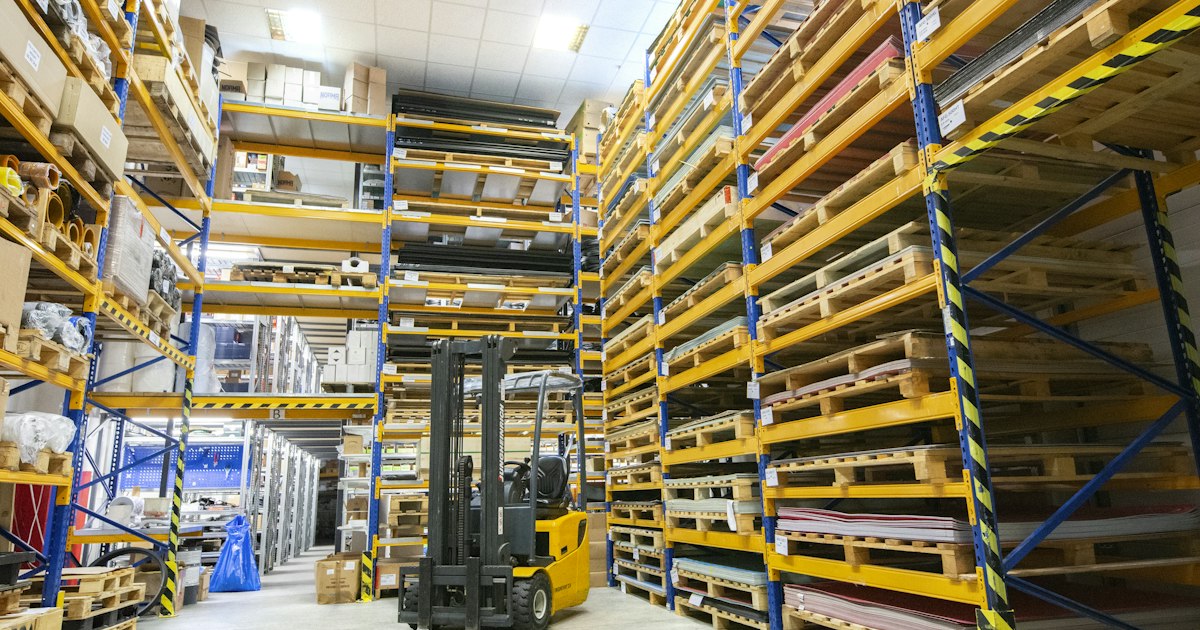
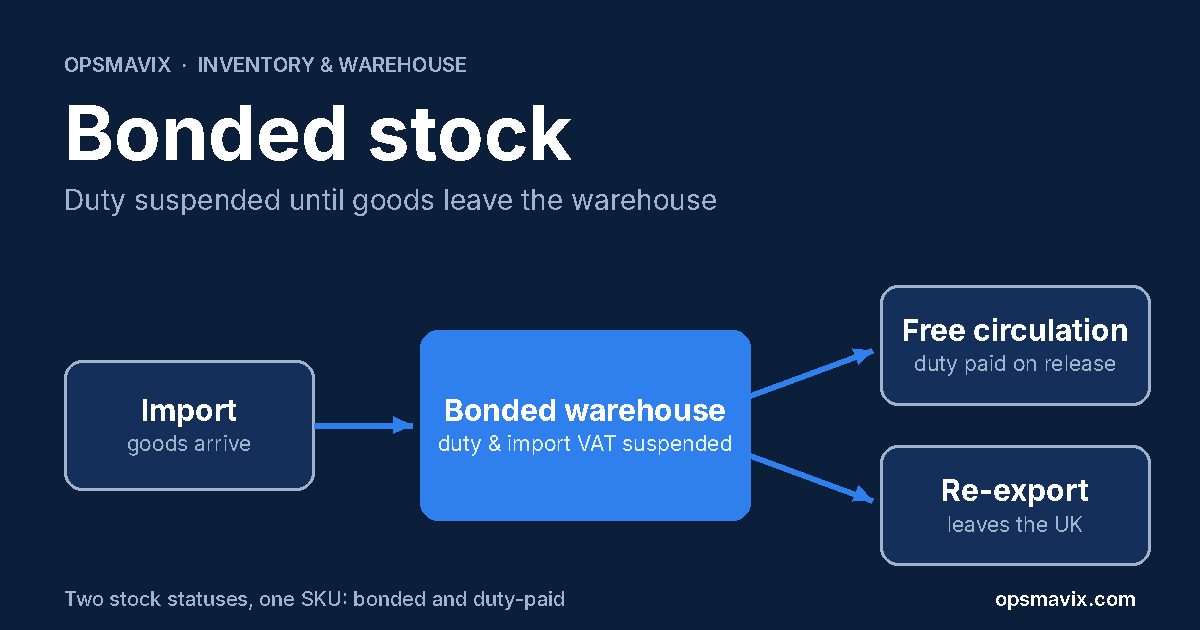
A bonded warehouse is a secure storage site, approved by HMRC, where imported goods can sit with import duty and import VAT (or excise duty) unpaid until they leave. If the goods are released for sale in the UK, the tax is paid at that point. If they are re-exported, HMRC’s guidance says you will not need to pay the duty and VAT.
This guide covers the facility and the decision. It is general information based on HMRC’s published guidance, checked on 26 November 2026, not customs advice. Check your own position with HMRC or a customs adviser.
What is a bonded warehouse?
HMRC rarely says “bonded”. Its guidance describes customs warehousing as “a customs special procedure that allows importers to store goods while suspending duties and import VAT” (HMRC introduction). The site is “a defined location, which can be a whole building, part of a building, or a silo or storage tank”, so it can be a marked customs area inside an ordinary warehouse.
Three things make a warehouse bonded:
- An authorised operator. HMRC calls this the warehousekeeper, who is approved and supervised by HMRC.
- Suspended tax. Goods inside are not in free circulation, so they cannot simply be sold and delivered in the UK.
- A record of every movement. Goods go in and out on a customs declaration or an excise record.
Delaying duty is the main use. HMRC also lists storing goods “where documents such as licences are not available when you import your goods”.
Customs warehouse vs excise warehouse
| Customs warehouse | Excise warehouse | |
|---|---|---|
| What is suspended | Customs Duty and import VAT | Excise duty |
| Typical goods | Goods imported from outside the UK | Beer, wine, cider, spirits, tobacco, vaping products and mineral oils |
| Types | Public or private | General storage and distribution, trade facility, or motor and heating fuel |
| When tax falls due | Release to free circulation | Removal to home use |
| Main guidance | How to use a customs warehouse | Excise Notice 196 and Excise Notice 197 |
They are separate approvals, though one site can hold both. HMRC also lets a customs warehouse store imported goods that will be liable to excise duty on release.
The stock records each regime needs are a subject of their own. Our guide to bonded stock covers how bonded and duty-paid stock are tracked and the HMRC record-keeping rules.
Public vs private bonded warehouses
| Public customs warehouse | Private customs warehouse | |
|---|---|---|
| Whose goods | Other people’s. The importers are called depositors | The operator’s own |
| Who needs HMRC authorisation | The warehousekeeper only | The business itself, as warehousekeeper |
| Who is liable for duty | The depositor, if duty and import VAT become due | The same business is warehousekeeper and depositor |
| What the operator must show HMRC | An economic need, with letters of intent from customers | A business need for the warehouse |
For most small importers the realistic choice is a public warehouse.
Who can use one, and what authorisation is needed
Storing goods in someone else’s warehouse
HMRC is direct: “You do not need to be authorised by HMRC to be a depositor in a public or private customs warehouse”. As a depositor you must:
- be established in the UK
- submit the import declaration, or arrange for an agent to submit it
- take on the liability if duties and import VAT become due. You do not have to own the goods
You must also send the goods directly to the warehouse named on the declaration within 5 working days of clearance, give the warehousekeeper the declaration details, and check the warehouse is approved for your type of goods.
An overseas owner needs a UK-established business to act. HMRC’s handbook gives two routes: a UK private warehousekeeper who takes on the liability, or a UK indirect representative who deposits the goods in a public warehouse and is jointly liable for the duty.
Running your own
To be approved as a customs warehousekeeper, HMRC says you need to be established in the UK, have an EORI number, be financially solvent, have a good customs compliance record and prove a business need. You must be able to make declarations and keep inventory records, and provide a guarantee if needed.
HMRC recommends applying at least 2 months ahead. The application includes written procedures, site plans and screenshots of your warehouse or duty management system. Our guide to customs warehouse software covers what HMRC expects from that system and seven tools to shortlist.
For excise, Notice 196 says: “You must be authorised to deal in duty-suspended goods.” The warehousekeeper is authorised and the premises approved separately, and the applicant must show a real economic need. If you only store your own goods in someone else’s excise warehouse, Notice 197 says the warehousekeeper should have a written commercial agreement with you as owner.
What you can and can’t do with goods inside
A customs warehouse is for storage, not manufacturing. HMRC allows limited operations called usual forms of handling, meant to preserve the goods, improve their presentation or prepare them for distribution or resale.
Usually allowed (examples from HMRC’s list):
- simple cleaning, drying and removing dust
- repairing packing
- stocktaking, sampling and weighing
- sorting, packing, unpacking and changing packing
- adding, removing or altering labels, marks and price tags
- simple testing to meet technical standards
Not allowed as usual handling: anything that changes the nature of the goods, improves their performance, or is done only to increase their value. HMRC’s example is repairing a car that needs panel beating or welding. That work needs another procedure, usually inward processing.
Two more rules surprise people. You can sell goods while they are in the warehouse, and HMRC says such sales “will not be charged supply VAT unless they are retail sales”. And goods cannot be taken out temporarily without HMRC’s permission, or to private premises at all.
How goods enter and leave
Going in. The goods are declared to customs warehousing instead of free circulation, on a full import declaration or an authorised simplified one. On the Customs Declaration Service this uses a 71-series procedure code, such as 7100. They then travel straight to the named warehouse. The customs value on the declaration normally comes from the supplier’s commercial invoice. If the goods arrive by sea, the carrier releases them separately, and our guide explains how an importer uses a bill of lading to collect them.
Staying in. HMRC tells warehousekeepers: “You can keep your goods in a warehouse for an unlimited time”.
Coming out.
| Route out | Duty and import VAT | What HMRC says |
|---|---|---|
| Release to free circulation | Due on the quantity released | Duty and exchange rates at the time of removal apply. Wait for the message confirming clearance before moving goods |
| Re-export | Not due | “No charges will be due” if you re-export directly from the warehouse |
| Another customs procedure, such as inward processing | Not due at that point | One declaration into the new procedure |
| Transfer to another customs warehouse | Still suspended | Between authorisation holders, only the receiving depositor declares |
On release, a VAT-registered business can account for the import VAT on its VAT Return instead of paying it upfront.
What it costs to use a bonded warehouse
HMRC does not set storage rates. The operator does. We looked for a UK bonded warehouse operator that publishes a commercial pallet tariff on its own website and did not find one, so expect a quotation. Ask about each charge type:
- Storage: per pallet per week or month, or per case for drinks.
- Handling in and out: receiving, checking, picking and loading.
- Customs entries: the declaration in and each release or re-export, charged per entry by the operator or your customs agent.
- Account charges: set-up, minimum monthly charge, stock reports.
- Handling work: relabelling, repacking or sampling.
- Insurance and transport from the port under customs control.
Compare quotes on the same pallets, months and number of releases. A low storage rate with a high charge per release costs more if you draw stock weekly. These charges belong in your landed cost calculation.
How to find and choose a bonded warehouse in the UK
- Decide which regime you need: customs, excise or both.
- Build a shortlist. Ask your freight forwarder or customs agent first. The UK Warehousing Association has a member directory. The HMRC guidance we read does not link to a public register of customs warehouses.
- Check the approval covers your goods. HMRC puts this check on the depositor, especially for chilled or frozen goods and chemicals. Ask for confirmation in writing.
- Check location and handling. Goods must arrive within 5 working days of clearance, and regular relabelling or repacking should be part of the operator’s authorisation.
- Ask how you will see your stock: quantities by declaration, released and still under suspension.
- Get every charge in writing, and agree who files each declaration. As depositor you carry the duty liability.
If ordinary outsourced storage is also an option, see our guide to using a third-party warehouse.
Alternatives: duty deferment, postponed VAT accounting and freeports
| Option | What it does | What you need |
|---|---|---|
| Bonded (customs) warehouse | Suspends duty and import VAT until release. Nothing due on re-exports | No authorisation as a depositor in a public warehouse |
| Duty deferment account | One Direct Debit a month. HMRC says you defer “for between 2 and 6 weeks”, an average of 30 days’ credit | An HMRC application, and a guarantee unless you get a waiver |
| Postponed VAT accounting | Import VAT is declared and recovered on the same VAT Return | UK VAT registration. “You do not need any approval” |
| Freeport customs site | A secure customs zone where you may get relief from duties and import taxes | Authorisation for the Freeport customs special procedure, or an existing special procedure authorisation |
Postponed VAT accounting already removes the upfront import VAT payment for a VAT-registered importer, and it can be used when goods leave a customs warehouse too. So the extra benefit of a bonded warehouse is mostly about duty. If you sell everything in the UK within weeks, a duty deferment account is usually the simpler tool.
A worked example of duty cash flow
Hypothetical example. The duty rate, finance cost and timings are illustrative assumptions, not real tariff rates or client figures.
A UK importer lands goods with a customs value of £300,000. Assume a duty rate of 12%, so the full duty is £36,000. It expects to release £50,000 of goods (at customs value) to UK customers in each of months 1 to 5 and re-export the last £50,000 in month 6. It uses postponed VAT accounting, so import VAT is left out.
| Duty paid | Pay on import | Duty deferment account | Bonded warehouse |
|---|---|---|---|
| On arrival | £36,000 | £0 | £0 |
| About a month later | £0 | £36,000 | £6,000 |
| Months 2 to 5 | £0 | £0 | £6,000 a month |
| Month 6 (re-export) | £0 | £0 | £0 |
| Total duty paid | £36,000 | £36,000 | £30,000 |
Two things change with the bonded warehouse:
- £6,000 of duty is never paid, because the re-exported goods do not enter free circulation (£50,000 × 12%). Whether duty already paid on re-exported goods could be recovered another way is not covered here.
- £30,000 is paid in five instalments. At an assumed finance cost of 10% a year, that delay is worth about £750 compared with paying on arrival (£6,000 × (1 + 2 + 3 + 4 + 5) months × 10% ÷ 12).
The gain is about £6,750 before charges. Set that against the extra cost of bonded storage over ordinary storage and six declarations out. If every unit were sold in the UK, only the £750 timing benefit would remain, and for many importers that would not cover the extra charges.
Common mistakes
- Treating “bonded” as one approval. Customs and excise warehouses are separate regimes.
- Counting import VAT as a saving when postponed VAT accounting already deals with it.
- Ignoring the charge per release. Small, frequent releases multiply declaration and handling fees.
- Planning work the warehouse cannot do. Assembly or repair is not usual handling.
- Moving goods before release is confirmed, or sending them somewhere else before the warehouse.
- Assuming the warehouse carries the duty risk. In a public warehouse the depositor is liable.
FAQs
Is there a list of bonded warehouses in the UK?
We did not find a public HMRC register of customs warehouses in the guidance we read. Importers usually find one through a freight forwarder, a customs agent or a trade body directory. Ask the operator to confirm in writing that its authorisation covers your goods.
What is an HMRC bonded warehouse?
A warehouse run by a warehousekeeper that HMRC has authorised and supervises. HMRC’s own terms are “customs warehouse” for import duty and import VAT, and “excise warehouse” for excise goods such as alcohol and tobacco.
How do I import goods to a bonded warehouse?
Declare them to customs warehousing instead of free circulation, send them directly to the named warehouse within 5 working days of clearance, and give the warehousekeeper the declaration details. If an agent makes the entry, HMRC expects you to give them clear written instructions.
How long can goods stay in a bonded warehouse?
HMRC’s guidance says goods can be kept in a customs warehouse for an unlimited time. Your storage contract and the shelf life of the goods are the practical limits.
Do I pay VAT on goods in a bonded warehouse?
Not while they are stored. Import VAT is due when goods leave a customs warehouse for free circulation, and a VAT-registered business can account for it on its VAT Return.
Do I need HMRC approval to use a bonded warehouse?
Not to store goods in a public customs warehouse as a depositor established in the UK. You do need authorisation to run a customs warehouse, and separate approval for an excise warehouse.
How OpsMavix can help
OpsMavix is not a bonded warehouse or a customs agent, and we do not file declarations. What we build is the stock and order system around a bonded operation.
- A custom build fits an importer who holds the same product as bonded and duty-paid stock: one product record with separate statuses, sales orders that only allocate released stock, and releases that only move stock once the declaration reference is recorded. We build at a fixed price in writing, from £4,950 for a first system, live in about 30 days, half paid to start and half when it works. You own the code, data and hosting.
- OpsMavix ERP is not the right tool for bonded stock today. It does not yet handle more than one stock location or batch tracking, and it keeps no customs stock account. It is also new, with no customer stories yet.
See our inventory automation system and wholesale order management system, check pricing, or tell us how your imports are stored today.
Sources
HMRC guidance checked 26 November 2026: How to use a customs warehouse, Apply to operate a customs warehouse, Managing your customs warehouse, the customs warehousing handbook pages on using a customs warehouse and usual forms of handling, and Apply for a duty deferment account, plus the pages linked above. The worked example is hypothetical. Cover photo from Unsplash.
Keep reading
Getting value from OpsMavix? Add us as a preferred source on Google — you'll see more of our operations content in your AI Overviews, AI Mode and Search.