
Purchase Order vs Invoice: The Difference Explained (UK)
A purchase order commits the buyer before supply; an invoice asks for payment after it. Side by side, the flow from PO to payment and a UK VAT example.
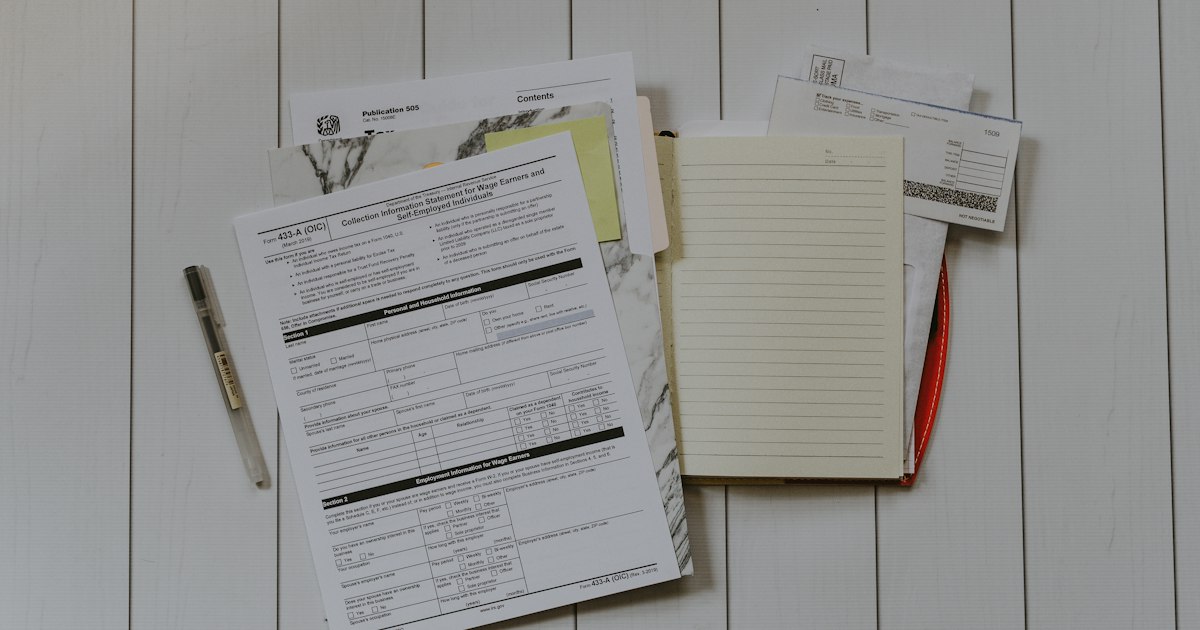
A purchase order is the buyer’s document: it is sent before anything is supplied and commits the buyer to buy set items at agreed prices. An invoice is the supplier’s document: it is sent after supply and asks to be paid. The invoice should always be checked against the purchase order, and ideally the delivery, before any money leaves.
This guide puts the two documents side by side, walks through the flow from PO to payment, lists what a valid UK VAT invoice must show, and works through a UK example where the invoice does not match. If you are new to POs, start with what a purchase order is.
Purchase order vs invoice: side by side
| Purchase order | Invoice | |
|---|---|---|
| Who issues it | The buyer | The supplier |
| Who receives it | The supplier | The buyer’s accounts payable |
| When | Before supply, once the spend is approved | After supply, or at the stage the contract allows |
| Purpose | Commit to buy set items at agreed prices and terms | Ask for payment for what was supplied |
| Legal effect | Usually an offer to buy; a contract is normally formed once the supplier accepts it | A request for payment under that contract; it is not usually the contract itself |
| VAT | May show expected VAT, but cannot be used to reclaim it | A valid VAT invoice is the primary evidence for reclaiming input tax |
| Number | The buyer’s PO number | The supplier’s invoice number, unique and, for VAT invoices, sequential |
| What it contains | Items, quantities, agreed prices, delivery date and address, payment terms, approval | Supplier and customer details, what was supplied, quantities, prices, VAT, total due, invoice date |
| In your accounts | An open commitment, not a cost yet | A liability (money owed) and a cost |
| Paid? | No, a PO is never paid itself | Yes, once it is checked and approved |
The legal points above are general. Whose terms apply, and when a contract is formed, depends on the facts and the sequence of documents, so take advice if a specific order matters.
The VAT points come from HMRC’s record keeping guidance (VAT Notice 700/21), which says the VAT invoices you receive are the primary evidence for recovering input tax.
The flow: from PO to delivery to invoice to payment
The two documents sit at opposite ends of the same transaction. Here is the order they arrive in.
| Step | Document | Who | What it proves |
|---|---|---|---|
| 1. Approve the spend | Requisition or approval | Buyer | Someone with authority agreed to the cost |
| 2. Place the order | Purchase order | Buyer | What you agreed to buy, at what price |
| 3. Confirm | Order acknowledgement | Supplier | The supplier accepts those terms |
| 4. Deliver | Delivery note | Supplier | What the supplier says was sent |
| 5. Receive | Goods received note | Buyer | What actually arrived, counted at the door |
| 6. Bill | Invoice | Supplier | What the supplier is charging |
| 7. Match | PO, GRN and invoice compared | Buyer | The bill agrees with the order and the delivery |
| 8. Pay and close | Payment and remittance | Buyer | The debt is settled and the PO is closed |
The thread that holds this together is the purchase order number. The supplier should quote it on the delivery note and the invoice, so accounts can find the order without detective work. For the receiving step, see our guide to the goods received note.
What a valid UK VAT invoice must show
If your supplier is VAT-registered and sells you standard-rated or reduced-rated goods or services, and you are VAT-registered too, the supplier must issue you a VAT invoice. HMRC’s VAT Notice 700/21 (section 4.1) lists what a full VAT invoice must show:
- a sequential number, based on one or more series, that uniquely identifies the invoice
- the time of supply (tax point)
- the date of issue, where it differs from the time of supply
- the supplier’s name, address and VAT registration number
- the name and address of the customer
- a description that identifies the goods or services
- for each description, the quantity of goods or the extent of the services
- the unit price
- the rate of VAT and the amount payable excluding VAT
- the gross total amount payable, excluding VAT
- the rate of any cash discount offered
- the total VAT chargeable, in sterling
Two shorter forms exist. For a charge of £250 or less including VAT, a supplier can issue a simplified invoice showing less detail. If the charge is more than £250 and you ask for a VAT invoice, the supplier must issue either a full VAT invoice or a modified one that shows VAT-inclusive values. The same notice says a VAT invoice should normally be issued within 30 days of the date of supply. A proforma invoice is a different document again: a preview of the bill, not a VAT invoice.
For invoices in general, the government’s guide to what an invoice must include lists a unique identification number, both parties’ names and addresses, a description, the supply date, the invoice date, the amounts, any VAT and the total owed.
Notice what is missing from both lists: your PO number. The law does not require a supplier to quote it. Your purchasing rules do, which is why you have to ask for it on the PO and in your terms.
Matching the invoice to the purchase order
Matching is where the two documents earn their keep.
- Two-way match: the invoice is checked against the PO. Same items, same prices, same or lower quantities.
- Three-way match: the invoice is also checked against the goods received note, so you only pay for what actually arrived.
For stock and materials, three-way matching is the safer default, because a short delivery billed in full passes a two-way match untouched. Our guide to two-way vs three-way matching explains when each is enough and how to set tolerances. An invoice that passes the match is then posted to the supplier’s account, and our guide explains how the purchase ledger works from there.
Worked UK example (Hypothetical)
Hypothetical: a catering supplies wholesaler in Leeds orders packaging. All names and figures are illustrative. VAT is at the UK standard rate of 20%, which the government’s VAT rates page lists for most goods and services.
The purchase order, PO-2026-0318
| Item | Qty | Unit price | Net |
|---|---|---|---|
| 8oz paper cups | 2,000 | £0.045 | £90.00 |
| Cup lids | 2,000 | £0.030 | £60.00 |
| Napkins, case | 40 | £3.25 | £130.00 |
| Net | £280.00 | ||
| VAT at 20% | £56.00 | ||
| Total | £336.00 |
The delivery arrives. The goods received note records 2,000 cups, 1,500 lids (500 short) and 40 cases of napkins. Then invoice INV-7731 arrives, quoting PO-2026-0318.
The invoice compared with the PO and the delivery
| Item | PO | Received | Invoiced | Result |
|---|---|---|---|---|
| Cups | 2,000 at £0.045 | 2,000 | 2,000 at £0.048 = £96.00 | Price higher than agreed |
| Lids | 2,000 at £0.030 | 1,500 | 2,000 at £0.030 = £60.00 | Billed for 500 not received |
| Napkins | 40 at £3.25 | 40 | 40 at £3.25 = £130.00 | Matches |
| Net | £286.00 | |||
| VAT | £57.20 | |||
| Total | £343.20 |
What the invoice should be, based on the PO prices and the quantities received:
- Cups: 2,000 × £0.045 = £90.00
- Lids: 1,500 × £0.030 = £45.00
- Napkins: 40 × £3.25 = £130.00
- Net £265.00, VAT £53.00, total £318.00
The invoice is £25.20 too high (£21.00 net plus £4.20 VAT). A two-way match against the PO alone would have caught the cup price but not the missing lids. The three-way match catches both. Accounts holds the invoice, asks the supplier for a credit note or a corrected invoice, and pays £318.00 once the paperwork agrees. The remaining 500 lids either follow on a later delivery against the same PO, or the PO line is reduced and closed.
Common mistakes
- Treating the invoice as the approval. The approval happened, or should have happened, when the PO was raised. An invoice for something nobody ordered is a question, not a bill to pay.
- Raising the PO after the invoice arrives. It records the spend but controls nothing.
- Matching against the PO only. Short deliveries billed in full slip straight through.
- Reclaiming VAT from your own PO. Your PO is not a VAT invoice. Reclaim from the supplier’s valid VAT invoice.
- Accepting invoices with no PO number. Every one costs someone a search. Ask suppliers to quote it, and hold invoices that do not.
- Leaving POs open after the final invoice. Old open POs make it look as though you have more on order, and more committed spend, than you really do.
- Confusing the supplier’s invoice number with your PO number. One identifies the bill, the other the order. Record both.
How to handle POs and invoices: a simple routine
- Raise and approve the PO before ordering, with a unique PO number.
- Ask the supplier to quote that number on the acknowledgement, delivery note and invoice.
- Count deliveries against the PO and record a goods received note.
- When the invoice arrives, check it is a valid VAT invoice if you are reclaiming VAT.
- Match invoice, PO and GRN: items, quantities, prices, VAT and totals.
- Hold anything that does not match and ask the supplier for a credit note or corrected invoice.
- Approve, pay on the agreed terms and close the PO line by line.
Two related topics: self-billing invoices, where the customer raises the invoice, and e-invoicing in the UK, which becomes mandatory for VAT invoices between VAT-registered businesses from 1 April 2029.
FAQ
Is a purchase order the same as an invoice?
No. The buyer sends a purchase order before supply to commit to an order. The supplier sends an invoice after supply to ask for payment. One buyer’s PO usually leads to one or more supplier invoices.
Which comes first, a purchase order or an invoice?
The purchase order. It is raised and approved before the goods or services are supplied. The invoice follows once the supplier has delivered, or at the stage the contract allows.
Can I reclaim VAT using a purchase order?
No. HMRC’s record keeping guidance says the VAT invoices you receive are the primary evidence for recovering input tax. Your PO can show the expected VAT, but you reclaim it from the supplier’s valid VAT invoice.
Does an invoice have to show a purchase order number?
Not by law. Neither the general invoice rules nor the VAT invoice rules require it. Many buyers make it a condition of payment, so suppliers should quote it whenever a customer issues POs.
What is a purchase order invoice?
It usually means an invoice raised against a purchase order and quoting its number. It is still the supplier’s ordinary invoice. The PO number on it simply lets the buyer match it to the order.
Is a purchase order legally binding?
In general, a PO is an offer to buy, and a contract is usually formed once the supplier accepts it, in writing or by fulfilling it. Which terms apply depends on the documents exchanged. This is general information, not legal advice.
How OpsMavix can help
Most PO and invoice problems are not about the documents. They come from the documents living in different places: POs in a spreadsheet, deliveries on paper, invoices in an inbox.
- OpsMavix ERP keeps purchasing, stock, orders and the books in one system, for £99.99 a month (Core) or £999.99 a year for the whole company, with no per-user fees and no VAT added. There is a 30-day trial; a card is needed, but nothing is charged until day 30. It is new, with no customer stories yet, and it does not yet do bank feeds, HMRC VAT filing or more than one stock location, so check those first on the ERP pricing page.
- A custom build fits when your approval chain or matching rules are specific to how you work. OpsMavix builds invoice approval workflow automation at a fixed price in writing, from £4,950 for a first system, live in about 30 days, with half paid to start and half when it works. You own the code, data and hosting, and there are no per-seat fees. See our pricing.
Talk to us about how your orders and invoices meet today.
Keep reading
Getting value from OpsMavix? Add us as a preferred source on Google — you'll see more of our operations content in your AI Overviews, AI Mode and Search.