
Cross Docking: What It Is, How It Works, When to Use It
What cross docking is, how it works step by step, the main types, how it compares with warehousing and drop shipping, and what a small UK distributor needs.
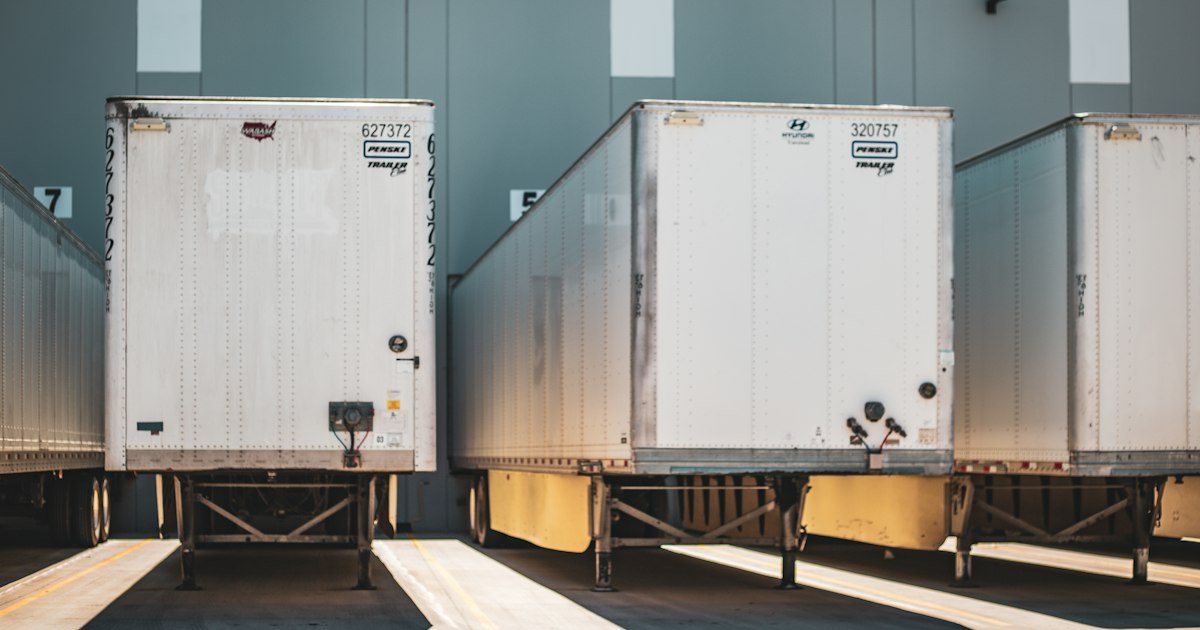
Cross docking is a way of running a warehouse in which goods move from the inbound lorry to an outbound vehicle with little or no storage in between. The goods are received, checked, labelled for their customer and loaded out again, usually the same day, without being put away and picked later. It suits stock that is already sold before it arrives.
This is general information checked on 26 November 2026. All figures in the worked example are hypothetical.
What is cross docking?
Maersk’s cross-docking guide defines it as a logistics process in which products from suppliers or manufacturers are transferred to a customer with minimal to no storage time in between. In effect it removes the storage phase.
The words are used loosely, so it helps to pin them down:
- Cross docking (or cross-docking) is the process.
- A cross dock is the place where it happens: a dock area, or a whole building, with inbound doors on one side and outbound doors on the other. People also use it as a verb, as in “cross dock those twelve pallets”.
- A cross docking warehouse is a site designed mainly for flow, not storage. A small distributor does not need one. Cross docking can be a marked area of floor between your goods-in door and your dispatch door.
How cross docking works, step by step
- The supplier tells you what is coming. This is the advance shipping notice. Maersk’s shipping glossary describes it as a document sent to the consignee ahead of delivery that details the contents of the shipment.
- You allocate customer orders to the inbound delivery. Each order line is matched to a purchase order line before the lorry arrives.
- You plan the dock. Book the inbound slot, book the outbound vehicles and clear a floor lane for each route or customer.
- Unload and check. Count or scan against the purchase order and the advance notice, and check for damage, as you would in any goods receiving process.
- Label for outbound at the dock door. Each pallet or carton gets its customer label as it is received.
- Move it straight to its outbound lane. If a pallet has to be split between customers, break it down in the dock area.
- Load and dispatch, then confirm the dispatch so the customer can be invoiced.
- Deal with exceptions. Shorts, damages and anything not allocated go into stock through normal put-away.
Types of cross docking
Maersk’s guide groups cross docking in two ways: by when the destination is decided, and by what happens to the load.
| Type | What it means | Small distributor example |
|---|---|---|
| Pre-distribution | The final destination is decided before the goods reach the cross dock | A customer’s full-pallet order is matched to the inbound purchase order, so the pallet is labelled on arrival |
| Post-distribution | Goods are sorted and allocated to destinations at the cross dock | A mixed delivery is split across branch or customer orders once you see what arrived |
| Continuous | Goods move directly from inbound to outbound transport with minimal waiting. Maersk says it suits high-demand products | A daily fresh or chilled delivery that goes out on the afternoon van run |
| Consolidation | Smaller shipments are combined into larger loads | Lines from three suppliers are merged into one pallet for one customer |
| Deconsolidation | A large shipment is divided into smaller deliveries | A container of imported stock is broken down into customer pallets |
Maersk notes that post-distribution gives more flexibility but needs more sophisticated sorting. For a small operation, pre-distribution is the place to start.
Cross docking vs traditional warehousing vs drop shipping
| Cross docking | Traditional warehousing | Drop shipping | |
|---|---|---|---|
| Where the goods go | Through your dock, in and out within hours | Into your racking until someone orders them | From the supplier straight to your customer |
| Stock you hold | Little or none for those lines | Days or weeks of cover | None |
| Who handles the goods | You, briefly | You | The supplier |
| Your control | You see, check and label the goods and can combine lines into one delivery | Full control | Very little. You rely on the supplier |
| Speed to the customer | Fast once the inbound arrives, so it depends on supplier lead time | Fastest for anything in stock | Depends on the supplier |
| What it needs | Reliable inbound timing, advance data and dock space | Space, cash for stock and a pick and pack process | A supplier willing to ship single orders for you |
| Main risk | A late or short delivery breaks customer promises at once | Cash tied up, storage cost and dead stock | No sight of quality or dispatch |
Most small distributors end up with a mix: fast, predictable or pre-sold lines cross dock, everything else is stored, and awkward or bulky items are drop shipped.
When cross docking works and when it does not
It works when:
- Supplier lead times are reliable. You are promising customers stock you do not yet hold. For imported stock, that includes the container being released on time: see our guides to the bill of lading and to Incoterms.
- You get advance shipping notices. You need to know what is on the lorry before it arrives.
- Pallets and cartons arrive labelled. GS1 describes the Serial Shipping Container Code as a way to identify a logistic unit such as a case, pallet or parcel, so one scan tells you what you are holding.
- Demand is steady or already sold. Back orders, pre-orders, standing weekly orders and promotions are good candidates.
- Goods move in full pallets or full cartons that need no repacking.
It does not work when:
- suppliers deliver late, short or without paperwork
- demand is unpredictable and customers expect next-day delivery from stock
- every delivery needs detailed inspection, testing or relabelling
- orders are single items picked from many lines
- you have no clear floor space near the doors
Maersk lists the same pressure points: precise scheduling, accurate real-time data and a high level of coordination between suppliers, hauliers and the warehouse.
What a small UK distributor needs to try it
- Dock space. A marked floor area between goods-in and dispatch, with a lane for each route or customer, sized for one delivery’s worth of pallets.
- Pre-allocated orders. Sales orders matched to inbound purchase order lines before the lorry arrives.
- Receiving that prints outbound labels. The person unloading should get the customer label at the dock door, not walk to the office for it.
- Supplier discipline. A booked delivery slot, an advance notice and labelled pallets. Start with your most reliable supplier.
- Outbound transport booked for the same day, timed after the inbound slot with a margin for delays.
- An exceptions rule. Decide in advance what happens to shorts, damages and the unsold remainder.
Start with one supplier and one weekly delivery. Run it for a month, then measure how many pallets went out the same day and how many missed.
A worked example
Hypothetical. The business, volumes, timings and hourly rate are illustrative. Time your own dock before relying on any of these figures.
A Leicester catering-supplies wholesaler takes one 26-pallet delivery a week from its main supplier. On a typical week 16 of those pallets are already sold as full pallets to four trade customers, and 10 go into stock. Today all 26 are put away, and the 16 are retrieved a few days later.
| Step | Put away, then pick | Cross dock |
|---|---|---|
| Unload from the lorry | 3 min | 3 min |
| Check against the purchase order and label | 4 min | 4 min |
| Put away to racking | 6 min | 0 min |
| Retrieve from racking for the order | 6 min | 0 min |
| Move to the outbound lane | 3 min | 2 min |
| Load onto the delivery vehicle | 3 min | 3 min |
| Minutes per pallet | 25 | 12 |
| Pallet moves | 5 | 3 |
| Measure | Figure |
|---|---|
| Pallets cross docked each week | 16 of 26 (about 62%) |
| Minutes saved per pallet (25 − 12) | 13 |
| Minutes saved per delivery (16 × 13) | 208, or 3.47 hours |
| Hours saved a year (50 deliveries) | 173.33 |
| Value of that time at £16 an hour | £2,773.33 |
| Pallet moves avoided a year (16 × 2 × 50) | 1,600 |
| Racking freed (16 pallets × 4 days) | 64 pallet-days a week |
The labour saving is real but modest: under three and a half hours a week. The bigger gains for this business are the racking space it gets back and customers receiving their pallets on the day of delivery, not four days later. Against that, it needs clear floor space for 16 pallets every delivery day, and one late lorry now delays four customers at once.
Risks and common mistakes
- Cross docking unreliable suppliers. If the inbound is late, every order tied to it is late.
- Skipping the receiving check to save time. Errors then reach the customer instead of being caught at your door.
- Not booking the goods in. Even if a pallet stays twenty minutes, record the receipt and the dispatch. Otherwise the supplier invoice has nothing to match against and your stock and margin figures are wrong.
- Allocating orders after the lorry arrives. The pallets then wait on the dock, block the doors and end up being put away anyway.
- No plan for shorts. Decide which customer goes without when 14 pallets arrive, not 16.
- Letting the dock become storage. Anything still in a lane at the end of the day should be put away.
- Trying it on every line. Slow or unpredictable lines belong in stock.
The system requirements
The core requirement is simple to state: orders must be allocated against inbound purchase orders before the lorry arrives. Everything else follows from that.
- Expected receipts by purchase order line, with dates you trust, ideally fed by the supplier’s advance notice.
- Allocation of sales orders to inbound stock, not just to stock on the shelf.
- A receiving screen that shows the destination. When a pallet is scanned it should say which customer and which lane, and print the outbound label.
- Receipt and dispatch recorded the same day, so purchasing, sales and the books stay correct.
- Short and over handling, with a rule for who gets priority.
A warehouse management system can provide this, but not every one does, so ask each vendor to show a cross dock receipt before you buy. Our guide to warehouse management system costs in the UK covers what to budget.
FAQs
What is cross docking?
Cross docking is moving goods from an inbound vehicle to an outbound vehicle with little or no storage in between. The goods are received, sorted and dispatched without being put away.
What is a cross dock?
A cross dock is the area or building where this happens, with inbound doors and outbound doors close together. It can be a whole depot or a marked section of a small warehouse floor.
Is cross-docking the same as drop shipping?
No. With cross-docking the goods pass through your building and you check and label them. With drop shipping the supplier delivers straight to your customer and you never handle the goods.
What is a cross docking warehouse?
It is a warehouse laid out for goods to flow through, not to be stored. It has plenty of dock doors and floor lanes and little racking.
What is the difference between pre-distribution and post-distribution cross docking?
In pre-distribution the destination of each pallet is decided before it arrives. In post-distribution the goods are sorted and allocated to destinations after they reach the cross dock.
Do you need a warehouse management system for cross docking?
Not always. A small operation can run it from a purchase order, an allocation list and printed labels. As volume grows you need a system that allocates orders to inbound stock and prints outbound labels at receiving.
How OpsMavix can help
We will be plain about this. OpsMavix ERP is not a cross docking system. It covers stock with bins, counts, labels and barcodes, orders, purchasing and the books, from £99.99 a month (Core) for the whole company with no per-user fees. It has one stock location and no advance shipping notice feature, so we do not claim it supports cross docking. It suits a small warehouse that puts stock away and picks it. Its posting rules have not been reviewed by an accountant, so ask yours to check the set-up, and it is new, with no customer stories yet. See ERP pricing.
A custom build can be scoped for cross docking: sales orders allocated against inbound purchase order lines, a receiving screen that shows the customer and lane, and outbound labels printed at the dock door. OpsMavix builds inventory systems and wholesale order management systems at a fixed price in writing, from £4,950 for a first system and live in about 30 days. You pay half to start and half when it works, with no per-seat fees, and you own the code, data and hosting. See pricing and whether OpsMavix is right for you.
If you run a large multi-site depot with conveyors and automated sorting, you need a specialist warehouse system, not us. If you are a small distributor wondering whether your Tuesday delivery could go straight back out, talk to us.
Keep reading
Getting value from OpsMavix? Add us as a preferred source on Google — you'll see more of our operations content in your AI Overviews, AI Mode and Search.