
Subcontract Manufacturing Tracking Software: UK Guide
Track parts sent to coaters, machinists and assemblers. A UK guide to subcontract software, partial returns, supplier balances and production release.
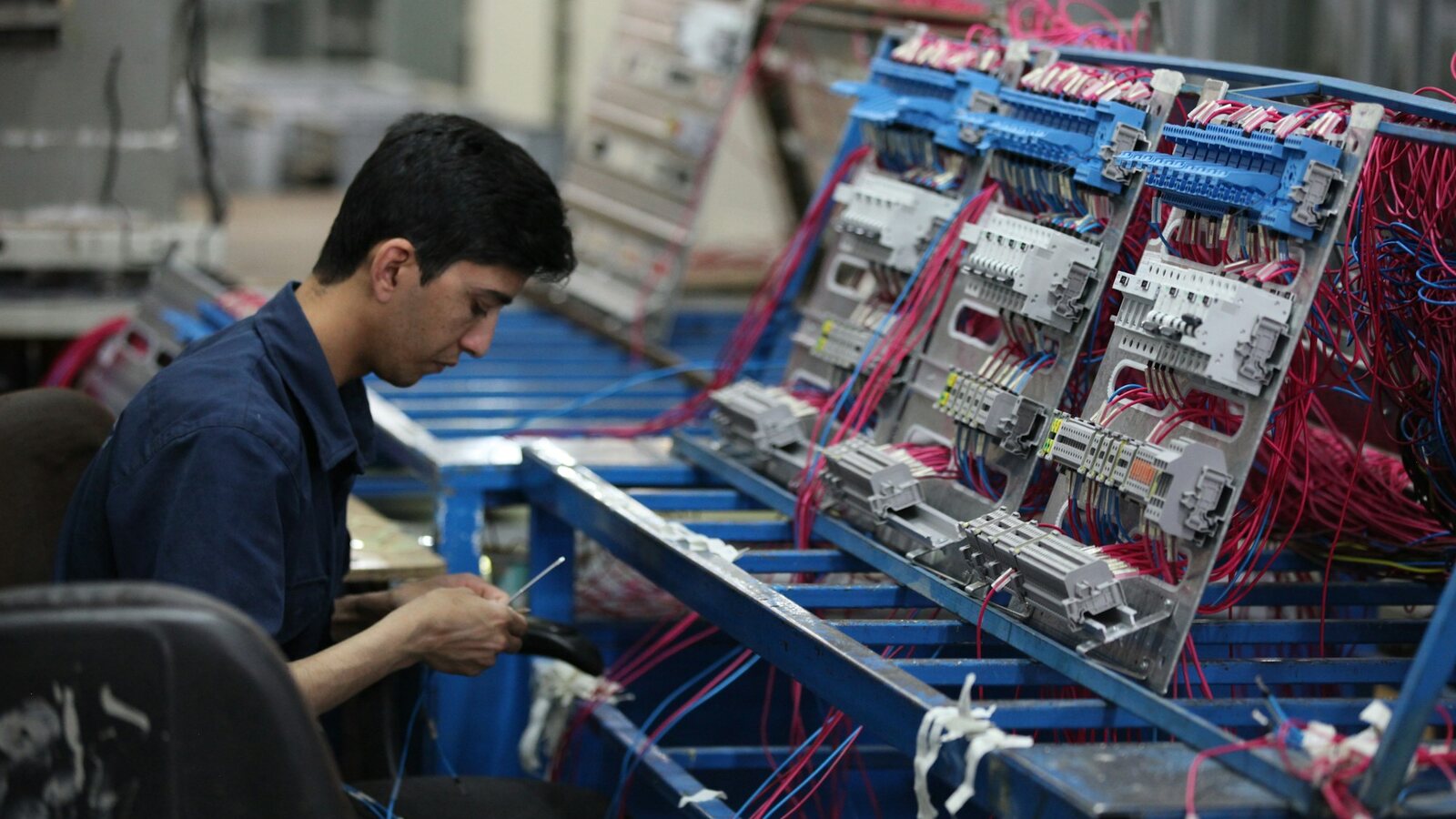
Subcontract manufacturing tracking software connects work sent outside your factory to the job, material quantities, supplier promise and inspection result that determine when you can deliver. For a UK manufacturer using coaters, machinists, heat-treatment specialists or external assemblers, a purchase order alone rarely tells the planner enough.
A supplier can confirm “complete” while part of the batch is still missing, the paperwork is outstanding or the returned goods have failed inspection. Your production board needs to show which of those conditions applies.
This guide sets out a practical specification, a partial-return example in pounds sterling and the questions to use in a software demonstration. It is designed for UK manufacturing SMEs that want clearer control over outsourced operations.
Subcontract tracking in 30 seconds
A useful subcontract record connects four things:
- The requirement: which job, part, drawing revision and operation need outside work.
- The movement: what left your premises, where it went and what came back.
- The commitment: agreed return date, confirmed quantity and supplier updates.
- The release: what passed inspection and may move to the next operation.
Keep those facts together. The person planning assembly should not need to reconcile a purchase order, a dispatch note and three email conversations before deciding what can start.
A production tracking system for manufacturers is the relevant starting point when the main problem is visibility across job stages. Make subcontract movements, approvals and stock reconciliation explicit in the scope rather than assuming they come with a production dashboard.
What is different about outsourced production?
An internal operation happens within your normal shop-floor process. An outside operation introduces another organisation, a separate queue and a physical handover.
You need to know whether your material is waiting for collection, in transit, received by the supplier, being processed, ready to return or back at your site awaiting acceptance. Those states can have different owners and different consequences for the customer promise.
There are also different commercial models. Sometimes the supplier provides a finished item using its own materials. Sometimes you send components for processing. Sometimes another supplier delivers those components directly to the subcontractor.
Odoo’s official subcontracting documentation distinguishes these sourcing patterns. That is a useful reminder to map who supplies the materials before designing stock movements. This guide proposes operating controls; it is not a version-specific Odoo setup tutorial.
Why an open purchase order list misses the problem
An open PO can show that 100 coated frames have not all been received. It may not show whether the missing quantity is holding up tomorrow’s assembly or whether the supplier has enough bare frames to finish it.
The most useful questions are operational:
| Question | Record needed to answer it |
|---|---|
| Which customer job is affected? | Linked job and required operation |
| What did we actually send? | Dispatch quantity and item identification |
| Has the supplier acknowledged receipt? | Receipt confirmation or follow-up task |
| What is expected back and when? | Current commitment with change history |
| What can production use now? | Accepted quantity after inspection |
| What remains unexplained? | Reconciled balance and named owner |
A single “at subcontractor” flag cannot answer all six. Use a small number of meaningful states with quantities behind them, rather than dozens of labels nobody maintains.
The minimum subcontract record
Before comparing software, write down the fields your team genuinely needs:
- Job or works order reference.
- Part number, description and drawing revision where relevant.
- Required process or operation.
- Supplier and physical destination.
- Dispatch reference, date, quantity and unit of measure.
- Required return date and supplier-confirmed date.
- Returned, accepted, rejected and outstanding quantities.
- Supporting documents and inspection evidence where required.
- Next action, responsible person and review date.
- Agreed processing charge and any separately approved additional costs.
A stable movement reference is particularly useful. One job can be split across deliveries, and one supplier delivery can contain parts for several jobs. Keep the underlying lines identifiable even if the dashboard groups them.
If your component structure is changing frequently, resolve that alongside bill of materials control. A supplier cannot reliably return the right revision if the dispatch instruction refers to an obsolete one.
Worked example: 100 frames sent for coating
This is a hypothetical UK manufacturing example, not a customer case study. All amounts are illustrative and exclude VAT.
A manufacturer sends 100 bare frames to a coater. The agreed processing charge is £6 per frame. The supplier returns a first delivery of 92 frames. Inspection accepts 88 and rejects four for rework. Eight frames have not yet returned.
| Position after the first return | Frames |
|---|---|
| Sent to the coater | 100 |
| Returned to your site | 92 |
| Accepted for the next operation | 88 |
| Returned but held for rework | 4 |
| Still outstanding at the supplier | 8 |
The physical reconciliation is 100 sent = 92 returned + 8 outstanding. Within the 92 returned, 88 accepted + 4 held = 92. The four rejected frames are not an extra deduction from the eight outstanding; that would count them twice.
If each final product needs one frame, the first return supports 88 assemblies, assuming all other components and capacity are ready. It does not support 92 just because the goods receipt has been posted.
The planned coating charge for 100 frames is £600. Suppose an approved extra collection costs £45 and a separately approved rework charge is £24. The expected processing and associated transport spend becomes £669. Whether those amounts belong in inventory value, job cost or another account depends on your accounting design; the operational record should retain the evidence for finance to decide.
Do not assume the supplier will charge for rework, or that your company must accept that charge. Record the commercial decision separately from the physical return.
Build the workflow around handovers
Before dispatch: confirm what the supplier needs
Check quantity, revision, packaging instructions and the promised date. Attach the agreed process specification where relevant. Identify whether supplied material is dedicated to one job or held as common stock at the supplier.
At dispatch: record the actual movement
Record the quantity that physically leaves, not just the quantity originally planned. A short dispatch should leave a visible balance. If the driver takes 80 of 100 frames, the remaining 20 are still at your site.
At supplier receipt: capture acknowledgement
Use a supplier portal, a controlled update form or a staff-entered confirmation from the supplier. The capture method matters less than retaining a dated, attributable record. An estimated delivery date is not proof of receipt.
While outside: manage changes as exceptions
Show jobs with an overdue acknowledgement, a changed return date or an unresolved quantity difference. Preserve the original commitment alongside the revised one so performance reporting does not improve simply because late dates were overwritten.
On return: separate receipt from acceptance
Book in what arrived, then record inspection and release where the process requires them. A partial return should update the linked production requirement without closing the outstanding balance.
At closure: reconcile the remainder
Close the outside operation only when the remaining material, accepted output, scrap, returns and open actions are explained. A completed supplier invoice is not proof that every part is accounted for.
Track materials without inventing consumption
For outsourced assembly, inputs and outputs may use different units. Sending 200 brackets and 100 panels does not mean you should receive 300 finished units. The bill of materials and agreed yield explain the expected conversion.
For a processing operation such as coating, the same part may return with a changed process state. Your software may model that as a different item, a revision or an operation on the existing item. Choose a consistent design and test its effect on traceability and valuation.
A useful supplier-stock reconciliation is: opening balance plus receipts, less documented consumption, returns and approved losses, equals closing balance. Apply it at the correct item and unit level. Investigate unexplained differences instead of clearing them through a generic “job complete” button.
This is closely related to shop-floor WIP tracking: the material may be off site, but it can still determine how much work is actually ready to move forward.
Software acceptance tests for UK manufacturers
Ask each provider to demonstrate these scenarios using one realistic job:
| Scenario | What to check |
|---|---|
| Dispatch 80 of 100 planned parts | Twenty remain visibly undelivered |
| Split the outside work across two suppliers | Each movement and commitment remains traceable |
| Return only part of a batch | Open balances remain correct |
| Reject part of a returned quantity | Only accepted goods feed the next permitted operation |
| Change the return promise | Original and revised dates remain visible |
| Receive the same delivery twice by mistake | Duplicate entry is prevented or clearly identified |
| Change a drawing revision | Existing dispatched work retains its original instruction history |
| Complete the supplier invoice first | Physical outstanding balances remain open |
Also test the way staff will actually update records. A solution that needs ten minutes of office work for every collection will attract shortcuts. Keep routine entries short and make the exception detail available when needed.
Spreadsheet, ERP module or focused system?
A shared spreadsheet can work when outside jobs are infrequent, quantities are simple and one person owns the entire process. Use unique references and reconcile it to physical movements. Its limitations become more serious when multiple people update the same balance or production relies on live availability.
An ERP subcontracting module may suit a manufacturer that already has reliable bills of materials, stock records and purchasing in the same system. Configuration and training may be a better investment than adding another application.
A focused custom system is worth comparing when your existing accounts package should remain in place but planners need connected production stages, supplier updates and exception visibility. Decide which application owns each record and how corrections flow between them.
OpsMavix offers production tracking built around jobs, stages and operational visibility. Use the manufacturing production tracking service to discuss your actual outside-work handovers, then require the proposal to identify the subcontract controls it will include.
Costs to include in the business case
Separate the software quotation from the cost of the process itself. Your implementation scope may include data cleanup, supplier locations, user permissions, label printing, integrations, inspection records and training.
For an illustrative admin calculation, 20 outside-work movements a week with eight minutes of chasing each require 160 minutes. At a hypothetical loaded staff cost of £24 per hour, that is £64 a week. A system will not remove every supplier conversation, so validate any expected time reduction during a pilot.
Keep late-delivery costs, premium transport and rework separate from admin time. Do not count the same event twice or assume a missed customer delivery would automatically have become a lost sale.
FAQ
Is subcontract tracking the same as supplier order tracking?
Supplier order tracking follows a purchasing commitment. Subcontract tracking also needs the relationship to production, supplied materials, partial returns and acceptance. The two should connect.
Do subcontractors need software accounts?
Not necessarily. Staff can capture confirmed updates, or suppliers can use a limited portal or form. If suppliers have access, restrict them to the information they need and agree how their updates are checked.
Can we track parts sent to a coater without replacing accounts software?
Potentially. Map the stock and job records first, then specify the integration with accounts. Decide who owns receipts, costs and corrections so the systems do not create competing balances.
When should an outside operation show as complete?
Define completion explicitly. It may require accepted output, reconciled remaining material and closed exceptions. Supplier confirmation alone should not silently satisfy every condition.
Can a production board show what is physically at a supplier?
Yes, if the underlying system records movements and quantities at that destination. A status label without those records cannot establish a reliable balance.
Start with one outside operation
Take a recent job that left the factory and returned in stages. Map every quantity, promise and release decision. Use that example to test software before broadening the project.
If your UK manufacturing team regularly asks “what is still at the coater, and what can we build today?”, explore production tracking built around your manufacturing workflow. Bring the job reference, dispatch record and partial return: they give the discussion a practical starting point.
Sources and further reading
- Odoo: Subcontracting — an official example of different component-sourcing workflows; configuration varies by version.
- OpsMavix manufacturing production tracking — current service scope.
- OpsMavix: Shop-floor WIP tracking — related production visibility guidance.
Examples and acceptance tests are proposed operating practices. Prices and savings illustrations are hypothetical. Updated 16 October 2026.
Keep reading

Getting value from OpsMavix? Add us as a preferred source on Google — you'll see more of our operations content in your AI Overviews, AI Mode and Search.