
Dead Stock Management: Freeing the Cash Stuck on Your Shelves
Dead stock management is really cash management — money locked in stock that won't sell, quietly draining while you keep buying more. Here's how to spot slow movers before they go dead, clear the ageing lines without giving margin away, and stop the same over-buying from filling the shelves again.
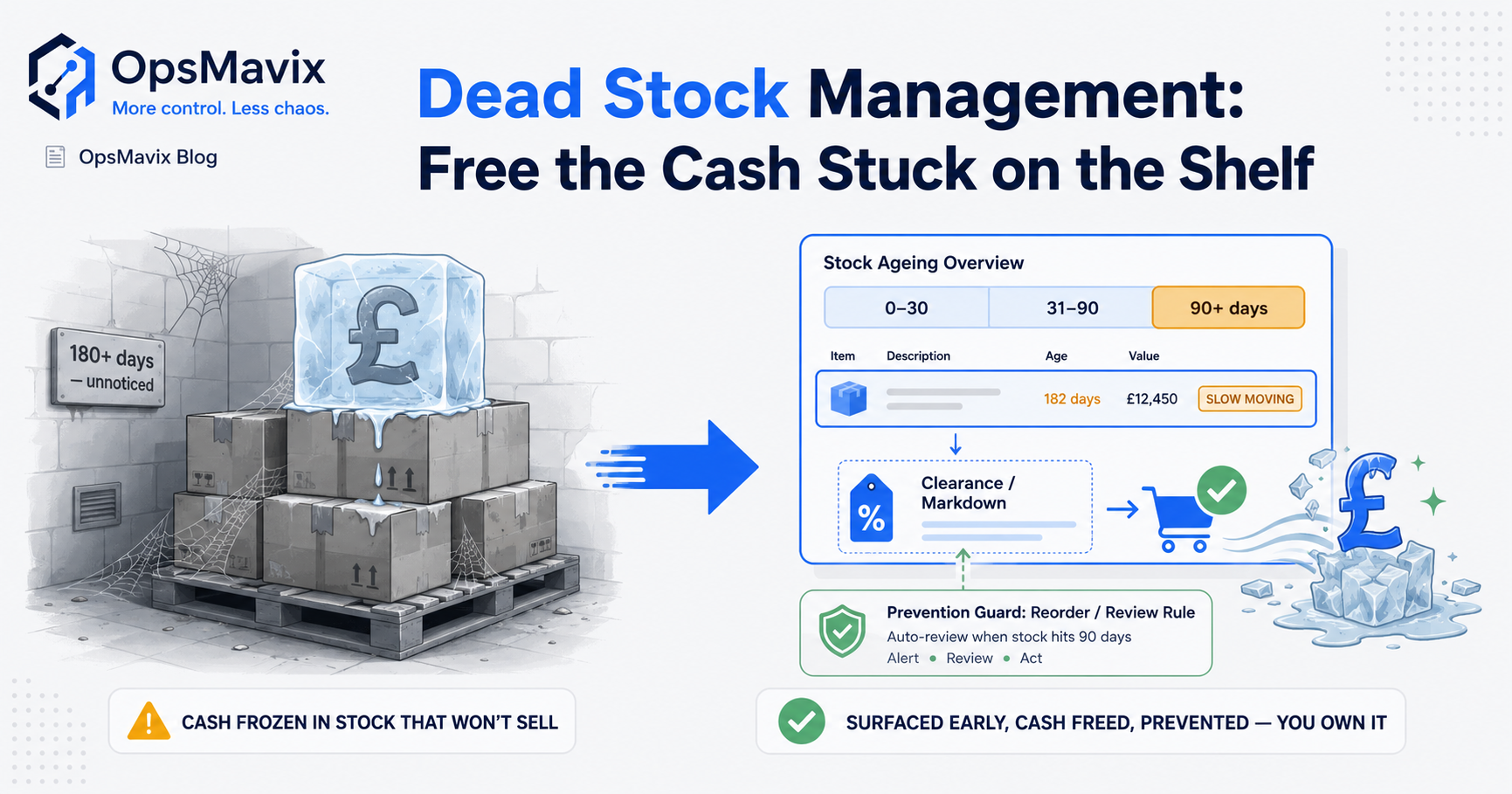
Dead stock management is not really a stock problem — it’s a cash problem wearing a stock disguise. Every line that hasn’t moved in months is money you already spent, sitting on a shelf, paying rent instead of earning. The goal isn’t to count it or shelve it more tidily. It’s to free the cash trapped in it, spot the next batch of slow movers before they die, and stop the buying habit that put it there in the first place. Get that right and dead stock stops being a write-off you discover at year-end and becomes a signal you act on while there’s still margin to save.
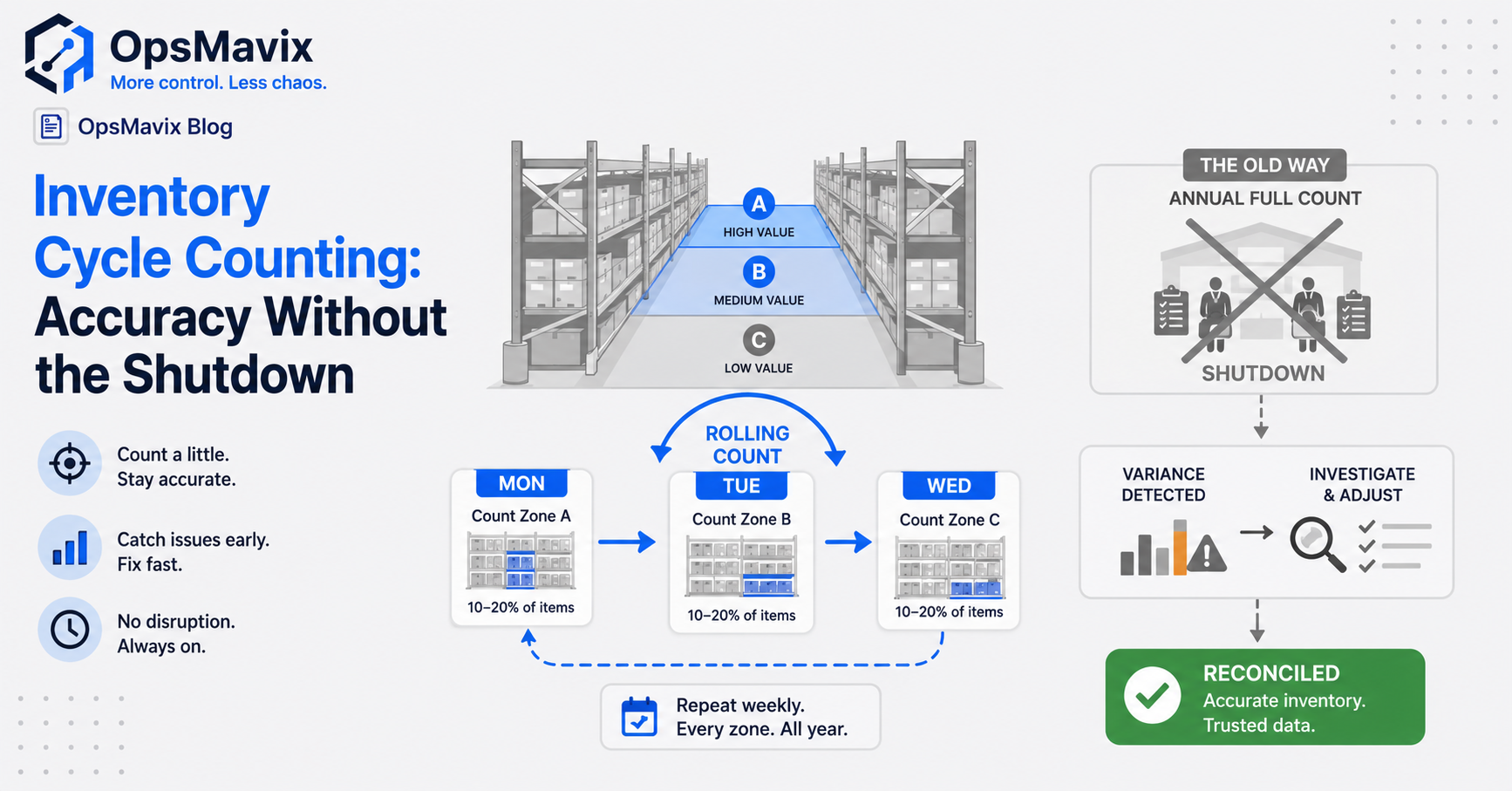
This post is about the cash-stuck-in-stock problem specifically — ageing, clearance, and prevention. It’s the sibling of the counting question (inventory cycle counting keeps your numbers honest) and the tracking question (a SKU tracker tells you what you hold). Those tell you the number is right. This tells you the number is rotting.
Key Takeaways
- Dead stock management is cash management — the real cost is money locked in stock that won’t sell, not the shelf space it takes.
- You can’t manage what you can’t see: stock ageing by SKU (30/60/90/180+ days since last sale) is the one report that turns “we have too much” into “these exact lines are the problem.”
- Clear ageing stock in tiers before it hits zero value — a discounted sale beats a write-off every time.
- Most dead stock is a buying problem: re-ordering on gut, minimum order quantities, and no read on what’s already slow.
- The fix is a system that flags slow movers early and feeds real sell-through back into purchasing, so you stop buying the same duds twice.
1. Dead Stock Is Cash on the Shelf, Not Just Clutter
The first thing to get straight: dead stock costs you money every single day it sits there, whether or not you ever look at it. You paid for it with cash that could have bought stock that sells, or paid down a supplier, or just sat in the bank. Instead it’s frozen in a product nobody’s buying. That’s the real bill — not the metre of shelf it occupies, the working capital it’s holding hostage.
It gets worse quietly. Slow stock ties up space that pushes you toward more storage, attracts handling and stocktake time it doesn’t earn back, and drifts toward obsolescence where it’s worth less every quarter. A line you could have cleared at 20% off last spring becomes a skip run this spring. The businesses that feel this hardest are usually the ones who can’t even see it — the stock’s real, the cost is real, but it never shows up as a number until the accountant flags the write-down.
2. You Can’t Manage What You Can’t Age
The single most useful thing in dead stock management is a stock-ageing view: every SKU, sorted by how long since it last sold. Not “how much stock do we have” — “how long has each line been sitting.” Thirty days, sixty, ninety, a hundred and eighty plus. The moment you can see that, “we’ve got too much stock” stops being a vague dread and becomes a specific list of lines you can actually do something about.
Most businesses can’t produce that report on demand, and that’s the whole problem. The stock figure lives in one place, the sales history in another, and nobody has the hours to reconcile them into “what hasn’t moved.” So the slow movers hide inside a healthy-looking total. As one operator put it, they were “running a million messy spreadsheets for the warehouse” — and none of them answered the one question that matters: what’s dying? Ageing is the report that drags the dead stock out of the average and puts it in front of you while you can still act.
3. Catch Slow Movers Before They Go Dead
Dead stock is rarely a surprise — it’s a slow decline you didn’t have eyes on. A line that sold twenty a month drops to five, then two, then nothing. If you only find out at the annual count, you’ve missed every cheap chance to intervene. Caught at “five a month and falling,” you can promote it, bundle it, or simply stop re-ordering. Caught at zero for six months, your only move is a loss.
The trick is a threshold that trips early. Flag anything whose sell-through rate has fallen below a set line, or that’s crossed sixty or ninety days without a sale, and route it to someone to decide. Not to panic — to choose. Keep, promote, discount, or discontinue. The decision is cheap and reversible when the stock’s merely slow; it’s expensive and one-way once it’s genuinely dead. Early warning is the entire game.
4. Clear the Ageing Lines in Tiers
Once you’ve got a list of slow and dead lines, the instinct is to sit on them hoping demand returns. It rarely does, and every month of hoping costs you more. The disciplined move is a clearance ladder tied to age: the older the stock, the harder you push it, because its value is only heading one way.
A workable pattern: at ninety days slow, a gentle nudge — feature it, bundle it with a fast mover, a small discount. At a hundred and eighty, a real markdown to move volume. Beyond that, clear it hard — job-lot it, sell it to a liquidator, donate it for the tax relief, whatever converts it back to cash or space. The number that matters isn’t the margin you’re giving up; it’s that a line sold at 40% off is cash working again, while the same line held “at full price” is worth exactly nothing until someone buys it, which they won’t.
5. Most Dead Stock Is a Buying Problem
Clearing dead stock without fixing why it appears is bailing a boat with a hole in it. The stock didn’t teleport onto the shelf — someone ordered it. And most over-ordering comes from the same few habits: re-ordering on gut feel, getting talked into a supplier’s minimum order quantity, buying a big batch for a discount that never pays back, or simply having no read on what’s already sitting slow when the next PO goes out.
That last one is the killer. If purchasing can’t see that you’re still holding four months of a line, they’ll happily reorder it. The dead stock you’re clearing today is often a line you’re about to buy again next quarter, because nothing connected “this didn’t sell” to “don’t buy more of it.” Fixing dead stock permanently means closing that loop — real sell-through data in front of whoever raises the order, so the buying decision is informed by what actually moves, not by a supplier’s deal sheet or last year’s optimism.
6. Build the Ageing and Buying Loop Into One System
Off-the-shelf tools tend to fail dead stock management from both ends. Either they can’t show you ageing the way your business actually reads it, or they treat stock and purchasing as separate worlds that never talk — so the slow-mover flag never reaches the person about to reorder it. That’s how businesses end up back in spreadsheets, cross-referencing sales exports against stock counts by hand, which no one keeps up for long.
Our view at OpsMavix: dead stock management works when ageing and purchasing live in one system. Every SKU aged by last sale, slow movers flagged automatically against your own thresholds, and that signal fed straight into re-ordering, so raising a PO for a line you’re still overstocked on gets questioned before it’s placed. Built around your product mix, your ageing bands, your clearance rules — and owned outright, so no vendor can switch it off or price you out of your own numbers.
7. When Off-the-Shelf Is Fine, and When It Isn’t
Be honest about the line. If you run a simple catalogue and your inventory tool already gives you a usable ageing report and a reorder view you trust, you may not need anything built — use what you have and just start acting on the ageing. Dead stock management is a discipline before it’s software; a business that religiously reviews a slow-mover list every month on a spreadsheet beats one with a fancy tool nobody opens.
Where custom earns its place is the gap: too much stock and too many SKUs to manage on spreadsheets, but not enough to justify a full ERP rollout that treats ageing as a buried sub-report. If your slow movers hide inside a healthy total, your purchasing can’t see what’s already dying, and clearance decisions happen too late to save margin, that’s a leak worth building around. The point isn’t more software — it’s the ageing-and-buying loop closed tight enough that dead stock stops quietly refilling the shelves.
Dead Stock, Managed vs Unmanaged
| Unmanaged (spreadsheet + gut) | Managed (ageing + buying loop) | |
|---|---|---|
| First sight of dead stock | Year-end write-down | Live ageing, 30/60/90/180+ days |
| Slow movers | Hidden in the average | Flagged automatically, early |
| Clearance | Panic markdown or skip | Tiered by age, margin saved |
| Buying | On gut, no read on what’s slow | Sell-through feeds the reorder |
| Cash tied up | Unknown until the accountant flags it | A live figure you watch and cut |
| Recurrence | Same duds bought again next quarter | The loop questions the repeat order |
FAQ
What is dead stock management?
Dead stock management is the practice of finding, clearing, and preventing stock that no longer sells — obsolete, slow-moving or excess inventory. The core of it is cash: money locked in unsold stock that can’t earn until it moves. Good dead stock management spots slow movers early through stock ageing, clears ageing lines before they hit zero value, and feeds real sell-through back into purchasing so you stop over-buying the lines that go dead.
How do I identify dead stock?
Run a stock-ageing report: list every SKU by how long since it last sold — 30, 60, 90, 180-plus days. Anything past your threshold with little or no recent sales is dead or dying. The reason most businesses can’t do this easily is that stock levels and sales history sit in separate systems, so the slow movers hide inside a healthy-looking total. Joining those two views is the whole job.
What’s the difference between dead stock and slow-moving stock?
Slow-moving stock still sells, just below the rate you’d want — it’s the warning sign. Dead stock has effectively stopped selling and is heading toward a write-off. The point of managing it is to act while stock is merely slow, when you can still promote, bundle or discount it profitably, rather than waiting until it’s dead and your only option is a loss.
How do I stop dead stock building up again?
Fix the buying, not just the shelf. Most dead stock comes from re-ordering on gut, chasing supplier minimum order quantities, or having no view of what’s already slow when the next order goes out. Close the loop: put real sell-through data in front of whoever raises purchase orders, so a reorder for a line you’re still overstocked on gets questioned before it’s placed.
Is a markdown better than holding dead stock?
Almost always, yes. A line sold at a discount is cash working again; the same line held “at full price” is worth nothing until someone buys it — and if it’s dead, they won’t. The margin you appear to give up in a markdown is smaller than the ongoing cost of storage, handling and tied-up capital, plus the risk the stock becomes worthless. Clear in tiers by age rather than hoping demand returns.
How OpsMavix Can Help
OpsMavix builds custom inventory automation systems for stock-holding businesses stuck in the gap — too much stock to manage on spreadsheets, not enough to justify a full ERP. For dead stock specifically, that means live ageing by SKU, slow movers flagged against your own thresholds before they die, clearance tiers tied to age, and sell-through fed straight into purchasing so you stop buying the lines that go dead. For online sellers, that extends to a tailored ecommerce inventory setup across your channels. Built around your product mix and yours to own outright — no black-box, no vendor lock-in.
If you suspect there’s cash frozen in stock that won’t sell but can’t put a number on it, that’s a leak you’re paying for every day. Book a Free Operations Leak Audit and we’ll map the dead and dying lines, what they’re costing you in tied-up cash, and how to stop them quietly refilling the shelves.
Keep reading

Getting value from OpsMavix? Add us as a preferred source on Google — you'll see more of our operations content in your AI Overviews, AI Mode and Search.