
Time and Materials Billing Software: US Contractor Guide
Bill every hour and part your crews use. A US guide to time and materials billing software, signed field tickets, NTE caps and a worked USD margin example.
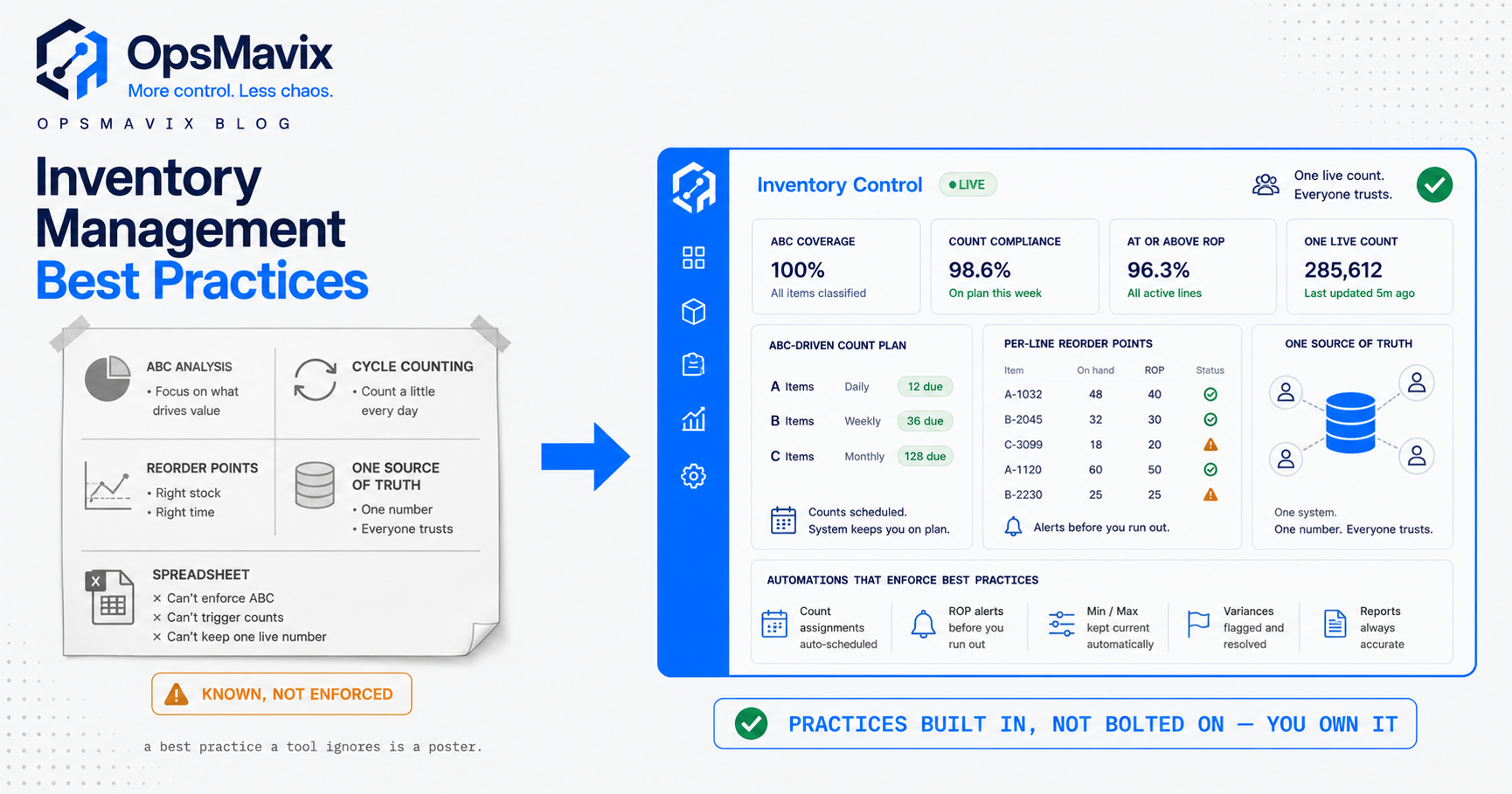
Inventory Management Best Practices That Actually Move the Needle
The inventory management best practices worth doing (SKU hygiene, ABC analysis, cycle counting, reorder points) all depend on one thing: stock records you can trust. This guide is for growing UK operators who have outgrown spreadsheets and want the practices that move the needle rather than a longer to-do list.
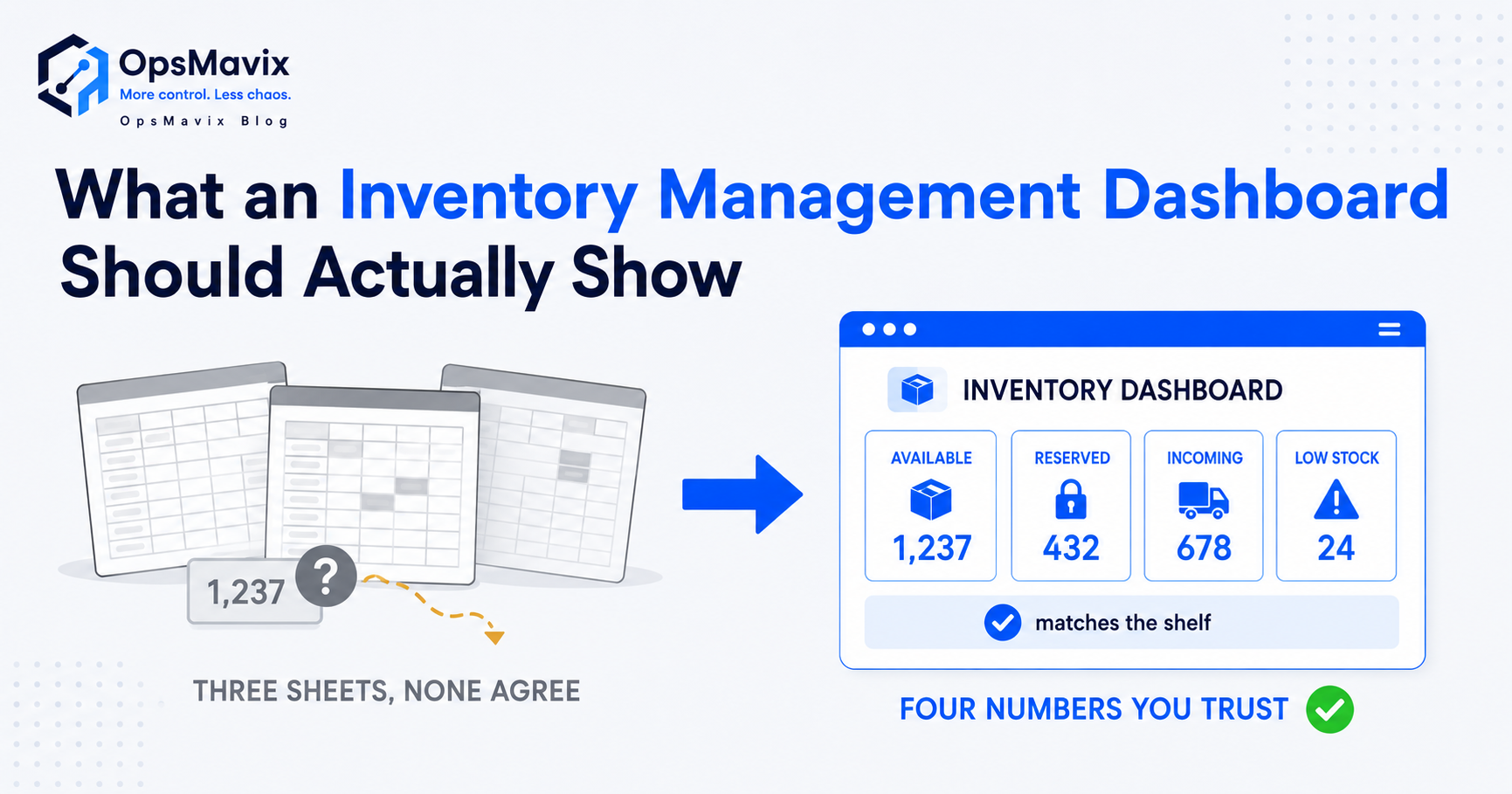
Inventory Management Dashboard: What It Should Actually Show (and the Leaks It Closes)
An inventory management dashboard is only worth having if every number on it matches the shelf. Here's what one should actually show, the leaks it closes (overselling, phantom stock, dead lines), when to buy off-the-shelf versus build, and how to right-size it without buying a £100k WMS.
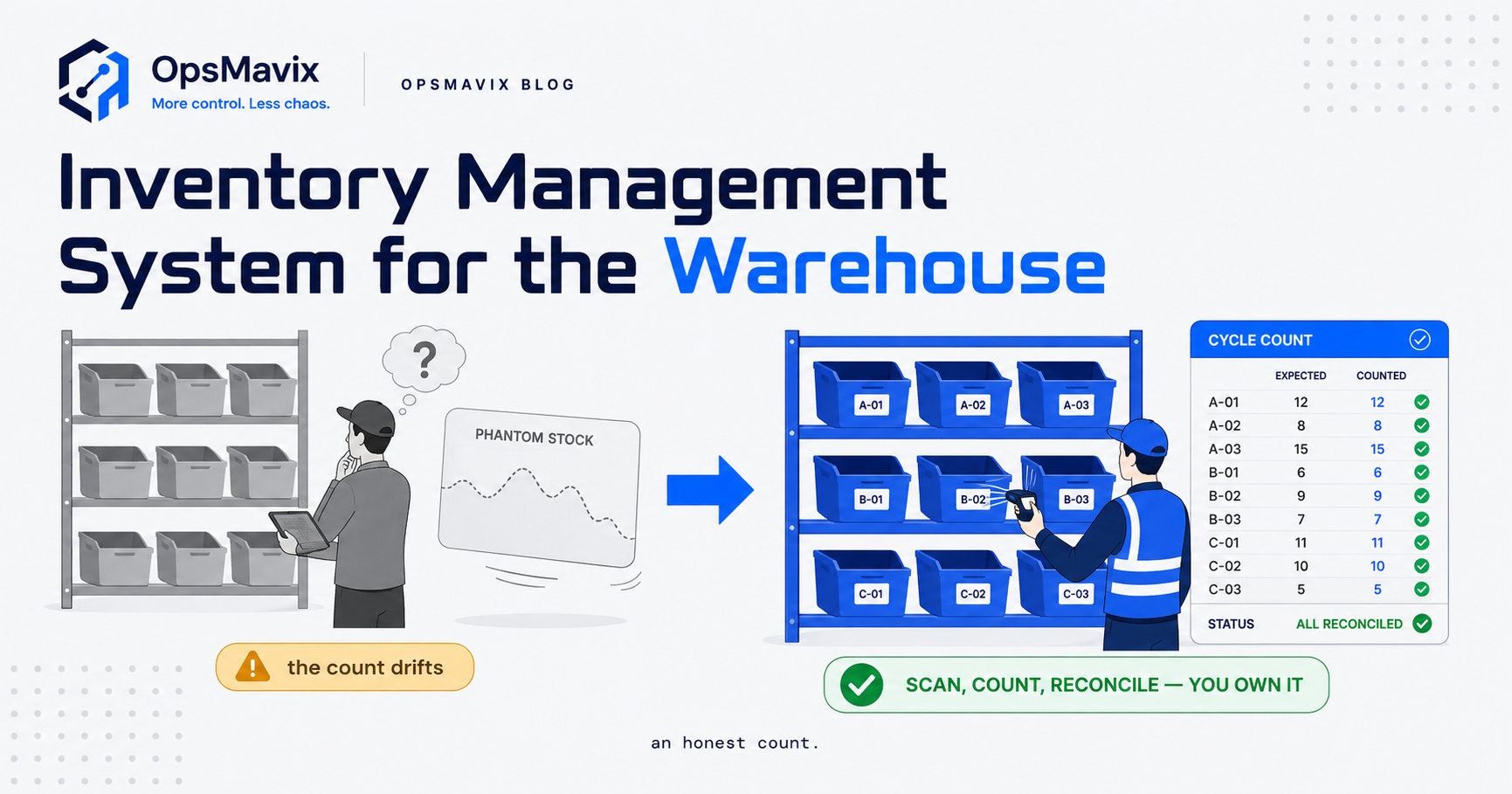
Inventory Management System for Warehouse: Making the Count Honest
An inventory management system for warehouse teams is really a machine for keeping one number honest: what's actually on the shelf. This is for the growing operation that's outgrowing spreadsheets and disconnected tools, and needs the count it can trust.
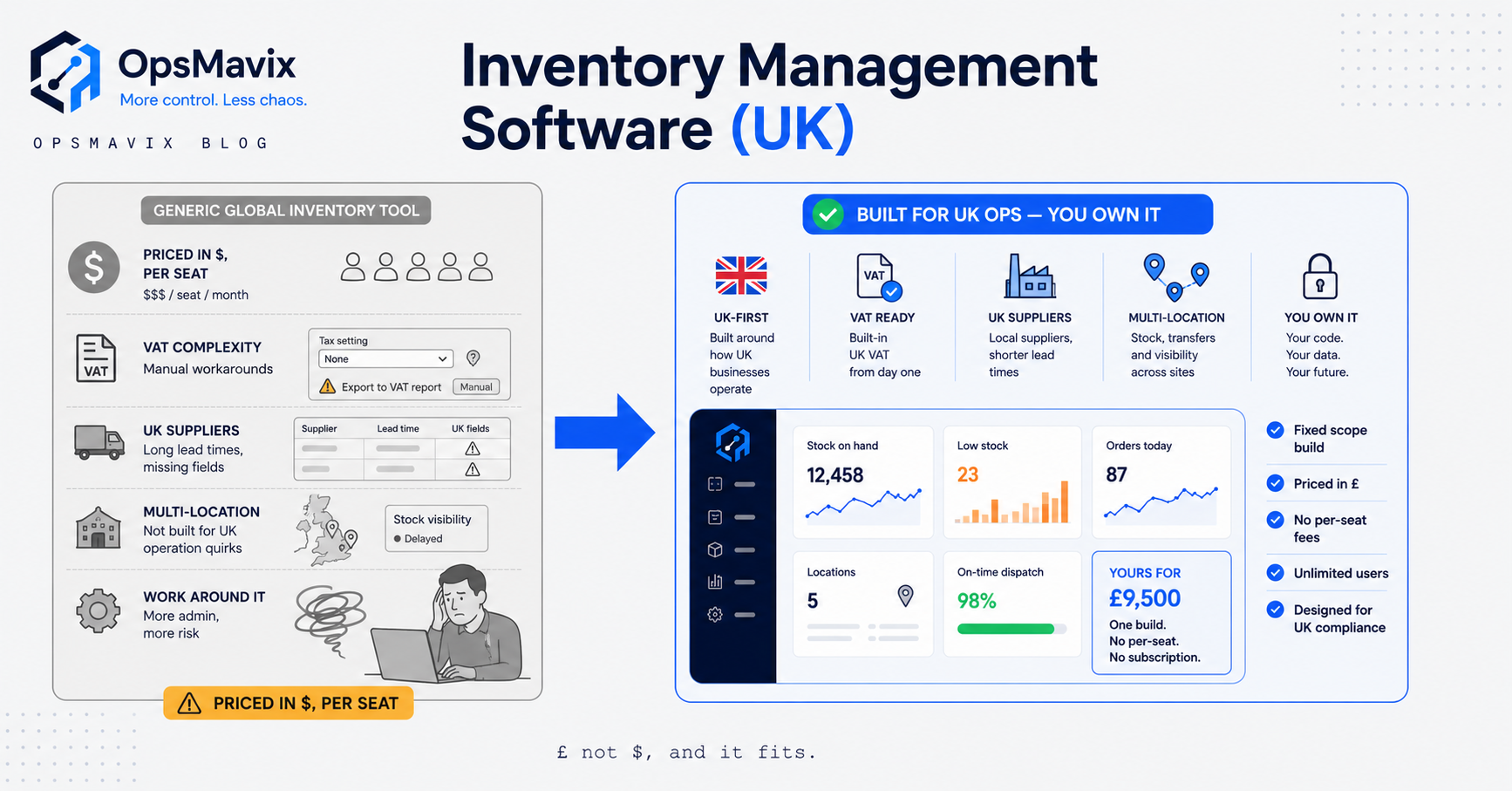
Inventory Management Software UK: Choosing a System That Fits
A practical UK buyer's guide to inventory management software, covering VAT and Making Tax Digital fit, integrations, and the real choice between a cheap tool, a full ERP, and a right-sized owned system for a business that has outgrown spreadsheets and disconnected tools.
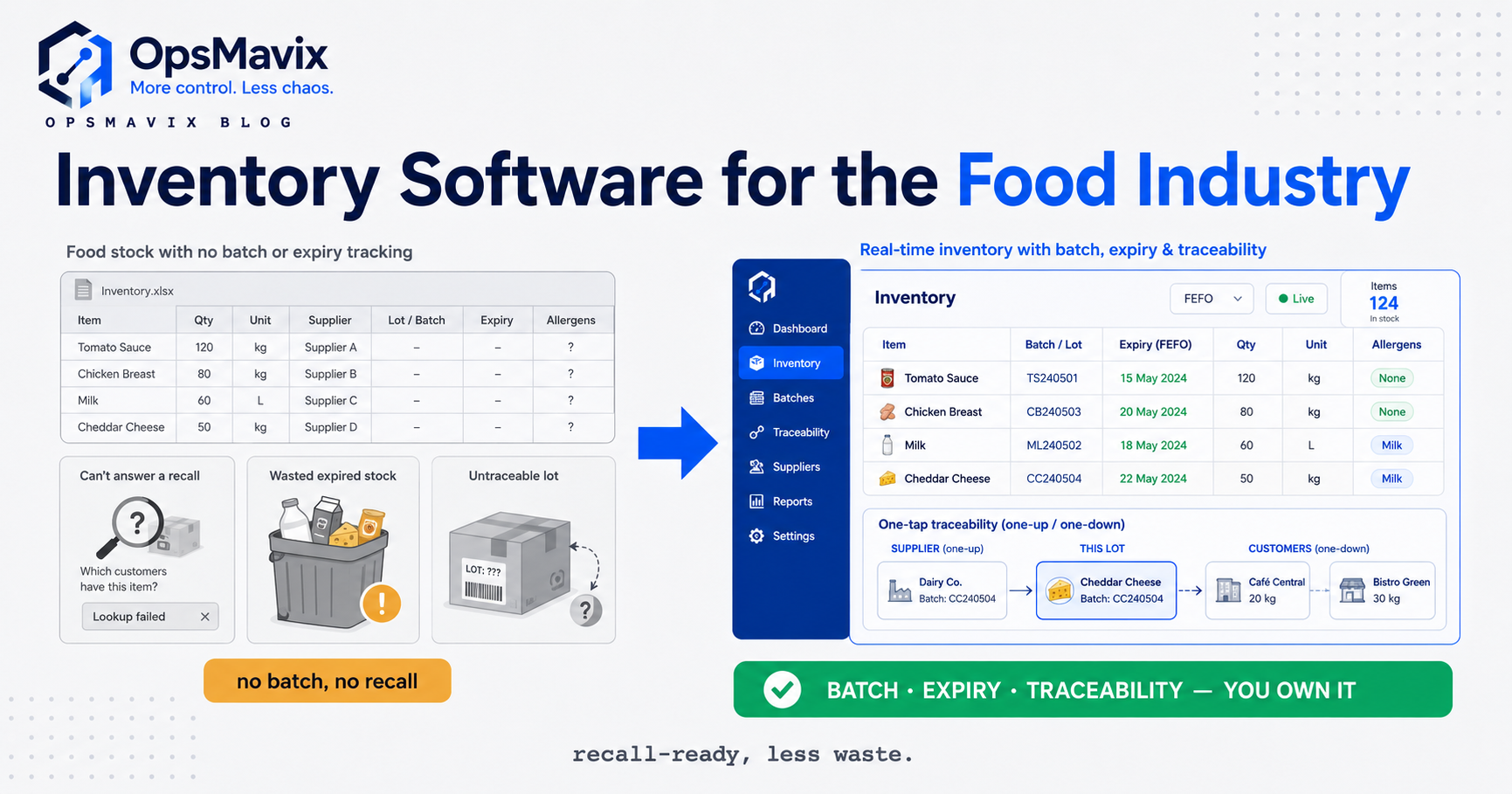
Inventory Management Software for the Food Industry
A generic stock app counts units. Inventory management software for the food industry has to track batches, expiry dates and allergens, drive first-expired-first-out picking, and trace one-up and one-down for a recall. This guide covers what food inventory software must do differently, and the right-sized owned alternative to bending your business around a heavy food ERP.
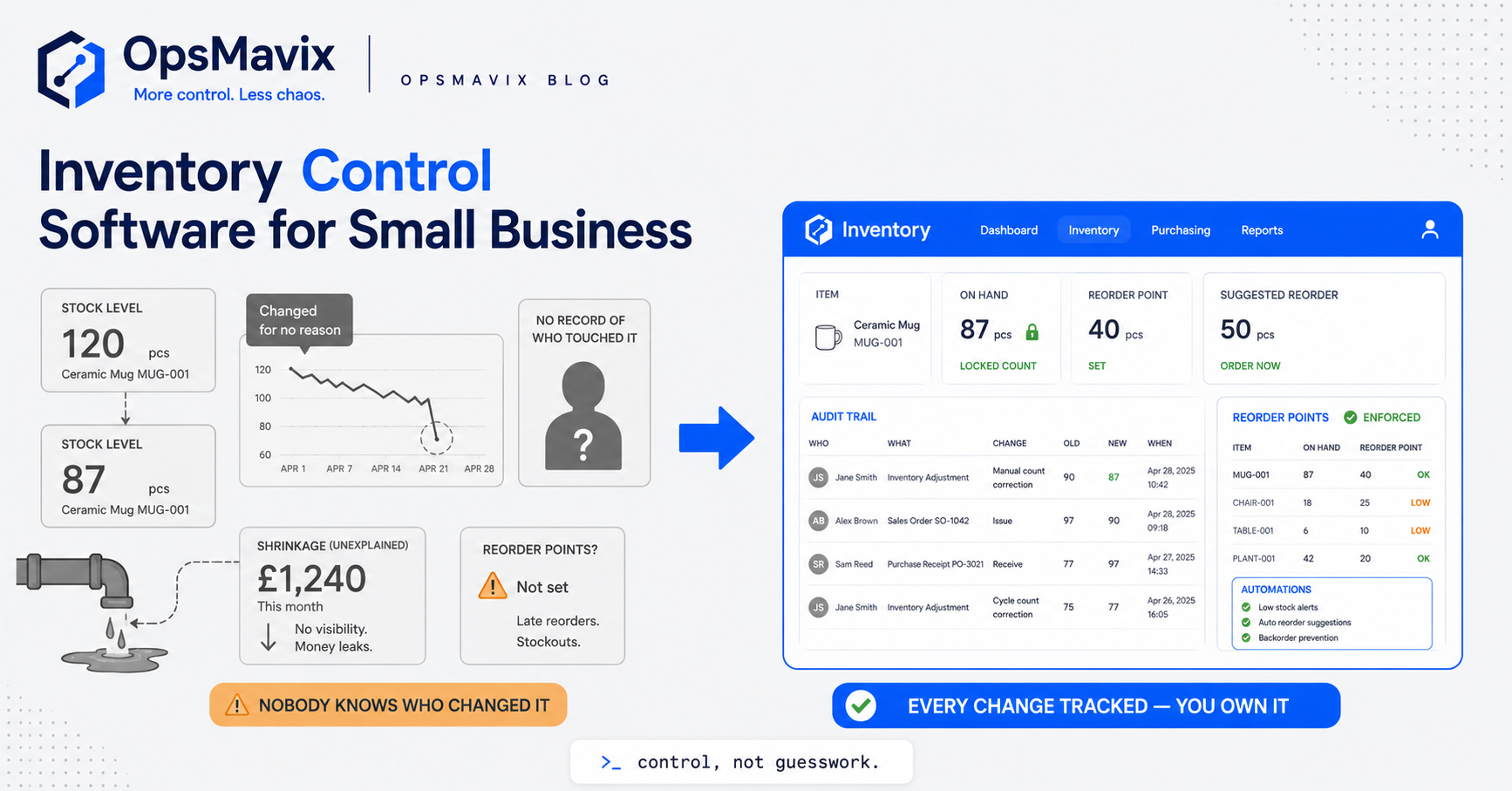
Inventory Control Software for Small Business: Stopping the Count From Drifting
Inventory control software for small business is about accuracy and accountability, not just storing a number. This guide shows how the right-sized system stops your count drifting for firms outgrowing spreadsheets and disconnected tools.
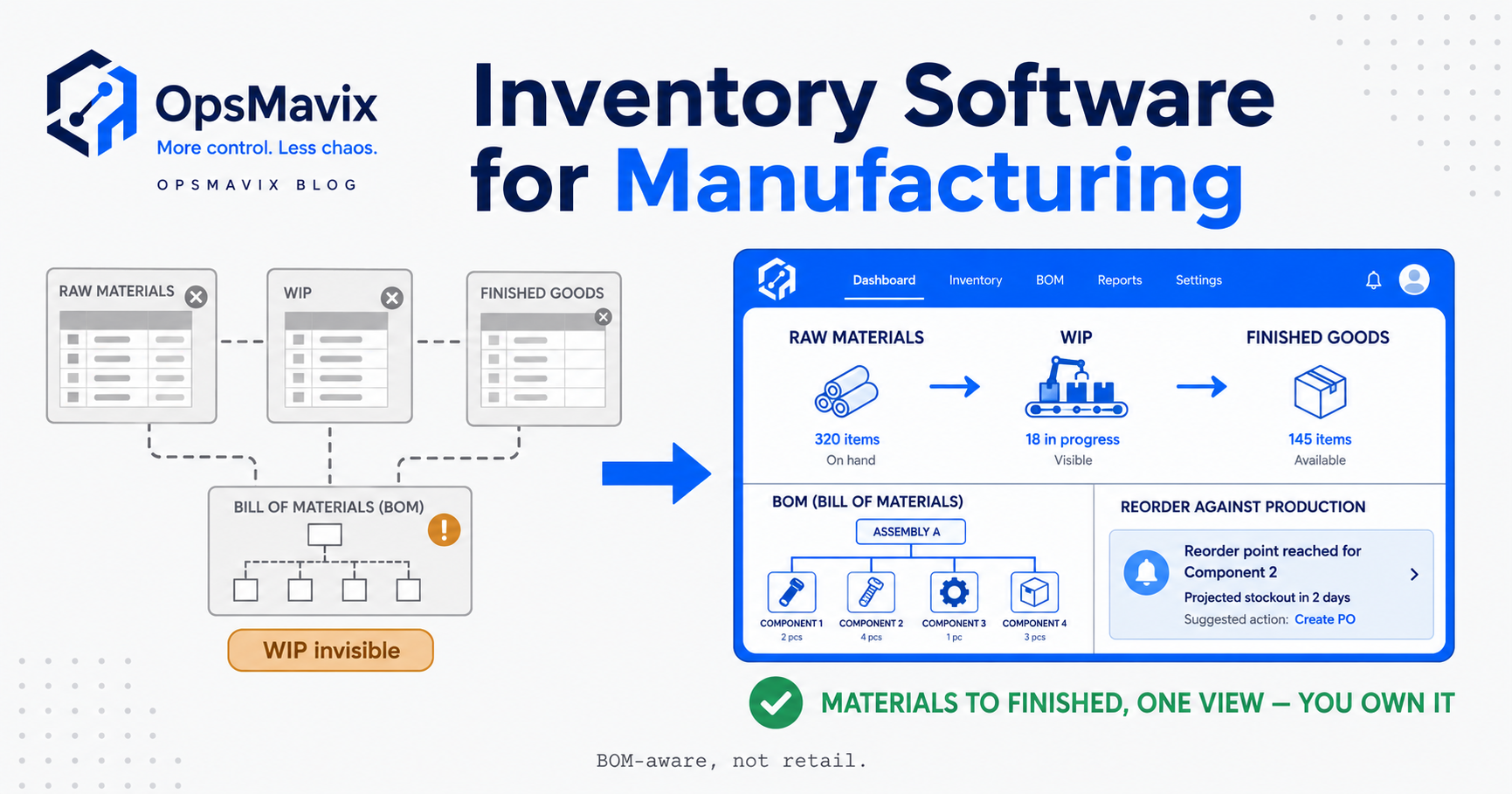
Inventory Management Software for Manufacturing: What It Must Do
A retail stock app counts finished goods on a shelf. A manufacturer has to track raw materials, work-in-progress, bills of materials and finished goods at once, with lot traceability underneath. This is what inventory management software for manufacturing must actually do, and why growing UK makers keep landing in the gap: outgrowing spreadsheets and disconnected tools.
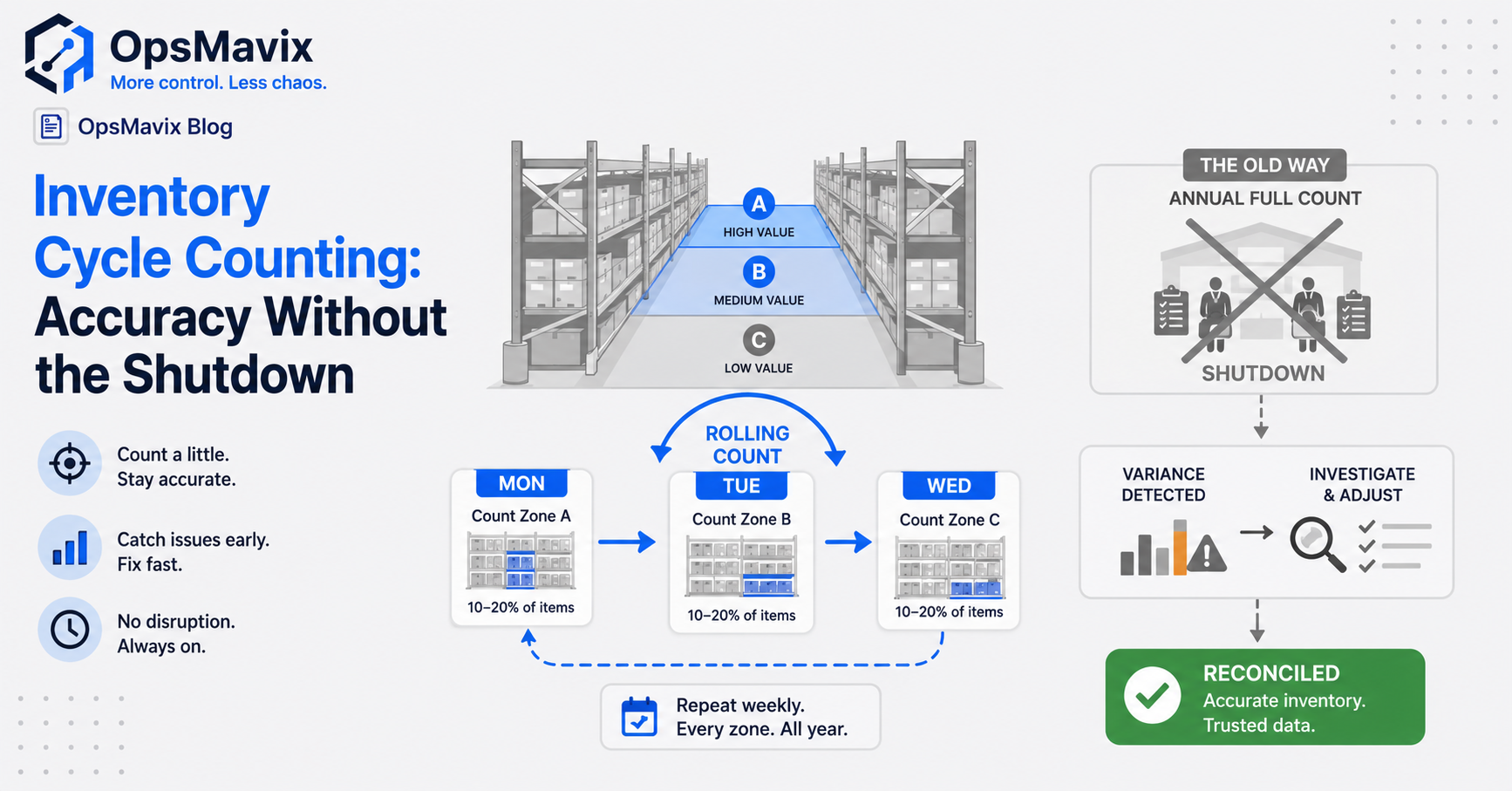
Inventory Cycle Count: Accuracy Without the Shutdown
An inventory cycle count keeps your numbers right without shutting the warehouse for a full count. Here's how to run one — ABC tiers, frequency, variance chasing — so the system finally matches the shelf.