
Sales Ledger: What It Is and How It Works (UK Guide)
A sales ledger records what each customer owes you. What gets posted, the control account, the daily process, a UK example and what Xero, QuickBooks and Sage call it.
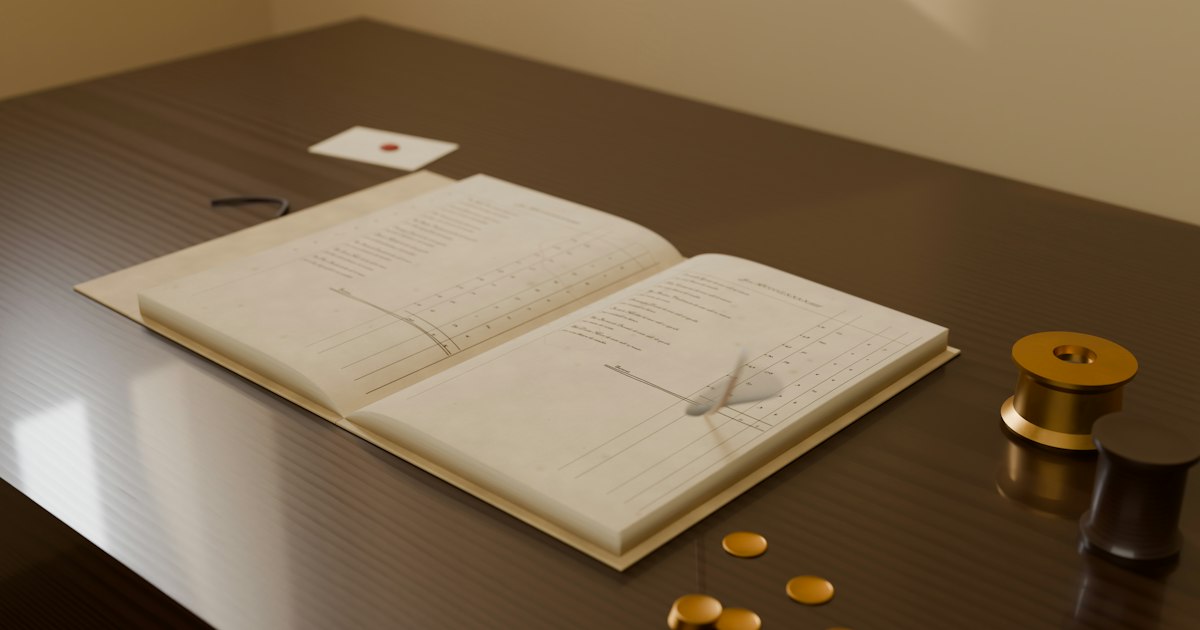
A sales ledger is the record of what each customer owes your business. Every sales invoice, credit note and receipt is posted to the customer’s account, so the ledger shows the balance each customer owes and the total owed by all of them. In the UK it is also called the debtors ledger or the accounts receivable ledger.
What is a sales ledger?
If you are asking what is sales ledger in plain terms, it is the detail behind the single “trade debtors” figure on your balance sheet. The balance sheet says customers owe you £24,040.00. The sales ledger says who owes it, for which invoices, and since when.
Each customer who buys on credit has an account. Each account lists that customer’s transactions in date order with a running balance. A sale paid for on the spot leaves nothing owing, so the sales ledger is really about credit customers.
The name varies. “Ledger sales”, “sales ledgers” and “customer ledger” all turn up in searches and job adverts, and they mean the same thing. Accounting software often avoids the word ledger altogether: you see a list of customers, each with paid and unpaid invoices.
People also use “sales ledger” for the job. A sales ledger clerk raises invoices, posts receipts and chases overdue accounts. In larger firms the same function is called accounts receivable or credit control.
It earns its keep in three ways:
- You know who owes you what. One account per customer answers a query in seconds.
- You get paid sooner. Statements, reminders and the aged debtors report all run from the ledger.
- Your accounts and VAT figures are right. Sales, debtors and output VAT all come from what is posted here.
What gets posted to the sales ledger
Three types of transaction make up almost every entry.
| Transaction | Effect on what the customer owes | Typical double entry (VAT-registered business) |
|---|---|---|
| Sales invoice | Increases it | Debit the sales ledger control account with the total. Credit sales with the net amount. Credit VAT |
| Customer credit note | Reduces it | Debit sales or sales returns. Debit VAT. Credit the control account with the total |
| Receipt from the customer | Reduces it | Debit the bank account. Credit the control account |
Quotes, sales orders, delivery notes, statements and remittance advices are not posted. Nor is a proforma invoice, which shows what a sale will cost before it is final. A remittance advice tells you what a payment covers; the payment is what goes in the ledger.
Less often you will post a refund to a customer, or write off a debt that will never be paid. Ask your accountant how to treat the VAT on a bad debt before you write one off.
If you are VAT-registered, HMRC’s guidance on keeping VAT records says you must keep copies of all the sales invoices you issue, even ones you cancel or produce by mistake, along with your debit and credit notes, and keep VAT records for at least 6 years. This is general information checked on 26 November 2026, not tax advice.
The sales ledger control account
The sales ledger control account is a single account in the nominal ledger that holds the total owed by all customers. Every invoice, credit note and receipt posted to a customer account also updates the control account, so the two should always agree. Sage calls it the debtors control account; Xero calls it Accounts Receivable.
Software posts both sides for you, but the check is still worth doing at each month end. Here is a small reconciliation.
Hypothetical. The businesses and figures are illustrative, and any resemblance to real businesses is unintended. Pennine Steel Ltd, a steel stockholder, lists its customer balances at 30 November 2026:
| Customer | Balance at 30 November |
|---|---|
| Northgate Fixings Ltd | £3,480.00 |
| Aireside Engineering Ltd | £5,750.00 |
| Donbank Fabrications Ltd | £5,000.00 |
| Ridgeway Trailers Ltd | £4,200.00 |
| Harbourline Marine Ltd | £3,750.00 |
| Castlegate Joinery Ltd | £1,860.00 |
| Total of customer accounts | £24,040.00 |
It then proves the control account from the month’s postings:
| Sales ledger control account, November 2026 | Amount |
|---|---|
| Opening balance at 1 November | £22,310.00 |
| Add sales invoices posted | £19,560.00 |
| Less credit notes posted | (£610.00) |
| Less receipts from customers | (£17,220.00) |
| Closing balance at 30 November | £24,040.00 |
| Total of customer accounts | £24,040.00 |
| Difference | £0.00 |
The two agree, so the ledger is internally consistent. Our guide to the aged debtors report splits these same balances by age. Now suppose someone writes off Castlegate Joinery’s £1,860.00 with a journal posted straight to the control account. The control account falls to £22,180.00 while the customer accounts still total £24,040.00, and the difference is exactly the journal.
That is the usual cause. Sage’s help for Sage 50 Accounts says journals posted to the debtors control account do not affect the customers ledger, which causes a difference between the two balances (Sage). Xero’s help lists Accounts Receivable as a system account that does not accept transactions or manual journals entered directly (Xero).
Sales ledger vs purchase ledger vs nominal ledger
| Sales ledger | Purchase ledger | Nominal ledger | |
|---|---|---|---|
| Question it answers | Who owes us, and how much? | Who do we owe, and how much? | What are our income, costs, assets and liabilities? |
| Also called | Debtors ledger, accounts receivable ledger | Creditors ledger, accounts payable ledger | General ledger |
| One account per | Customer | Supplier | Type of income, cost, asset or liability |
| Posted from | Sales invoices, customer credit notes, money received | Purchase invoices, supplier credit notes, payments out | Totals from the other two ledgers, the bank and journals |
| Normal balance | Debit, because it is an asset | Credit, because it is a liability | Either |
| Ageing report | Aged debtors | Aged creditors | None |
| Document sent from it | Statement of account | Remittance advice | None |
The sales ledger is the mirror image of the purchase ledger. Your sales invoice is your customer’s purchase invoice, and your debtor is their creditor.
The day-to-day sales ledger process
- Set the customer up once. One account per customer, with agreed payment terms, a credit limit and an accounts email address, not just the buyer’s.
- Invoice promptly. Raise the invoice the day the goods leave or the work is done, and quote the customer’s purchase order number. An invoice that is late or missing a PO number gives the customer a reason to pay late.
- Post credit notes as soon as they are agreed. A credit note left in someone’s inbox keeps the balance too high and starts an argument.
- Send statements. A monthly statement of account shows the customer everything on the account and flushes out queries early.
- Chase what is overdue. Work from the aged debtors report every week, oldest and largest first. Our guide to credit control covers the reminder sequence.
- Allocate cash from the remittance advice. When money arrives, match it to the invoices the customer says it pays. If no remittance came, ask for one. Do not guess.
- Reconcile. Agree the bank, then agree the customer balances to the control account, then review credit balances and unallocated cash.
A worked UK example
Hypothetical. The businesses, references and figures are illustrative. VAT is at the UK standard rate of 20%, as listed on the government’s VAT rates page.
Pennine Steel Ltd sells steel bar to Northgate Fixings Ltd, a fastener wholesaler in Sheffield, on 30-day terms. Both are VAT-registered. This is Northgate’s account in Pennine Steel’s sales ledger for November 2026. It is the same trading relationship we used in the purchase ledger guide, seen from the seller’s side.
| Date | Reference | Details | Debit | Credit | Balance owed |
|---|---|---|---|---|---|
| 1 Nov | Balance brought forward | £2,400.00 | |||
| 4 Nov | INV-5512 | Sales invoice: £1,500.00 net plus £300.00 VAT | £1,800.00 | £4,200.00 | |
| 11 Nov | INV-5547 | Sales invoice: £900.00 net plus £180.00 VAT | £1,080.00 | £5,280.00 | |
| 13 Nov | CN-0098 | Credit note, damaged bar: £200.00 net plus £40.00 VAT | £240.00 | £5,040.00 | |
| 27 Nov | BACS | Receipt, allocated to INV-5398 and INV-5431 less CN-0091 | £2,400.00 | £2,640.00 | |
| 27 Nov | INV-5590 | Sales invoice: £700.00 net plus £140.00 VAT | £840.00 | £3,480.00 |
A debit increases what Northgate owes. A credit reduces it. That is the opposite way round to a supplier account in a purchase ledger.
The receipt on 27 November is where allocation matters. Pennine’s bank shows £2,400.00 from Northgate, but the two October invoices total £2,580.00. Northgate’s remittance advice explains the gap: it pays INV-5398 (£1,560.00) and INV-5431 (£1,020.00) less credit note CN-0091 (£180.00). The clerk allocates the receipt and the credit note to those two invoices, and nothing from October is left open.
Behind the first November invoice, the nominal ledger moves like this:
| Nominal account | Debit | Credit |
|---|---|---|
| Sales ledger control | £1,800.00 | |
| Sales | £1,500.00 | |
| VAT | £300.00 |
At 30 November Pennine’s ledger says Northgate owes £3,480.00, and that is the figure on the statement it sends. Northgate’s own purchase ledger shows £2,640.00, because it has not yet received INV-5590 for £840.00. Neither ledger is wrong. The statement is how the two sides find the difference.
Common mistakes
- Unallocated cash. A receipt posted “on account” and never matched leaves paid invoices looking overdue. The customer gets chased for money they have paid.
- Credit notes not posted, or posted and not allocated. The balance overstates what is owed and the ageing is wrong.
- Duplicate customer accounts. “Northgate Fixings” and “Northgate Fixings Ltd” as two records split the invoices from the receipts. Search before you create a customer.
- Receipts posted to the wrong customer. Similar names and group companies are the usual cause. The remittance advice settles it.
- Receipts coded as other income. Money banked without touching the customer account leaves the invoice open. Sage’s help for Sage Accounting notes that a receipt entered as an Other Receipt does not appear on its Aged Debtors report (Sage).
- Invoicing late. Payment terms usually run from the invoice date, so a week’s delay in invoicing is a week’s delay in cash.
- Journals to the control account. The customer accounts no longer add up to the nominal ledger.
- Never reconciling. Small differences are easy to trace in the month they happen and hard a year later.
How Xero, QuickBooks and Sage name the sales ledger
We checked each vendor’s own help pages on 26 November 2026. The cloud tools mostly avoid the words “sales ledger”.
| Tool | Customer invoices are called | Account holding the total owed | Report listing customer balances |
|---|---|---|---|
| Xero | Invoices | Accounts Receivable, a system account | Aged Receivables Summary, with an Aged Receivables Detail report behind it |
| QuickBooks Online (UK) | Invoices, which its help describes as requests for payment sent to customers | Debtors, which its help says tracks transactions for customers who owe you money | Accounts receivable ageing summary |
| Sage Accounting | Sales invoices | Trade Debtors, default code 1100 | Aged Debtors |
| Sage 50 Accounts | Sales invoices, in the Customers module | Debtors Control, default code 1100 | Aged debtors reports under Customers, then Reports |
Sources: Xero system accounts, Xero Aged Receivables Summary, QuickBooks on invoices, QuickBooks chart of accounts, QuickBooks ageing reports, Sage Accounting control accounts, Sage Accounting Aged Debtors, Sage 50 control accounts and Sage 50 aged debtors.
If chasing is the problem and not the ledger itself, our guide to accounts receivable software for small business looks at the tools that sit on top.
FAQs
What is sales ledger?
It is the set of customer accounts that records what each customer owes a business. Sales invoices, credit notes and receipts are posted to it, and its total is the trade debtors figure in the accounts.
Is the sales ledger the same as accounts receivable?
In practice, yes. Sales ledger and debtors ledger are the traditional UK terms and accounts receivable is the international one. Xero uses Accounts Receivable; QuickBooks and Sage use Debtors in the UK.
Is the sales ledger a debit or a credit balance?
Normally a debit balance, because it is money owed to you and so an asset. A credit balance on a customer account means the customer has overpaid or is holding a credit note, and it should be followed up.
What is the sales ledger control account?
It is the one account in the nominal ledger that holds the total of all customer balances. It should equal the total of the sales ledger at any date. If it does not, look first for journals posted directly to it.
What is the difference between the sales ledger and the purchase ledger?
The sales ledger records what customers owe you. The purchase ledger records what you owe suppliers. The same invoice sits in the seller’s sales ledger and the buyer’s purchase ledger. Our guide to the accounts payable process follows an invoice through the buyer’s side.
How long do we need to keep sales invoices?
HMRC says VAT-registered businesses must keep copies of all sales invoices they issue and keep VAT records for at least 6 years. Ask your accountant if you are unsure which rules apply to you.
How OpsMavix can help
A sales ledger goes wrong upstream: orders are delivered and invoiced late, credits are agreed by phone and never raised, and nobody sees that a customer is over their limit until the next order has shipped.
- OpsMavix ERP covers stock, orders, purchasing and the books in one system. Core is £99.99 a month or £999.99 a year for the whole company, with no per-user fees and a 30-day trial; a card is needed and nothing is charged until day 30. Be clear about the limits: it has no bank feeds, so receipts are not matched from the bank automatically, and it has no HMRC VAT filing, no multi-currency and no payroll. Its posting rules have not been reviewed by an accountant, so ask yours to check the set-up before you rely on it for your books. It is new, with no customer stories yet. If you need any of those missing pieces today, stay on Xero, QuickBooks or Sage. See the ERP pricing page and our note on whether OpsMavix is right for you.
- A custom build fits when the ledger is fine where it is and the work before the invoice is the problem. OpsMavix builds wholesale order management systems at a fixed price in writing, from £4,950 for a first system, live in about 30 days, with half paid to start and half when it works. There are no per-seat fees and you own the code, data and hosting. A build can be scoped to check a customer’s balance and credit limit at order entry and to pass each delivered order to your accounting software for invoicing.
Talk to us about how orders become invoices, and invoices become cash, in your business today.
Keep reading


Getting value from OpsMavix? Add us as a preferred source on Google — you'll see more of our operations content in your AI Overviews, AI Mode and Search.