
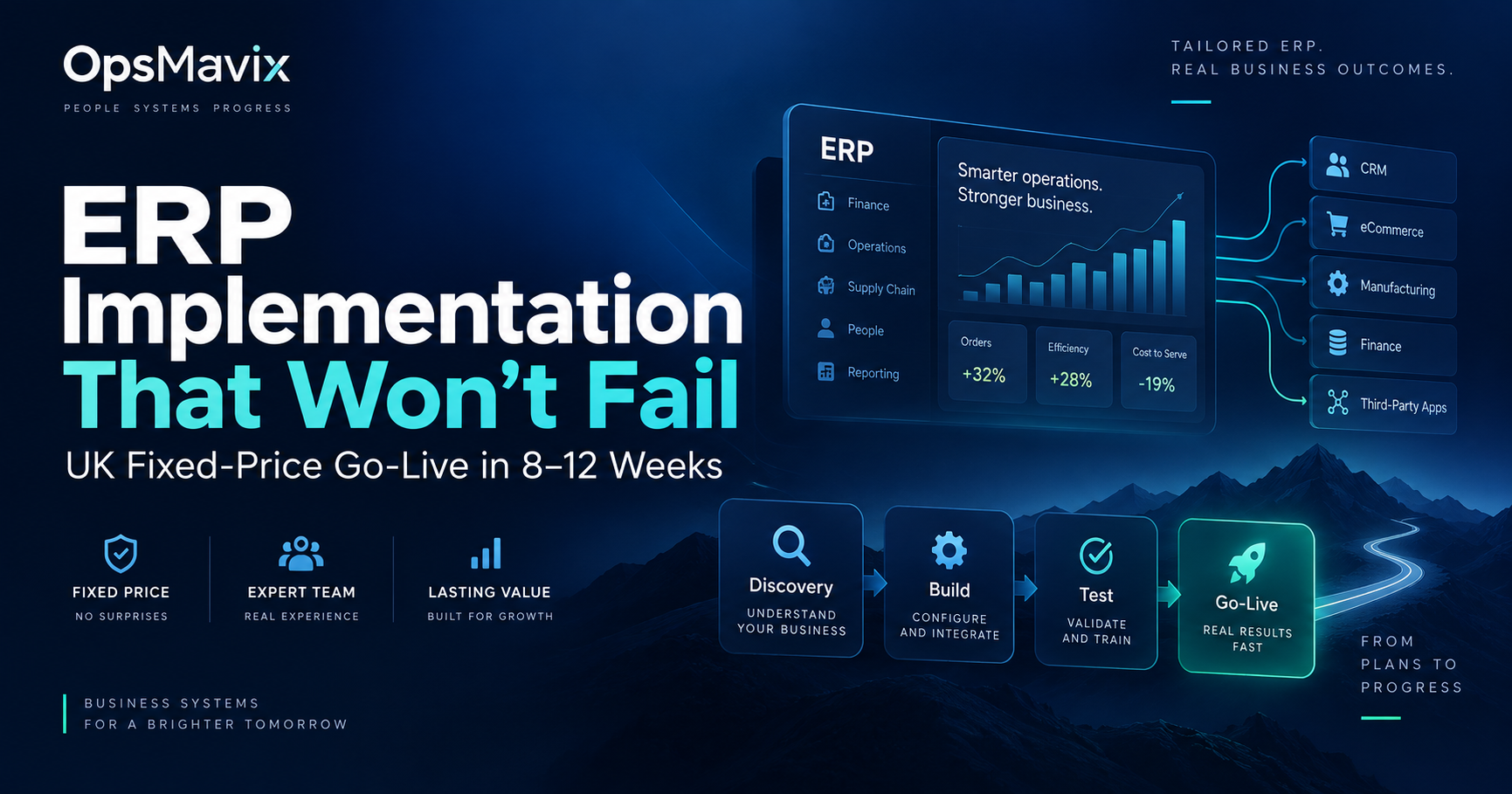
ERP Implementation That Won't Fail — UK Fixed-Price Go-Live in 8–12 Weeks
OpsMavix delivers fixed-price ERP implementation for UK SMEs, with tailored workflows, clear scope, structured testing, data migration, and go-live typically targeted within 8–12 weeks.
Introduction
ERP implementations rarely fail because the software simply does not work. Problems usually begin much earlier: unclear requirements, poor process fit, uncontrolled scope changes, weak data preparation, and a lack of accountability around decisions.
For many businesses, the problem is simple: they are trying to force the way they operate into software that was designed for thousands of other companies.
At OpsMavix, we take a different approach.
We build our own ERP platform and tailor it around how your business actually works. See how OpsMavix works. Instead of forcing your processes into rigid modules, we design the workflows, approvals, data structures, integrations, and reporting around your operation.
For suitable SME projects, we deliver on a fixed-scope, fixed-price basis, with a typical go-live target of 8–12 weeks.
No endless implementation. No per-user licence fees. No surprise development invoices for functionality that should have been identified before the project started.
In this guide, we explain how our ERP implementation process works and why building a system around your business can reduce many of the risks associated with traditional ERP projects.
Why So Many ERP Implementations Go Wrong
Most troubled ERP projects have one thing in common: important decisions were left unresolved until too late.
The 5 Most Common ERP Implementation Problems
-
Generic software forces process compromises A platform may technically be customisable, but every deviation from its standard process can add configuration, development, testing, cost, and complexity. With a tailored ERP, the system is designed around the agreed process from the start.
-
Discovery is rushed Cutting the requirements-gathering phase to save time usually creates rework later. If purchasing, inventory, finance, production, fulfilment, or reporting requirements are unclear before development starts, they become expensive questions during testing.
-
Data migration is underestimated Legacy data is rarely clean. Duplicate products, inconsistent customer records, missing fields, incorrect stock figures, and historical workarounds can quickly become go-live problems. Data needs to be audited before migration, not after it.
-
Poor process fit leads to poor user adoption A system can pass technical testing and still fail operationally if employees find it slower or harder than the process it replaced. Users need workflows that make sense in the context of their actual day-to-day work.
-
Scope and accountability are unclear If nobody knows what is included, who makes decisions, or what counts as a change request, implementation quickly becomes open-ended. A clear blueprint and scope freeze protect both sides.
Our ERP — Built Around Your Business
OpsMavix does not simply install an off-the-shelf ERP and ask your team to adapt to it. If you are comparing packaged software with a tailored build, see our Odoo vs Custom Software guide.
We design the system around your agreed requirements.
| Traditional Off-the-Shelf ERP | OpsMavix Tailored ERP |
|---|---|
| Workflows follow pre-built modules | Workflows are designed around your operation |
| Often priced per user per month | No per-user ERP licence fees |
| Changes may depend on third-party modules or vendor limitations | Required functionality is designed into the agreed solution |
| Integrations are often added later | Integrations are planned during discovery |
| Vendor roadmap influences future functionality | Your operational priorities shape future development |
| Standard terminology and structures | Fields, terminology, permissions, and workflows can reflect your business |
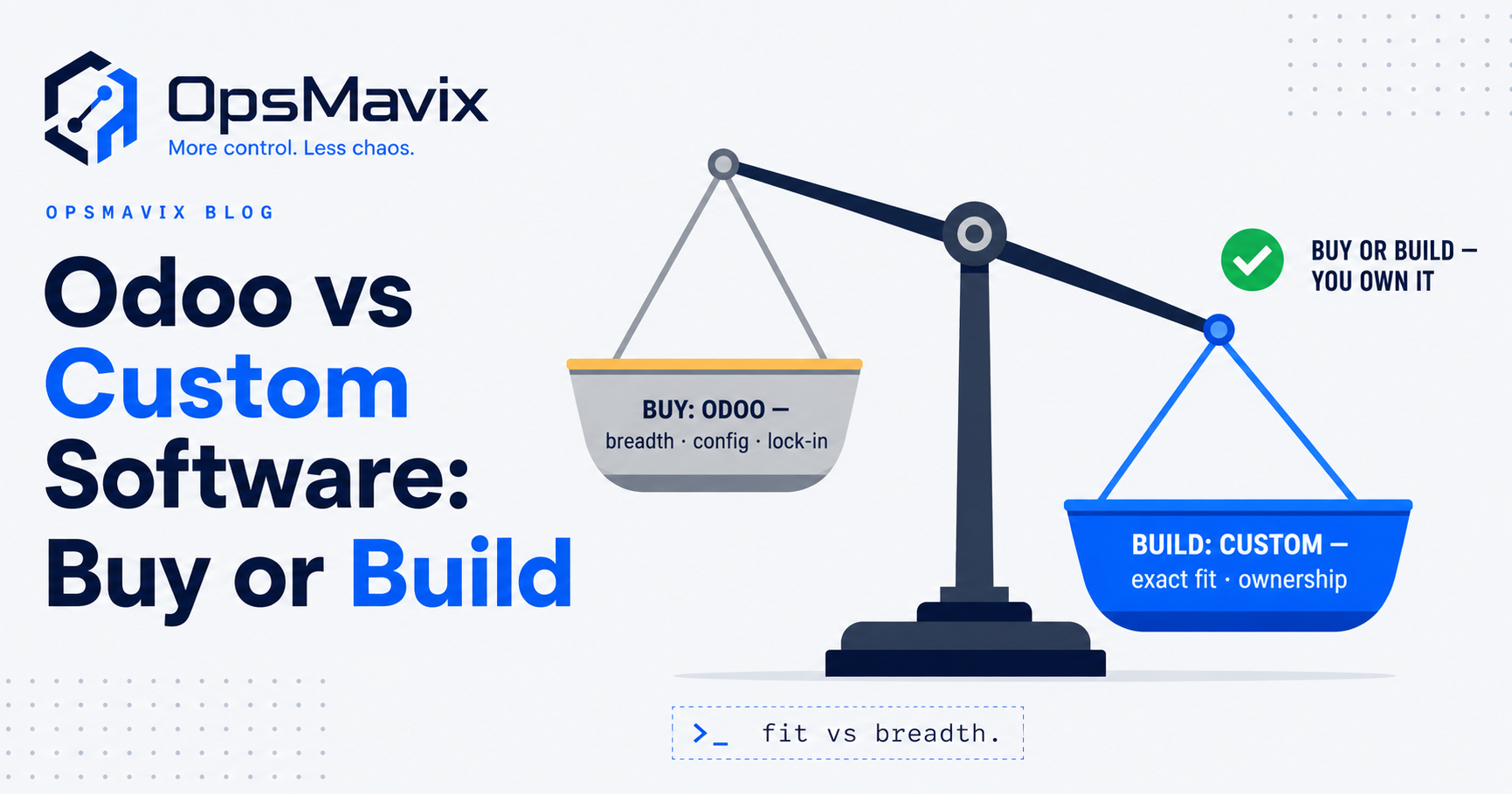
Bespoke ERP vs generic ERP: tailored architecture compared with one-size-fits-all modules.
The objective is not to customise everything for the sake of customisation.
It is to build exactly what your business needs to operate effectively — and nothing it does not need.
Our Fixed-Scope, Fixed-Price ERP Implementation Methodology
Our ERP implementation methodology is built around one principle:
Make the difficult decisions before they become expensive changes.
That means mapping processes, agreeing requirements, preparing data, defining acceptance criteria, and freezing the implementation scope before full development begins.
The 4-Phase ERP Implementation Roadmap
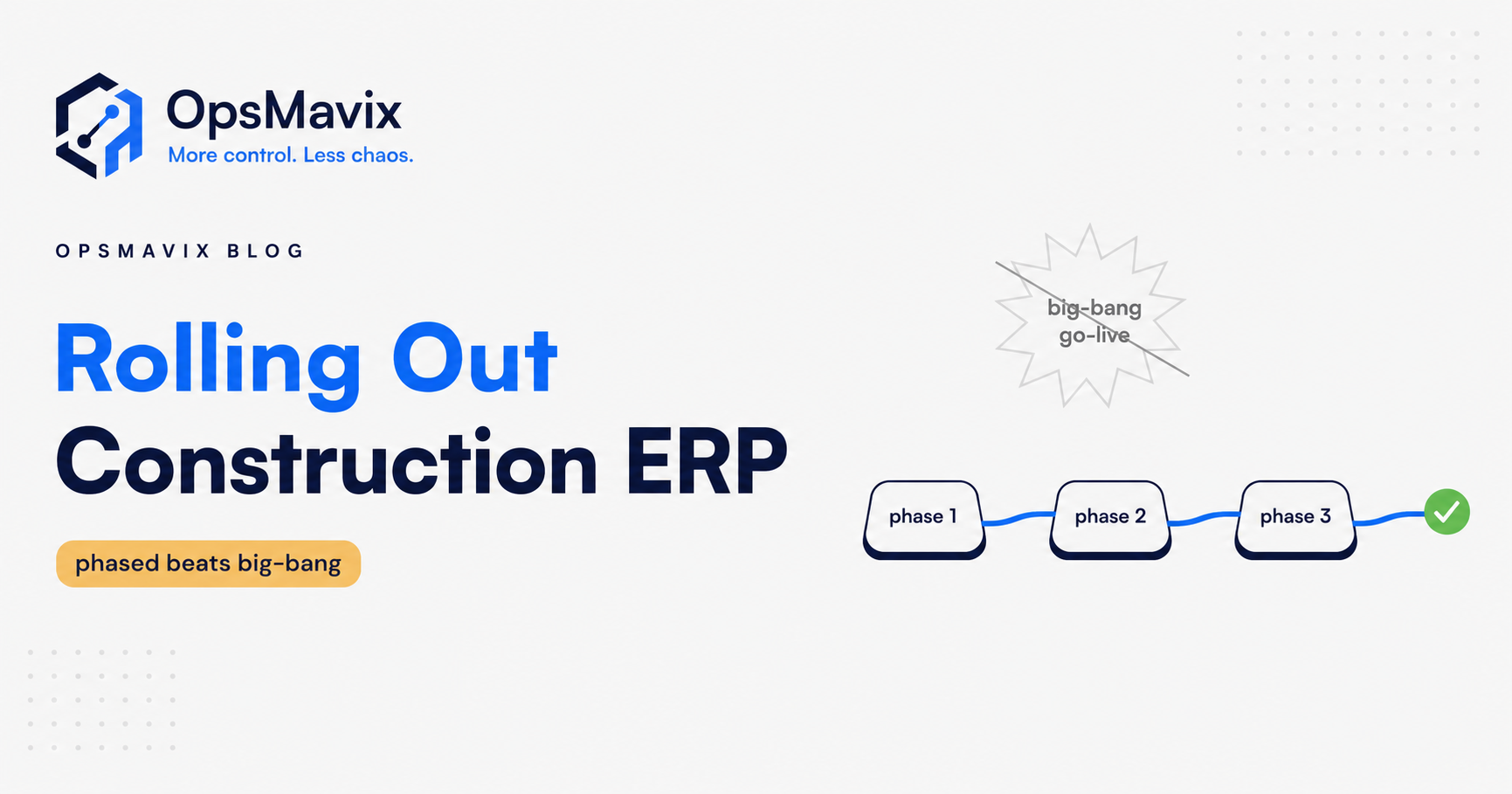
Four-phase ERP implementation timeline from discovery through go-live and hypercare.
Phase 1: Discovery & Blueprint — Weeks 1–2
We do not guess. We map.
This phase establishes the foundation for the entire implementation.
- Kickoff and alignment — Confirm stakeholders, project ownership, escalation routes, communication, and decision-making responsibilities.
- Deep process mapping — Document how your business operates across sales, purchasing, inventory, fulfilment, production, finance, reporting, and other relevant areas.
- Functional blueprint — Define the required workflows, screens, approvals, permissions, automations, reports, and exceptions.
- Data audit and readiness plan — Review legacy data, identify quality issues, and define how records will be cleansed and migrated.
- Scope freeze — Document the agreed deliverables and acceptance criteria before the main build begins.
Deliverable: Approved project plan, functional blueprint, data migration approach, confirmed scope, and fixed-price quotation.
Process mapping → blueprint → sign-off.
Phase 2: Build & Customise — Weeks 3–6
Once the blueprint is approved, we turn it into a working system.
- Core architecture — Configure the infrastructure, database, security, access controls, and system foundations.
- Workflow development — Build the required order management, stock control, purchasing, production, finance, reporting, approval, or operational workflows.
- Native integrations — Connect agreed systems such as Xero, Sage, e-commerce platforms, CRM tools, shipping services, or EDI platforms.
- Data structure configuration — Set up fields, naming conventions, classifications, business rules, and relationships around your data.
- Build review checkpoint — Review the working system against the signed-off blueprint before formal testing begins.
The objective at this stage is not to surprise you with a finished system.
You see what is being built before it reaches final testing.
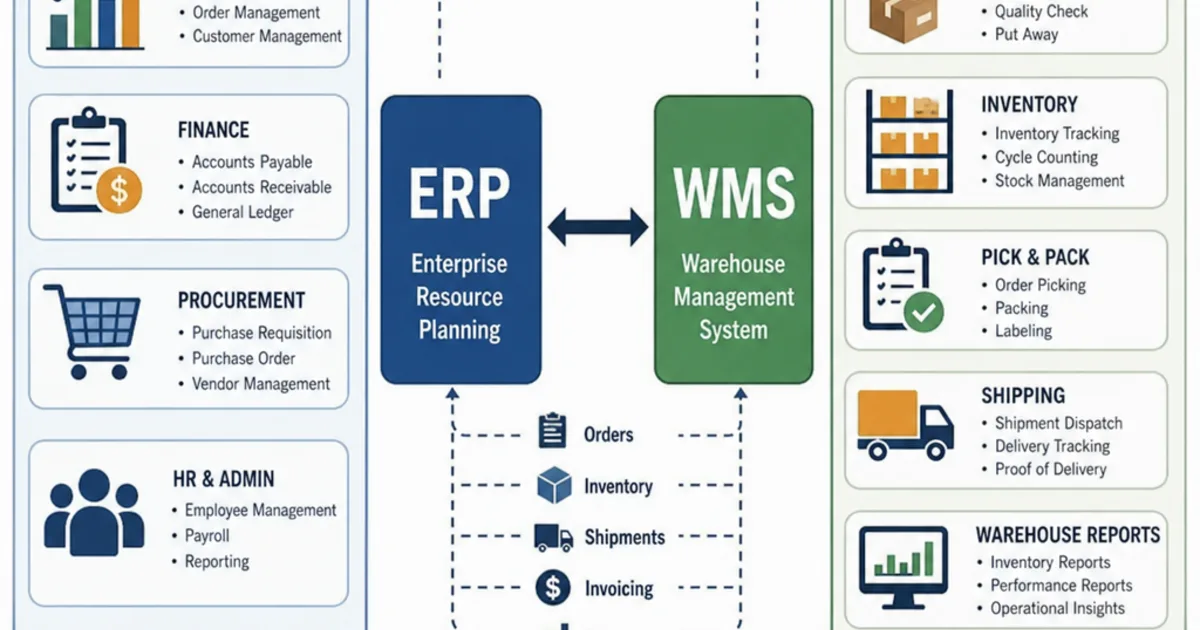
Unified ERP architecture with tailored modules and integrations.
Phase 3: Test, Train & Validate — Weeks 7–10
Testing is where assumptions are replaced with evidence.
We validate the system through three core testing stages:
| Test Type | What It Validates | Who Validates |
|---|---|---|
| Functionality Testing | Processes, calculations, workflows, permissions, and reports behave according to the blueprint | OpsMavix technical and project team |
| Integration Testing | Data moves correctly between the ERP and connected systems | OpsMavix and relevant client stakeholders |
| UAT — User Acceptance Testing | Key users can complete agreed real-world business scenarios successfully | Department leads and key users |
This phase also includes:
- Role-based training — Finance teams learn finance processes, warehouse teams learn stock processes, managers learn dashboards, and each user group focuses on what they actually need.
- Data migration rehearsal — Trial data loads are completed and reconciled before final migration.
- Issue resolution and retesting — Problems discovered during testing are corrected and verified.
- Go/No-Go review — Training, data, testing, open issues, sign-offs, and cutover readiness are reviewed before launch.
The go-live date should be based on readiness — not optimism.
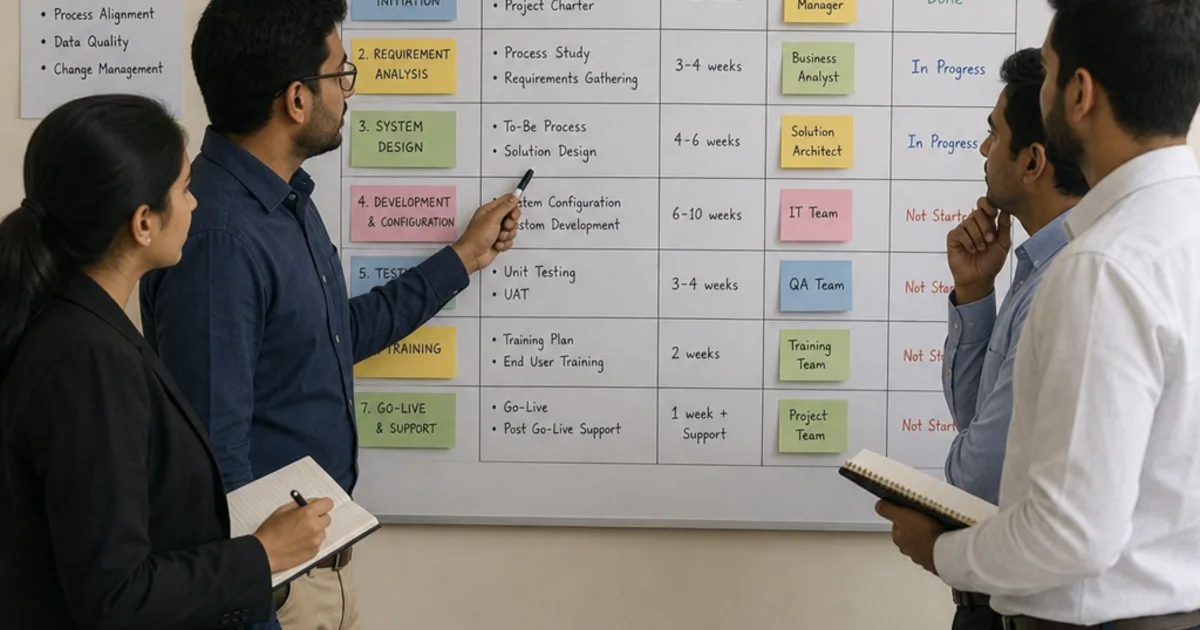
Functionality testing → integration testing → UAT → sign-off.
Phase 4: Go-Live & Hypercare — Weeks 11–12
Go-live is not the end of an ERP implementation.
It is the point where the system begins operating under real business conditions.
- Final cutover planning — Confirm the data freeze, final migration, outstanding transactions, integrations, responsibilities, and switchover process.
- Go-live support — Closely monitor the system during the first days of live operation.
- Hypercare — Prioritise and resolve genuine go-live issues quickly while users transition to the new processes.
- Post-go-live review — Review adoption, outstanding actions, data quality, process performance, and any improvements identified during live use.
- Continuous improvement — Once the system is stable, additional automation, reporting, workflows, or modules can be added separately as the business evolves.
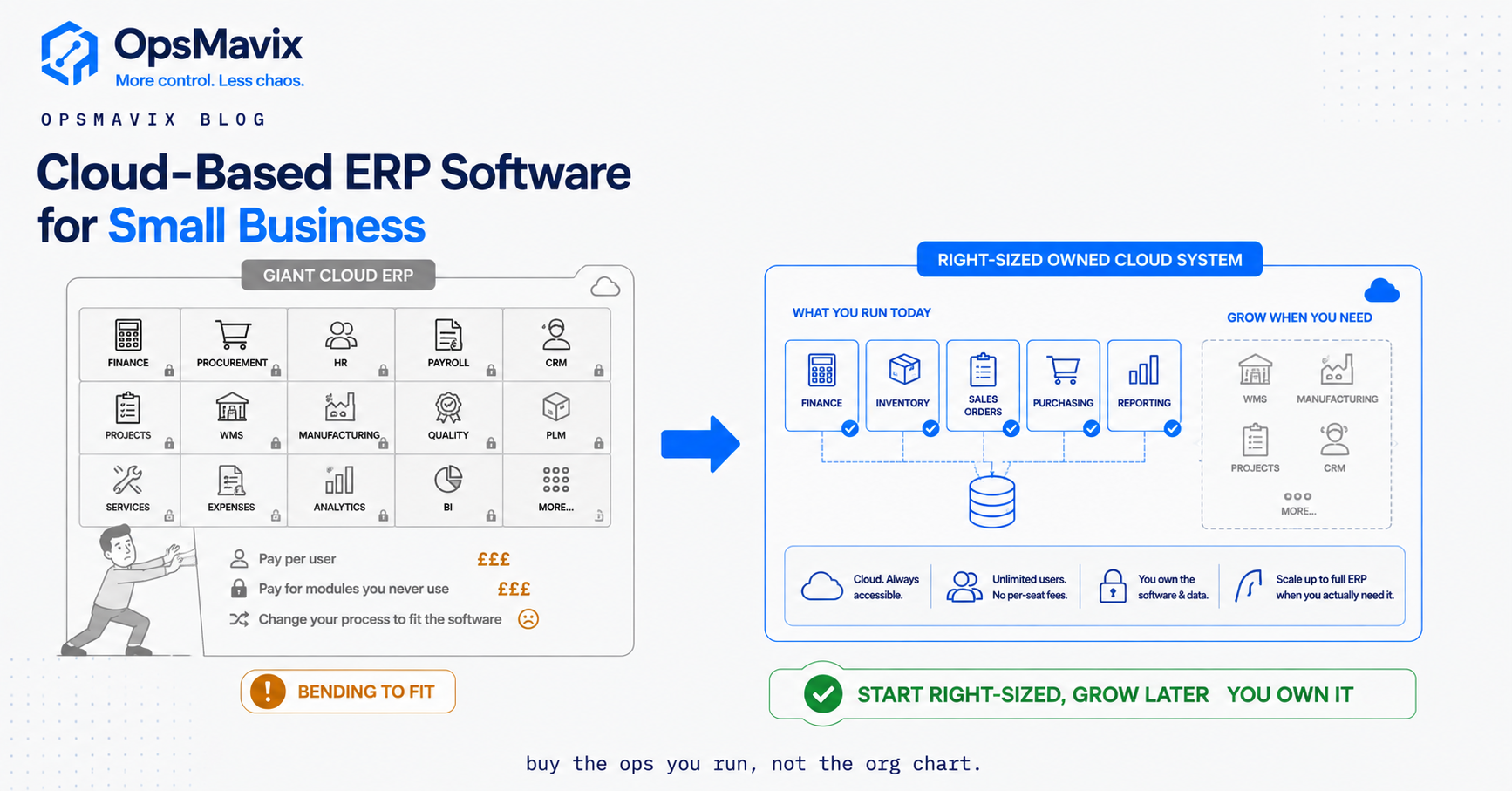
Cutover → hypercare → stabilisation → continuous improvement.
What Does ERP Implementation Cost in the UK?
ERP pricing should not be a mystery.
A meaningful quotation depends on the number of workflows, integrations, companies, sites, migration complexity, automation requirements, and reporting needs.
Rather than starting development on an open-ended daily rate, OpsMavix defines the agreed implementation scope first and prices that scope clearly.
Indicative OpsMavix ERP Project Ranges
| Business Profile | Typical Scope | Indicative Investment | Typical Timeline |
|---|---|---|---|
| Small business — fewer than 25 users | Core operations, finance, and inventory | £14,000–£24,000 | 8–10 weeks |
| Growing SME — 25–75 users | Multi-site operations and multiple integrations | £24,000–£48,000 | 10–12 weeks |
| Mid-market / multi-entity — 75–150 users | Advanced workflows, multiple entities, EDI, or complex integrations | £48,000–£90,000 | 12–16 weeks |
Complex projects may fall outside these ranges. The final price and timeline are confirmed after discovery.
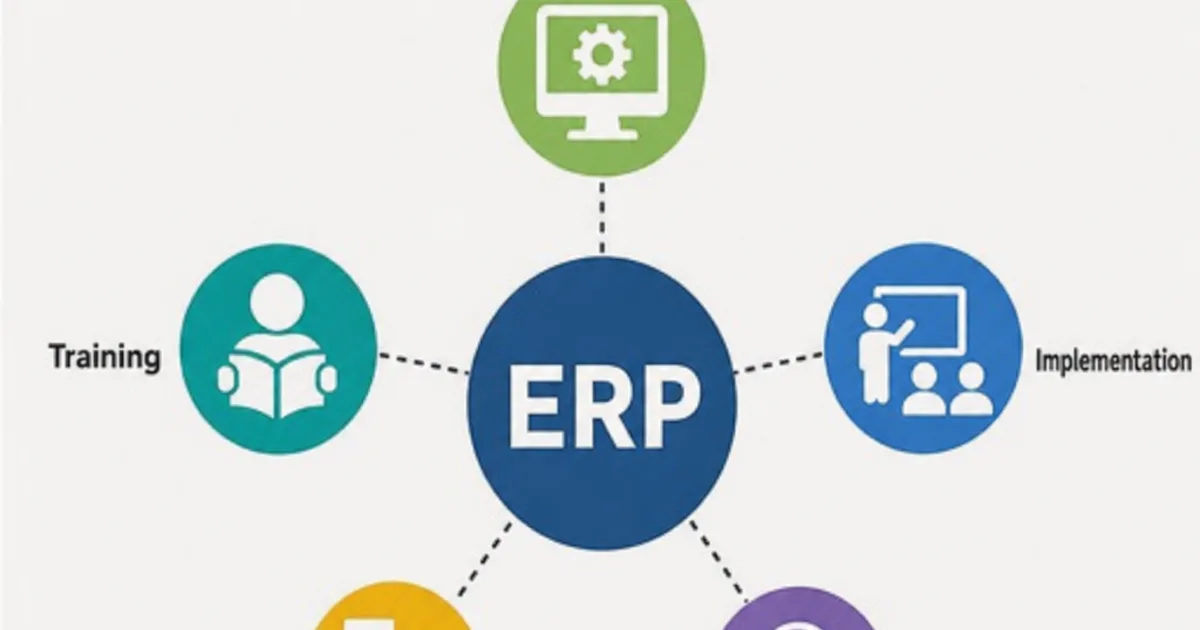
Illustrative comparison of ERP total cost of ownership over time.
What Can Be Included in a Fixed-Price Implementation?
Depending on the agreed scope:
- Full discovery and process blueprint
- Tailored development of the core ERP system
- Agreed native integrations with existing tools
- Data migration planning, cleansing support, and trial migrations
- Role-based user training
- Functional, integration, and user acceptance testing
- Go-live preparation
- Post-launch hypercare
- No per-user ERP licence fees
What Is Usually Outside the Fixed Scope?
We define exclusions before development begins.
Typical examples include:
- Third-party software subscriptions or licences such as Xero, Sage, shipping platforms, or other external services
- New features requested after the agreed scope has been frozen
- Major changes to requirements after development has started
- Manual correction of inaccurate source data that requires business decisions from your team
If something is outside the agreed implementation scope, it should be identified and quoted separately rather than appearing as a surprise invoice.
Why a Bespoke-Built ERP Can Make Sense Long-Term
Process Fit
Your processes are part of how your business operates.
A tailored ERP can preserve the workflows that genuinely create value while removing manual work, duplicate entry, unnecessary approvals, and disconnected spreadsheets.
Faster Change
When your operation changes, your ERP should be able to change with it.
New approval rules, reports, workflows, integrations, products, sites, or business entities should not require you to redesign your entire operating model around software limitations.
Clearer Cost Structure
Per-user subscriptions can become increasingly expensive as teams grow.
A tailored implementation changes that model by focusing the investment on designing and building the system rather than charging for every additional employee who needs access. You can also review OpsMavix pricing for the current published pricing bands.
Operational Control
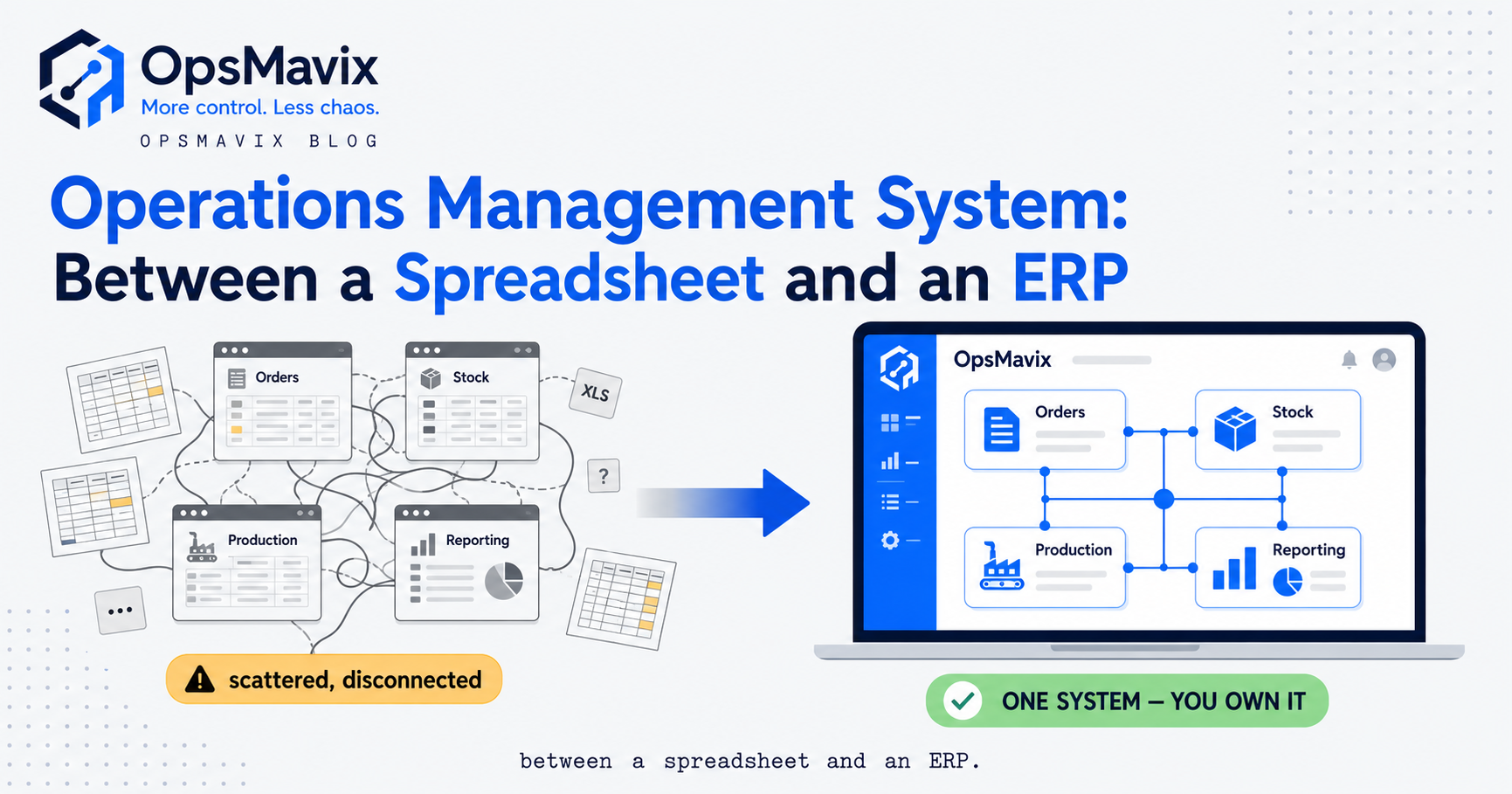
A well-designed ERP gives the business one structured source of operational data instead of spreading critical information across spreadsheets, inboxes, disconnected applications, and individual employees. For a practical example of that middle ground, see our Operations Management System guide.
Direct Support
When changes or problems need technical investigation, you want access to people who understand how your system was designed — not a generic support script.
How to Choose the Right ERP Implementation Partner
Whether you buy a standard ERP, heavily customise an existing platform, or choose a tailored system, ask potential implementation partners direct questions before signing.
7 Questions to Ask Every ERP Provider
-
What exactly is included in the implementation scope? Ask for clear deliverables rather than broad module names.
-
Is the implementation fixed-price or time-and-materials? Understand what could cause the final cost to change.
-
What happens when we request something outside the agreed scope? There should be a defined change-control process.
-
Who is responsible for data migration and data validation? Migration responsibilities are one of the easiest areas for assumptions to develop.
-
How will you measure implementation success? Look beyond “the system went live.” Testing completion, adoption, data accuracy, process performance, and post-go-live stability all matter.
-
What happens if the system is not ready on the planned go-live date? There should be a clear go/no-go process and contingency plan.
-
What support is provided after go-live? Understand who handles issues, how quickly they are triaged, and what happens after the initial stabilisation period.
Are You Ready for an ERP Implementation?
Before starting an ERP project, ask whether your organisation can answer yes to these questions:
- [ ] We know the main business problems we want the ERP to solve.
- [ ] Senior leadership supports the project.
- [ ] We have a named internal project owner with decision-making authority.
- [ ] We can explain our current processes well enough to map them.
- [ ] We can provide the data required for migration and validation.
- [ ] Key users will be available for testing and training.
- [ ] We have budgeted for both implementation costs and internal staff time.
- [ ] We understand that ERP implementation is an operational change project, not simply an IT installation.
The software is only one part of the implementation.
The decisions, data, processes, and people around it determine whether the system works in practice.
Ready for an ERP Built Around Your Business?
Stop forcing your business to fit software.
Start with software that fits your business.
At OpsMavix, we design, build, and implement bespoke ERP systems tailored to how your business operates and delivered on a fixed-price, fixed-scope basis. The system is designed to be owned by the client — see our ownership and data portability approach.
For suitable SME projects, we work to an 8–12 week implementation target.
Book Your Free ERP Scoping Session
We will:
- Map your main operational pain points and workflows
- Identify what your ERP actually needs to include
- Outline a realistic implementation approach
- Review migration and integration requirements
- Define the likely timeline
- Give you a clear view of the expected investment
Book your free ERP scoping session →
See how the OpsMavix process works →
Key Takeaways
- ERP problems often begin with unclear requirements, weak data preparation, poor process fit, and uncontrolled scope.
- Discovery and process mapping should happen before development, not during final testing.
- A tailored ERP can be designed around the workflows your business actually needs.
- Fixed-scope, fixed-price delivery creates clearer expectations around cost and accountability.
- An 8–12 week implementation can be achievable for suitable SME scopes, while larger or more complex implementations may require longer.
- Data preparation, testing, training, and user involvement are just as important as the software itself.
- A successful go-live is not the finish line — the system still needs stabilisation, support, and continuous improvement.
Published by OpsMavix — UK Bespoke ERP Implementation Specialists. Building systems that fit your business, not the other way around. Read more OpsMavix insights →