
Warehouse Management Features That Actually Change the Day
A warehouse management system helps businesses control stock, streamline day-to-day warehouse tasks and improve visibility across the movement of goods. The right WMS software brings inventory, people, processes and data into one connected workflow, making warehousing management less reactive and more predictable.

A warehouse management system helps businesses control stock, streamline day-to-day warehouse tasks and improve visibility across the movement of goods. The right WMS software brings inventory, people, processes and data into one connected workflow, making warehousing management less reactive and more predictable. For growing teams, platforms such as OpsMavix can be part of a wider move towards smarter operations, fewer manual bottlenecks and better customer fulfilment.
What does WMS software actually improve?
WMS software improves the way goods are received, stored, picked, packed, shipped and recorded. Instead of relying on spreadsheets, paper notes or disconnected tools, teams can use a single system to manage stock accuracy, task allocation and warehouse performance. The practical benefit is simple: fewer errors, clearer priorities and faster decisions when orders, demand or supply conditions change.
In many warehouses, problems do not come from one major failure. They build up through small delays, unclear stock locations, duplicated work, missed updates and slow communication between teams. A WMS reduces these everyday frictions by giving staff a shared view of what is in the warehouse, where it is, what needs to move next and which tasks matter most.
That visibility is especially valuable when order volumes rise. A process that feels manageable with a small team can quickly become chaotic when more products, channels or customers are added. WMS software gives the operation a stronger structure, so growth does not automatically mean more confusion.
Stronger inventory accuracy and stock control
One of the most important warehouse management system functions is accurate stock control. When inventory records are wrong, the effects spread quickly. Sales teams may promise stock that is not available, purchasing teams may reorder too early or too late, and warehouse staff may waste time searching for items that are not where the system says they should be.
Modern inventory tracking systems help reduce these issues by recording stock movements as they happen. Goods can be tracked from receiving through storage, picking, packing and dispatch, giving teams a clearer picture of available stock. This makes it easier to identify shortages, overstocking, misplaced items and slow-moving products before they cause larger problems.
Better inventory accuracy also supports customer trust. If customers are told an item is available, they expect the order to be fulfilled correctly and on time. A WMS helps businesses make more reliable promises because stock information is based on current warehouse activity rather than delayed manual updates.
Key improvements often include:
- Real-time stock visibility, so teams can see what is available, reserved, picked or awaiting replenishment.
- Clearer item locations, helping staff find products faster and reduce unnecessary walking time.
- More reliable cycle counts, allowing stock checks to happen regularly without stopping the whole operation.
- Reduced manual entry errors, because stock movements are captured through consistent digital workflows.
- Better replenishment decisions, supported by clearer data on what is moving and what is not.
These benefits matter whether a warehouse handles raw materials, finished goods, spare parts or ecommerce orders. The core need is the same: know what you have, know where it is and know what needs to happen next.
Faster fulfilment with fewer manual bottlenecks
Speed matters in the warehouse, but speed without control creates mistakes. WMS software supports faster fulfilment by giving workers guided processes for receiving, putaway, picking, packing and shipping. Instead of depending entirely on individual memory or informal routines, the system helps standardise how work gets done.
This is where warehouse management features become especially practical. A WMS can help prioritise urgent orders, group similar picking tasks, direct staff to efficient routes and flag exceptions before they delay dispatch. These improvements do not simply make people work faster; they remove unnecessary decisions and interruptions from the workflow.
For example, pickers should not need to ask where an item is stored or whether an order has changed. Packers should not need to guess which items are ready to ship. Managers should not have to walk the floor repeatedly to understand what is falling behind. A good WMS turns these questions into visible, manageable tasks.
Which key features of warehouse management system software matter most?
The key features of warehouse management system software are the tools that help teams control stock, direct labour, manage orders and measure performance. The best mix depends on the size and complexity of the operation, but most warehouses benefit from features that improve visibility, accuracy and task flow. When assessing software, it helps to focus on practical functions rather than impressive-sounding extras.
Commonly useful features include:
- Receiving and putaway management Goods can be checked in, labelled and directed to suitable storage locations. This reduces confusion at the start of the warehouse process, where poor records often create problems later.
- Inventory tracking and location control Stock movements are recorded across bins, zones or storage areas. This makes it easier to find items, investigate discrepancies and maintain accurate availability.
- Picking and packing workflows Orders can be released, prioritised and picked using structured instructions. Packing teams can confirm items before shipment, reducing the risk of sending incomplete or incorrect orders.
- Replenishment support The system can highlight when pick faces or storage locations need restocking. This helps prevent delays caused by empty picking areas while stock sits elsewhere in the warehouse.
- Reporting and performance visibility Managers can monitor activity such as order progress, stock issues and task completion. Useful reports make it easier to spot recurring bottlenecks and improve processes over time.
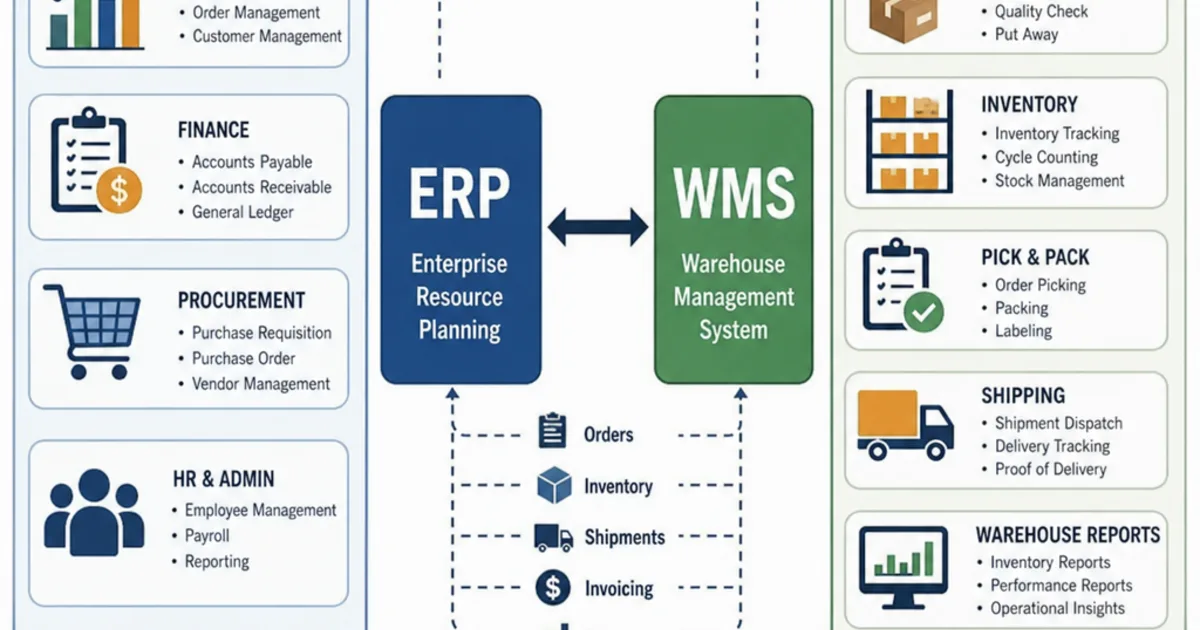
- Integration with wider business systems A WMS becomes more powerful when it connects with order management, purchasing, ecommerce, transport or finance tools. This reduces duplicated data entry and improves communication between departments.
These key features of warehouse management system platforms should be judged by how well they support real work on the warehouse floor. A feature only has value if it helps people complete tasks more accurately, quickly or confidently.

Better labour planning and team productivity
Warehouse productivity is not only about how many orders are shipped. It is also about whether people are spending their time on useful work. Without a WMS, supervisors often have to assign tasks manually, answer repeated questions and solve problems only after they become urgent.
WMS software can improve labour planning by making tasks clearer and easier to distribute. Staff can be directed to the next priority activity, while managers can see which areas are busy, delayed or underused. This creates a more balanced workflow and helps prevent certain team members or zones from becoming overloaded.
It also supports training. When processes are documented inside the system, new staff can follow structured steps instead of relying entirely on shadowing or informal instructions. That can make onboarding smoother, especially in seasonal peaks or fast-growing businesses where teams change frequently.
The benefit is not about replacing human judgement. It is about giving people better information, clearer instructions and fewer avoidable obstacles during the working day.
Supply chain optimisation starts inside the warehouse
Supply chain optimization is often discussed at a strategic level, but many of its gains begin with basic warehouse discipline. If stock data is unreliable, receiving is slow or dispatch is inconsistent, the wider supply chain becomes harder to manage. A WMS helps create the operational clarity needed for better planning beyond the warehouse walls.
When warehouse data is accurate, purchasing teams can make more informed replenishment decisions. Sales and customer service teams can respond with more confidence. Transport planning can be better aligned with what is actually ready to ship. In this way, the warehouse becomes a dependable source of information rather than a blind spot.
WMS software can also help businesses respond more effectively to disruption. If a supplier is late, demand shifts suddenly or an order needs urgent attention, managers can assess the current position quickly. They can see what stock is available, what orders are affected and where labour may need to be redirected.
What are the main warehouse automation benefits?
The main warehouse automation benefits include reduced manual handling of information, more consistent task execution and faster movement of goods through the operation. Automation does not always mean robots or fully automated storage systems. In many warehouses, the biggest gains come from automating routine decisions, alerts, records and task instructions.
For instance, software can automatically suggest putaway locations, generate replenishment tasks, update stock records or prioritise orders based on rules. These automated prompts reduce the mental load on staff and help keep work moving when the warehouse is busy. They also reduce dependence on a few experienced individuals who hold important process knowledge in their heads.
Useful automation may support:
- Order prioritisation, so urgent or time-sensitive orders are handled first.
- Replenishment alerts, helping teams prevent picking delays.
- Barcode scanning workflows, improving accuracy during stock movements.
- Exception notifications, so supervisors know when something needs attention.
- Performance tracking, giving managers clearer insight without manual reporting.
The best approach is usually gradual. Businesses do not need to automate everything at once. They can start with the processes that cause the most errors, delays or repeated admin, then build from there.
Reduced errors and stronger customer experience
Warehouse errors are expensive because they rarely stay contained. A wrong pick can lead to returns, replacements, customer complaints, extra shipping costs and wasted time for support teams. A delayed order can damage trust, even if the original issue was only a small stock discrepancy.
WMS software helps reduce these risks by adding checks and structure at each stage. Scanning, guided picking, stock validation and packing confirmation all create opportunities to catch mistakes before goods leave the warehouse. This protects margins and helps customers receive what they ordered when they expect it.
A stronger customer experience is one of the most valuable outcomes of better warehousing management. Customers may never see the WMS, but they notice the results: fewer stock surprises, more accurate deliveries and more reliable communication. In competitive markets, that operational consistency can become a real advantage.
Clearer reporting for better decisions
Without reliable reporting, warehouse decisions often depend on instinct. Experienced managers may have a good feel for the operation, but they still need accurate data to understand patterns, compare performance and justify changes. WMS software gives teams a more objective view of what is happening.
Reports can help identify slow-moving stock, recurring picking issues, high-pressure zones or order types that take longer than expected. This makes improvement more targeted. Instead of asking staff to “work faster”, managers can investigate the process, adjust storage layouts, change picking methods or review replenishment rules.
Good data also supports conversations across the business. Warehouse teams can explain constraints more clearly, leadership can see operational impact and other departments can make decisions based on shared evidence rather than assumptions.
Choosing WMS software with practical outcomes in mind
Choosing WMS software should start with operational goals. A business should understand what it wants to improve before comparing features. That might be stock accuracy, faster order fulfilment, fewer manual updates, better reporting or stronger integration with existing systems.
A simple selection checklist can help:
- Identify the warehouse processes that currently cause the most delay or rework.
- Decide which warehouse management system functions are essential from day one.
- Check whether the software can support current volumes and future growth.
- Consider how easily staff can learn and use the system.
- Look at how the platform connects with other business tools.
- Plan implementation carefully, including data clean-up, training and process review.
Solutions such as OpsMavix should be assessed in this practical context. The question is not simply whether a platform has many features, but whether those features fit the way the warehouse needs to operate.
A smarter warehouse is a more resilient business
WMS software gives businesses more control over inventory, labour, fulfilment and operational data. Its value comes from turning everyday warehouse activity into clear, manageable workflows that support accuracy, speed and better decision-making.
For teams dealing with growth, complexity or recurring stock problems, the benefits can be significant. By focusing on the right warehouse management features, using reliable inventory tracking systems and building towards thoughtful automation, a business can create a warehouse that is not only busier, but genuinely smarter.
FAQ
What are the key features of warehouse management system software?
The key features are the tools that help teams control stock, direct labour, manage orders and measure performance: receiving and putaway management, inventory tracking and location control, picking and packing workflows, replenishment support, reporting and performance visibility, and integration with wider business systems such as order management, purchasing, ecommerce, transport or finance tools.
How does a WMS improve inventory accuracy?
A WMS records stock movements as they happen, tracking goods from receiving through storage, picking, packing and dispatch. That gives teams real-time visibility of what is available, reserved, picked or awaiting replenishment, clearer item locations, more reliable cycle counts and fewer manual entry errors, so shortages, overstocking and misplaced items surface before they grow.
Does warehouse automation mean buying robots?
No. Automation does not always mean robots or fully automated storage systems. In many warehouses the biggest gains come from automating routine decisions, alerts, records and task instructions: suggesting putaway locations, generating replenishment tasks, updating stock records, prioritising orders by rule, barcode scanning workflows, exception notifications and performance tracking.
How does warehouse software support supply chain optimisation?
Many supply chain gains begin with basic warehouse discipline. When warehouse data is accurate, purchasing teams can make more informed replenishment decisions, sales and customer service can respond with more confidence, and transport planning aligns with what is actually ready to ship. The warehouse becomes a dependable source of information rather than a blind spot.
What should a business look at before choosing WMS software?
Start with operational goals rather than feature lists. Identify the processes causing the most delay or rework, decide which warehouse management system functions are essential from day one, check the software supports current volumes and future growth, consider how easily staff can learn it, review integrations, and plan implementation including data clean-up and training.
Keep reading

Getting value from OpsMavix? Add us as a preferred source on Google — you'll see more of our operations content in your AI Overviews, AI Mode and Search.