
RGIS Stocktake Alternative: A System That Counts Itself
RGIS sends counters once a year to fix a number that's been wrong for months. The real alternative isn't a different counting crew. It's a system that keeps stock accurate year-round, so the disruptive full count stops being the only time you trust your figures.
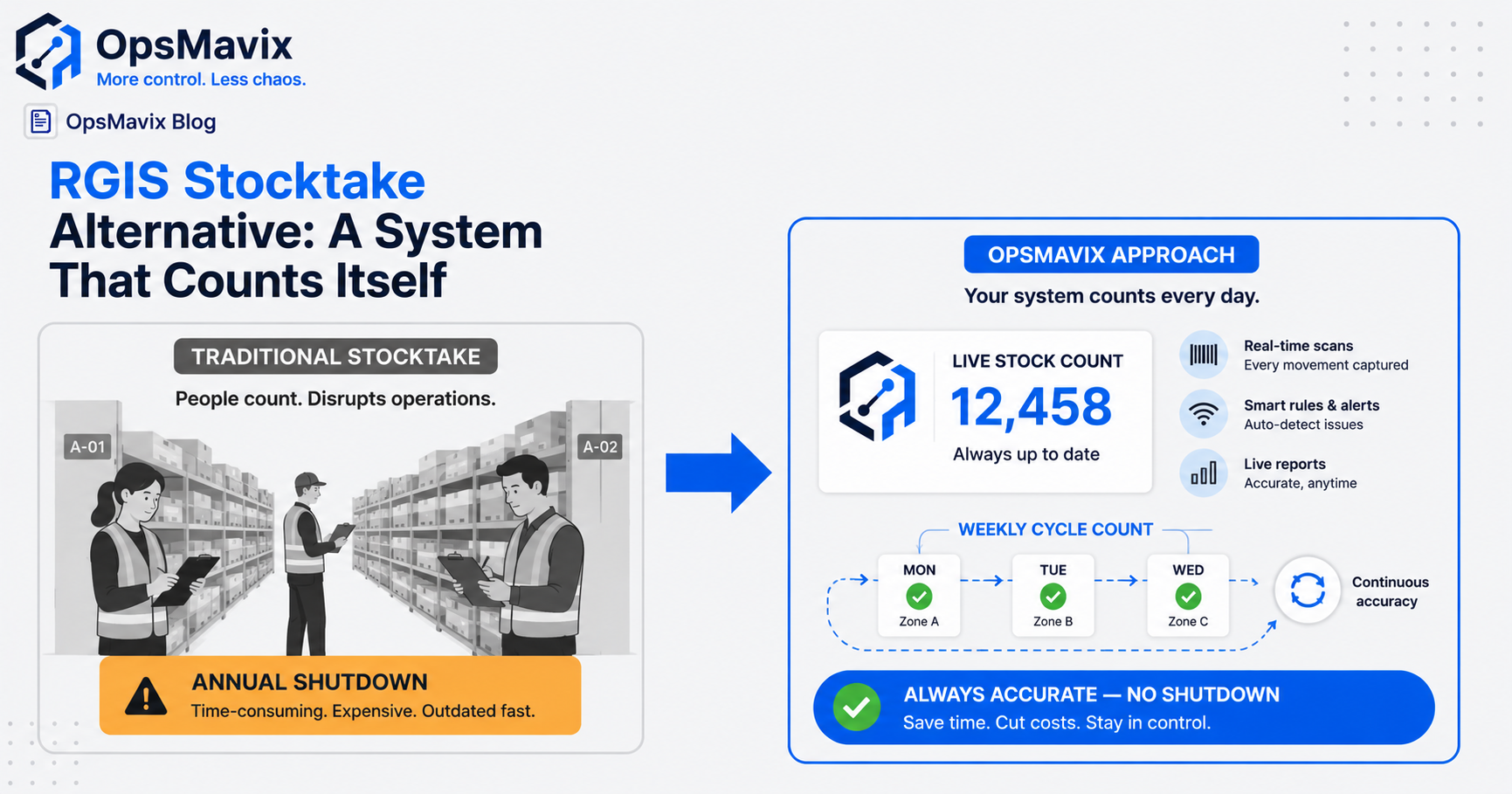
The best RGIS stocktake alternative isn’t a different counting service. It’s a connected system plus regular cycle counts that keep your stock accurate all year, so you barely need the disruptive annual count at all. RGIS is good at what it does: send a trained crew, count everything fast, hand you a number. But that number is only true for one night, and it’s been drifting wrong for the eleven months before it. The alternative most stock businesses actually want is to stop letting the figure drift in the first place.
A once-a-year count is a snapshot of how wrong things got. It tells you the variance after the damage is done: the overselling, the dead stock, the phantom figures you’ve been making decisions on for months. This post covers when a full RGIS-style count still earns its place, why year-round accuracy beats an annual reset, and what a system built to count itself does that a counting crew can’t.
Key Takeaways
- RGIS fixes the number once a year. A connected system plus cycle counts keeps it right every week, so the big count stops being your only source of truth.
- The annual count tells you how wrong you got, after the overselling and dead stock already cost you.
- An RGIS stocktake alternative worth switching to attacks the drift between counts, not the count itself.
- A system that records every movement (receive, pick, dispatch, return) means the figure is already accurate before anyone walks the floor.
- Big one-off counts still have a place: a baseline, an audit, or a year-one reset. Don’t cancel them on principle; make them rare.
1The Annual Count Is a Symptom, Not a Fix
You don’t hire RGIS because counting is hard. You hire them because your own number stopped being trustworthy and you need someone to reset it. That reset is real value once a year. The problem is what it admits: your stock figure has been wrong, quietly, for months, and you’ve been running the business on it.
One warehouse manager put the underlying pain plainly: “We would consistently oversell items we didn’t even have on hand. The stock never matches the system, and I’m running a million messy spreadsheets for the warehouse.” A full count fixes that for one night. By the next morning, the first mis-scan, unlogged return, or off-system transfer starts the drift again. You’ve paid for accuracy with a very short shelf life.
2What an RGIS Stocktake Alternative Actually Replaces
This is the reframe that matters: an RGIS stocktake alternative isn’t a cheaper crew or a faster scanner. It replaces the need for the big count by closing the gap that makes it necessary. The full count exists because nothing in between is reliable. Fix the in-between, and the annual event shrinks from a business-stopping ordeal to a light spot-check.
That gap is usually a workflow problem, not a counting problem. Stock moves. It gets received, picked, sold across a website and a shop floor, returned, transferred, and if those movements aren’t all hitting one figure, the figure rots. The same drift shows up when stock never matches the system: two places hold a count, they disagree, and you need an outside crew to break the tie. A connected system means there’s only one number, and it updates itself as the stock moves.
3Cycle Counts Beat One Big Count
The proven middle path between “count everything once a year” and “trust the screen blindly” is cycle counting: count a small slice of stock often, a few bins or product lines a day or week, on a rolling schedule, so the whole warehouse gets verified continuously without ever shutting down. It’s how disciplined operations stay accurate without an annual fire drill.
Cycle counts catch drift while it’s small and fixable, not after it’s compounded into an “$80k value difference that cannot be explained.” They also surface why the variance happens: a bin that’s always short, a SKU that’s always mis-picked, which a single annual count averages away. We’ve covered the mechanics of running them properly in our guide to inventory cycle counts. The point here is that a system that schedules and records cycle counts makes the big RGIS-style count almost redundant.
4The Right System Counts Itself Between Counts
Even cycle counts are a check, not the source of truth. The real win is a system where the figure is already right because every transaction maintained it. When receiving, picking, dispatch, and returns are all recorded against one live stock number, the count isn’t something you do. It’s something the system holds, and the floor walk just confirms it.
This is the difference between renting accuracy and owning it. RGIS hands you a correct number and leaves; the moment they’re gone, it starts decaying. A custom inventory system built around how your stock genuinely moves keeps the number correct continuously, with auditable movements instead of unexplained swings. You stop paying for a reset because you stopped needing one, and you own the system outright, so there’s no per-seat creep and no vendor who can switch it off.
5When a Full Count Is Still the Right Call
Be fair to the big count: it has a real place, and cancelling it on principle is its own mistake. If you’ve never had a clean baseline, you need one before any system can stay accurate, and a thorough physical count is the honest way to set it. The same goes for a year-end audit your accountant or insurer requires, a warehouse move, or recovering from a period where the figures genuinely fell apart.
So the goal isn’t “never count again.” It’s to make the full count rare and optional instead of annual and inevitable. Use a proper physical stocktaking procedure, RGIS-led or your own team, to set the baseline, then let cycle counts and a connected system hold it. A business that counts everything every year is treating the symptom forever. A business that counts everything once, then maintains it, fixed the cause.
Comparison Table
| RGIS-style annual stocktake | Cycle counts + connected system | |
|---|---|---|
| When accuracy exists | One night a year | Continuously, year-round |
| Disruption | Whole site stops or works after hours | None; counts run in the flow |
| What it tells you | The variance, after it happened | The drift, while it’s small |
| Finds root cause | No; averages errors away | Yes; surfaces which bin/SKU drifts |
| Cost shape | Recurring fee, every year | One-time build, then you own it |
| Between events | Number drifts unchecked | Number maintained by every movement |
| Best for | Baselines, audits, year-one resets | Staying accurate the other 364 days |
FAQ
What is the best RGIS stocktake alternative?
The best alternative isn’t another counting service. It’s keeping stock accurate year-round so you rarely need the big count. That means regular cycle counts (counting a small slice of stock often, on a rolling schedule) backed by a connected system that records every receive, pick, dispatch, and return against one live figure. RGIS resets your number once; this keeps it from drifting in the first place.
Do I still need an annual stocktake if I use cycle counts?
Usually far less often, and sometimes not at all. Cycle counts plus a system that maintains the figure keep accuracy high continuously, which makes a full annual count largely redundant. You may still want a complete count to set an initial baseline, satisfy an audit, or recover after a warehouse move, but it becomes a rare, deliberate event rather than an annual disruption.
Is cycle counting cheaper than hiring a stocktaking crew?
Over time, usually yes. A hired count is a recurring fee you pay every year, forever, for a number that’s accurate for one night. Cycle counts run by your own team in normal hours, supported by a system that holds the figure, cost far less per year and keep stock accurate the other 364 days. The honest comparison is the recurring crew cost versus a one-time system you own.
Won’t a connected system still get the count wrong over time?
Only if movements aren’t being recorded. The whole point is that every transaction (receiving, picking, transfers, returns) updates one shared figure, so the number stays right as stock moves rather than drifting between counts. Cycle counts then verify it against the shelf and catch any gaps while they’re small, which is exactly the drift a once-a-year count lets compound. This is the same fix for stock that never matches the system.
When is a full RGIS-style count actually worth it?
When you need a trustworthy starting point and don’t have one: setting a first clean baseline, a required year-end or insurance audit, after a site move, or recovering from a stretch where the figures fell apart. In those cases a thorough physical count is the right call. The aim isn’t to never count. It’s to make the full count rare instead of inevitable.
How OpsMavix Can Help
OpsMavix builds custom inventory systems shaped to how your stock actually moves (receiving, picking, transfers, returns, dispatch) so every movement updates one live figure the shelf and the screen both agree on. We build cycle counting into the system so accuracy is maintained continuously, not reset once a year by an outside crew. The result: the big disruptive count stops being the only time you can trust your number, and you own the whole thing, with no recurring crew fee and no vendor who can switch it off.
If you’re tired of paying for an annual reset to a number that’s been wrong for months, that’s exactly the gap we close. Book an Operations Leak Audit and we’ll map where your stock accuracy breaks down today, what the drift is costing you between counts, and whether a connected system is genuinely worth the move.