
Where operations quietly leak — and how to fix it.
Field notes for businesses too messy for spreadsheets, not ready for a full ERP. Inventory, orders, production, reporting — the practical system layer.
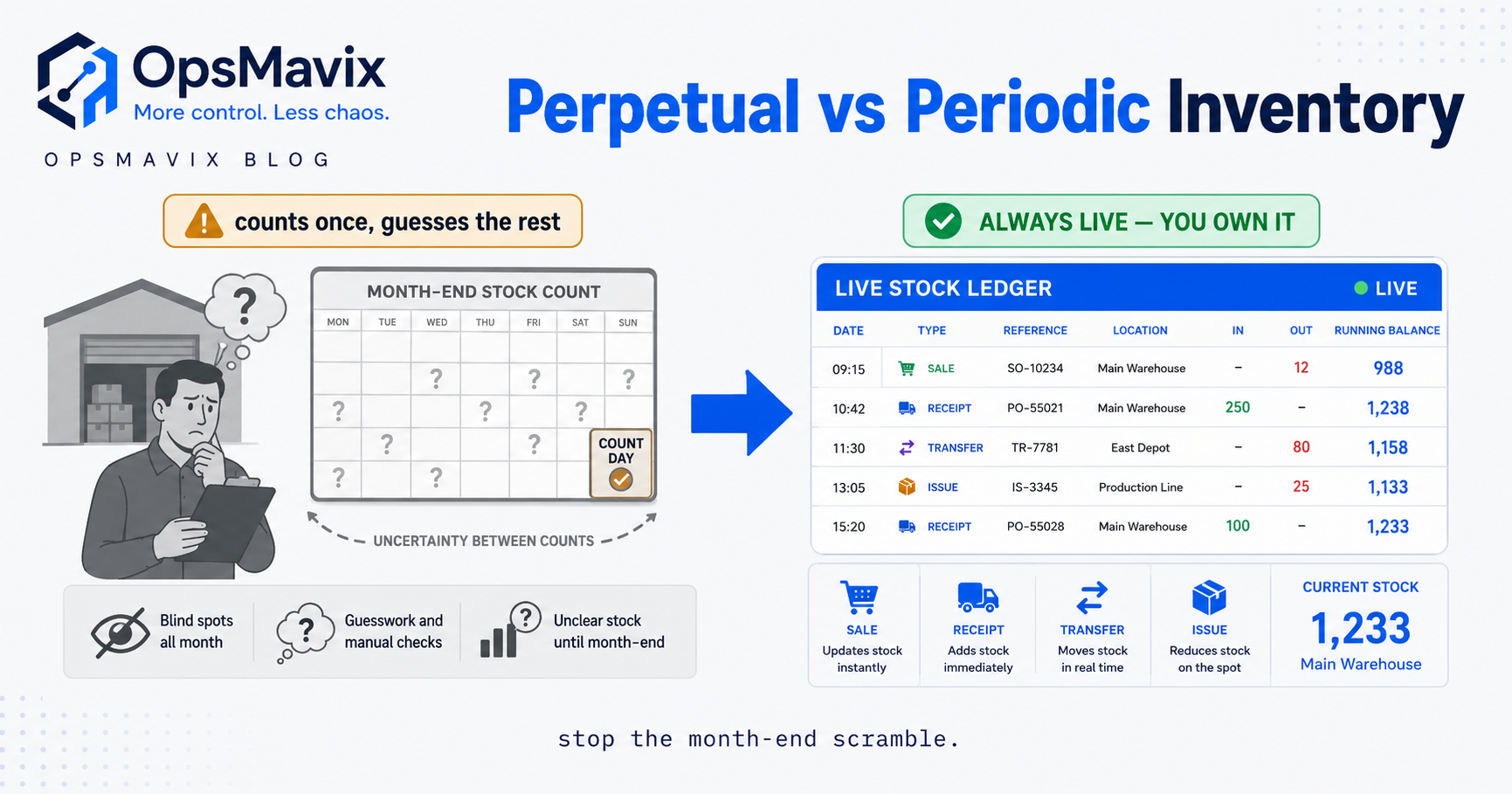
Perpetual vs Periodic Inventory: Which Is Right for Your Business?
Perpetual vs periodic inventory is a choice about when your stock figure is true — continuously, or only at a count. This guide compares both on cost, accuracy and effort, shows which fits which business size, and counts the hidden cost of flying blind between counts.
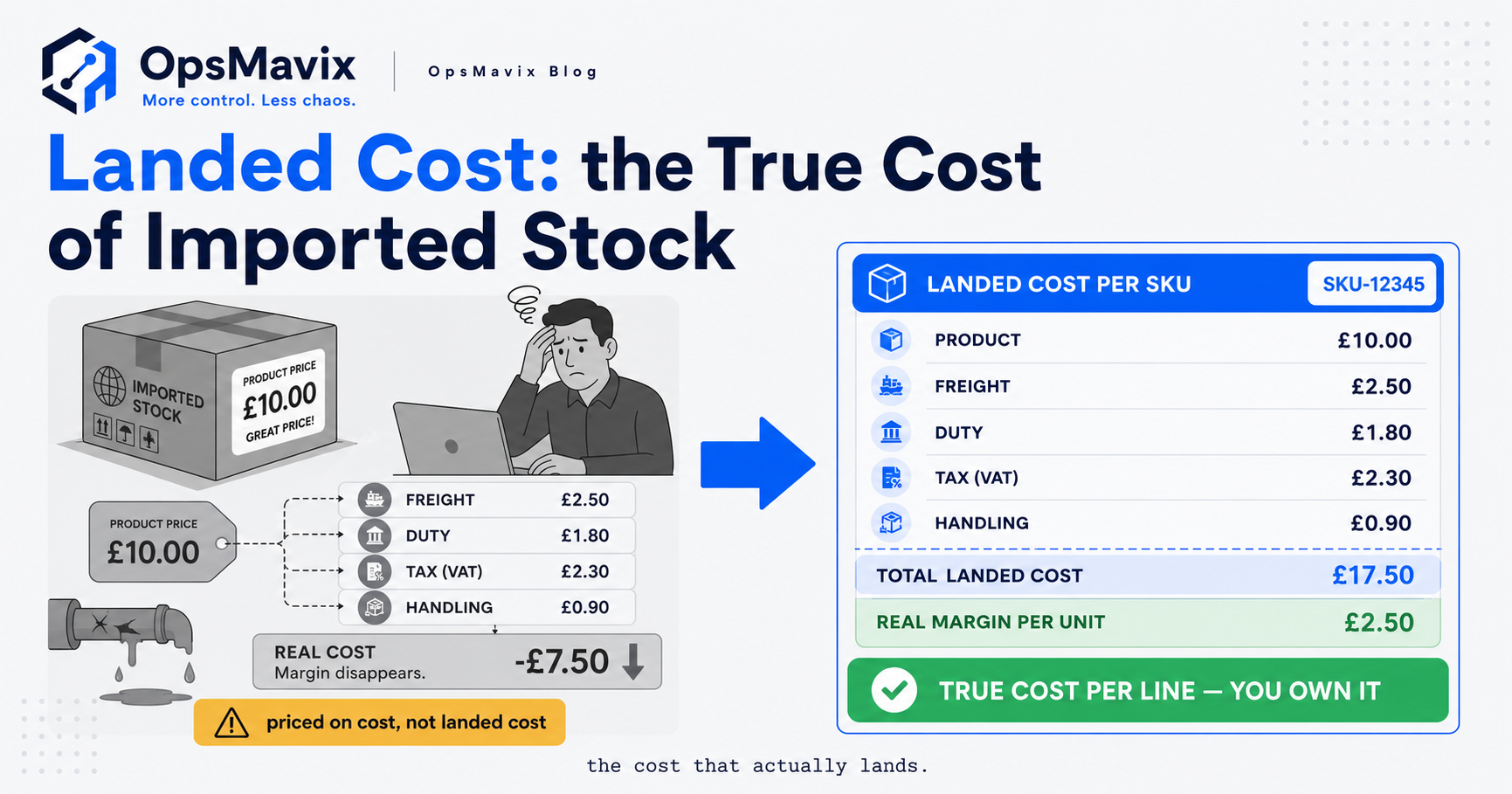
Landed Cost: How to Calculate the True Cost of Imported Stock
Landed cost is the true, all-in cost of getting a product from a supplier to your shelf — product, freight, insurance, duty, handling and more. This guide gives you the full formula, a worked example in pounds, and shows why ignoring landed cost quietly destroys margin on imported lines.
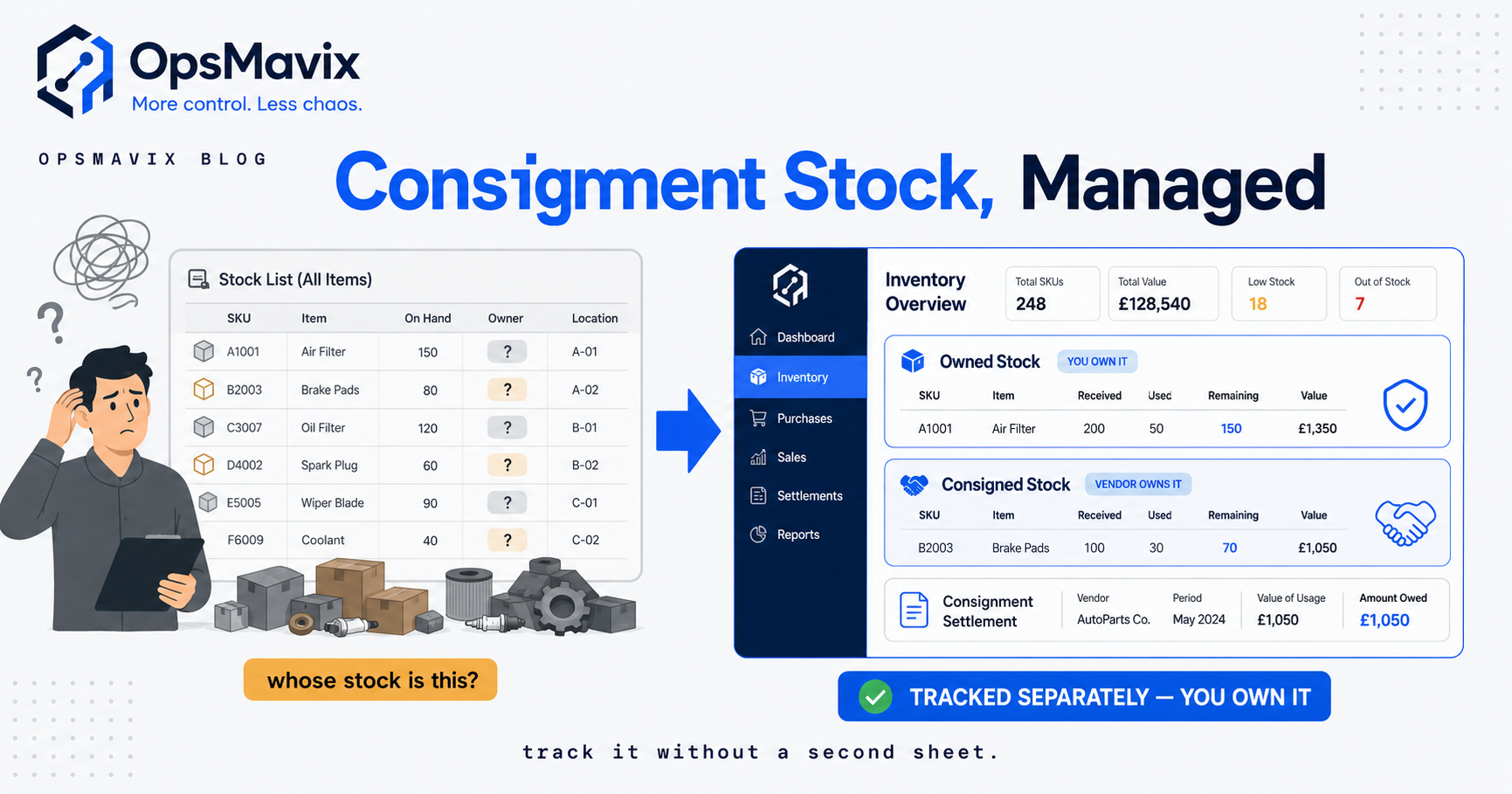
Consignment Stock: How It Works and How to Manage It
Consignment stock is inventory that sits in one company's warehouse but stays owned by the supplier until it sells. This post explains who owns it, the cash-flow benefit for both sides, the UK VAT and accounting nuance most guides skip, and why mixing consigned and owned stock quietly wrecks your numbers — plus how an owned system tracks consignment separately without a second spreadsheet.
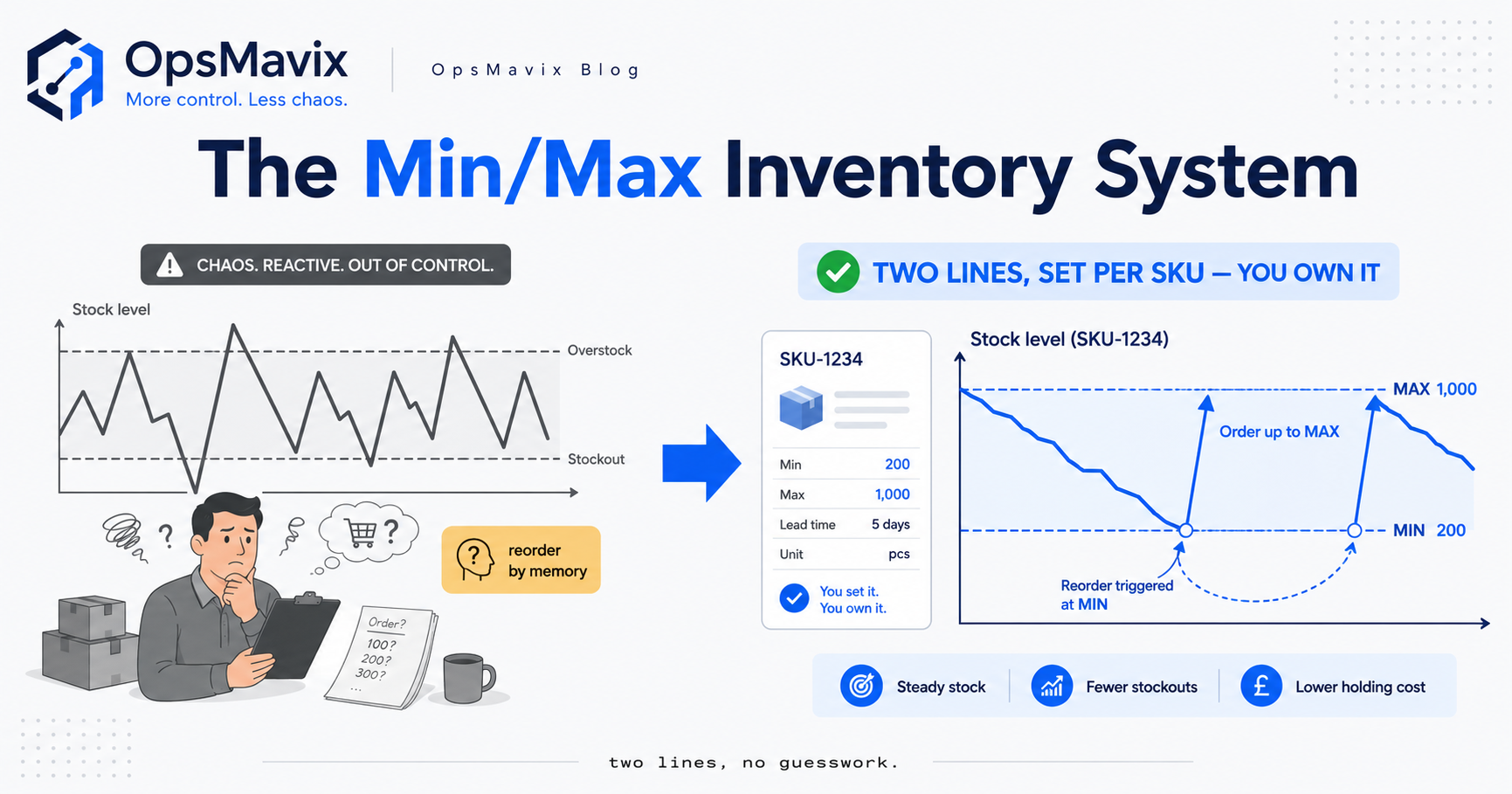
The Min/Max Inventory System: How It Works and When to Use It
A min/max inventory system sets two levels per line — a minimum that triggers a reorder and a maximum you top back up to. This guide covers the order-up-to-max formula with a worked example, how min/max compares to reorder point and EOQ, where the method breaks on demand swings and moving lead times, and how an owned system re-tunes the thresholds per SKU instead of leaving them to rot.
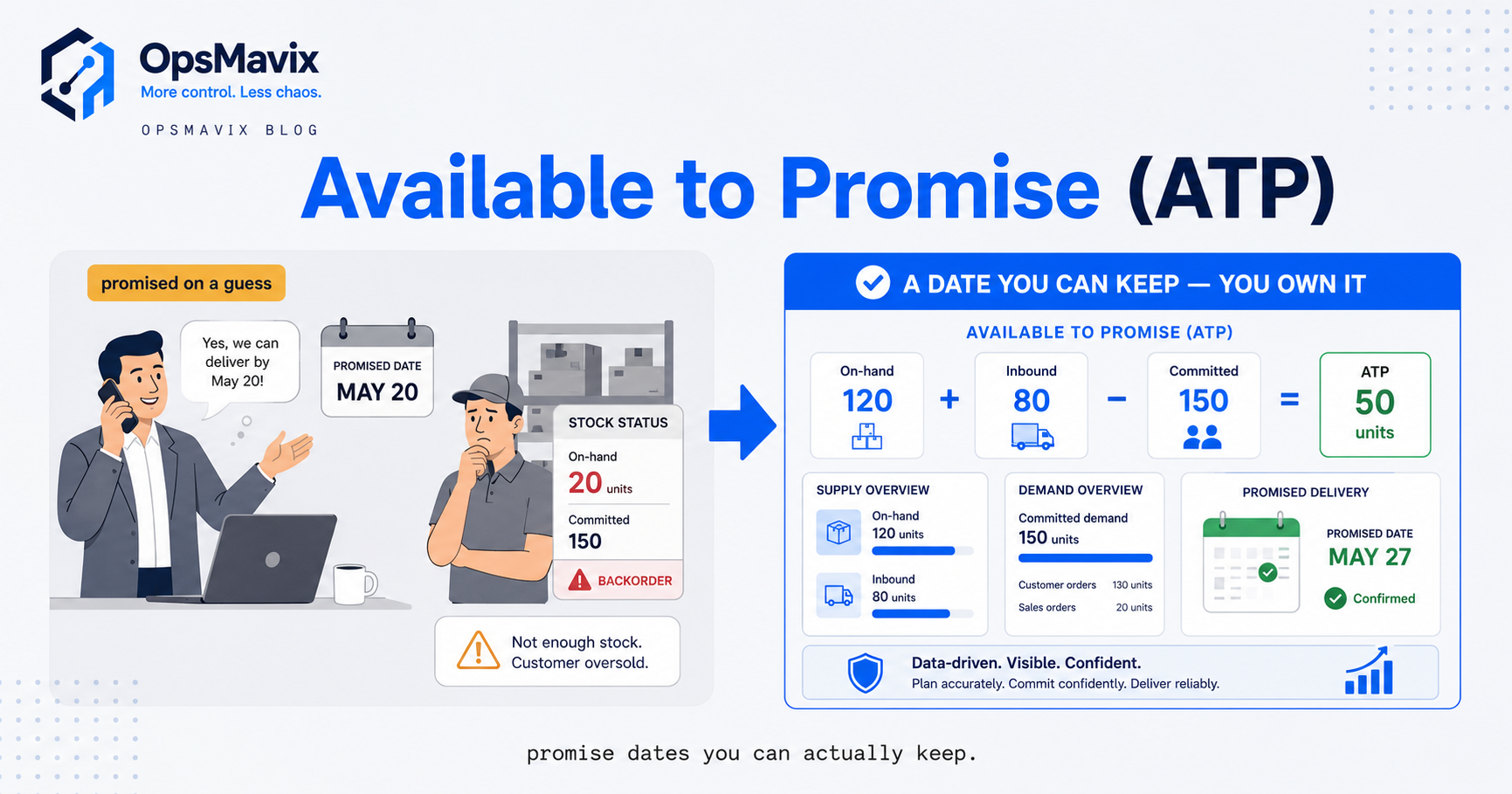
Available to Promise (ATP): What It Is and How to Calculate It
Available to promise (ATP) is the portion of your stock and inbound supply that isn't already spoken for — the quantity you can safely sell without overselling. This post gives you the ATP formula plainly (on-hand + inbound supply − committed demand), a worked example, and why gut-feel promising causes oversells and backorders. It also shows why a spreadsheet can't keep ATP current and how a live owned system computes it per line automatically.
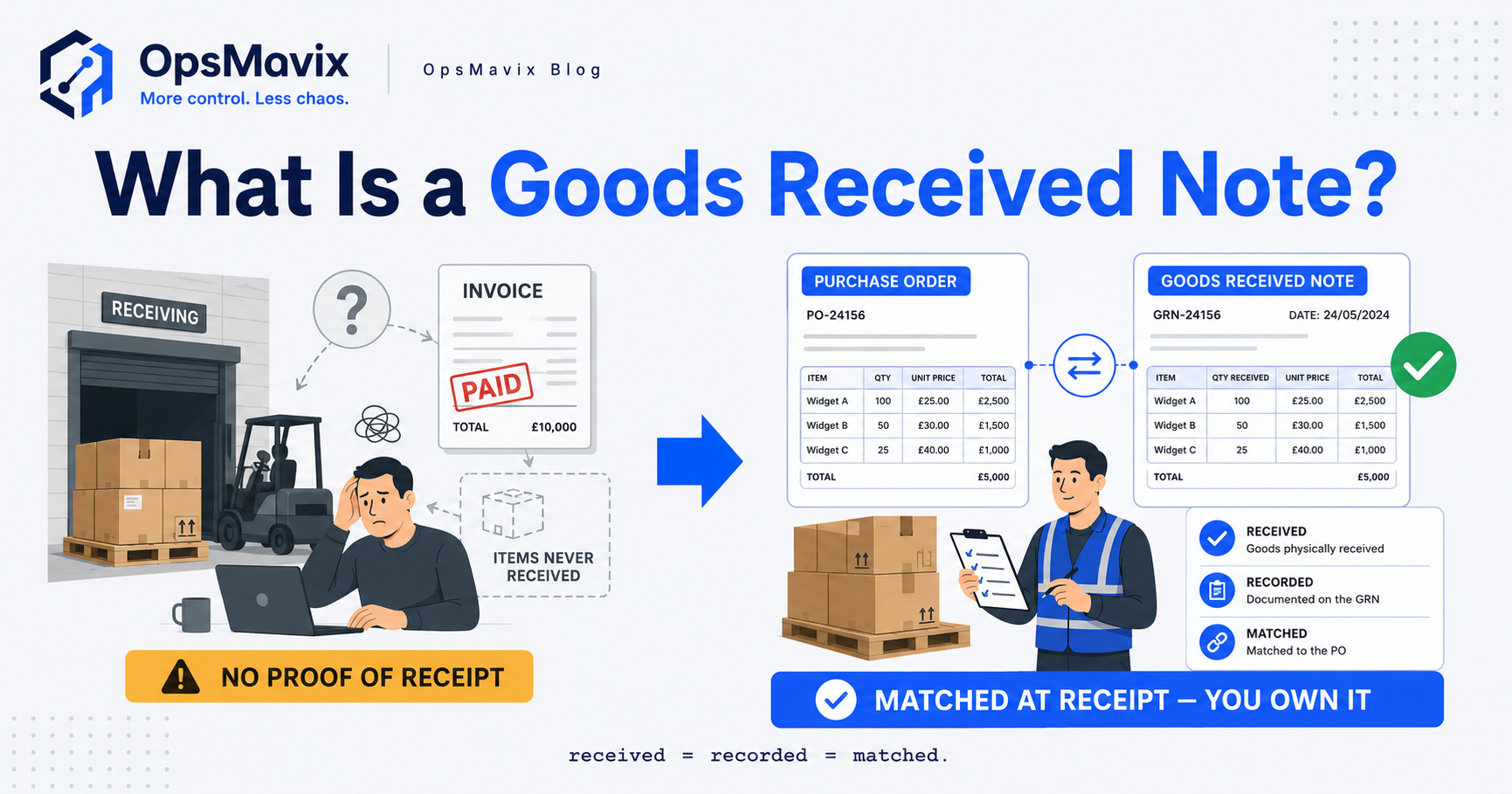
What Is a Goods Received Note (GRN)? A Practical Guide
A goods received note is the buyer's own record of what physically turned up against a purchase order — not what was ordered, not what the supplier says was sent. This guide covers what goes on a GRN, how it feeds three-way matching, and why the document quietly fails on spreadsheets and email.
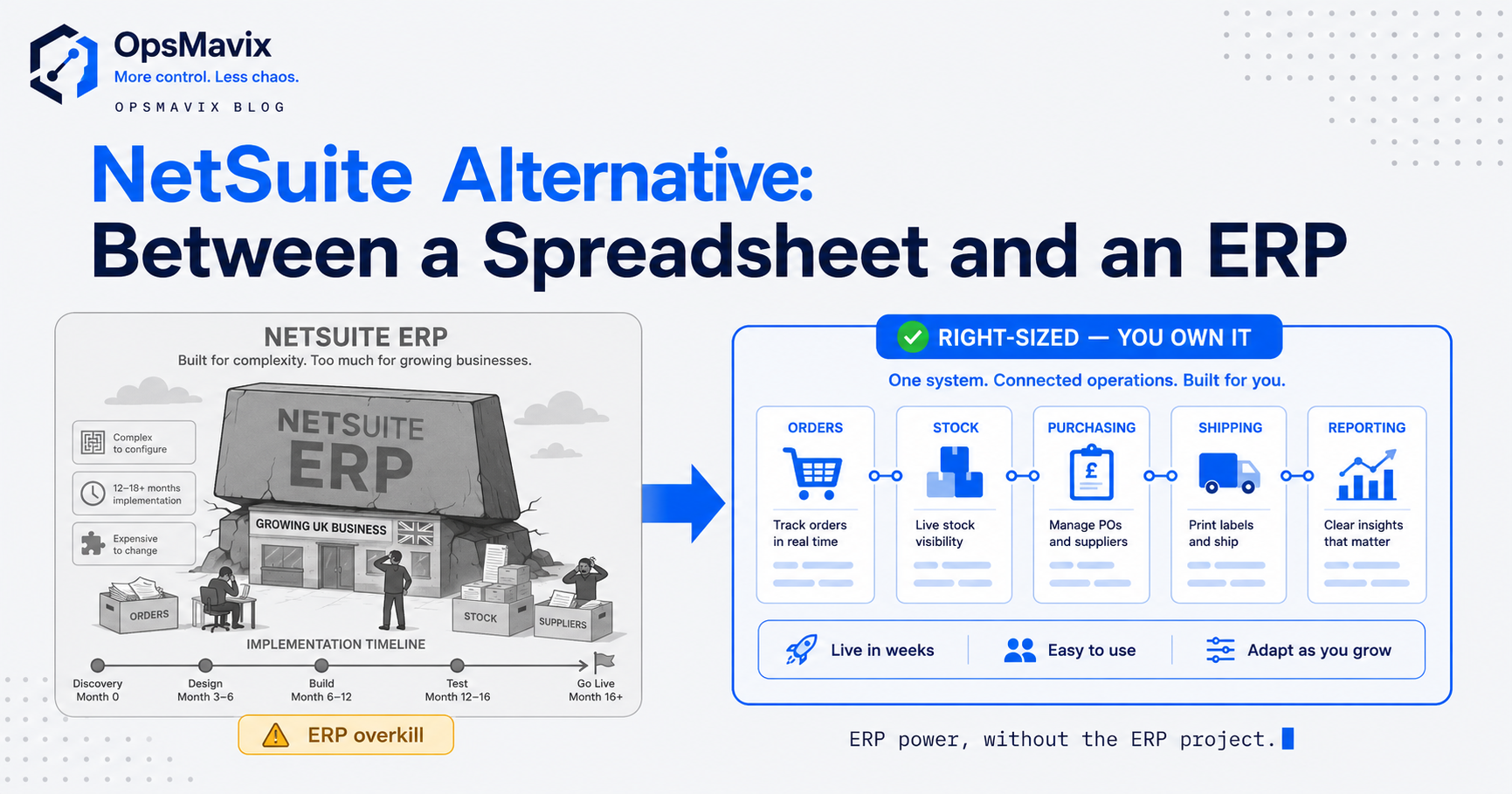
The NetSuite Alternative Between a Spreadsheet and an ERP
Most businesses hunting for a NetSuite alternative have outgrown spreadsheets but are nowhere near needing a full ERP. This is the honest case for the right-sized middle: one owned operations system shaped to how you already work, instead of a platform you spend two years growing into.
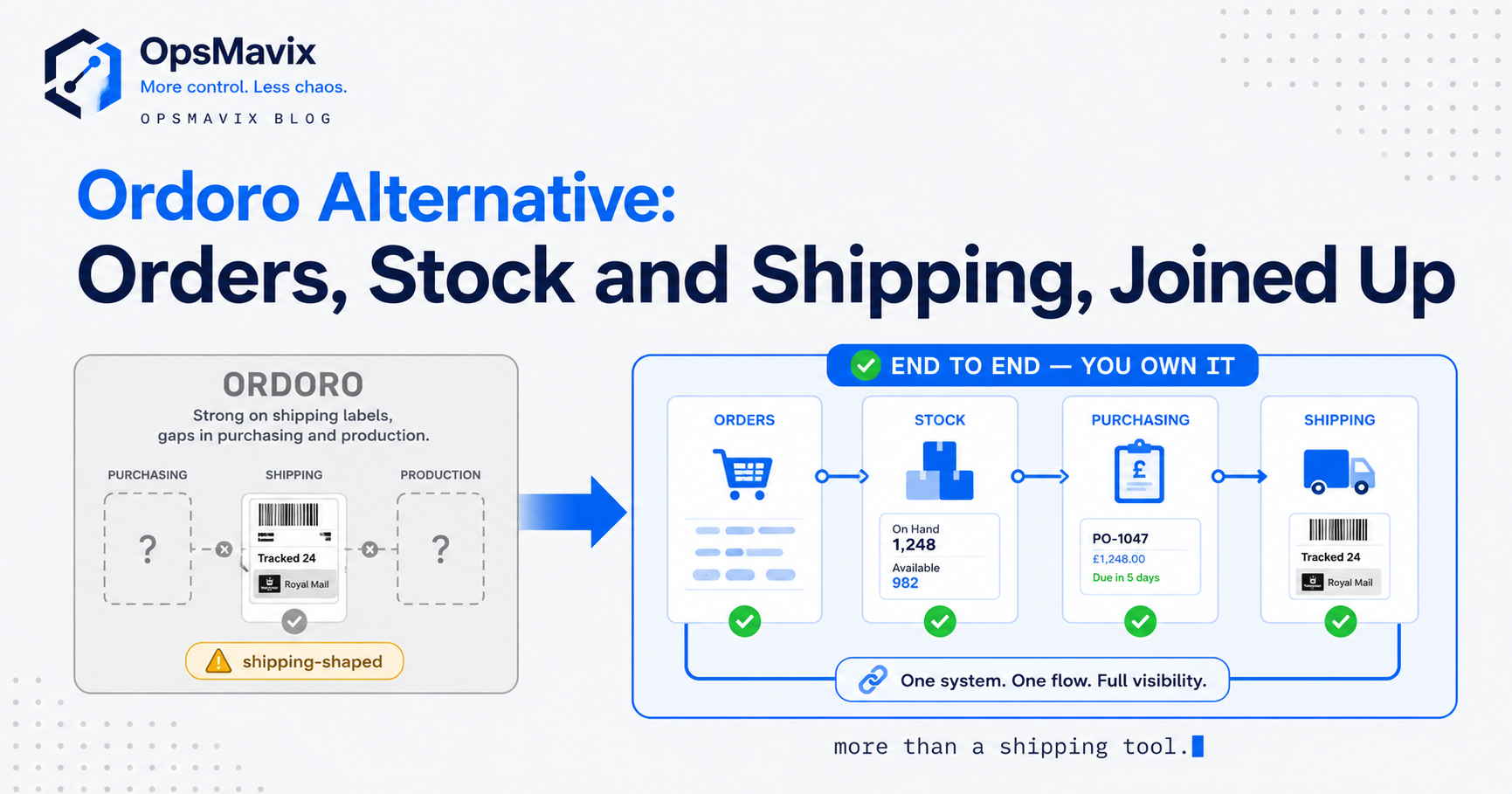
The Ordoro Alternative: Orders, Stock and Shipping Joined Up
Ordoro is genuinely strong shipping-and-inventory software with real dropshipping depth. But if your real leak is purchasing, production and reporting drifting apart from the pack bench, the best Ordoro alternative isn't another labels tool — it's one operations system shaped to how you actually run.
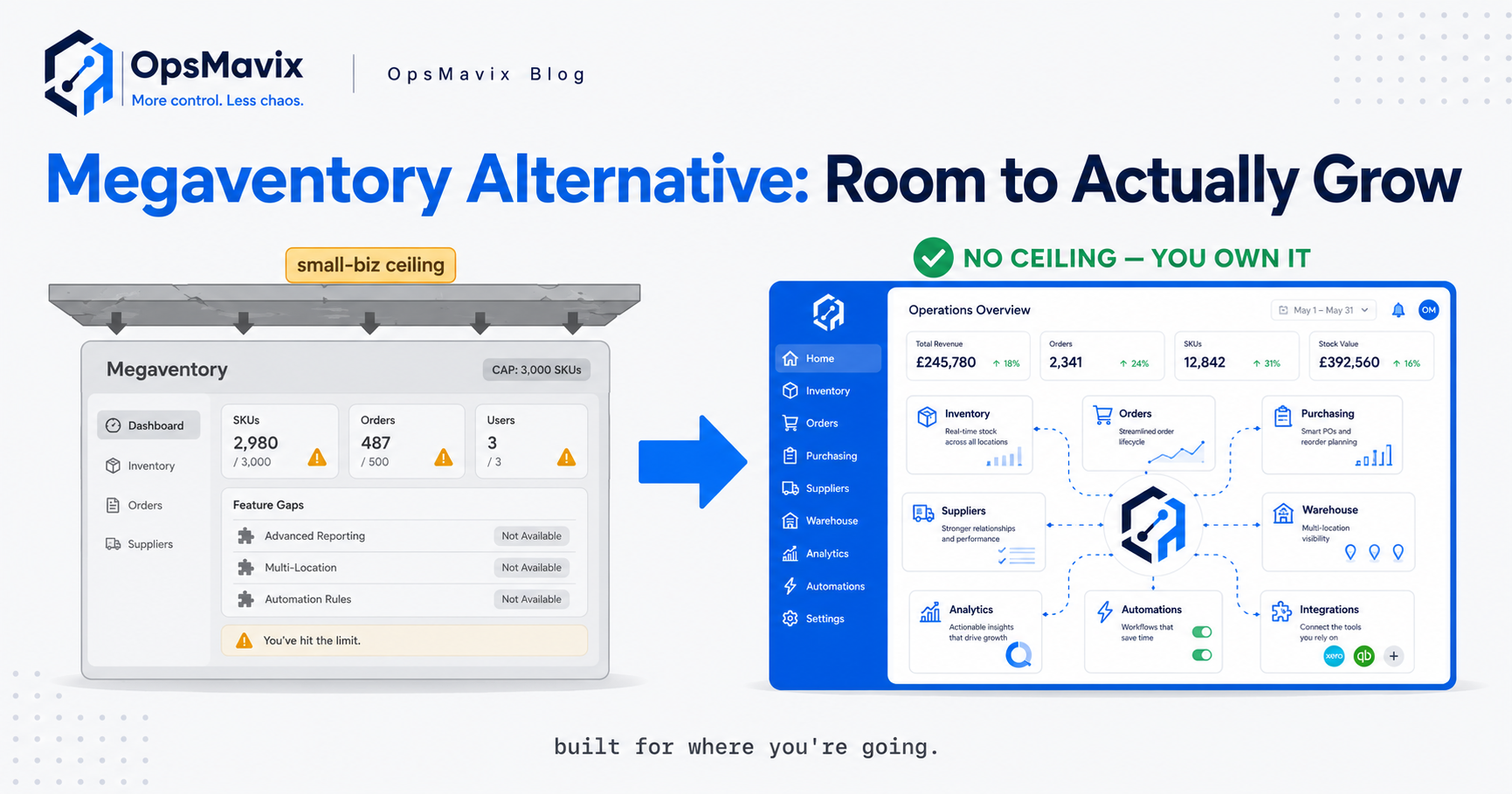
The Megaventory Alternative With Room to Actually Grow
Megaventory is a capable cloud inventory, order and light-manufacturing tool for small teams — until per-user pricing, transaction caps and shallow process depth start bending your operation around the software. This is the honest guide to when a Megaventory alternative makes sense, and why the real one is often an owned operations system rather than the next subscription.