
Running FIFO Stock Rotation Without Losing Track
FIFO only saves money if the oldest stock actually ships first. Here's how to enforce first-in-first-out in your stores, and stop quietly writing off expired stock.
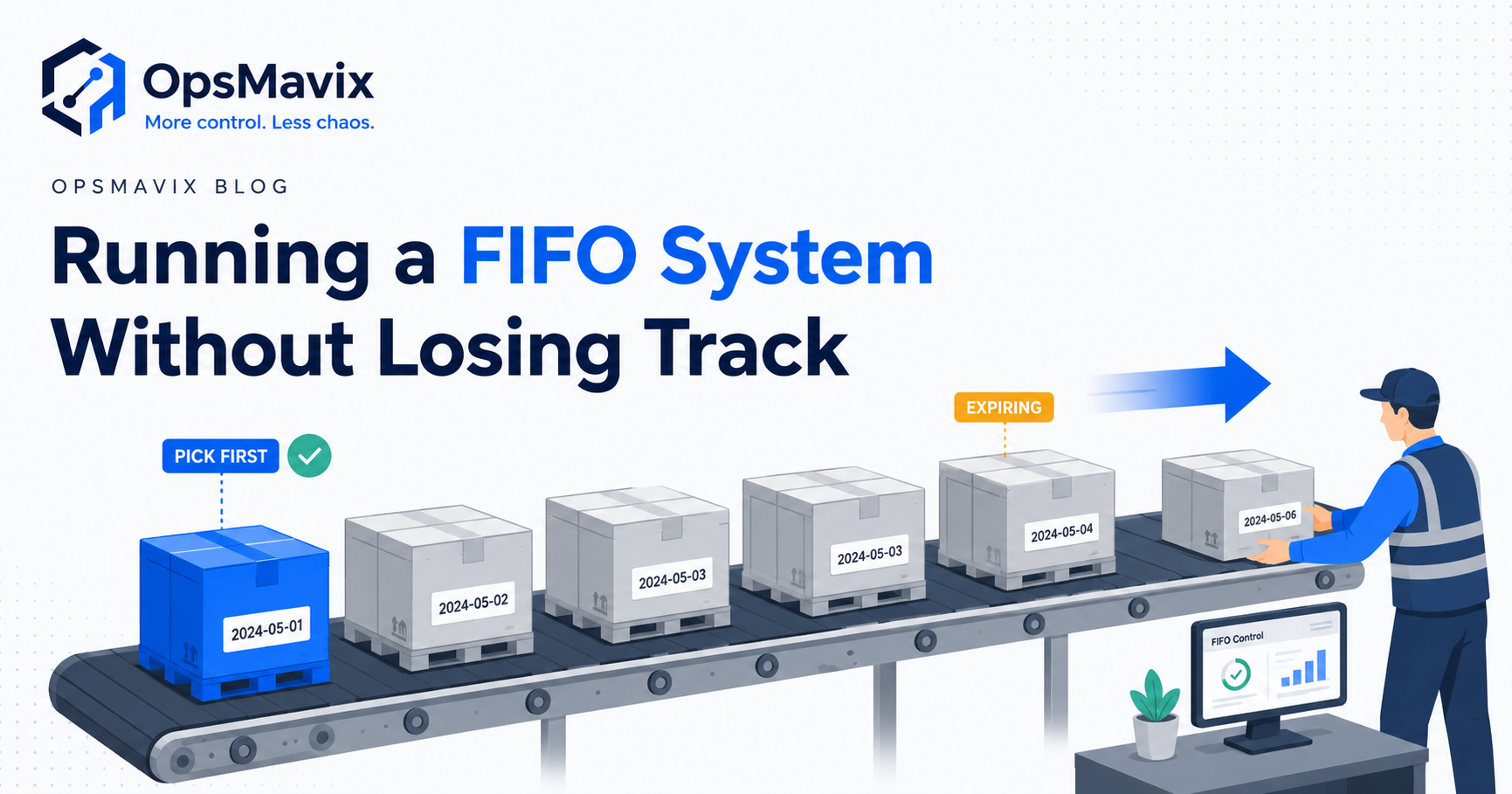
A FIFO system in stores means the oldest stock leaves first, so units don’t sit on a shelf until they expire or spoil. First in, first out. The idea is simple. The hard part is enforcing it: making the picker grab the older batch instead of the nearest one. When FIFO is a sticker on the racking rather than a rule the system enforces, the oldest stock quietly ages out and gets written off, and nobody can say exactly when it happened.
If your stock figure already can’t be trusted, FIFO gets harder still. You can’t rotate what you can’t see. The fix isn’t counting harder. It’s making the system tell the picker which batch to take, then recording every movement so the count stays true.
Here’s how to run FIFO without losing track of it.
Key Takeaways
- FIFO only cuts spoilage if it’s enforced at the pick, not printed on a poster.
- You can’t rotate stock you can’t trust. Batch and date tracking is the foundation.
- The expensive failure is silent: old stock ages out and gets written off with no explanation.
- The picker should be told which batch to take, not left to guess by eye.
- Every receipt, pick and write-off has to update one live figure, or the count drifts.
1FIFO Fails at the Pick, Not on Paper
Most businesses already “do FIFO” on paper. There’s a process. Maybe a sign on the racking. But the rule lives in someone’s head, and a picker under pressure grabs whatever’s at the front or easiest to reach. Stockout Steve, the warehouse manager this avatar is built from, runs “a million messy spreadsheets for the warehouse” and spends his day “guessing and manually counting material.” No spreadsheet is going to tell anyone which batch to ship. FIFO that depends on memory and goodwill isn’t a system. It’s a hope.
2You Can’t Rotate What You Can’t See
Rotation assumes you know which stock is older. But if the count can’t be trusted in the first place, “oldest first” means nothing. As one warehouse owner put it, “our spreadsheet counts wind up being off, sometimes wildly so.” When that’s your starting point, you don’t reliably know what you hold, let alone when it arrived. Batch tracking with received dates is the foundation FIFO sits on. Without it, every rotation decision is a guess made by eye, and the guesses go wrong in your favour right up until the write-off.
3The Expensive Failure Is Silent
Overselling at least announces itself. The order gets cancelled, the customer complains. Spoilage does none of that. Stock simply sits, the date passes, and one day it’s binned. No alert, no flag. It surfaces later as an unexplained shrink in the count, the kind of swing nobody can account for. The avatar research is full of this: numbers that “change for no reason” and a stock value difference “that cannot be explained.” Expiry write-offs hide inside that same fog. The money leaks quietly, every week, with no single moment you can point at.
4Tell the Picker Which Batch to Take
The reliable version of FIFO removes the judgement call. When a picker pulls an order, the system already knows which batch is oldest and directs them to it by location, by date, by batch number. They don’t read labels or recall the rule. The screen tells them. This is the OpsMavix view on rotation: don’t train harder, design the choice out. A picker told “bin A3, batch dated earliest” can’t accidentally ship the fresh stock and leave the old to rot. The rule moves out of someone’s head and into the workflow.
5Every Movement Has to Update One Figure
FIFO breaks the moment a movement goes unrecorded. A batch received but not dated. A sample sent out. A damaged unit binned. Each untracked change corrupts the rotation order and the count behind it. This is the same discipline behind a stock figure that finally matches the shelf, covered in why your stock never matches the system: receipts, picks, transfers, returns and write-offs all updating one live figure the instant they happen. FIFO isn’t a separate feature bolted on top. It falls out automatically once every movement is captured against a dated batch.
6Write-Offs Should Be Visible, Not Buried
When stock does expire, that’s information, not just a loss. A system that records each write-off, with the what, when, which batch and why, turns spoilage from a mystery shrink into a number you can act on. Now you can see which lines you over-order, which suppliers’ batches arrive short-dated, where rotation keeps slipping. The avatar’s hidden goal is owning a system “no vendor can sunset, price-gouge, or hold hostage.” The same ownership applies to your spoilage data. It’s yours, it’s visible, and it tells you where to stop the leak, instead of being absorbed into a count you’ve already learned not to trust.
FAQ
What is a FIFO system in stores?
FIFO, first in, first out, means the oldest stock is sold or shipped before newer stock. In a store or warehouse, a FIFO system tracks when each batch arrived and directs picking so older units leave first. That cuts the chance of stock sitting long enough to expire, spoil or turn into dead stock.
How do I enforce FIFO instead of just hoping for it?
Take the decision away from the picker. The system records a received date or batch number for every unit, then tells the picker which batch to take when an order is picked. When the oldest batch is the one the screen points to, rotation happens by default rather than depending on someone remembering the rule.
Does FIFO only matter for food and perishables?
No. Anything with a shelf life, expiry, use-by, or a tendency to go obsolete benefits: cosmetics, pharma, chemicals, electronics, batteries, even fashion lines that date. If stock loses value the longer it sits, FIFO protects margin. For non-perishable goods it still reduces dead stock and keeps your oldest inventory moving.
Why do I keep writing off expired stock even though we “do FIFO”?
Usually because FIFO is a manual habit, not an enforced rule. Under pressure, pickers grab the nearest or easiest unit, and without batch dates in the system there’s nothing checking that the oldest left first. The write-offs then hide inside general stock shrink, so the rotation problem never gets traced.
Can I run FIFO if my stock count is already unreliable?
Not well. Rotation depends on knowing what you hold and when it arrived. The first step is getting every movement to update one trusted figure, with batches and dates attached. Once the count is reliable, FIFO becomes a rule the system can enforce rather than a guess made by eye.
How OpsMavix Can Help
OpsMavix builds custom inventory systems where every batch is dated on receipt and the system directs picking so the oldest stock ships first. FIFO enforced at the pick, not printed on the racking. Every write-off is recorded against its batch, so spoilage stops being an unexplained shrink and becomes a number you can trace back to a supplier, a line, or a rotation gap.
Expired and spoiled stock is a quiet operational leak. You pay for it once when you buy it and again when you bin it. Book an Operations Leak Audit and we’ll map where your stock rotation breaks down, and what those write-offs are actually costing you.