
Who Is Drew Binsky's World's Loneliest Man? The Video, a 2024 Press Story, and What Matches
Drew Binsky's world's loneliest man is a shepherd called Mehmet. A 2024 Turkish press story matches him closely, but the link is not confirmed.
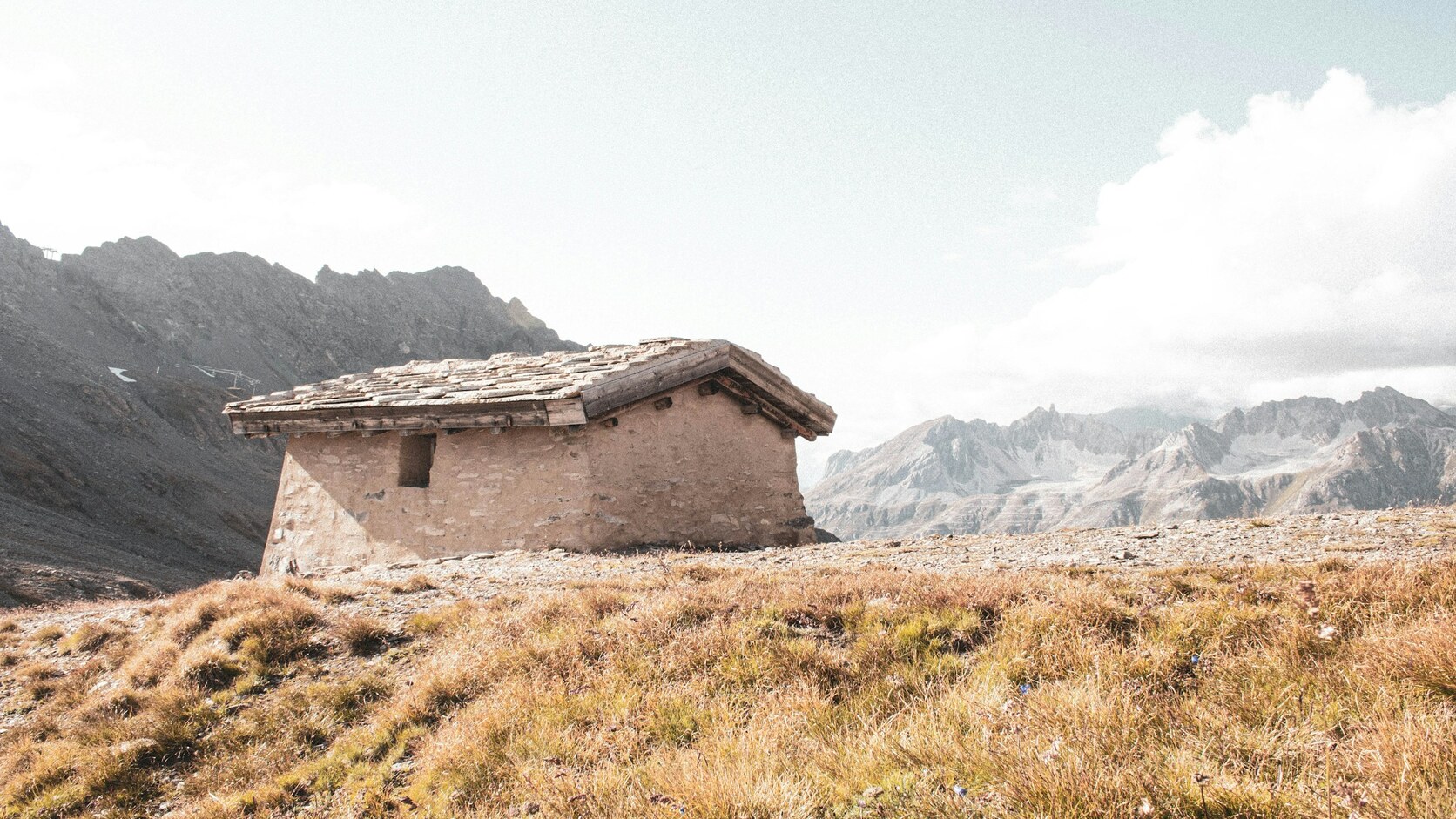
Drew Binsky’s world’s loneliest man is a shepherd the video calls only Mehmet, who lives alone with his goats in the mountains outside Antalya, Turkey. The video gives no surname. A 2024 Turkish wire story names a man who matches on most details. That identification is inferred, not confirmed.
Quick summary: The video, published on 3 October 2026, says Mehmet has lived alone for 17 years and lost almost 200 goats to thieves in one night (Drew Binsky on YouTube). On 18 March 2024 the agency DHA reported that Mehmet Çabuk, then 80, withdrew to a mountain in Antalya province after about 150 goats were stolen in 2007 (Milliyet); the link is our inference, and the video does not confirm it.
The strange part is the title. On the second day Binsky asks the man he has billed as the loneliest on earth whether he feels lonely. The translated answer is a flat no. The 2024 Turkish story uses a different word for its subject, a verb that means taking offence and no longer speaking to someone.
Who is the world’s loneliest man in Drew Binsky’s video?
The world’s loneliest man in Drew Binsky’s video is an elderly Turkish shepherd introduced as Mehmet, who keeps goats in the mountains outside Antalya and, by the video’s account, has lived there alone for 17 years.
The film gives little more than that about his identity. The visitors address him as Mehmet Amca (amca is Turkish for uncle). The English captions and the description carry no surname, village or district.
The 39-minute film went up at 14:34 UTC on 3 October 2026 and showed 221,990 views about six and a half hours later. Its description says Binsky “first came across Mehmet in a small article on a Turkish news site”. On camera the visitors say: “To be honest, we don’t know much else.”
Drew Binsky
Drew Binsky is an American travel film-maker who says he has visited all 197 countries. His about page claims more than 10 million social media followers and says he grew up in Scottsdale, Arizona. His YouTube channel showed about 7.46 million subscribers on 3 October 2026, the day he published this video, and the video itself runs to about 39 minutes.
Anıl Ünlü, the guide and translator
Most of what Mehmet says reaches the viewer through Anıl, a Turkish friend from a road trip the two took about four years earlier. The description credits his channel, gezmekenkolay, where he introduces himself (in Turkish) as Anıl Ünlü. It showed 366,000 subscribers on 3 October 2026. This matters for accuracy: the English lines attributed to Mehmet are mostly live summaries given on the spot, and the captions carry no speaker labels.
What the video shows over two days
The film opens in Antalya with the pair driving out of the city and no address to aim for. They ask around, get pointed towards a mountain, and buy food on the advice of a man at a market.
They carry in pasta, oil, bread, sugar and a watermelon, plus flea treatment for the goats. After a hot walk they spot a man walking by himself, with goats close by. Early in the conversation he is talking about jackals, which he says have taken two kids from the herd.
The first evening is mostly goats: about two hours getting them into shelter, with every offer of help waved away. Then the mood changes. He accepts the supplies, blesses the visitors and eats with them. They camp nearby and are woken at 5:35 for his morning routine, a fast climb to gather leaves for the young goats.
He has not owned a phone, because he says he would lose it running over the rocks. He notices a single stone that has rolled onto the path since he last passed. At night the herd sleeps under his own roof, safe from the jackals.
Why does Mehmet live alone?
Mehmet lives alone, by his own account as translated in the video, because thieves took his herd in a single night and he then left the place he knew. The on-camera translation calls the theft his “breaking point”.
Early on, through the translation, he says he once had more than 200 goats and that a thief stole them. Later he describes how: one night the thieves used barbed wire to steer the animals one way and loaded them onto trucks. He went to the police. Nothing came of it.
He then moved away with the few animals he had left. The film, on camera, calls the move “a rebellious thing”, a decision to manage by himself. The captions do not show whether that phrase is his or the visitors’.
There is a practical side too. In town, he says, the land is fenced into gardens and farms, and he does not want trouble for his goats. On the mountain, in the translated line, “it is free here with my goats, so why shouldn’t I live here?”
The herd is small now. The video puts it at perhaps 15 to 20 animals, with one goat giving milk and nothing sold for two years. He does not eat them. Asked why they matter so much, the answer relayed is plain: he has nothing but the goats.
What the Turkish press reported in 2024
On 18 March 2024 the Turkish news agency DHA (Demirören Haber Ajansı) filed a story from Kemer, a district of Antalya province, bylined Alparslan Çınar and Levent Yenigün. It ran that day on Milliyet, Hürriyet and Habertürk, among others. Milliyet’s headline, in our translation from Turkish: “He fell out with people, and has lived on the mountain for 17 years”.
Mehmet Çabuk, as DHA described him in March 2024
The report names its subject as Mehmet Çabuk, aged 80, and gives his neighbourhood within Kemer district. It says he lives in a wooden hut he built himself, alongside close to 100 goats. According to DHA, about 150 of his goats were stolen in one night in 2007, and in the 17 years since he has left the spot only to buy food twice a week. It adds that he is unmarried, washes in a stream, and sleeps beside his herd.
Duvar English rewrote the wire story in English two days later, crediting DHA. It quotes him on the theft, in its own English: “At night, the thieves brought a vehicle. They surrounded the goats with a wire. The goats entered the vehicle and they left. We couldn’t find them.” It is the only English account of the 2024 story we found.
He also told the agency what keeps him there. From Milliyet, in our translation from Turkish: “I don’t get bored, I’m used to it. Without my goats I couldn’t stay here for an hour.” Breakfast that day, he said, had been tea, olives and bread.
The DHA story is clear that he was not abandoned. Milliyet’s copy quotes a relative who says, in our translation from Turkish, “He left us because his animals were stolen.” The relative describes visiting often, and says the neighbourhood’s elected headman, the muhtar, checks on him when the family cannot.
One copy differs on the name. The gallery version on Haber7 calls him Mustafa Çabuk in its introduction, while Milliyet, Hürriyet, Habertürk, Sözcü, Cumhuriyet and Duvar English all print Mehmet. We read Mustafa as one outlet’s slip, and record it so you can weigh it.
Is the Mehmet in the video the man in the press story?
The Mehmet in the video is probably the man in the press story, but the match is inferred, not confirmed: nobody involved has said so, and the identification is ours. The film gives no surname or district, and reports written in 2024 cannot mention a video made later.
Here are the two accounts side by side, as evidence for a match that is inferred, not confirmed. The first column comes from the video’s narration, on-camera remarks and translation. The second comes from the DHA story as printed by Milliyet on 18 March 2024.
| Detail | The video says | The 2024 press says | Matches? |
|---|---|---|---|
| Name | Mehmet, no surname | Mehmet Çabuk (one outlet: Mustafa) | First name only |
| Place | Mountains outside Antalya | Kemer district, Antalya province | Consistent; the video names no district |
| Age | “80-year-old”; he says he stopped counting | 80 in March 2024 | Same figure, two and a half years apart |
| Years alone | 17 (narration), 20 (said twice on the walk in) | 17, counted from 2007 | Same figure; the count should have moved on |
| Goats stolen | “More than 200”, then “almost 200” | About 150 | Partly |
| How it was done | Barbed wire, then trucks, in one night | Wire, then a vehicle, in one night | Yes |
| Afterwards | Went to the police, no result | A search that found nothing | Yes |
| Herd today | Perhaps 15 to 20 | Close to 100 | No |
| Married | No | No | Yes |
| Family | Says he has no one to look after him | A relative visits often | No |
| Washing | In a small stream | In a stream | Yes |
The strongest match is the method. Wire, a vehicle, one night, a search with no result: that sequence appears in both accounts and is too specific to wave away as coincidence. Add a shared first name, the same province, the same trade and the figure of 17 years.
Three things do not fit neatly. First, 80 and 17 are identical in a March 2024 article and an October 2026 video. If DHA was right, he would now be about 82, with roughly 19 years on the mountain.
The man himself says on camera that he stopped counting his age after the theft, so the simplest explanation is that the video reused the article’s figures.
Second, the size of the theft: about 150 goats in the press, about 200 in the video. That could be memory, translation or rounding. Third, the press describes a relative who visits, while the video’s translation has him saying he has no one.
We cannot tell which is closer to his life today. The herd counts differ as well, with two and a half years between the two publications.
A surname spoken on camera, or a word from Binsky, would settle the question. Until then, treat the name as likely and unconfirmed.
A possible third account, from November 2025
A Turkish-language video published on 20 November 2025 by the creator Furkan Lök may show the same man. We have not confirmed that it does. It had 1,847,432 views on 3 October 2026, and its subject is also addressed as Mehmet Amca. We read it only through YouTube’s automatic Turkish captions, so we quote nothing from it.
As far as those captions can be trusted, they cover a herd stolen in one night and a search across Antalya that found nothing. Binsky’s film credits “some Turkish creator” with finding him but names nobody, so we cannot say this is the one.
Where in Turkey does Mehmet live?
Mehmet lives in the mountains outside Antalya in southern Turkey, and that is as exact as the video gets. The 2024 press reports, if they describe the same man, go further and name the district, Kemer, and a neighbourhood within it.
We are stopping at the district on purpose. The reports print finer detail, and we have left it out. He is an elderly man who lives alone.
He does have a view on visitors. Asked how he feels when people turn up, the answer Anıl relays is that he likes it “if they can act properly”, and that otherwise he shows it at once. So if the film moved you, please do not go looking for him.
The “loneliest” label against his own words
Binsky puts the question directly on the second day: “Do you feel lonely?” The answer Anıl relays is: “No. It’s a big no.” The reason given is that he knows every detail of these hills, and that the place is safe and is home.
The film is honest enough to show the other side. Asked whether he is happy, he says through Anıl that the life is difficult but he likes it, that the path has become “rougher and rougher”, and that he has nowhere else to go.
The 2024 Turkish coverage frames its subject differently. Each of the Turkish headlines we opened uses the verb küsmek, which Wiktionary glosses as “to take offense and not to speak with someone”. In that telling he is a man who fell out with people over a wrong done to him, which is a narrower thing than loneliness.
So “world’s loneliest man” is the video’s label. The man in the film declines it, and the 2024 Turkish reports we opened do not use it.
Other people who have been called the world’s loneliest man
The phrase was in circulation long before this video, attached to people whose isolation was of a very different kind. If you searched for the world’s loneliest man and expected somebody else, it was probably one of these.
A close variant was applied to the astronaut Michael Collins, who orbited the Moon by himself during Apollo 11. A 2009 Guardian profile said he “appears to have relished his time as the loneliest member of his species”.
The Man of the Hole, Brazil
A widely reported holder of the label was an Indigenous man in the Tanaru territory of Rondônia, Brazil, the last survivor of a people whose name is not known. In July 2018 the BBC covered footage of him under the headline “Last survivor: The story of the ‘world’s loneliest man’”. Survival International wrote in 2005: “We don’t know who he is, the name of his tribe or what language he speaks.” The BBC reported his death in August 2022, at an estimated age of 60, after 26 years in total isolation.
Mehmet’s situation is different in kind. The Man of the Hole avoided any contact with outsiders after his people were killed. Mehmet talks to visitors, walks to a village for bread and, if the press account is about him, has relatives who come to see him.
A short note on stock records
This blog belongs to OpsMavix, which builds custom internal systems for stock, orders and reporting, and theft is a UK cost too: NFU Mutual puts rural crime as a whole, not livestock theft alone, at an estimated £41.5m in 2025 (Rural Crime Report).
In the systems we build, the stock record is designed to sit apart from the goods, so that a loss can be shown and claimed for, and an off-the-shelf inventory tool is often enough for that.
FAQ
Who is Mehmet in Drew Binsky’s video?
He is an elderly shepherd who lives alone with his goats in the mountains outside Antalya, Turkey. The video gives only his first name. A March 2024 DHA story describes a Mehmet Çabuk who matches closely, but the video does not confirm it.
Where does the world’s loneliest man live?
The video places him in the mountains outside Antalya in southern Turkey and names nothing more exact. The 2024 press story that appears to describe him names Kemer district. We repeat nothing finer, and ask readers not to go looking.
Why does Mehmet live alone in the mountains?
By his own account in the video, thieves took almost 200 of his goats in one night, he went to the police, the animals were not traced, and he moved away with the few left. The 2024 press report gives the same cause, with a figure of about 150.
How long has Mehmet lived alone: 17 years or 20?
The narration and the description say 17 years, and on the walk in the visitors twice say 20. The 17 figure also appears in the March 2024 press story, which counts from a theft in 2007. If that date is right, the figure in October 2026 is about 19.
Does Mehmet say he is lonely?
No. Asked directly, his translated answer is “No. It’s a big no”, because he knows the hills in detail and regards them as home. He also says the life is hard, so the picture is mixed.
Final takeaway
Drew Binsky’s video shows a man called Mehmet who lost a herd in one night, moved up a mountain and, when asked, says he is not lonely.
A 2024 DHA story describes Mehmet Çabuk of Kemer in terms that match on the theft, the method and the 17 years. We think they are the same person, but that is inferred, not confirmed.
If the stock-record point applies to your own business, our demos show what written-down stock looks like, or you can Book a free Operations Leak Audit.