
The Knight Who Refused To Remove His Armor: Is It a Real Legend, and Where Does the Dragon Curse Come From?
Is the knight who refused to remove his armor a real legend? What we checked, the older dragon tales it echoes and what museums say about armour.
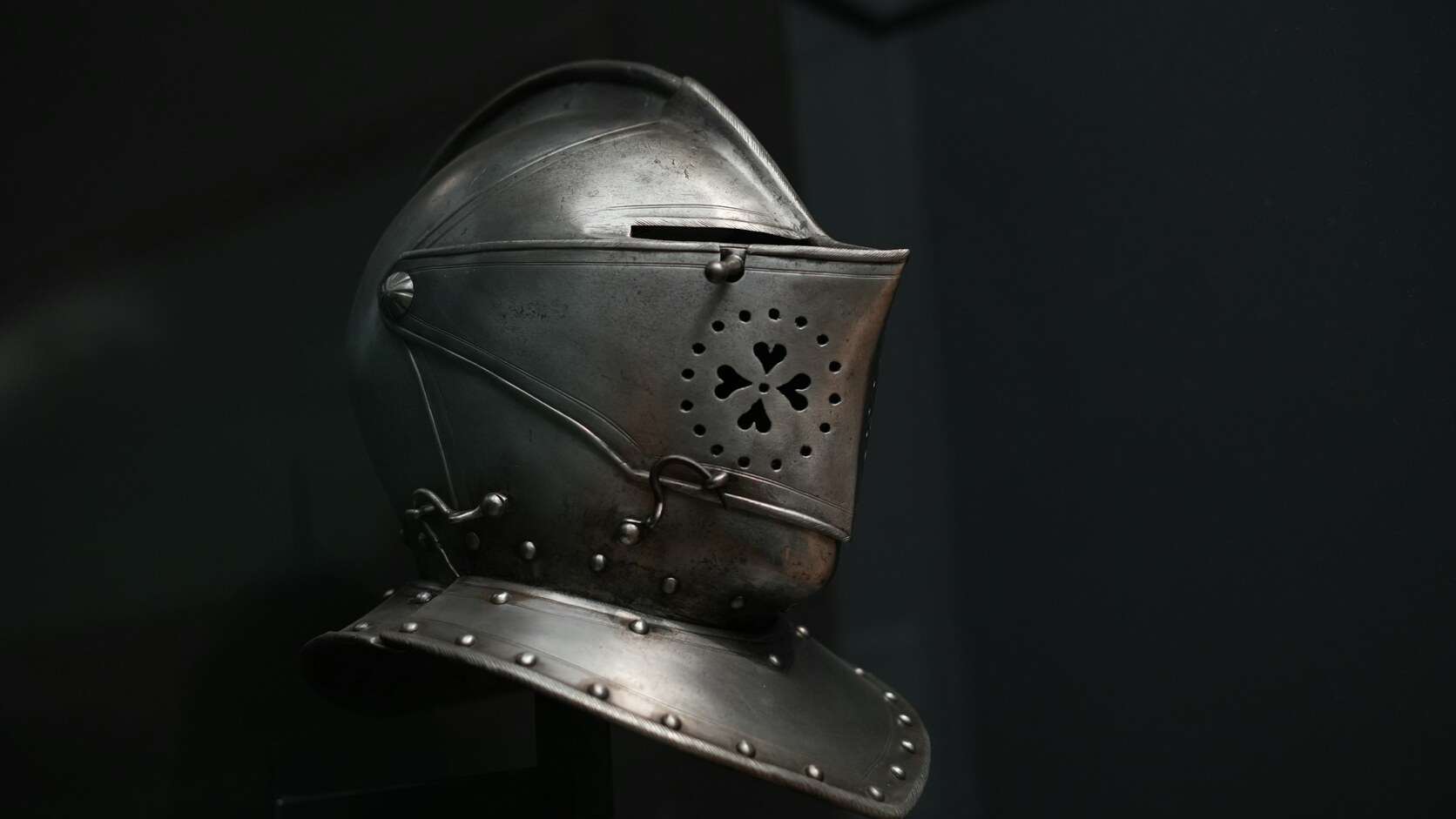
The knight who refused to remove his armor matches no legend we found. On 3 October 2026, nine searches, the video page and its top comments gave no source, so the Zack D. Films Short appears to be original fiction. Its core idea, a slayer marked by his dragon, is at least 750 years old.
Quick summary: The 58-second Short passed 1.1 million views within four hours of upload on 3 October 2026 (YouTube), and it names no source, place or date. Real plate armour is the other half of the answer: a full battle harness “usually weighs between 45 and 55 lbs. (20 to 25 kg)”, according to The Metropolitan Museum of Art.
The strange detail is the dragon’s head. In the Short it is the proof that settles everything, and the village throws a feast. In a well-known family of European dragon-slayer tales, the man who walks in carrying the head is the liar. The real slayer has kept the tongue, and the lie holds until somebody looks in the dragon’s mouth.
What the Short actually shows
A knight walks back to his village carrying the head of a dragon he has killed. The village celebrates. At the feast he refuses to take off his armour, and the narration says he ate “through the slit in his visor”. When his wife reaches for his helmet, he grabs her wrist and stands up.
The villagers assume he is wounded. Then, in the video’s words, “days passed and he still kept it on. He slept in it, worked in it.” The village leaders grow concerned, wait until he is resting, and hold him down. His wife begs them to stop.
One of the men lifts the helmet. They find scales on his face, sharp teeth and golden eyes. The last line carries the twist: “You see, he really did kill the dragon, but not before it cursed him.”
That is the whole story. Nobody in it has a name. There is no country, no century and no source.
Is the knight who refused to remove his armor real?
No, the knight who refused to remove his armor does not appear to be real, and we could not find a legend it was taken from. On current evidence it appears to be original fiction from the channel. That describes what our checks found in writing. It says nothing about what the creator intended.
Here is exactly what was checked on 3 October 2026, the day the Short went up:
- Nine web searches on the plot, the exact title, the dragon-curse motif and the channel’s fan wiki. None returned a written page telling this story or a named legend that matched it.
- The video page. The title carries no fiction tag, YouTube shows “No description has been added to this video”, and nothing on the page, viewed signed out, names a source.
- The channel’s fan wiki on Fandom. A search for the Short returned no page for it.
- The first 20 top comments. None was a pinned note from the channel. Two viewers remarked on a missing “fiction” tag. That hints, on two comments only, that some regulars expect one on invented stories.
- The channel page. It lists a compilation titled “19 of My Creepiest Fiction Stories (Compilation)”, so the channel does publish stories it calls fiction.
Two limits apply. A blank from nine searches does not prove that no such legend exists, least of all this early: pages under two days old may not be indexed yet. And the creator has not said, anywhere we could see, where the idea came from. If a source turns up, the answer changes.
Stories that sound similar but are not this one
Two near misses came up. The closest is Robert Fisher’s self-help novel The Knight in Rusty Armor. As Wikipedia summarises it, the knight wears his armour constantly, even to sleep, and one day finds he cannot take it off.
Wikipedia calls the book allegorical, and the plot follows his journey to get free of the armour. The summary mentions no dragon’s curse and no scales under the helmet.
The other is a parable that circulates online, in which every hero who kills the dragon turns into the next dragon. Our searches could not tie it to a named text, and we found no scholarly or museum source for it, so it is not treated as authentic folklore here.
What legend is the knight cursed by a dragon story from?
The knight cursed by a dragon story is not from any single legend we can identify, but its motifs are old. Older sources carry four of them: a man who becomes a dragon, a slayer changed by the kill, a dying dragon’s last words, and a head offered as proof.
1. Fáfnir, the man who became the dragon
Fáfnir is the dragon of the Norse Völsunga saga, and he was not born one. Britannica summarises the story: he killed his father for a hoard of cursed gold, and “Full of greed, Fafnir changed into a dragon to guard his treasure”. In William Morris and Eiríkr Magnússon’s translation, his brother Regin says he “became the worst of all worms”. The saga dates from roughly 1270, per Britannica, so the idea of a man turning dragon is at least 750 years old in writing.
2. Sigurd and Siegfried, the slayers who took something from the dragon
Sigurd kills Fáfnir, and the saga gives the dying dragon a warning: “that same gold which I have owned shall be thy bane too.” An endnote in that edition says Sigurd first hides his name because of “the superstition that a dying man could throw a curse on his enemy”. That is close to the Short’s twist, a dying dragon cursing its killer, in a saga from around 1270.
Sigurd then takes “the Helm of Awe” from the dragon’s lair. In the German Nibelungenlied, the change is physical: Siegfried “slew a dragon and bathed him in the blood, so that his skin became like horn”.
3. Eustace Scrubb, the boy who woke up as a dragon
A clear modern version is in C. S. Lewis’s The Voyage of the Dawn Treader, published in 1952 (Britannica). Eustace falls asleep on a dead dragon’s treasure and wakes transformed. Lewis writes: “Sleeping on a dragon’s hoard with greedy, dragonish thoughts in his heart, he had become a dragon himself.” He scratches off three skins and is still a dragon. The lion Aslan has to tear the last one away. As in the Short, somebody else has to take it off him.
4. The steward who carried in the head
The head as proof has its own history. In The Blood Brothers, a tale that D. L. Ashliman’s folktexts library, hosted by the University of Pittsburgh, says “is told throughout the Indo-European cultural area”, the real slayer cuts out the dragon’s tongue. A steward finds the body, cuts off the head and claims the reward. The king is “delighted to see the dragon’s head” until the hero says: “It is a strange dragon that has no tongue.” The same trick appears in Tristan and Isolde.
How the Short compares with the real sources
None of these is the Short’s plot, in which a knight is cursed by the dragon he killed. Each shares one piece with it.
| Source | Written | Who is changed | How | What it shares with the Short |
|---|---|---|---|---|
| Völsunga saga: Fáfnir | Roughly 1270 | Fáfnir | Greed over cursed gold turns him into a dragon | A man becomes a dragon, but he is the one slain |
| Völsunga saga: Sigurd | Roughly 1270 | Sigurd | The dying dragon warns the gold will be his bane | A dying dragon’s warning to its killer, with no change of body |
| Nibelungenlied: Siegfried | Medieval German epic | Siegfried | Bathes in the dragon’s blood; skin “like horn” | The slayer’s body changes, but it protects him |
| The Voyage of the Dawn Treader | 1952 | Eustace | Sleeps on the hoard with “dragonish thoughts” | A person becomes a dragon and another must remove the skin; he slew nothing |
| The Blood Brothers | Traditional, retold 2012 | Nobody | The head is false proof; the tongue exposes it | The head carried in as proof |
The combination, a slayer who comes home, hides in his own armour and is unmasked by his neighbours, is not in any source we could open.
Could a knight really live in plate armour for days?
Whether a knight could live in plate armour for days is not something the museum sources we read answer: none gives a limit for wearing one. They describe a harness a knight was helped into, with parts that came off for the toilet. None of the three museums describes anyone living in one.
The Met, the Royal Armouries and the Wallace Collection on real armour
The Met’s essay on armour misconceptions, by Dirk H. Breiding of its Department of Arms and Armor and dated October 2004, puts a full field armour at 20 to 25 kg, with the helmet at 2 to 4 kg, spread across the whole body. It says an untrained man in a fitted harness can “sit or lie on the ground, get up again, run”.
So lying down in armour is possible. On toilets the essay admits there is “no definitive answer”, but says that off the battlefield the wearer would “remove relevant parts of his armor and clothes”.
A second Met essay on how armour functioned gives the order of dressing: legs first, then the upper body and arms, and “the helmet and gauntlets were donned last”.
The helmet is a separate piece and the last one on. On that description, men lifting it off a resting knight is one of the Short’s more believable moments.
The Royal Armouries tells schools that “Armour was heavy and difficult to put on so knights would have needed help, usually from a squire”, and that suits were made to fit one wearer. Its squire worksheet, written for ages 4 to 7, adds the unglamorous part: a squire “would have to clean lots of armour”, shaking it in a waxed bag with sand and urine.
The schools page also notes that monsters and dragons were common decoration on real horse armour, and that a suit made for the 24-year-old Henry VIII is engraved with St George slaying one.
The two museums differ in emphasis. The Met calls the belief that armour is extremely heavy wrong. The Royal Armouries still calls it heavy. Both can hold: 25 kg is a real load, and a fitted harness spreads it over the body.
The Wallace Collection in London publishes actual weights for its Armour for Man and Horse, made in Landshut around 1480: 27.161 kg for the man’s armour, 30.07 kg for the horse’s and 10.17 kg of mail.
So the verdict is mixed. On the Met’s figures the weight would not stop him, and he could lie down. But the sources describe help getting in, parts coming off for the toilet, and a squire cleaning the armour. None gives a time for putting a harness on or a limit for wearing one, so we offer no figure.
The armour myths museums keep correcting
The Short leans on a popular picture of a knight sealed inside his armour. The Met’s list takes two parts of that picture apart:
- Cranes. The belief that knights were hoisted into the saddle “appears to have originated during the late nineteenth century as a joke”, and was fixed in memory by Laurence Olivier’s 1944 film Henry V.
- The helpless fallen knight. The Met calls this “without foundation” and cites the French knight known as Boucicault, who could climb the underside of a ladder in full armour using only his hands.
None of this makes the Short wrong, because it is a story. It does suggest the sealed-shell image owes more to later storytelling than to the objects themselves.
Who is Zack D. Films?
Zack D. Films is a verified YouTube channel with 28.7 million subscribers and about 4,000 videos as of 3 October 2026, according to its channel page. Its own description is one line: “A Collection of Things I Find Interesting”.
The Shorts tab that day mixed subjects freely. On the same tab as the knight sat “The Bomb That Almost Nuked North Carolina”, “What Is A Jerboa?” and “How Ink Tags Stop Clothing Thieves”, the last at 13 million views. None of the 48 most recent Short titles we read carried a fiction label.
That mix is why the question is fair. Two Shorts the channel posted within a day of this one, about a bullet found under a pillow and a man who choked on a burger, retell stories that news sites had already reported (TechSpot in June 2026, Greek City Times in November 2025).
A viewer could reasonably assume the knight is real too. The knight Short had 1,148,814 views and about 76,000 likes when we read the page, under four hours after upload.
We read the channel’s home page and Shorts tab. Neither gives the creator’s full name, age or location, so neither do we.
What a dragon’s head teaches about a stock figure
The village made one mistake twice. It took the head as the whole story, and then for days nobody looked under the helmet. The old tales knew better: the head is the easy thing to carry in, and the tongue is the check.
Businesses do this with stock. The figure on the spreadsheet is the head on the table. It looks like proof, it gets passed around, and quotes, orders and purchasing are built on it. The count on the shelf is the tongue, and it may be months since anyone asked for it.
In the systems we build, stock, orders and purchasing read from one record, and each figure can be traced to the movements behind it. That is what a proper stock record is for. A safety stock level worked out from a count nobody has verified is a feast thrown for a head.
OpsMavix builds custom internal systems for inventory, orders, purchasing, production and reporting, in place of spreadsheets and disconnected tools. The demos show what a checkable number looks like.
FAQ
Is the knight who refused to remove his armor a true story?
We found no evidence that it is. The Short names no person, place, date or source, and nine searches on 3 October 2026 found no written version of the plot. It appears to be original fiction.
Did Zack D. Films say the knight story is fiction?
Not that we could find. The title has no fiction tag, the description is empty, and the first 20 top comments held no pinned note from the channel. The channel does publish a compilation it calls “Fiction Stories”.
Is there a real myth where a dragon slayer turns into a dragon?
Not exactly, in the sources we read. Fáfnir becomes a dragon but is the one slain. Siegfried kills a dragon and gains skin “like horn”. Eustace becomes a dragon without killing one. A dying dragon warning its killer is in the Völsunga saga.
How heavy was a real suit of plate armour?
The Metropolitan Museum of Art gives 45 to 55 lbs (20 to 25 kg) for a full field armour, with a helmet of 4 to 8 lbs (2 to 4 kg). The Wallace Collection lists 27.161 kg for the man’s armour in its Landshut harness of about 1480.
Could a knight sleep in his armour?
He could lie down in it: the Met says a man in fitted armour can lie on the ground and get up again. Nothing in the Met, Royal Armouries or Wallace Collection pages we read describes knights sleeping in a full harness.
Final takeaway
The knight who refused to remove his armor appears, on everything we could check, to be a new story with old parallels: Fáfnir’s change, the dying dragon’s warning, Siegfried’s horn skin, Eustace’s dragon hide and the steward’s false trophy. Real armour would have let him lie down. It would also have needed a squire and a scrub.
The part worth keeping is the village. It trusted the trophy and skipped the check. If your stock, orders or job costs rest on a figure nobody has looked under lately, Book a free Operations Leak Audit and we will show you where to lift the helmet.