
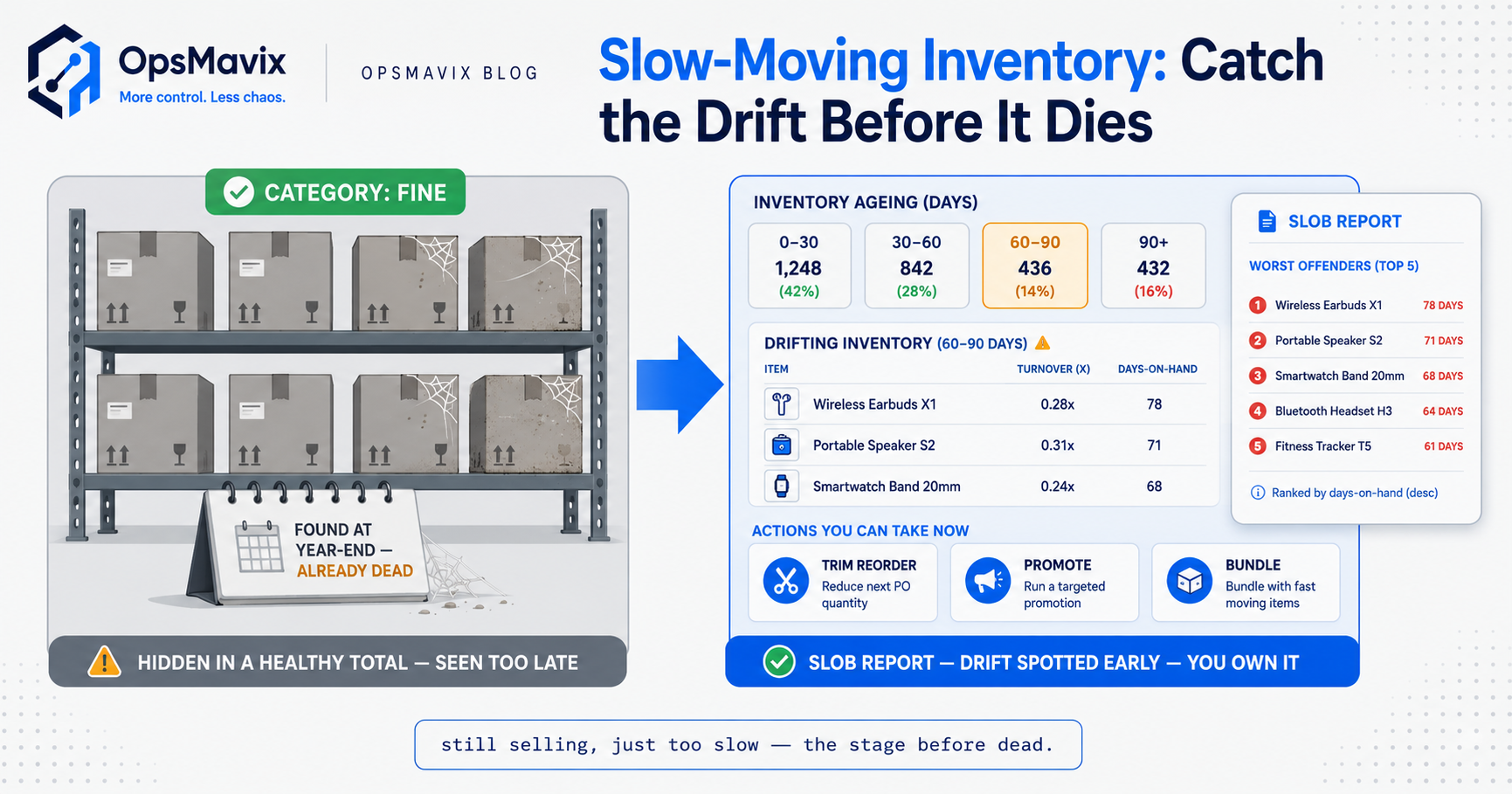
Slow-Moving Inventory: Spotting the Drift Before It Dies
Slow moving inventory is stock that still sells, just far too slowly — the early-warning stage before it goes dead. Here's how to measure it with stock turnover, days-on-hand and ageing buckets, build a SLOB report, and set per-category thresholds so the drift shows up while there's still time to act.
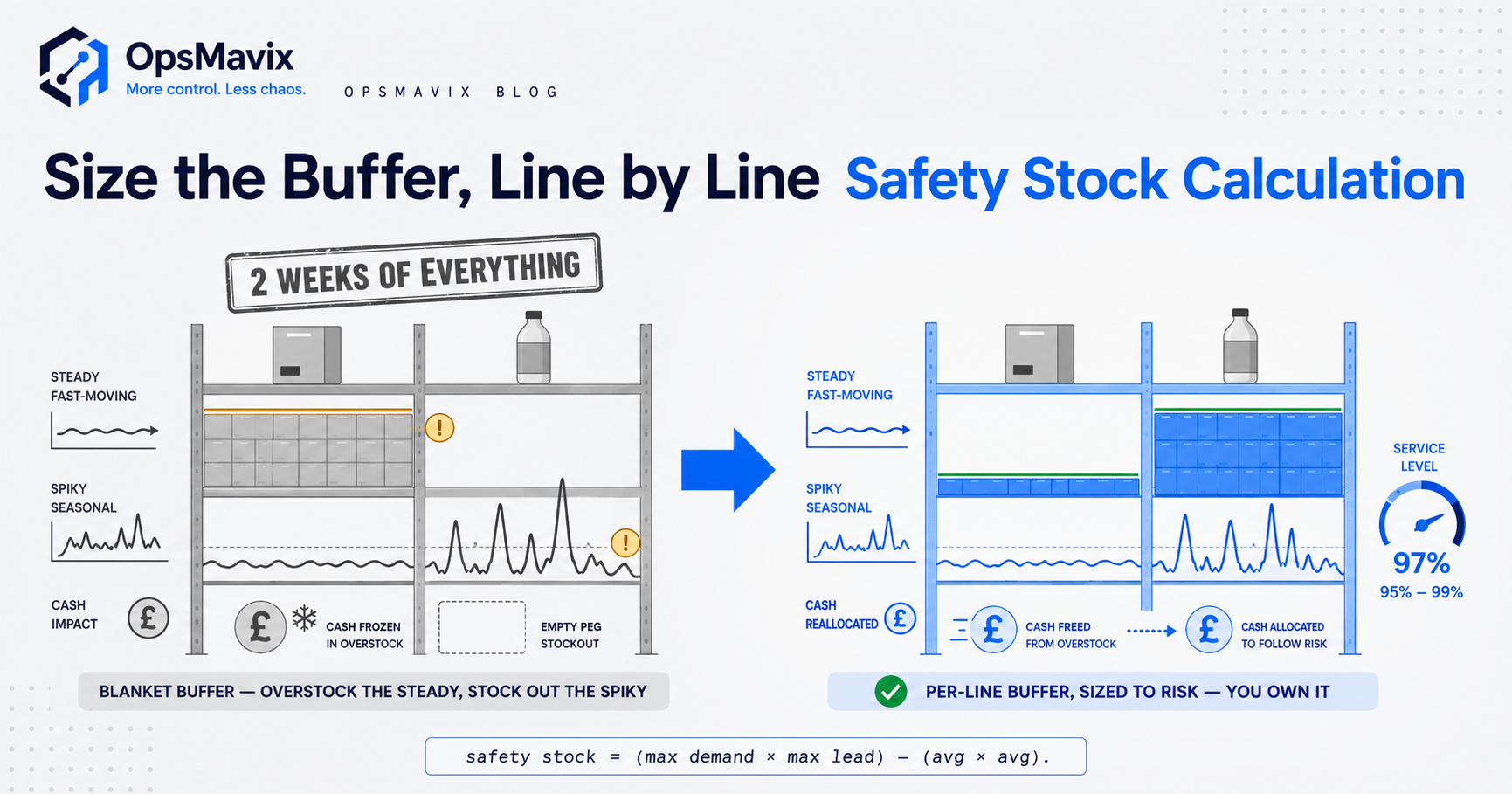
Safety Stock Calculation: How to Size the Buffer Per Line
A safety stock calculation sizes the buffer each line needs to survive a demand spike or a late delivery — without a blanket "two weeks of everything" quietly overstocking you. Here are the formulas in plain terms, the service-level trade-off, and how to size per line.
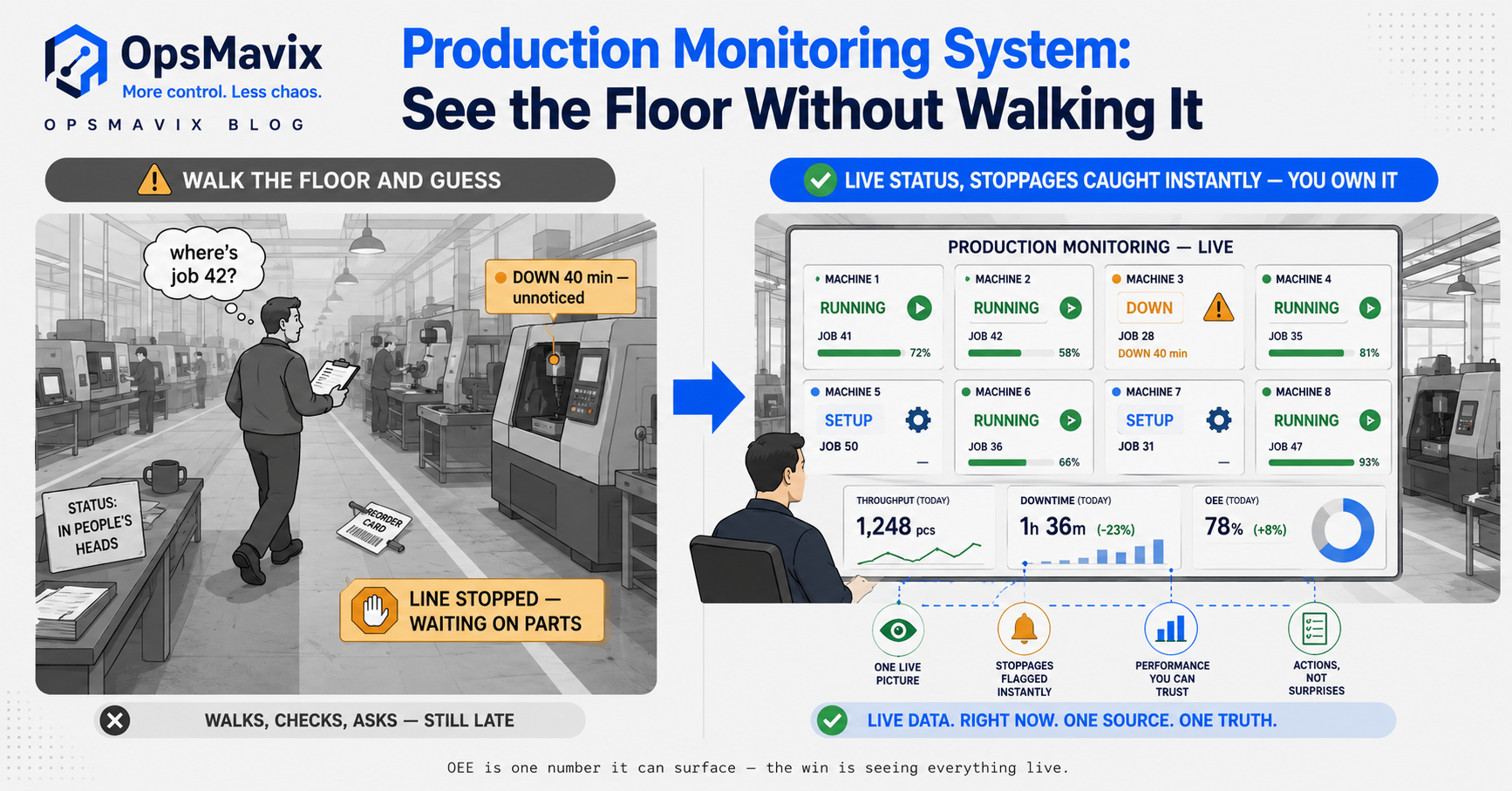
Production Monitoring System: One Live Picture of the Floor
A production monitoring system answers the question you keep walking the floor to ask — what's actually running right now, where are the jobs, and where did we just stop. Not a report you read after the shift. Here's what a live picture of the floor is really for, why standalone monitoring dashboards get ignored, and how to build one that catches a stoppage while it's still costing you minutes, not hours.
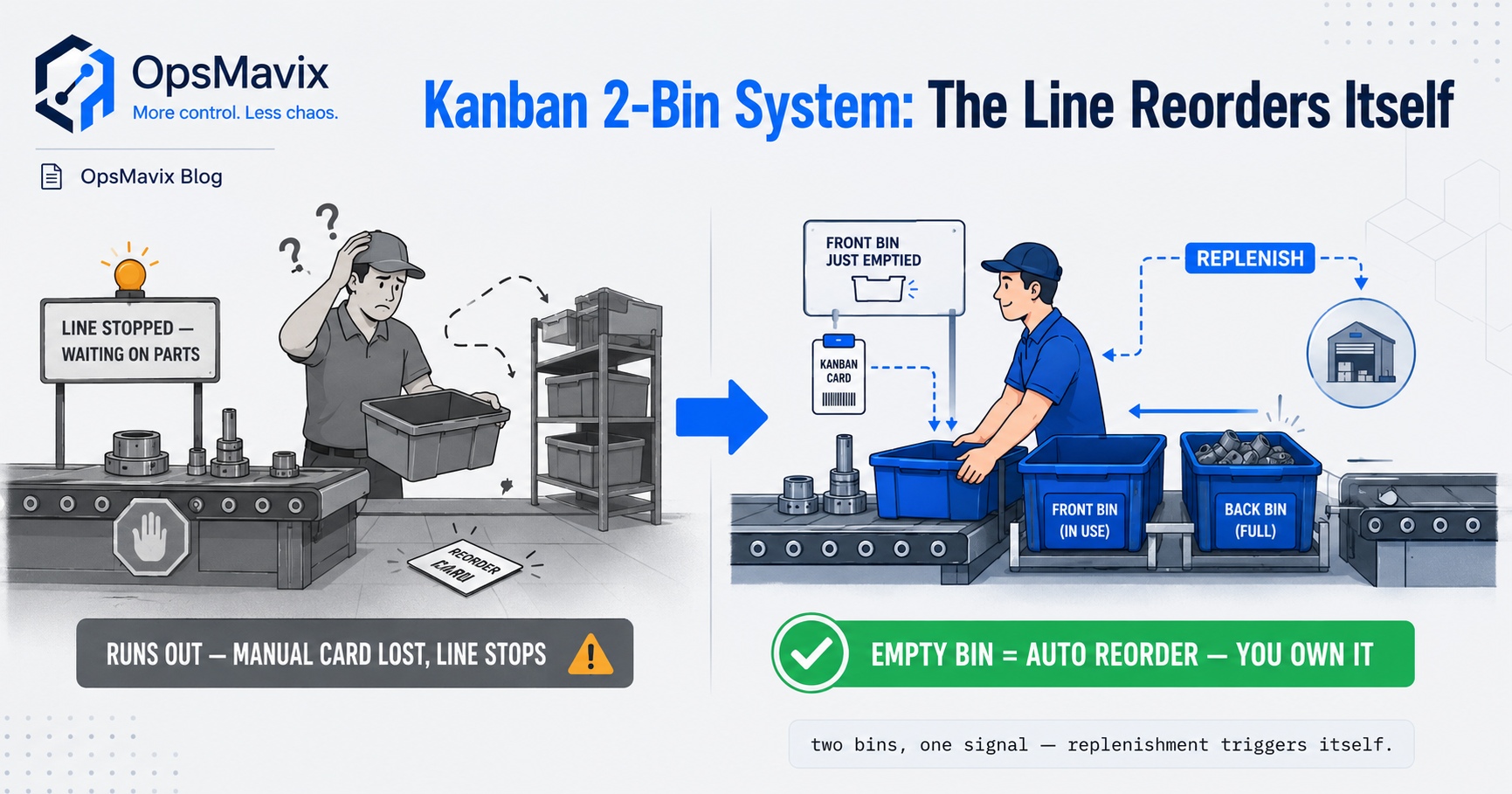
Kanban 2 Bin System: How the Two-Bin Method Actually Works
A kanban 2 bin system is the simplest pull method there is: draw from one bin, and the moment it runs dry, that empty bin is your order signal. Here's how the two-bin method actually works, where it earns its place, where it quietly fails, and how to move from paper cards to a signal you can't lose.
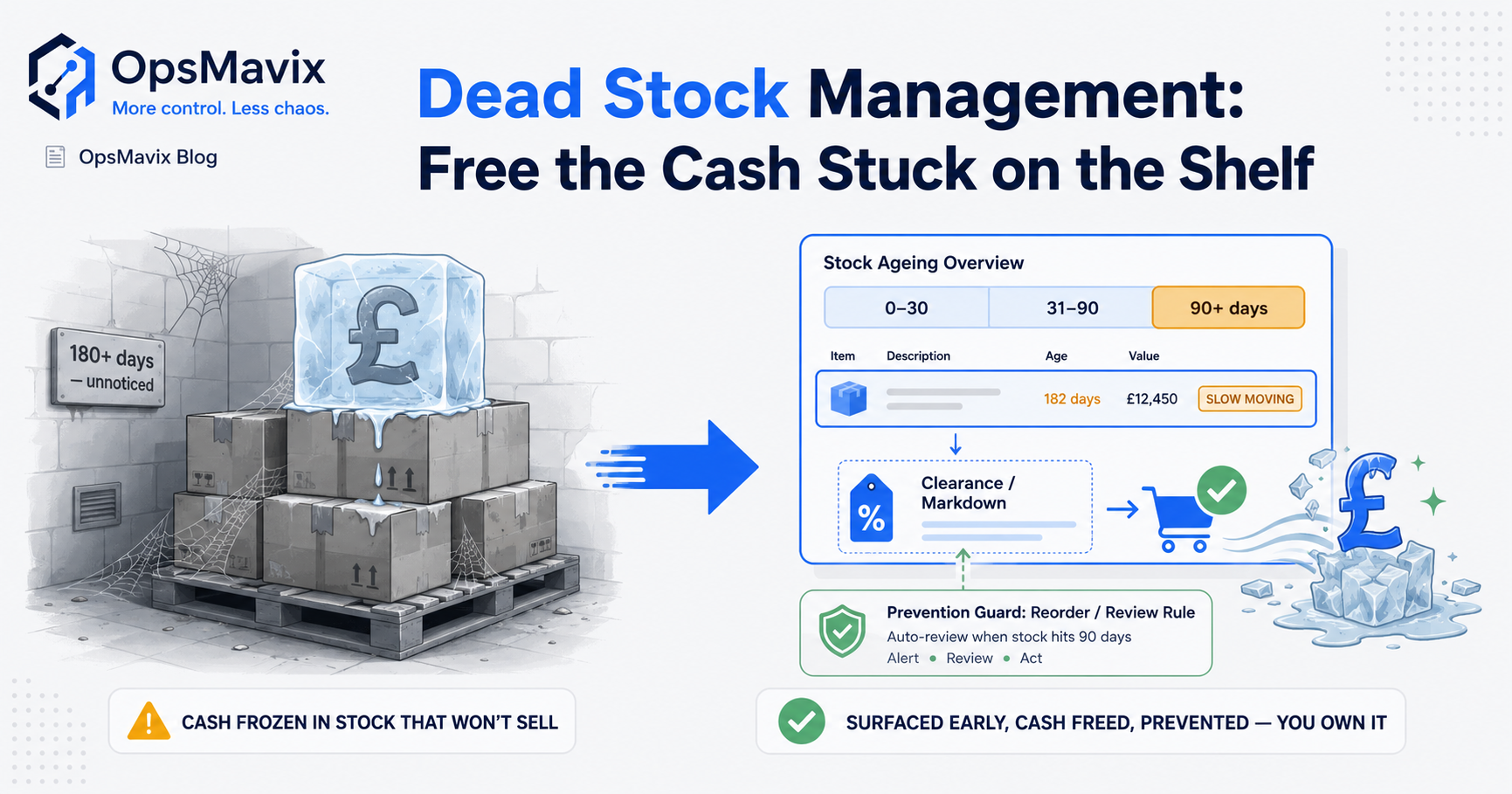
Dead Stock Management: Freeing the Cash Stuck on Your Shelves
Dead stock management is really cash management — money locked in stock that won't sell, quietly draining while you keep buying more. Here's how to spot slow movers before they go dead, clear the ageing lines without giving margin away, and stop the same over-buying from filling the shelves again.
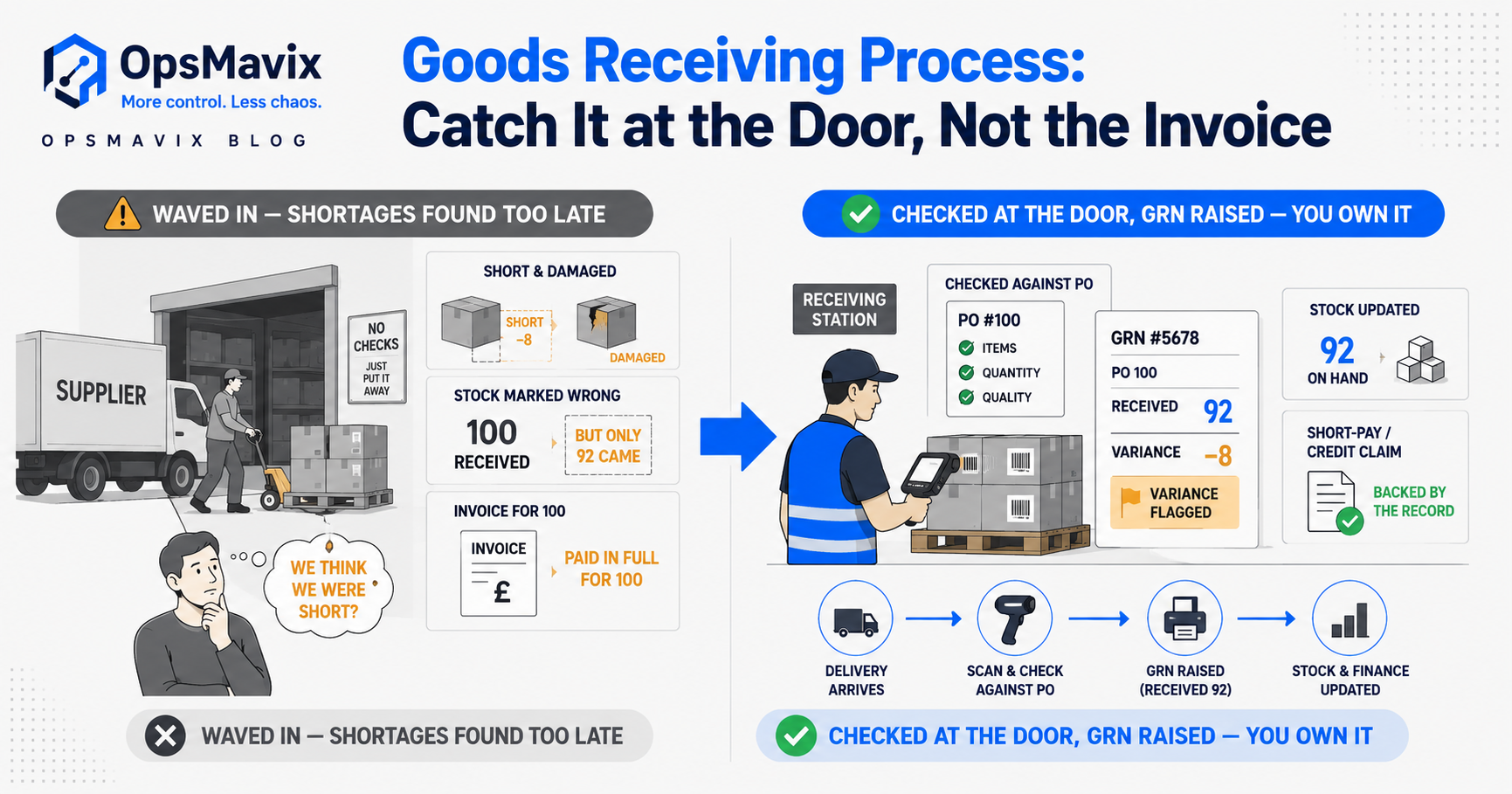
The Goods Receiving Process That Catches Errors at the Door
A weak goods receiving process is where stock accuracy dies before you ever pick an order. Here's how to book in deliveries against the PO, raise a clean GRN, catch short and damaged loads at the door, and put stock away so it's right from the moment it lands.
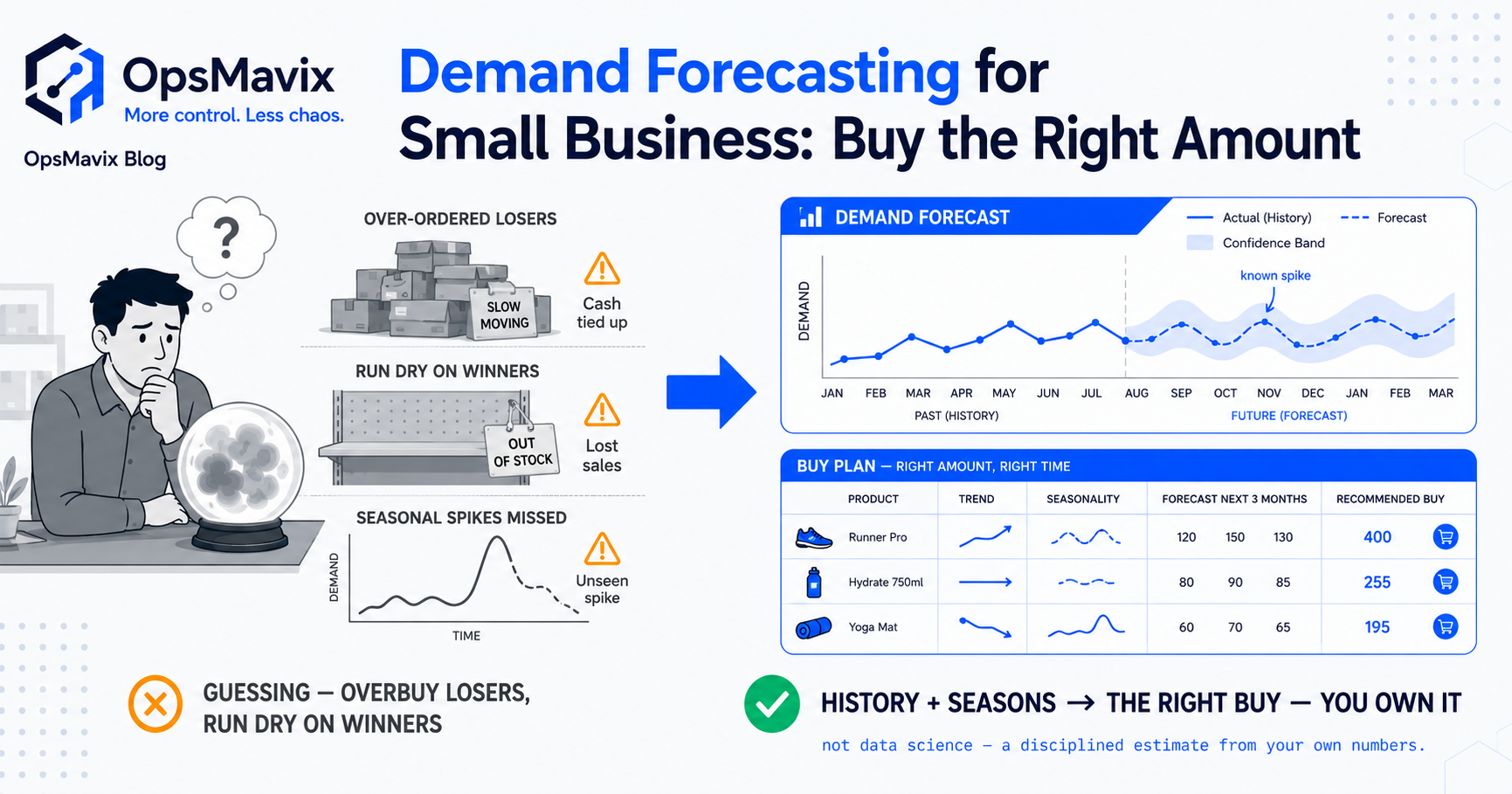
Demand Forecasting for Small Business: Buy the Right Amount, Not a Guess
Demand forecasting for a small business isn't a crystal ball — it's a disciplined guess at what you'll sell, so you buy the right amount ahead of time. Here's how to do it with methods simple enough to actually keep up, without the over-engineering that gets abandoned by week three.
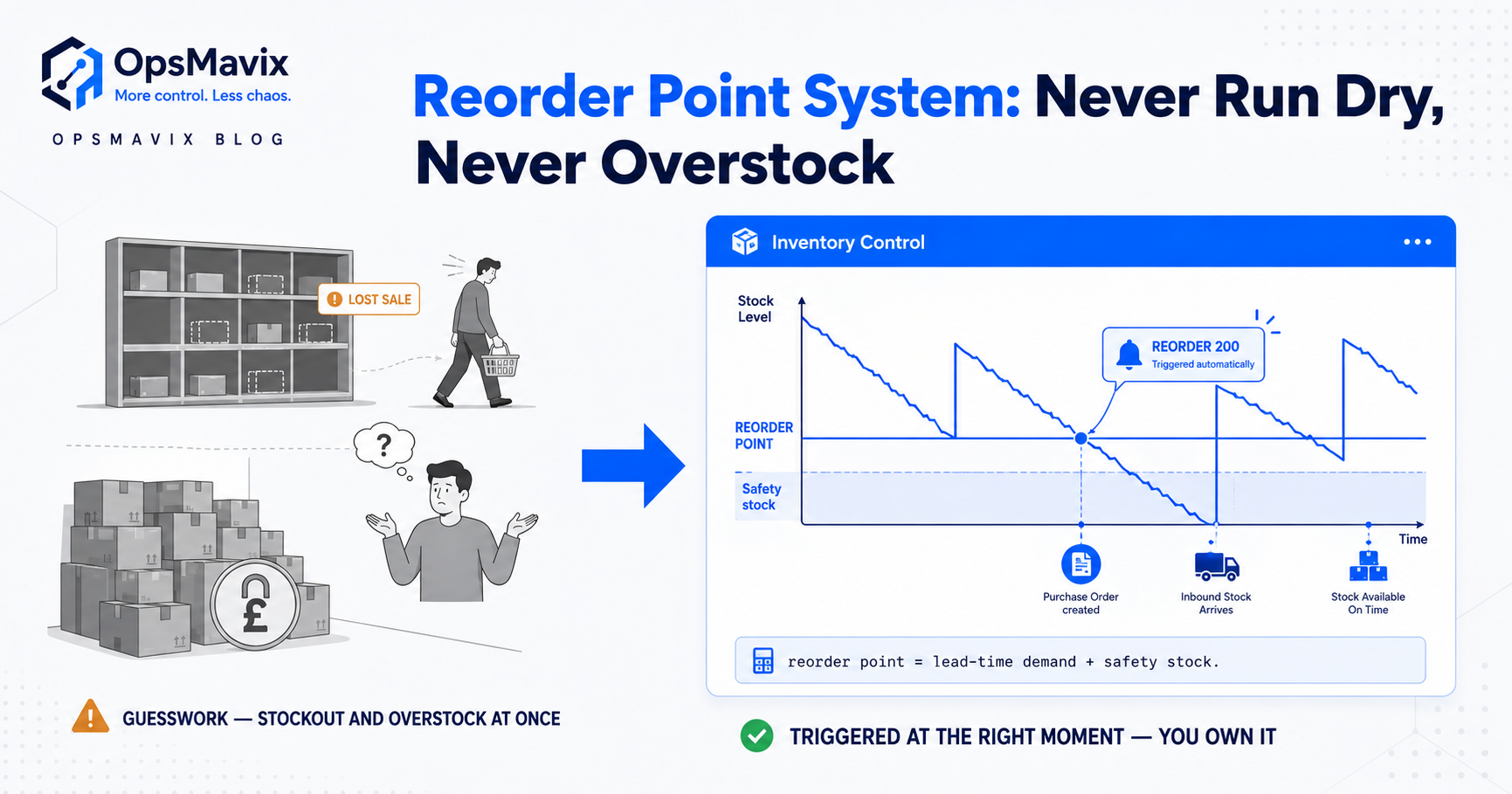
Reorder Point System: Knowing When and How Much to Reorder
A reorder point system decides when to reorder each line and how much — so you never run out of a seller and never tie up cash in stock that won't move. Here's the formula behind it, how safety stock really works, and why a spreadsheet version quietly rots.
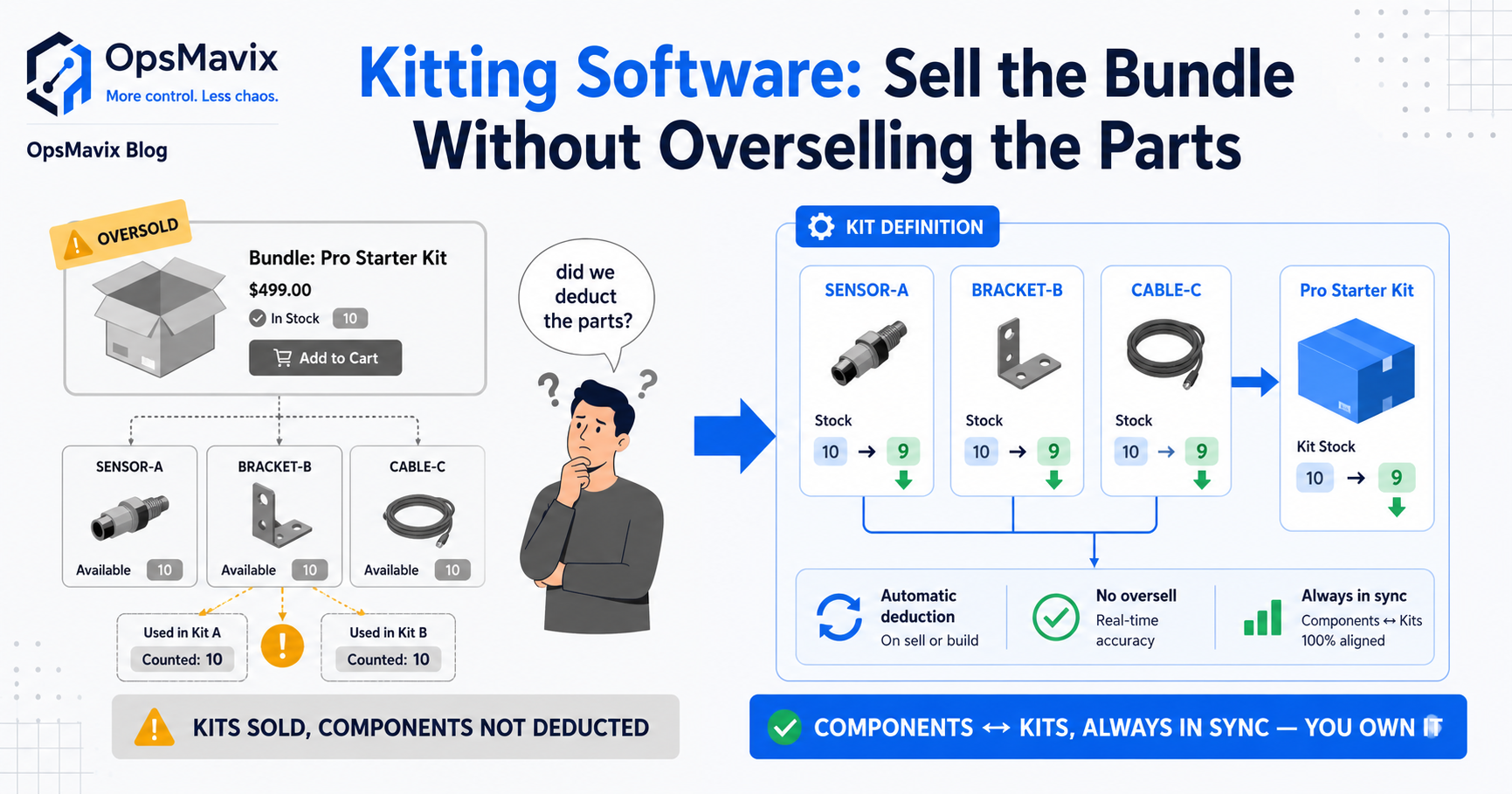
Kitting Software: Bundles That Don't Oversell Their Parts
Kitting software exists to solve one quiet problem: a kit you sell is really several components, and unless the two stay in sync, you oversell parts you don't have. Here's what kitting software should actually track — kit recipes, component stock, build-to-order versus build-ahead — and when a right-sized custom system fits better than a rigid off-the-shelf tool.