
SAP: Streamline ERP & CRM with DevOps
SAP is one of the best-known platforms for helping organisations manage core business operations in one connected environment. At its heart, it supports enterprise resource planning, but it also reaches into data, customer experience, finance, supply chain, human resources, and technology delivery. For teams trying to understand how modern businesses run at scale, SAP offers a useful lens into how processes, people, and information can work together.
What is SAP and why does it matter?
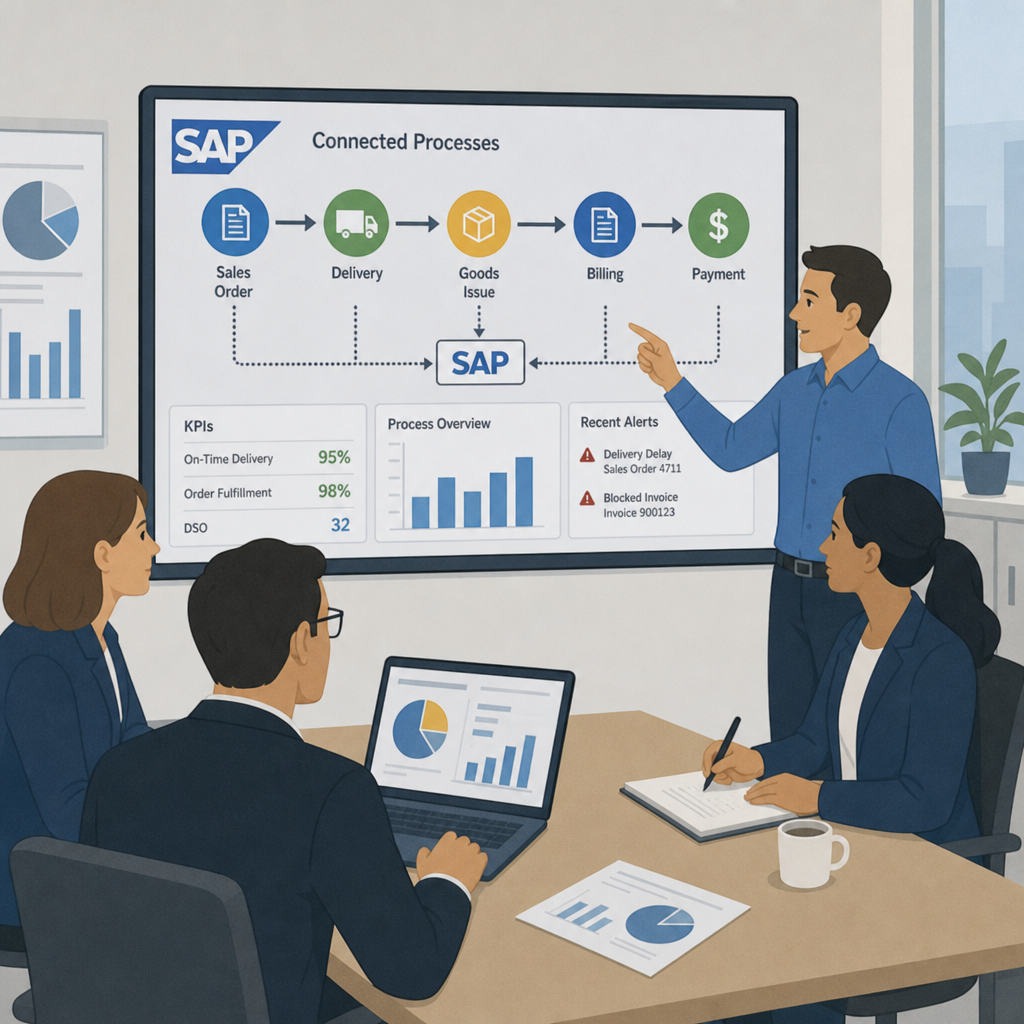
SAP is business software designed to bring key organisational functions into a shared system, so teams can plan, record, analyse, and improve their work using consistent data. Rather than every department relying on separate tools and disconnected spreadsheets, SAP helps create a single operational backbone across areas such as finance, procurement, sales, production, logistics, and customer service.
That matters because many business problems are not caused by a lack of effort. They are caused by fragmented information. If finance sees one version of a customer order, operations sees another, and sales works from an outdated forecast, decisions slow down and errors multiply. A well-implemented SAP environment helps reduce those gaps by giving departments a common structure for everyday work.
SAP is not just one product used in one way. It is an ecosystem of applications, modules, data tools, integrations, and services that can be shaped around different industries and operating models. A manufacturer may use it to coordinate materials, production, and distribution, while a services organisation may focus more on finance, projects, procurement, and customer relationship management.
The role of enterprise resource planning
Enterprise resource planning, often shortened to ERP, is the foundation of many SAP environments. ERP software connects the core resources of a business: money, people, stock, assets, suppliers, customers, and processes. The goal is not simply to digitise paperwork; it is to make operations more visible, controlled, and efficient.
In practice, this means a purchase order can flow through approval, goods receipt, invoice matching, and payment without each step needing to be rebuilt manually. A sales order can influence stock availability, production planning, delivery scheduling, and revenue reporting. When these processes are linked, leaders can see the wider impact of decisions rather than viewing each department in isolation.
The value of ERP usually becomes clearest as organisations grow. Small teams can often manage complexity informally, but larger businesses need repeatable processes and reliable data. SAP helps provide that structure, although the quality of the result depends heavily on good design, disciplined implementation, and ongoing improvement.

Core SAP capabilities across the business
SAP is often discussed in technical terms, but its usefulness is easiest to understand through everyday business functions. Different organisations will use different combinations, yet the broad capability areas tend to include the following:
- Finance and controlling: Supports accounting, reporting, budgeting, cost control, and financial visibility across the organisation.
- Procurement and supplier management: Helps manage purchasing, supplier relationships, approvals, contracts, and spend control.
- Sales and distribution: Connects customer orders, pricing, delivery, billing, and revenue processes.
- Manufacturing and supply chain: Supports planning, materials management, production, warehousing, logistics, and fulfilment.
- Human resources: Can help manage employee data, payroll-related processes, talent activities, and workforce planning where relevant modules are used.
- Analytics and reporting: Turns operational data into dashboards, insights, and performance measures that support better decision-making.
These areas are powerful because they do not have to operate as separate islands. For example, a change in demand can affect purchasing, production, stock levels, cash flow, and customer delivery promises. With SAP, those relationships can be reflected in the system rather than handled through informal messages and manual reconciliation.
How do SAP, BI and CRM fit together?
SAP, BI and CRM fit together by covering different but connected needs: SAP often manages operational processes, BI turns data into insight, and CRM focuses on customer relationships and commercial activity. When combined well, they help a business understand not only what is happening internally, but also how customers are behaving and where performance can improve.
BI, or business intelligence, is especially important because ERP systems generate large amounts of data. Orders, invoices, stock movements, payments, support cases, and employee activity all create signals. BI tools organise those signals into reports, dashboards, trends, and alerts, making it easier for managers to act on evidence rather than instinct alone.
CRM software, meanwhile, supports customer relationship management. It helps sales, marketing, and service teams track interactions, opportunities, customer needs, and follow-up activity. In a connected environment, CRM data can complement SAP operational data, giving teams a fuller view of the customer journey from first enquiry to order fulfilment and ongoing support.
A useful example is sales forecasting. CRM may show potential deals, customer conversations, and expected close dates. SAP may show current stock, production capacity, pricing, delivery performance, and invoicing. BI can bring these views together so leaders can judge whether a forecast is commercially attractive and operationally realistic.
Benefits of using SAP in a growing organisation
The main benefit of SAP is that it can help organisations replace disconnected processes with a more integrated way of working. This does not automatically make a business efficient overnight, but it creates the conditions for better control, clearer accountability, and more informed decisions.
A strong SAP setup can support:
- More reliable data: Teams work from shared records, reducing duplication and conflicting versions of the truth.
- Faster process flow: Routine activities such as approvals, billing, stock checks, and reporting can become more consistent.
- Improved visibility: Leaders can see performance across functions, not just within separate departments.
- Stronger compliance and control: Standardised workflows help organisations apply rules, approvals, and audit trails more consistently.
- Scalability: As the business grows, processes can be expanded and refined without rebuilding everything from scratch.
- Better customer experience: When internal teams can see accurate order, delivery, service, and account information, customers are less likely to receive vague or inconsistent answers.
The practical impact is often felt in small moments: fewer manual checks, fewer duplicate entries, fewer delays caused by missing information, and fewer meetings spent debating whose numbers are correct. Over time, those improvements can change how confidently a business plans and operates.
Implementation is where value is won or lost
SAP projects are not only technology projects. They are business change projects. The software may provide the structure, but the organisation must define how work should happen, who owns each process, which data matters, and how people will adopt new ways of working.
A common mistake is to treat implementation as a technical installation rather than a redesign of operating habits. If poor processes are simply copied into a new system, the result may be expensive complexity rather than improvement. The best implementations usually involve process owners, end users, data specialists, technical teams, and leadership working together from the beginning.
Key implementation priorities include:
- Clear business objectives: Define what the organisation wants to improve, not just which modules it wants to deploy.
- Process mapping: Understand current workflows, pain points, dependencies, and decision points before designing the future state.
- Data quality: Clean, consistent master data is essential for accurate reporting and smooth transactions.
- Change management: People need training, communication, and time to adjust to new responsibilities.
- Testing: Realistic testing helps reveal gaps before they affect customers, suppliers, or financial reporting.
- Governance: Decisions about configuration, customisation, access, and process ownership should be controlled and documented.
Implementation success is rarely about using every possible feature. It is about making deliberate choices that match the organisation’s goals and capacity.
SAP and modern technology delivery
As business systems become more connected, SAP increasingly sits alongside cloud platforms, data services, automation tools, and integration layers. This makes collaboration between business and technology teams even more important. It also makes devops practices relevant in environments where SAP changes need to be delivered reliably and safely.
Devops practices encourage teams to improve collaboration, automate repeatable tasks, manage releases carefully, and learn from feedback. In an SAP context, this may involve better testing discipline, clearer deployment pipelines, stronger monitoring, and closer cooperation between developers, functional consultants, operations teams, and business users.
The aim is not to make SAP change reckless or rushed. In fact, heavily integrated enterprise systems require careful control. The value of modern delivery practices is that they can make change more predictable, reduce manual effort, and help teams respond to business needs without losing stability.

Common challenges to plan for
SAP can bring significant benefits, but it also requires commitment. Organisations should be realistic about complexity, cost, time, and internal readiness. The platform often touches critical processes, so unclear decisions or weak sponsorship can create delays and frustration.
Typical challenges include over-customisation, poor data quality, limited user engagement, unclear ownership, and underestimating training needs. Another common issue is trying to solve every business problem at once. A phased approach can be more manageable, especially when it focuses on high-value processes first and builds confidence over time.
It is also important to keep improving after go-live. Business requirements change, reporting needs mature, and users discover better ways to work once they understand the system. Treating SAP as a living business platform, rather than a one-off project, helps protect the investment.
Making SAP work for the business
The organisations that gain the most from SAP usually combine technical capability with clear business thinking. They know which processes are strategic, which data must be trusted, and where standardisation will help. They also recognise that people need to understand the reasons behind change, not just the steps they must follow.
For a practical starting point, businesses should assess where disconnected systems create the most friction. Are reports difficult to trust? Are customer teams missing order information? Are finance processes too manual? Are supply chain decisions being made with outdated data? These questions help identify where SAP, BI, CRM, and related tools can create the most useful improvements.
Final takeaway
SAP is best understood as a connected business platform rather than a single piece of software. It supports enterprise resource planning, strengthens operational visibility, and can work alongside BI, CRM software, customer relationship management processes, and modern devops practices to help organisations run with greater clarity.
Its success depends on thoughtful implementation, reliable data, committed users, and continuous improvement. When those elements are in place, SAP can become more than a system of record; it can become a practical foundation for better decisions, smoother processes, and stronger customer experiences.