
Drillbound: The Mining Game From the GrayStillPlays Video, Where the Mine Fights Back
Drillbound on Steam: the release date, what the free demo contains, how the mining loop works by player accounts and what is still unknown.
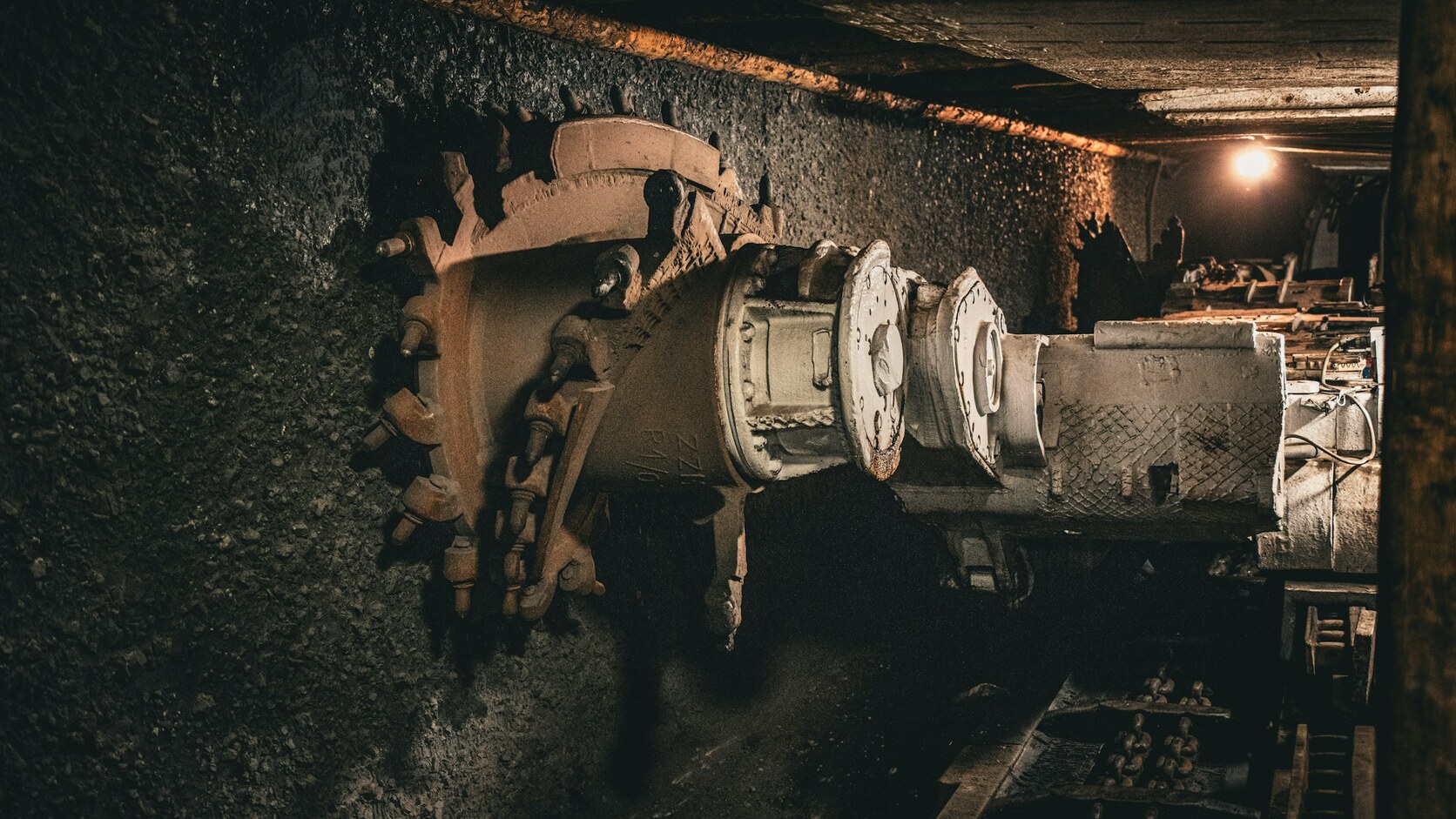
Drillbound is a short incremental mining game for Windows, made by solo developer TimeSeeker, where you slide an auto-firing drill along a rail and dig towards the planet’s core. Its Steam release is scheduled for 8 October 2026. As of 3 October 2026 a free demo was live and no price had been announced.
Quick summary: Steam lists Drillbound’s planned release as 8 October 2026, and its free demo had 37 user reviews, all positive, when we checked on 3 October 2026 (Steam demo page). Steam describes it as “a short incremental game about mining your way to the planet’s core”, and its first press release pitched it as the miner “where the Mine Fights Back”.
Two demo reviewers on Steam say some of the ore fires at you. One, writing on 26 March 2026, describes red ore that “will shoot a projectile upward at a certain interval AND if you hit it with a drill”. Your drill fires on its own timer, so during a dig the main thing you control is where it stands.
What is Drillbound?
Drillbound is a single-player incremental mining game in which a rail-mounted drill digs through layers of rock towards a planet’s core, while you dodge projectiles and spend what you mine on permanent upgrades. It is developed by TimeSeeker and published by Troglobytes Games and Gamersky Games.
The Drillbound Steam page carries the tags Incremental, Mining, Arcade, Idler and Short. The first press release, dated 11 June 2026, sold it as “the new Incremental Miner where the Mine Fights Back”.
So how does the mine fight back? With projectiles. Steam’s description has you mining “while dodging projectiles”, and the first press release calls them “magma projectiles”. Neither says what fires them. The detail that it is the ore comes from demo reviews, covered below.
If you arrived from YouTube, this is the game named in the description of the GrayStillPlays video “literally digging to the planets core”, published on 2 October 2026. The description also links to the Steam page.
Drillbound is a different game from Drill Core, a Steam strategy title from Hungry Couch Games and tinyBuild, released on 17 July 2025, about managing workers and holding off alien attacks.
When is the Drillbound release date, and what will it cost?
The Drillbound release date is scheduled for 8 October 2026 on Steam for Windows, and no price had been announced when we checked the store on 3 October 2026. Both facts come from Steam’s own listing, which showed “Planned Release Date: 8 Oct, 2026” and no price for the UK store.
The date was announced on 13 August 2026. A second press release said the game “will launch on PC via Steam on October 8th, 2026”. The developer’s Steam announcement that day was blunter: “The date is locked in: Drillbound officially launches on PC on October 8th, 2026!”
Treat it as scheduled. After 8 October 2026, the Steam page will confirm whether it shipped.
The price has not been published. Two games a demo reviewer compared it with, Nodebuster and Keep on Mining!, had regular UK Steam prices of £2.49 and £4.29 on 3 October 2026. That is genre context, not a forecast.
The road to launch, from the game’s Steam announcements and the store listing:
- 24 March 2026: free demo released.
- 13 April 2026: a “Big Update” with four new mechanics and a progress reset.
- 29 April 2026: the developer reports passing 2,000 wishlists.
- 15 June 2026: updated demo for Steam Next Fest.
- 13 August 2026: release date announced.
- 8 October 2026: scheduled full release.
Drillbound demo vs full game on Steam
The Drillbound demo is free, available now and covers the opening stages, while the full game is not marked free and continues towards the core. The table shows what Steam listed for each on 3 October 2026.
| Demo | Full game | |
|---|---|---|
| Steam app ID | 4521880 | 4149040 |
| Release | 24 March 2026 | Scheduled for 8 October 2026 |
| Price | Free | Not announced |
| Publishers listed | TimeSeeker, Gamersky Games | Troglobytes Games, Gamersky Games |
| Steam Achievements | Not listed | Listed |
| User reviews | 37, all positive | None yet |
| Platform | Windows | Windows |
On 18 March 2026, six days before the demo came out, the developer told players to expect “~50 minutes of pure rock crushing & upgrading” and “+20 Unique upgrades”. One early reviewer put it at “about 35 - 45 minutes”. By our own calculation from Steam’s review data on 3 October 2026, the 37 reviewers’ median recorded playtime was 77 minutes in total, and 62 minutes at the point they reviewed.
Two things are unconfirmed: whether demo saves carry into the full game (the April update wiped demo progress once already), and any platform beyond Windows. The minimum spec is light: Windows 10, a 2 GHz processor, 4 GB of RAM and a “GeForce 700 series or similar” graphics card. Steam lists 14 languages.
How does a Drillbound run work?
A Drillbound run works as a short descent: you slide the drill along its rail, it fires by itself, and, by demo players’ accounts, the dig ends when health or energy runs out. Then you smelt the ore and buy upgrades. Four steps repeat.
1. You steer, the drill fires itself
Steam’s description is specific: “The drill automatically shoots every few seconds, so you only have to worry about positioning yourself properly.”
Store screenshots show depth markers at 20m, 40m and 60m and a prompt, “Hold Right Click to TERMINATE”. Nothing we read explains the prompt. Our guess, untested, is that it ends a dig early.
2. Health and energy end the run, players say
The clearest account is a Steam demo review from 26 March 2026, written before the April rework: “The drill has health and energy (energy is spent when firing the drill). If either of those run out your current dig is terminated.” A Simplified Chinese review from 18 May 2026, after the rework, says the same: health and energy limits, and the dig ends when either is empty (our translation). Steam’s description and the press releases do not state this rule.
The March reviewer also describes the threat, red ore that fires upward on a timer and again when struck. A second reviewer the same day mentions “the ore that shoots to you”. That makes two player accounts of armed ore and no official one.
3. Ore has to be collected, then smelted
Breaking a block is half the job. According to that March review, freed ore flies up “at a random angle and gets stuck in this metal net”, and you move the drill across to collect it. The net rests on that one review.
The same review describes stoking a smelter to build heat, then spending the heat to turn ore into bars. Stoking has been reworked since. The second press release says bars buy “permanent power, efficiency, and passive bonuses”.
4. Bars buy permanent upgrades
Store screenshots show four menu buttons: Matrix, Smelter, Assembler and Scanner. The store page explains none of them. Two screenshots show a web of linked upgrade nodes that we take to be the Matrix, so our guess is that it is what Steam’s description calls “the skill tree”.
The June patch notes mention “Matrix costs” and a “Z4p damage buff” without explaining either. One screenshot shows an item labelled GrN8 with a cooldown, damage and radius. Z4p’s name follows the same pattern, so it may be a second machine, but that is a guess from the name alone.
Drillbound best upgrades: untested reasoning from the sources
Nothing in this section has been tested in the game, and no source ranks Drillbound’s upgrades yet. On 3 October 2026 the Steam guides section showed no guides, the press material named no individual upgrades, and the GrayStillPlays video had no captions to check.
If the player accounts and patch notes are right, five things can cap a run. Work out which one stopped the last run, and spend there first.
- Energy ran out. Each shot spends energy, by one reviewer’s account, so run length is the constraint. One forum player wrote: “The energy drains so quickly that each run is over almost as soon as it begins.”
- Health ran out. You are being hit. Positioning costs nothing, so fix that before paying for anything else.
- Blocks would not break. Damage is the constraint. The patch notes mention Armor Penetration, and one reviewer said dynamite “really changes the way you play”.
- Ore left uncollected. Collection is the constraint. A Chinese-language reviewer felt movement-speed upgrades were scarce in the demo (a player’s view, our translation).
- Ore piling up unsmelted. The smelter is the constraint. One store screenshot shows a smelter marked “78 per batch” beside a figure displayed as 529.402.
That last one has been reworked more than once. April’s update changed how the stoking speed boost works, and the June Next Fest announcement advertised “a completely hands-free stoking system”. A player thread also mentions a second iron smelter.
How do you reach the core in Drillbound?
You reach the core in Drillbound, as far as the patch notes and store screenshots show, by working down through numbered depths (Depth 0, Depth -1 and so on) with permanent upgrades earned on earlier runs. The number of depths has not been published, and no source we found documents the route to the core itself.
The demo v0.4.3 notes of 16 June 2026 refer to “the boss of Depth 0” and to tweaking some health values on Depth -1 so its end is easier to reach. April’s Big Update “Removed access to Depth -2” from the demo. So, as of those June notes, the demo appears to cover Depth 0 and Depth -1. That is our inference from the patch notes, not a published list.
Store screenshots for the full game go further. The depth selector reads Depth -3 in two and Depth -4 in another. If the screenshots match the shipped game, it runs to at least Depth -4, but a screenshot is all that rests on.
A side panel in those screenshots lists names with decimal figures, including Attackite, Dynamite, Iron, Ice, Gold, Sensite and Transium. The store page does not explain the panel. Going by the name alone, Attackite may be the ore that fires, which is a guess.
One more documented detail: clearing an entire row of blocks gives a speed boost, which v0.4.3 reduced for the early stages.
We found no source for how many depths there are, what waits at the core, or how long the descent takes. The one developer comment on scope we found is a 12 June forum reply: “there’s a good amount of content waiting for you all”.
Minecraft gates progress on a similar chain, long enough that an AI spent roughly 21 hours on it and was knocked off course by one creeper.
The GrayStillPlays video, and what demo players say
The video runs 37 minutes 58 seconds, went up on 2 October 2026, and had about 138,500 views when we checked late on 3 October 2026, on a channel with 8.61 million subscribers. Its description opens with one word, “Drillbound”, and ends with the Steam blurb and store link.
What we could not verify is anything said or done in it. No captions were available on 3 October 2026, so this post does not describe the run, the upgrade order, whether the core is reached, or whether the footage comes from the public demo or an early copy of the full game.
Demo players are easier to quote. By our count from Steam’s review data, 16 of the 37 reviews were written in Simplified Chinese and 13 in English. Praise centres on the loop. “Simple but surprisingly satisfying gameplay loop”, wrote one. Another, in Spanish, called it an incremental with Space Invaders-style combat (our translation).
The criticism has a pattern too. More than one positive reviewer says the start is slow, and a June Steam forum thread has a player asking “What am I even supposed to be doing?” and calling for a tutorial. The developer’s April notes had already listed a “Better tutorial”, so that complaint came after one attempt at a fix.
The people behind Drillbound
Three names sit on the store page.
TimeSeeker, Troglobytes Games and Gamersky Games
TimeSeeker is the developer. The first press release calls TimeSeeker “the solo-developer of Drillbound”, and the developer’s own site opens with “Hello! I’m Èric”, describing “an indie game developer focused in game design and programming based in Barcelona”. It lists earlier work on Hyper Shapes and Nomad Defender.
Troglobytes Games is the publisher named first on the full game. Its press releases use the label Troglobytes Publishing, described as “the independent publishing arm of Troglobytes Games”, and its website lists Drillbound alongside titles such as Ravenous Devils and Death Noodle Delivery. On Steam the company calls itself an “Indie dev studio from sunny Barcelona, Spain”, the city the developer’s site also names.
Gamersky Games is the co-publisher, and the only publisher listed on both the demo and the full game. Its Steam publisher page describes it as “A gaming media outlet founded and operated by players for over 20 years, and a passionate publisher”, and links to gamersky.com, a Chinese-language games site. Our guess, with no source behind it, is that this is why Simplified Chinese is the most common language among the demo’s reviews.
What Drillbound teaches about bottlenecks
An incremental game is a bottleneck you are paid to find. If Drillbound plays the way its demo players describe, one thing caps your progress at any moment, whether that is energy, damage, collection or the smelter, and bars spent anywhere else change little. Spend on the constraint and the mine speeds up. Then the constraint moves somewhere new.
Production behaves the same way, with slower feedback. A workshop that buys a faster saw when the real queue is at inspection has upgraded the wrong node. Ore to bars to upgrades is also a tiny bill of materials: nothing downstream moves until the step before it delivers.
The difference is visibility. Going by its store screenshots, Drillbound puts its queues on screen. A business often has to reconstruct them from a spreadsheet, a whiteboard and whoever was on shift. In the systems we build, the first screen is designed to show where work is waiting right now, ahead of any dashboard of everything.
OpsMavix builds custom internal systems for inventory, orders, purchasing, production and reporting, so the constraint is visible before money goes on the wrong upgrade. You can see how that looks in the demos.
FAQ
Is Drillbound free?
The Drillbound demo is free on Steam. The full game is not marked as free to play, and no price had been announced as of 3 October 2026.
Is Drillbound on Steam Deck, Mac or console?
Steam lists Windows only, and the August press release says “PC via Steam”. In the sources we read there was no announcement for Mac, Linux or consoles, and nothing about Steam Deck support, as of 3 October 2026.
How long is Drillbound?
The demo was pitched at roughly 50 minutes before it launched. The full game’s length has not been published. Steam tags it “Short”, and its own description calls it “a short incremental game”.
Will Drillbound demo progress carry over to the full game?
That is not confirmed. We found no statement either way, and the April 2026 demo update reset progress after a rebalance. It is safer to assume you will start again.
What game does GrayStillPlays play in “literally digging to the planets core”?
Drillbound, going by the video’s own description, which names the game and links to its Steam page. The description does not say whether the footage is from the free demo or an early copy of the full release.
Final takeaway
Drillbound is a small, sharp idea: an idle game that will not let you idle, because the mine fires projectiles at you and the ore has to be collected. A free demo is on Steam, the full release is scheduled for 8 October 2026, and the price was still unannounced on 3 October 2026.
What is not documented yet is what a guide would need: upgrade names, depth count, the route to the core. Until someone documents those, our untested rule of thumb is to find what ended the last run and fix that first.
If your own operation keeps upgrading the wrong thing, the queue may be somewhere you cannot see. Book a free Operations Leak Audit and we will look for where the work is waiting.