
The wholesaler re-typing every faxed order
Orders by fax, phone, email, PDF and portal, every one typed in again by hand, priced from memory and checked against stock afterwards.
- Sector
- Wholesale distribution
- Where
- United Kingdom
- Size
- About 240 trade accounts, catering disposables, hygiene and cleaning supplies
Where the business was
A trade distributor of catering disposables, hygiene and cleaning supplies, selling to a few hundred trade accounts, most of them repeat buyers who order the way they always have.
Orders arrived five ways: fax, phone, email, PDF attachments and a customer portal. Each one was keyed into the system by hand before anything else could happen.
Pricing lived in people's heads and old price lists, stock was checked after the order was taken, and credit was checked after the goods had gone.
What discovery surfaced
The things that decided the shape of the system. Most of them were not on the original wish list.
The order is typed twice before it is picked once
Every channel ended in the same place: someone re-typing it. That is where the wrong quantity and the missed line come from.
A smudged fax is a guess
A line that reads "6 or 0" should be checked by a person, not guessed by a person in a hurry. The system had to flag doubt, not hide it.
Every customer has their own price
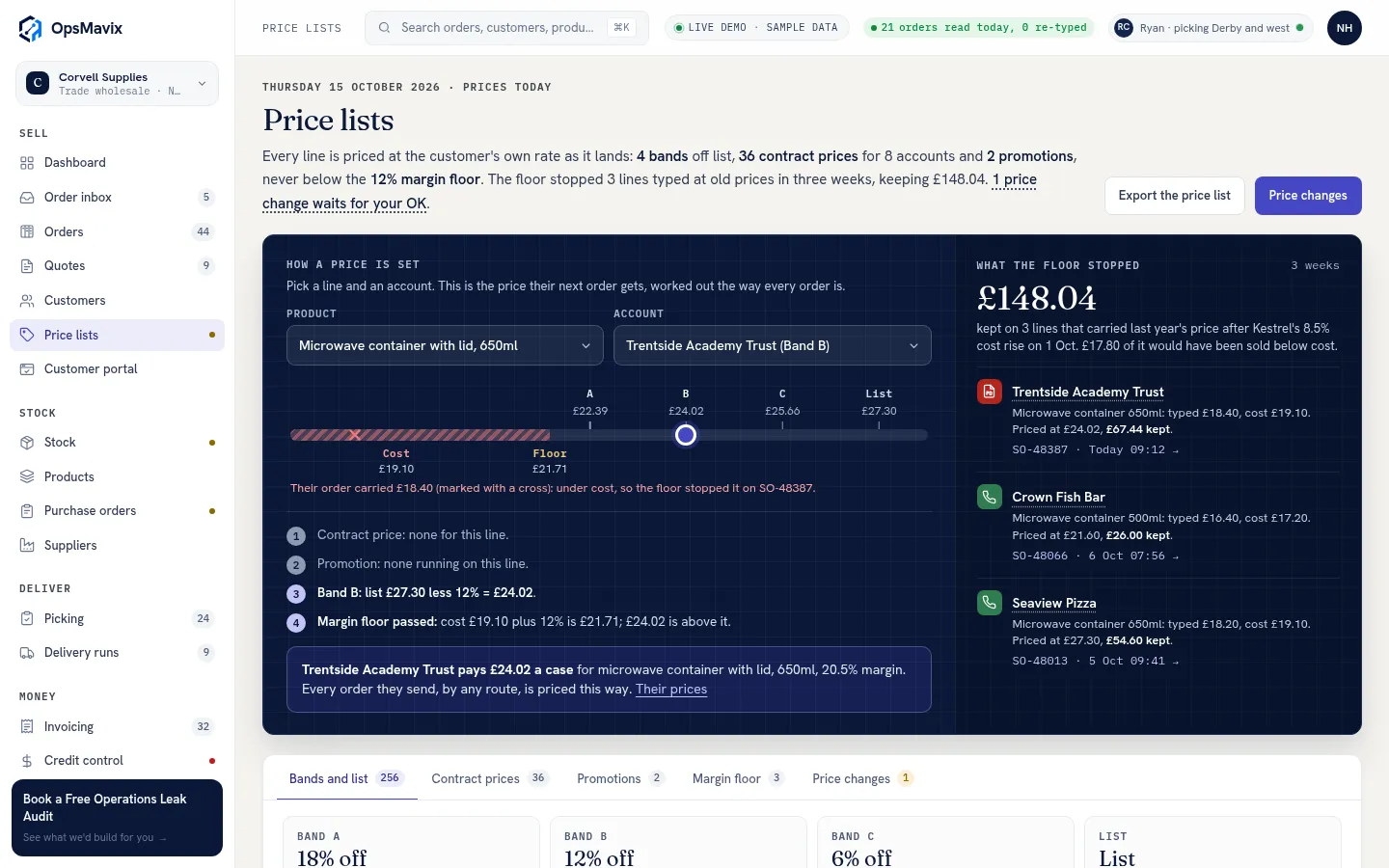
Price bands and contract prices per account, plus old prices that should never be honoured again. Margin was leaking through the second one.
Credit was checked too late
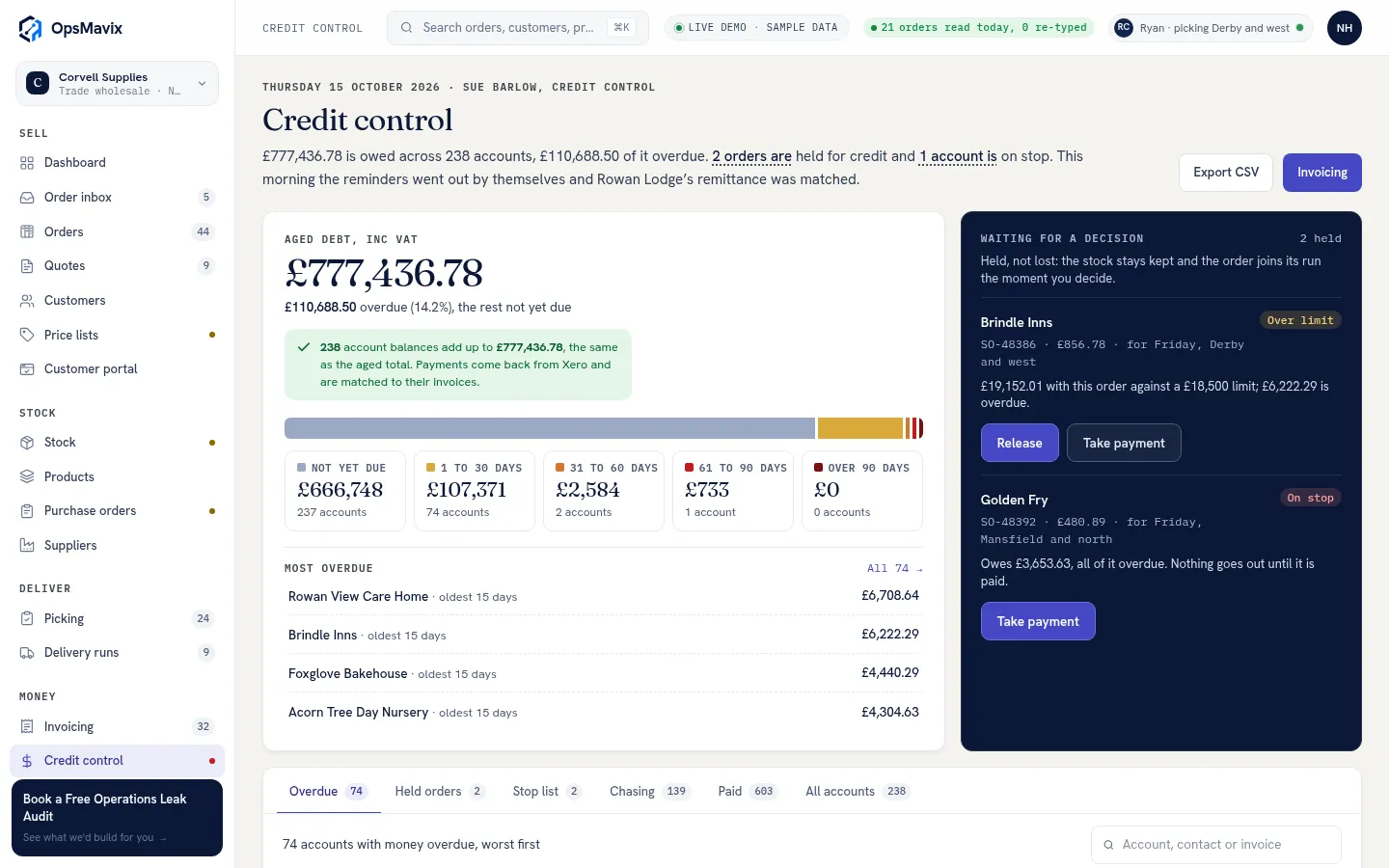
An account over its limit only showed up at invoicing, after the goods were on the van.
What we built
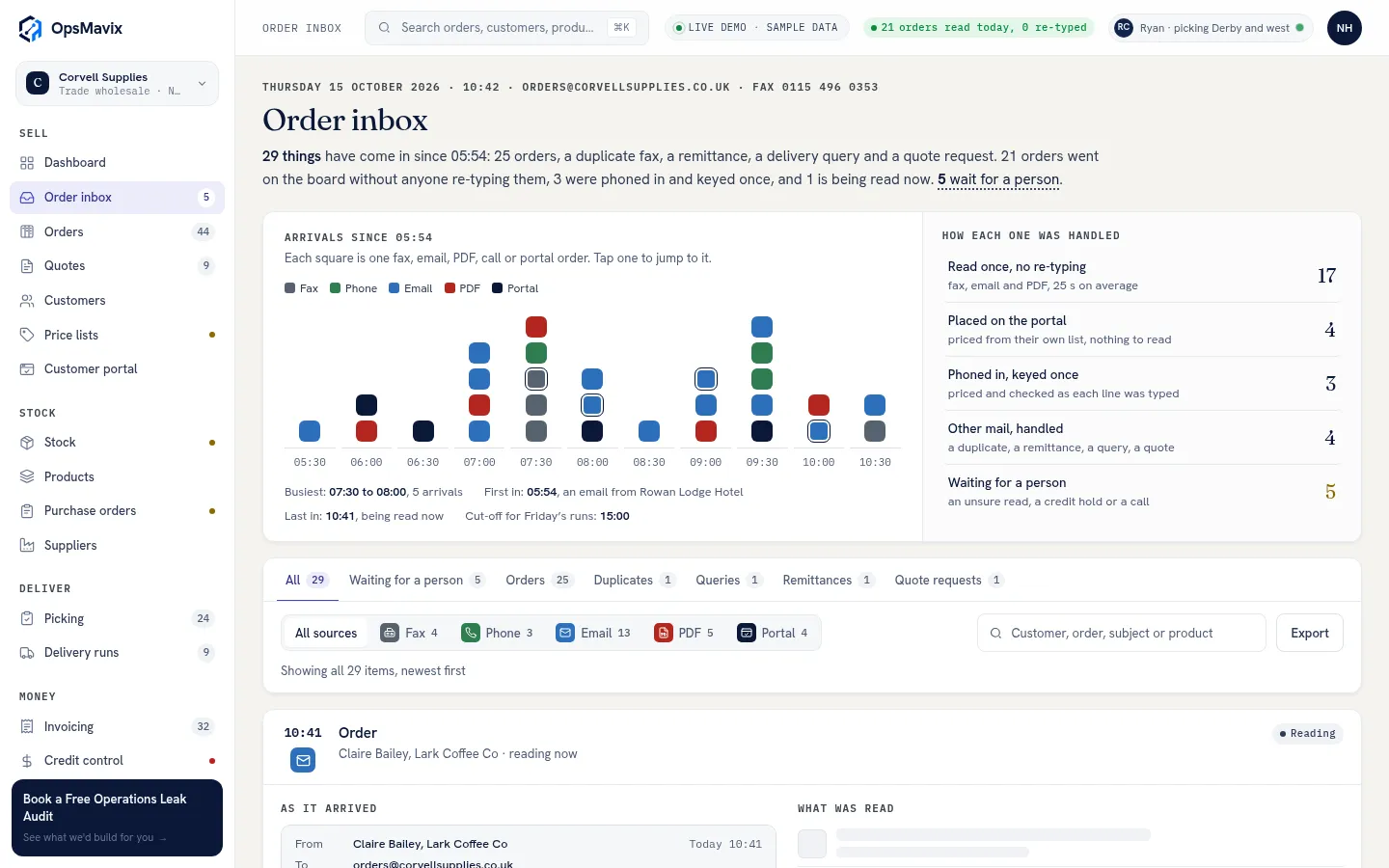
One order inbox for all five channels
Fax, phone, email, PDF and portal orders on one board, read once and never re-typed.
Doubt flagged for a person
Lines the system is not sure about are marked for someone to confirm before they reach the pick.
Customer price lists with a margin floor
Every line priced at the account's band or contract rate, and a floor that stops a stale price going out.
Credit control on the order
Accounts over their limit are held, not lost, until credit control releases them.
Short stock handled at the order
Part-ship or swap to an agreed alternative, with the purchase order tracked to goods in.
Picking, delivery runs and invoicing
Picked, sent out on the vans and handed to invoicing without anyone typing the order again.
Wholesale Control Room
The system described above, running. Click through it yourself.
The system that was built
Real screens from the working system, not mockups. You can open the whole thing yourself.
Scope, as agreed
- Order channels
- Fax, phone, email, PDF and a customer portal, all on one board
- Pricing
- Per-account price bands and contract prices, with a margin floor
- Credit
- Orders over the limit held for credit control, not lost
- Stock
- Checked at the order, with part-ships, substitutes and purchase orders to goods in
- Despatch
- Picking and delivery runs, then straight to invoicing
The reality it had to respect
A system that ignores any of these is a system this business cannot actually run on.
- Trade price bands and contract pricing
- Credit limits and account holds
- Substitutions and part shipments
- Van delivery runs
What is missing from this page, and why
A case study usually carries a few more things. Here is exactly why each one is absent, so you are not left wondering.
- The client's name. We do not name a client without their written consent.
- A customer quote. Same reason. We will not write one on their behalf.
- Before-and-after numbers. These need a baseline measured before go-live and consent to publish. Without both, any percentage here would be invented.
When one of these launches with real baselines and written consent, this page gains an outcomes section. Until then it stays as it is.
Want the same treatment
Every one of these started with a conversation about how the business actually runs, not a feature list. If your operation has a version of these problems, that is the conversation to have.