
The fit-out firm finding its losses after the job
Estimate on one side, actual cost in a pile of receipts and timesheets, and extras agreed on site that never made it to the invoice.
- Sector
- Kitchen, bathroom and commercial fit-out
- Where
- Withheld at the client's request
- Size
- Three crews plus subcontractors
Where the business was
A kitchen, bathroom and small commercial fit-out firm running three crews and a set of subcontractors.
Each job was quoted carefully and then costed afterwards, if at all. By the time the numbers were in, the job was finished and the margin was whatever it turned out to be.
Extras agreed with the client on site were the easiest money to lose: done, not written down, not billed.
What discovery surfaced
The things that decided the shape of the system. Most of them were not on the original wish list.
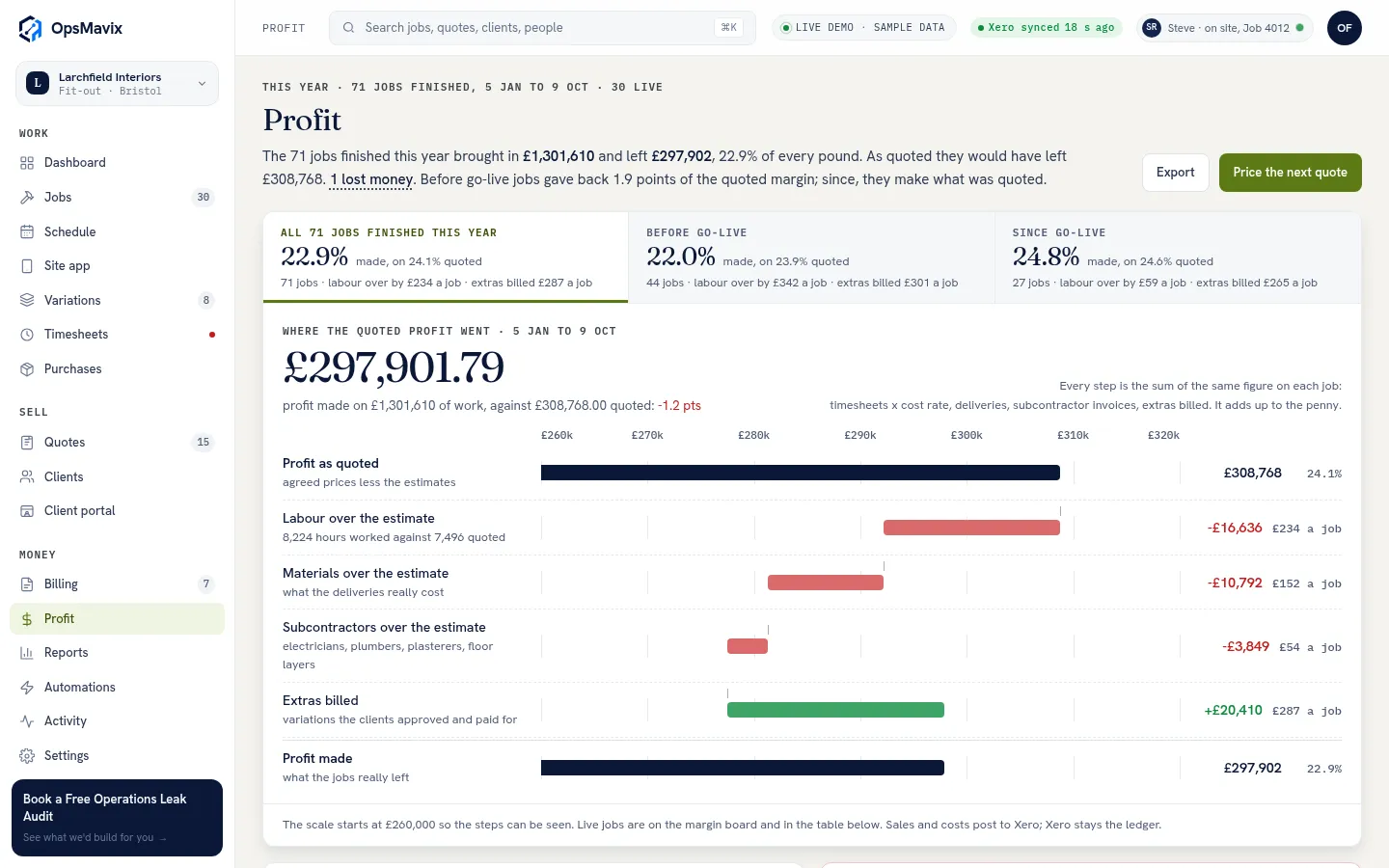
An overrun found after the job cannot be saved
Estimate against actual had to be live, while there was still margin to protect.
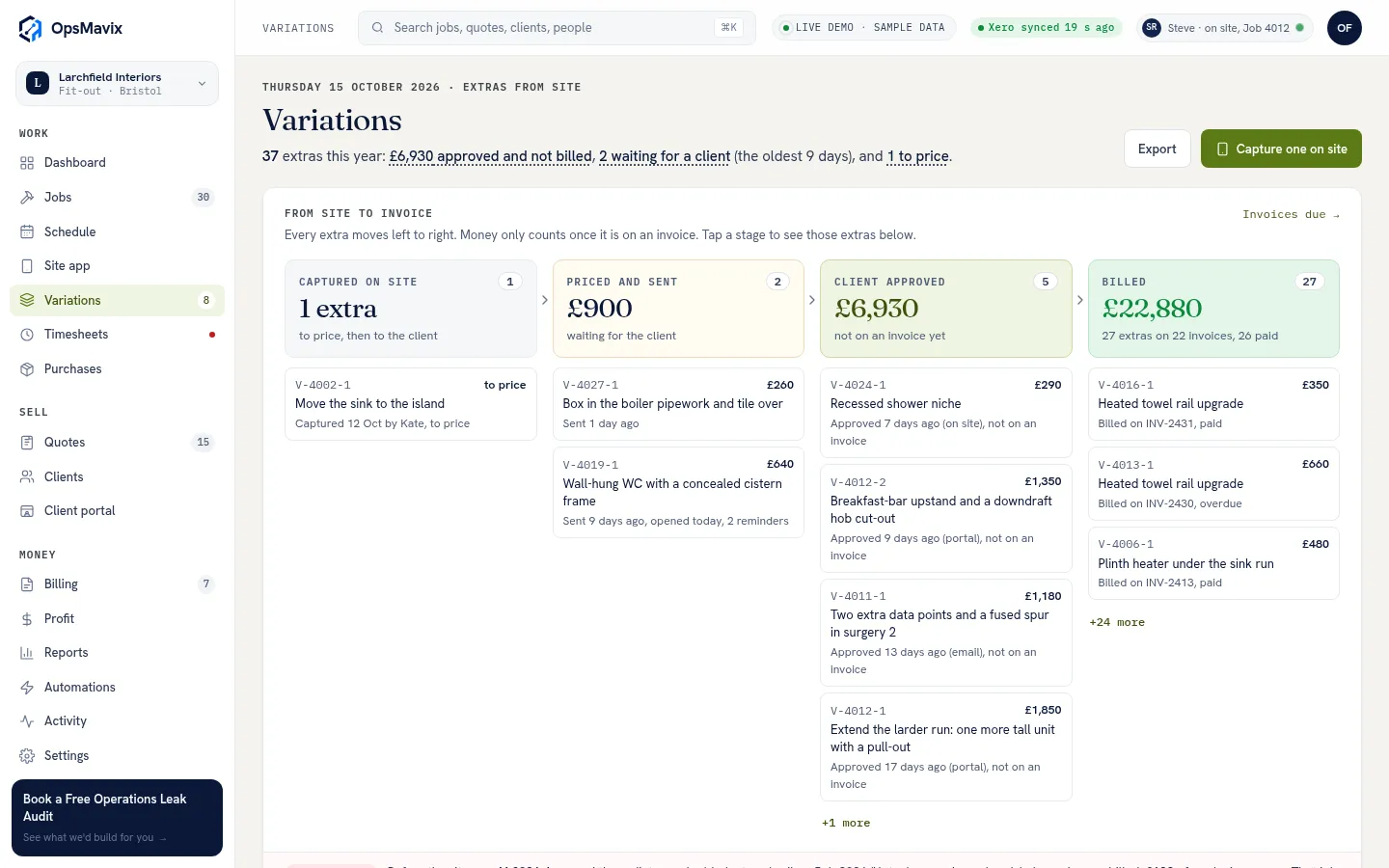
Extras need a signature at the time
A variation agreed verbally is a dispute later. Captured on site with the client's sign-off, it is an invoice line.
Hours not on a job are hours not billed
Time on site not logged to a job sends the invoice out short.
The next quote repeats the last mistake
Quotes priced on guesses instead of the true labour cost of similar finished jobs.
What we built
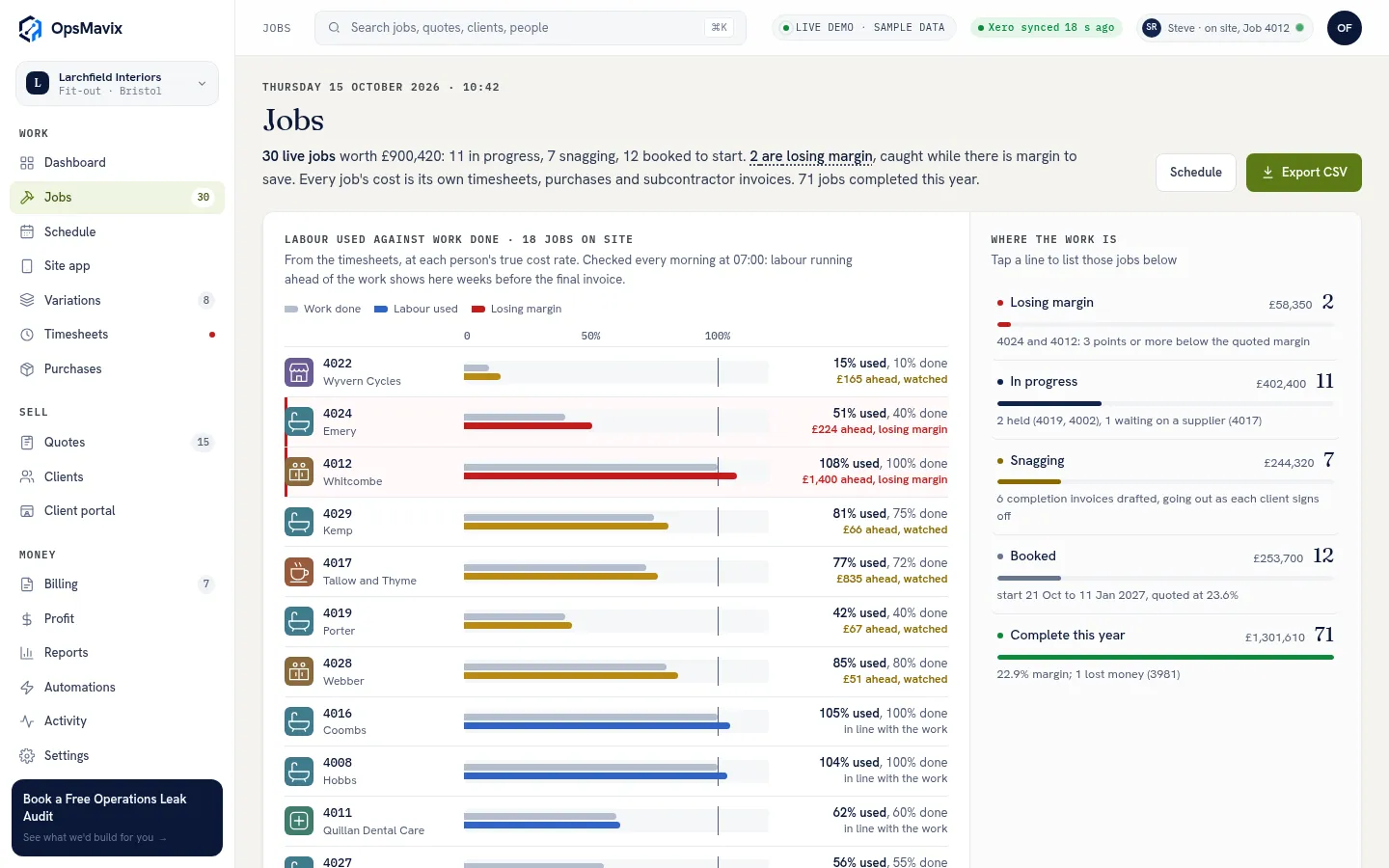
Estimate against actual per job
Labour at each person's true cost, materials as bought, subcontract and extras, as the work happens.
Variations captured on site
With the client's sign-off, flagged to bill.
Timesheets checked against jobs
Unlogged hours caught before the invoice goes out.
One margin board
Every live job, with the ones leaking flagged.
Quotes from real costs, plus a client portal
The next quote priced from what similar jobs really cost, and clients see progress and approve changes.
Projects Control Room
The system described above, running. Click through it yourself.
The system that was built
Real screens from the working system, not mockups. You can open the whole thing yourself.
Scope, as agreed
- Teams
- Three crews plus subcontractors
- Costing
- Estimate against actual per job for labour, materials, subcontract and extras
- On site
- A site app for variations with client sign-off, and timesheets
- Billing
- Stage billing with extras flagged to bill
- Clients
- A portal for progress and approvals
The reality it had to respect
A system that ignores any of these is a system this business cannot actually run on.
- Job costing
- Variations and client sign-off
- Subcontractor management
- Stage billing
What is missing from this page, and why
A case study usually carries a few more things. Here is exactly why each one is absent, so you are not left wondering.
- The client's name. We do not name a client without their written consent.
- A customer quote. Same reason. We will not write one on their behalf.
- Before-and-after numbers. These need a baseline measured before go-live and consent to publish. Without both, any percentage here would be invented.
When one of these launches with real baselines and written consent, this page gains an outcomes section. Until then it stays as it is.
Want the same treatment
Every one of these started with a conversation about how the business actually runs, not a feature list. If your operation has a version of these problems, that is the conversation to have.