
The online brand selling the same last unit twice
Four channels, three places the stock actually was, and no single number anyone trusted.
- Sector
- Ecommerce brand
- Where
- Withheld at the client's request
- Size
- Own store plus Amazon, eBay and TikTok Shop, with own stock, FBA and a drop-ship supplier
Where the business was
An online brand that buys finished stock and sells it everywhere: its own Shopify store, Amazon (own stock and FBA), eBay and TikTok Shop.
Stock sat in three places: their own unit, Amazon's warehouses and a supplier's drop-ship feed. Each channel had its own idea of how much was left.
Bundles made it worse. A kit could sell when one of its parts was already gone.
What discovery surfaced
The things that decided the shape of the system. Most of them were not on the original wish list.
The oversell is a timing problem
Each channel updated on its own clock, so a spike on one sold stock that another had already sold.
Three kinds of stock, one customer
Own stock, FBA and drop-ship behave differently but the buyer sees one product. The count had to keep them apart and sell them as one.
Returns disappeared
A return was requested, then nothing: nobody could say whether it came back, went back on the shelf or was written off.
Revenue was visible, profit was not
Per-order profit after fees, postage and returns was the number they were missing.
What we built
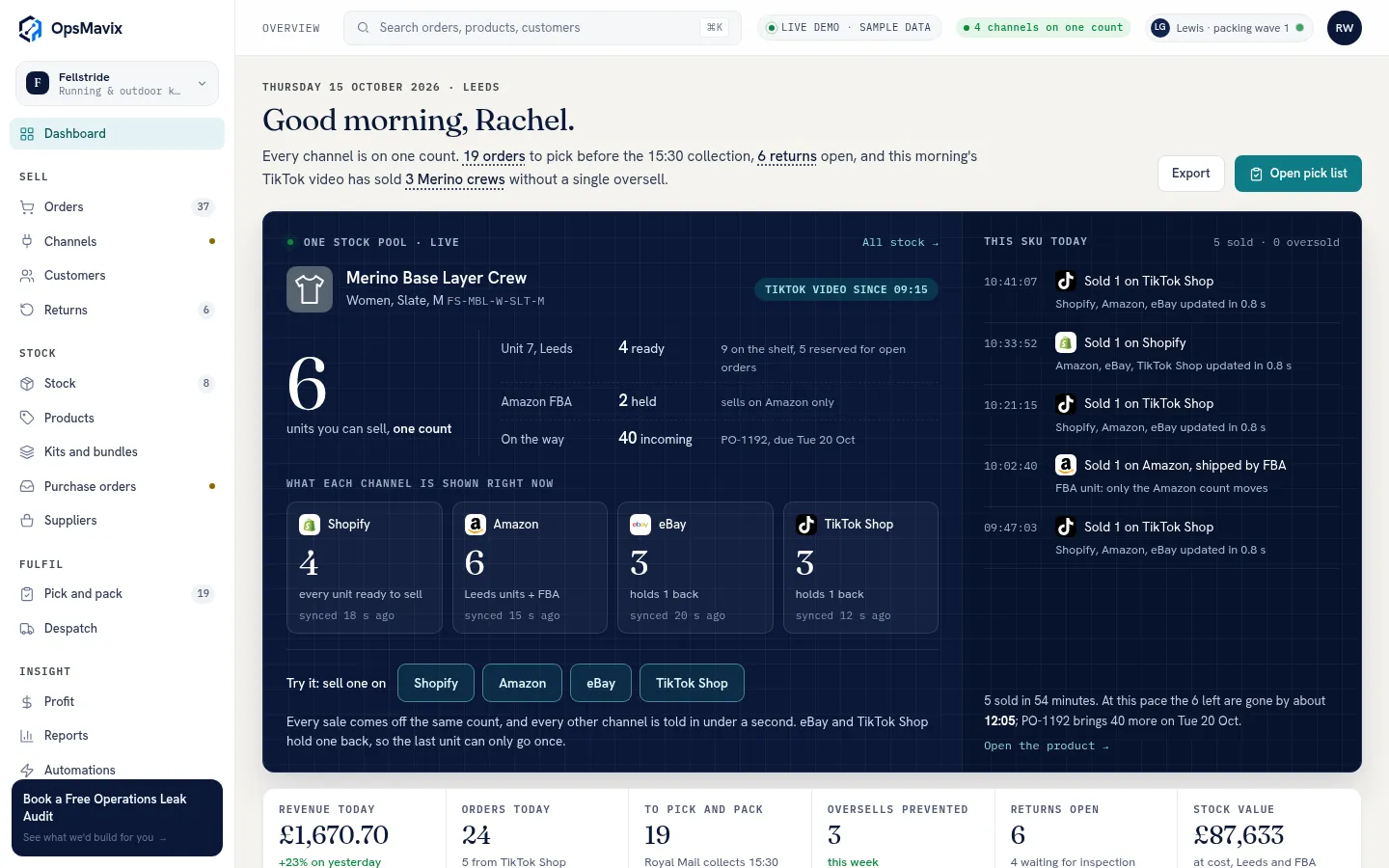
One stock pool
Each sale lowers the count and every other channel is updated.
Own stock, FBA and drop-ship counted apart
Sold as one product, tracked as three sources.
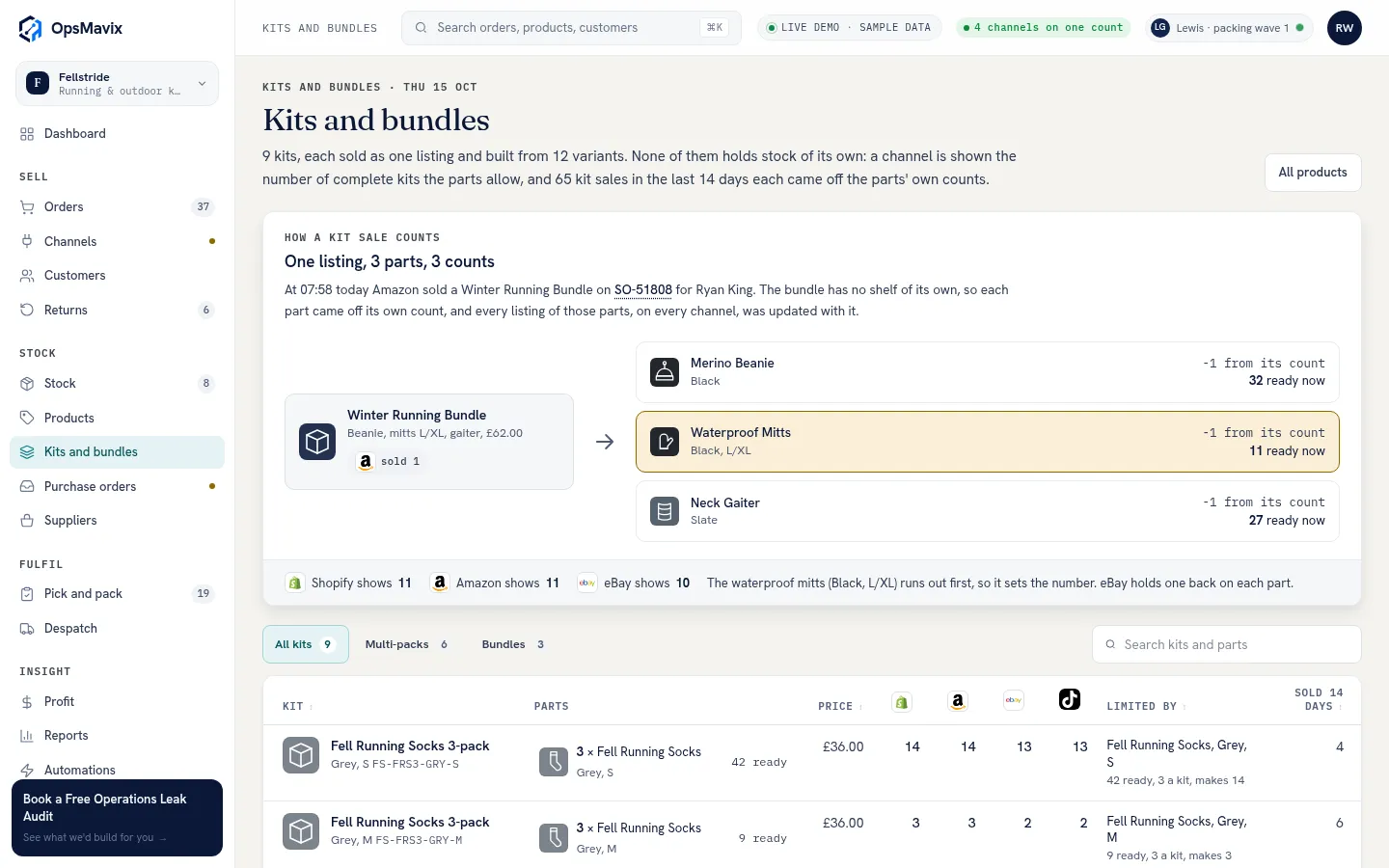
Kits and bundles from parts
A bundle takes its parts from stock, so it cannot sell a missing item.
Returns followed to the shelf
Every return tracked from request to back in stock or written off.
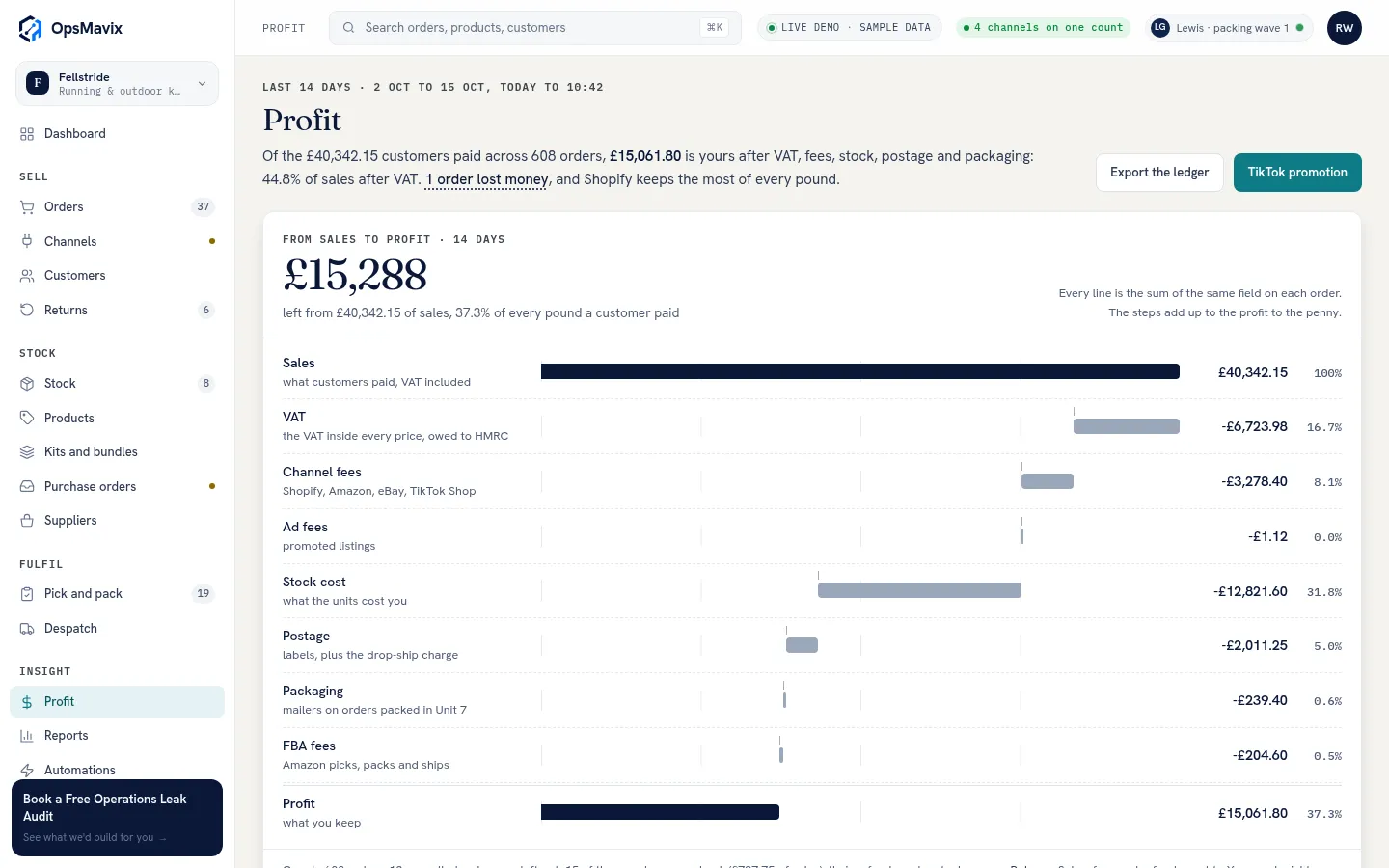
Profit per order and per channel
After marketplace fees, postage and returns.
E-commerce Control Room
The system described above, running. Click through it yourself.
The system that was built
Real screens from the working system, not mockups. You can open the whole thing yourself.
Scope, as agreed
- Channels
- Own Shopify store, Amazon, eBay and TikTok Shop
- Stock sources
- Own unit, Amazon FBA and a supplier's drop-ship feed
- Products
- Single items plus kits and bundles built from parts
- After the sale
- Pick and pack, despatch and returns
- Money
- Profit per order and per channel after fees, postage and returns
The reality it had to respect
A system that ignores any of these is a system this business cannot actually run on.
- Marketplace stock sync
- Amazon FBA alongside own stock
- Drop-ship supplier feeds
- Kits and bundles
What is missing from this page, and why
A case study usually carries a few more things. Here is exactly why each one is absent, so you are not left wondering.
- The client's name. We do not name a client without their written consent.
- A customer quote. Same reason. We will not write one on their behalf.
- Before-and-after numbers. These need a baseline measured before go-live and consent to publish. Without both, any percentage here would be invented.
When one of these launches with real baselines and written consent, this page gains an outcomes section. Until then it stays as it is.
Want the same treatment
Every one of these started with a conversation about how the business actually runs, not a feature list. If your operation has a version of these problems, that is the conversation to have.