
Linnworks for Manufacturing: Where Order Software Stops
Linnworks for manufacturing runs into a wall the moment you stop selling stock and start making it. The platform is strong at multichannel orders, inventory sync and warehouse fulfilment, and its kitting handles bundles — but there's no true multi-level BOM, no work orders, no WIP and no material costing. Here's exactly where order software stops, why makers end up running production on a spreadsheet beside it, and how to tell whether light kitting is enough or you need a system shaped to how you make things.
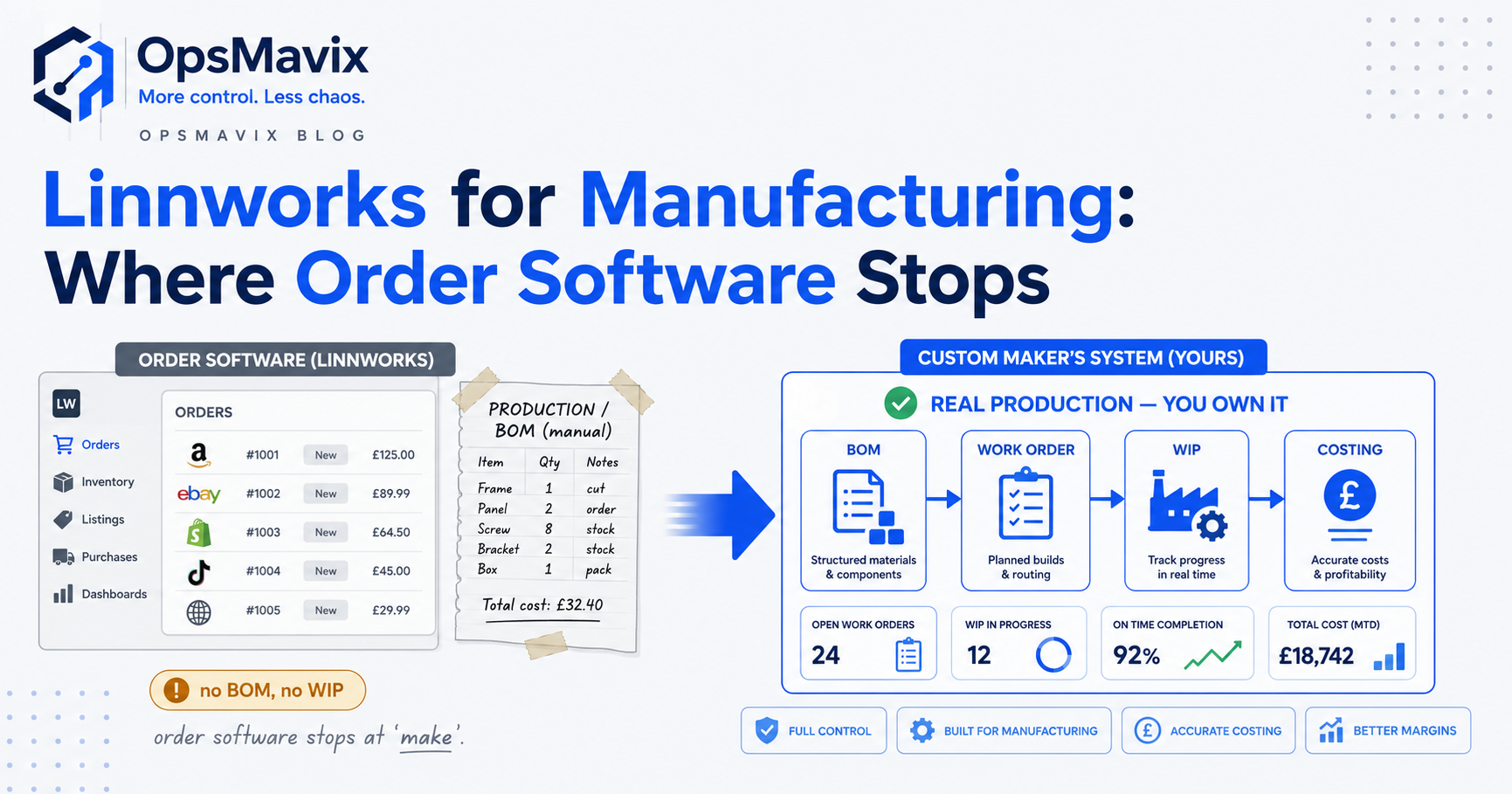
Linnworks for manufacturing is a question a lot of makers reach after the platform has already earned its place. Linnworks is a UK-born cloud commerce platform built around multichannel selling — it takes orders across marketplaces and your own store, keeps one stock figure synced across channels, runs warehouse picking and packing, and handles purchase orders and shipping from one place. For a business that buys finished goods and sells them, that’s a good fit. The trouble starts when the thing you sell isn’t the thing you bought — when raw materials come in one door and finished products go out another, and something has to happen on a bench in between.
That in-between is what Linnworks doesn’t model. Its kitting and composite features can bundle existing stock into a sellable SKU, which covers a real slice of light assembly. But making — turning components into sub-assemblies into finished goods, against a work order, consuming material and tracking cost as you go — sits outside what an order-and-inventory platform was built to do. This post maps where Linnworks stops, why makers end up running production on a spreadsheet next to it, and how to decide whether that’s fine or a leak worth closing. We won’t re-teach what a bill of materials is — our BOM software post covers the fundamentals; the focus here is the Linnworks-specific gap.
Key Takeaways
- Linnworks is order-and-inventory software, not manufacturing software — it excels at multichannel selling, stock sync and warehouse fulfilment, but it was never built to run production.
- Its kitting and composites handle single-level bundles, not a production BOM — a composite parent is a virtual, “not tracked” SKU whose level is read from its children; there’s no multi-level BOM, work orders, WIP or material costing behind it.
- The gap is everything between raw material and finished good — work orders, sub-assemblies, issuing material to a job, tracking part-built stock, and rolling labour and components into a real unit cost.
- Most makers fill that gap with a spreadsheet beside Linnworks — production planning, batch records and costings live in Excel while Linnworks holds the sellable stock, and the two quietly disagree.
- A maker’s system adds what the order tool can’t — multi-level BOM, work orders, WIP visibility, material issue and true costing, all reading from one stock figure that already feeds your sales channels.
- Light kitting with no real production? Linnworks is fine — the honest test is whether “making” is a bench task or a process with stages, cost and things that go wrong.
What Linnworks Actually Does Well
Give Linnworks its due, because the reason you’re using it is real. It centralises orders from Amazon, eBay, Shopify and the rest into one queue, so you’re not hopping between seller dashboards. It keeps a single stock figure synced across every channel — sell a unit anywhere and the count drops everywhere, so you oversell less. Its warehouse side runs barcode-verified picking, digital pick lists, stock transfers and quality checks before dispatch. And it handles purchase orders and supplier replenishment so you can reorder what’s selling.
That is a complete picture of a commerce operation — buying stock, listing it, selling it across channels, shipping it accurately. If your business is fundamentally distribution with a bit of bundling on top, swapping Linnworks out would solve a problem you don’t have. The question isn’t whether Linnworks is good. It’s whether “sell the stock” and “make the stock” are the same job — and they aren’t. Linnworks answers the first; manufacturing asks the second.
The Assembly Linnworks Does Have: Kitting and Composites
Linnworks isn’t blind to assembly — it just handles a specific, shallow kind. Through composite items (kits) you can define a sellable SKU made of other SKUs: give the kit a code, list what it contains, and the platform works out how many kits you can sell from the component stock. There are assembled products, where you physically pre-build a bundle in the warehouse and hold it as a single pickable item so staff grab one thing instead of gathering parts. And there are alternates, so an approved substitute keeps the sale alive if a component runs out.
For a gift-set seller, a multipack merchant, a hamper business — that’s most of what “assembly” means, and Linnworks does it cleanly. But look at what it is under the bonnet. A composite parent is, in Linnworks’ own terms, a virtual item: usually set to “not tracked,” its stock level calculated from its children rather than counted in its own right. You can’t put one on a purchase order, move it in a warehouse transfer, or use fractional component quantities. Those aren’t bugs — they’re the shape of a selling construct, a flat parent-child list built to sell bundles, not a production record built to make things.
Where “Make” Starts and Linnworks Stops
Here’s the line. The moment your process has more than one level, or a stage where value is added rather than parts combined, you’re past the composite. Real making needs a multi-level BOM — a finished good built from sub-assemblies, each with its own components — and Linnworks composites are single-level by design. It needs a work order: an instruction to build a batch that reserves and consumes materials and outputs finished units as a tracked event. Linnworks has purchase orders for buying, but no production order for making.
It needs WIP — the ability to say “these components have left the shelf and become part-built stock that isn’t sellable yet.” A composite computed on the fly has no concept of half-finished. It needs material issue: booking components out against a specific job, so raw-material stock is accurate the moment you start, not when you remember to adjust it. And it needs costing — rolling real components, labour and overhead into a genuine unit cost you can price against. A virtual kit inherits its children’s prices; it doesn’t build a cost the way a job does. Every one of those is standard in an MRP system and absent from an order platform, because they belong to a different category of tool.
The Spreadsheet-Beside-the-Tool Tax
So what do makers actually do? They keep Linnworks for the sellable stock and the orders — and they run the production on a spreadsheet next to it. The batch plan, the recipe or cut list, the material consumption, the costings, the “what’s on the bench right now” — all of it lives in Excel, because that’s the only place it can live. Linnworks holds the finished-goods number; the workbook holds the truth about how that number got there. And the two are stitched together by a human retyping between them.
That arrangement is a tax you pay every day. Someone finishes a batch and manually bumps the finished SKU up in Linnworks while dropping the raw materials — and the moment they mistype, forget, or do it a day late, the stock figure that feeds every sales channel is wrong. Now you’re overselling components you already consumed, or sitting on finished stock the system can’t see. The spreadsheet carries the classic risks too: no audit trail, no permissions, one person who understands the costing model, a silent formula error that misprices a product for a quarter. It isn’t a workaround — it’s a second system doing the most important job, held together by memory.
What a Maker’s System Adds
A system built for how you make things doesn’t replace the good part of Linnworks — it fills the hole the spreadsheet is plugging, against one stock figure instead of two that disagree. It holds a real multi-level BOM, so a finished good knows its sub-assemblies and they know their components, and a recipe change updates everything that uses it. It runs work orders: raise a build for a batch, and the system reserves and issues materials, tracks the batch as WIP on the bench, and books finished units into stock when done — as recorded events, not a manual keystroke.
It gives you material issue so raw-material stock is right in real time, and costing that rolls components plus labour into a unit cost you can price against. On top, it can carry the shop-floor layer — what’s in progress, what’s queued, what a job cost versus estimate — the territory of a manufacturing execution system and shop-floor tracking software. And because it’s built around your operation, the finished-goods count still feeds your channels the way Linnworks does today. You keep the selling strength; you stop running the making on a workbook.
When Light Kitting Is Genuinely Enough
Now the honest bit, because not every “maker” needs any of the above. If your “manufacturing” is assembling a gift box from three finished items, packing a multipack, or bundling stock you already bought into a sellable set — that’s kitting, and Linnworks does it well. There are no stages, no part-built inventory, no material to cost beyond the components’ own prices, and nothing that can go wrong on a bench a composite can’t represent. Bolting a production system onto that is firing a cannon at a fly.
The line is stages, cost and things that go wrong. Ask three questions. Is your product built in more than one step, where a sub-assembly is made and then used in something else? Does the finished item cost meaningfully more than the sum of its parts, because of labour, waste or process? Can stock sit half-made — real, valuable, not yet sellable? If all three are no, Linnworks plus its composites is the right amount of tool. If any is yes, you’ve got production, and the spreadsheet beside Linnworks is quietly running the most important part of your business.
Build vs Bolt-On: The Honest Call
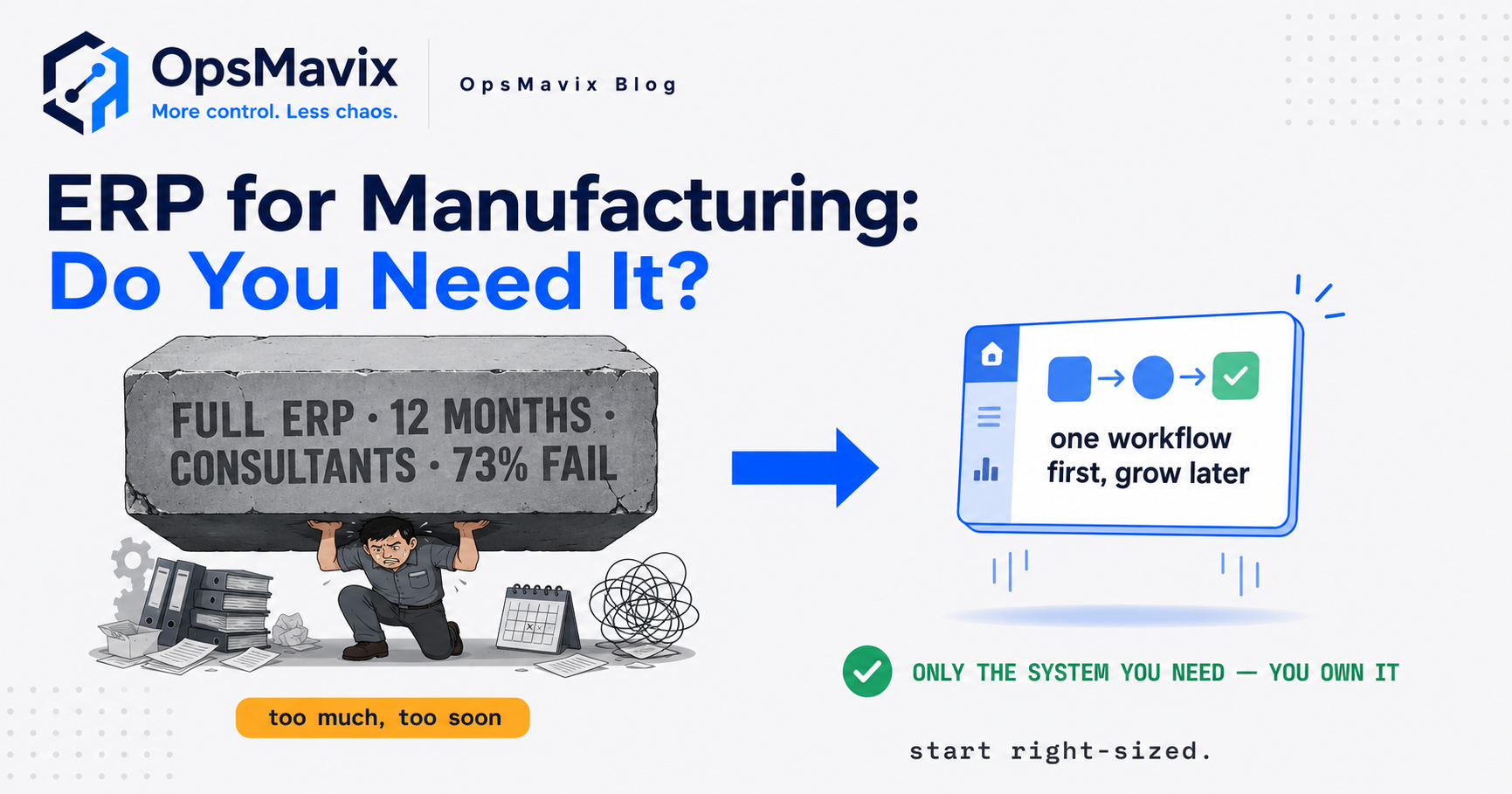
When kitting isn’t enough, there are three roads. The first is a bolt-on manufacturing app that syncs to Linnworks — real products exist here, and for a straightforward maker they can work; the risk is a second subscription, a sync seam that can drift, and a template that fits your process roughly rather than exactly. The second is a full ERP with a manufacturing module — genuinely right if you’re heading into complex, capacity-planned production, but often far more system (and admin, and cost) than a small maker needs. The third is a right-sized system that owns your exact BOM-to-finished-goods flow and reads from one stock figure — the OpsMavix position.
The point of that third road isn’t “a cheaper Linnworks.” Linnworks can stay doing what it’s good at, or the whole flow can be one system — that’s a design decision, not a religion. The point is that the making shouldn’t live on a spreadsheet held together by one person’s memory, and it shouldn’t force you to buy a whole ERP to escape it. The right-sized build sits exactly in the middle: everything a maker needs — multi-level BOM, work orders, WIP, material issue, costing — and nothing they don’t. Which road is right depends on how complex your production really is — a question worth answering with numbers before you commit.
FAQ
Can Linnworks handle manufacturing?
Not in the true sense. Linnworks handles multichannel orders, inventory sync and warehouse fulfilment, and its composite/kit features can bundle existing stock into a sellable SKU. But it has no multi-level bill of materials, no work orders, no WIP tracking, no material issue against a job, and no production costing. If “manufacturing” means combining finished items into bundles, Linnworks copes. If it means turning raw materials into finished goods through stages, that sits outside what the platform does.
Does Linnworks have a bill of materials?
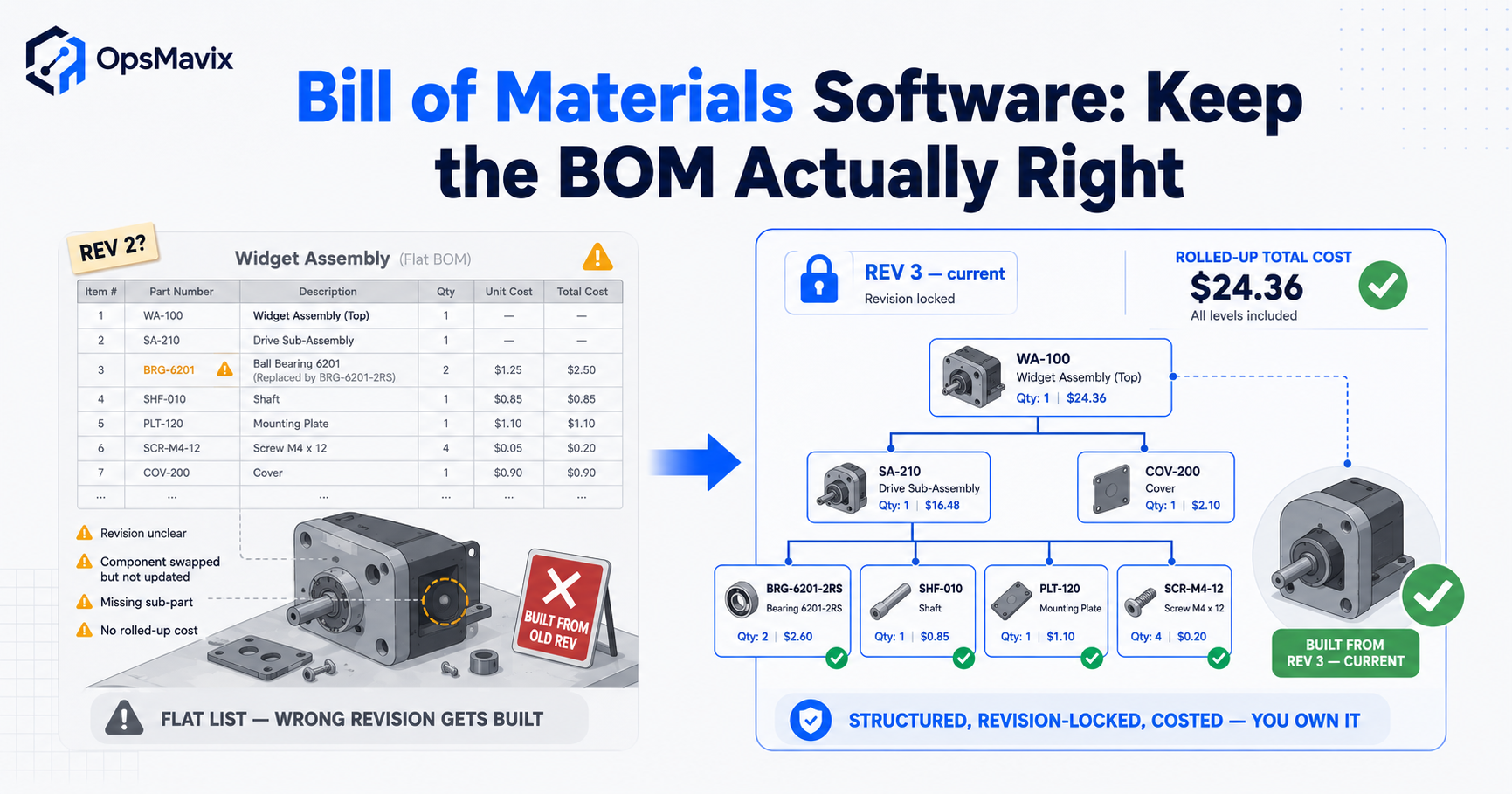
It has composite items, which are a single-level list of the SKUs a kit contains — a selling construct, not a production BOM. A composite parent is a virtual, usually “not tracked” item whose stock is calculated from its children; you can’t put it on a purchase order or move it in a warehouse transfer. That’s fine for bundles. It isn’t a multi-level manufacturing BOM with sub-assemblies, work orders and cost roll-up. For what a real BOM does, see our bill of materials software post.
What does Linnworks not do for makers?
The whole space between raw material and finished good: multi-level BOMs, work orders to build a batch, WIP so part-made stock is visible, material issue so raw-material counts are right the moment you start a job, and costing that rolls components and labour into a real unit cost. Makers typically run all of that on a spreadsheet beside Linnworks — which is where stock figures start drifting.
Should I add a manufacturing app to Linnworks or replace it?
It depends on how complex your production is. Simple, single-step making with a light bolt-on can work, though you take on a second subscription and a sync seam that can drift. Complex, capacity-planned production may warrant a full ERP. Many small makers sit in between — too much for kitting, too little for ERP — where a right-sized system that owns the BOM-to-finished-goods flow while feeding one stock figure is the honest fit.
How OpsMavix Can Help
OpsMavix builds right-sized manufacturing and production tracking systems for makers who’ve outgrown kitting but don’t need a full ERP — the exact middle where Linnworks stops and a spreadsheet takes over. That means a real multi-level BOM, work orders that reserve and consume material and book finished units as recorded events, WIP so part-built stock is visible, material issue so raw-material counts stay honest, and costing that rolls components and labour into a true unit cost. It reads from one stock figure, so the finished-goods number can still feed your channels the way Linnworks does today — you keep the selling strength and retire the production spreadsheet. And you own it outright: no per-order creep, nothing a vendor can switch off.
If running production on a spreadsheet beside Linnworks is costing you — stock that drifts, batches that go untracked, margins you can’t prove — start by seeing the number. Book a Free Operations Leak Audit and we’ll map where the make-versus-sell gap costs you today, what it’s worth to close, and whether a right-sized system is the honest fit for how you make things now.
Keep reading
Getting value from OpsMavix? Add us as a preferred source on Google — you'll see more of our operations content in your AI Overviews, AI Mode and Search.