
The Connex Alternative for Sellers Who Keep Overselling Across Channels
Connex is a sync connector that pushes orders and inventory between your channels and QuickBooks. If you keep overselling anyway, the fix usually is not a better connector but one operations system where stock lives in a single place. Here is when to switch and what to switch to.
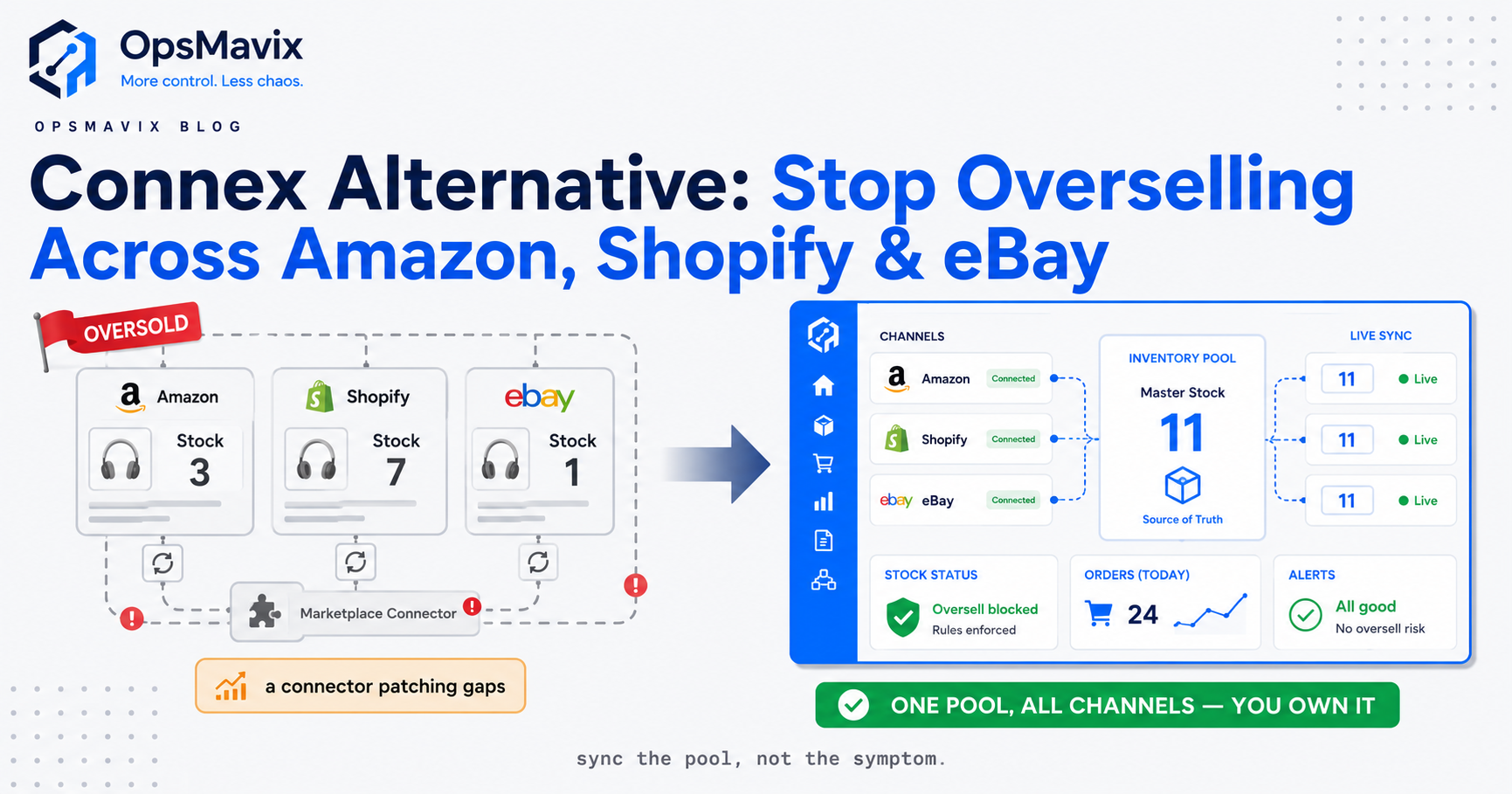
The best Connex alternative depends on why Connex stopped working for you: if you still oversell after connecting everything, the problem is not the connector, it is that your stock has no single home. Connex is a sync tool that moves orders, inventory and payments between your selling channels and an accounting system like QuickBooks, Xero or Sage. That is genuinely useful. But a sync connector can only copy numbers between apps that each think they own the truth, and copying is where overselling is born.
If you sell on Amazon, Shopify and eBay at once and you are tired of refunding customers for stock you already sold somewhere else, this piece is for you. We will be fair to Connex, show exactly where its ceiling sits, and explain the different shape of fix: one operations system where inventory is a single ledger, not a value that gets pushed around on a timer.
Key Takeaways
- Connex is a connector, not a system of record. It syncs orders and stock between your channels and QuickBooks or similar. It does not become the one place your inventory lives.
- Overselling is a source-of-truth problem. When three channels each hold their own stock number and a job syncs them every few minutes, the gap between syncs is where you oversell.
- Rules engines add power and fragility. Connex’s field-mapping rules are flexible, but every rule is another thing to maintain when a channel changes its API or you add a SKU variant.
- Pricing scales with complexity. Connex is billed per connection and steps up as you add marketplaces, so “just add another channel” rarely stays as cheap as it first looks — the real cost is the stack of connectors you end up renting.
- The alternative is one system you own, where stock decrements the moment an order lands anywhere, and every channel reads from the same number.
- Build vs buy is a real decision. A connector is right for light needs; an owned operations layer earns its place once overselling costs real money and staff time.
What Connex actually does (and does well)
Connex sits between your sales channels and your accounting or inventory back end. It pushes orders, inventory levels, customers, products and payments both ways, so that a sale on Shopify shows up in QuickBooks and a stock change flows back out to your channels. It supports Amazon, Shopify, WooCommerce, eBay, Walmart, ShipStation and more, into QuickBooks Online and Desktop, Xero, Sage, Odoo and Zoho Books (as of 2026).
Its headline feature is a rules engine that lets you control how customers, products and orders map between systems. That is real flexibility, and for a business whose main pain is manual data entry into the books, Connex removes hours of re-keying.
Give Connex credit: if your core problem is “orders are not reaching my accounting system,” a connector is a sensible, proportionate answer. You have not made a mistake by using it.
Where the connector ceiling shows up
The trouble starts when the job Connex is doing quietly changes from “copy orders into the books” to “prevent overselling across three marketplaces.” Those are not the same job, and a sync tool is built for the first one.
Here is the mechanism. Amazon holds a stock number. Shopify holds its own. eBay holds a third. Connex reconciles them on a schedule. In the minutes between one sync and the next, two customers on two channels can both buy the last unit. Both orders are valid. Neither channel knew about the other in time. You find out when you go to ship and the shelf is empty.
The rules engine that gives Connex its power is also a maintenance surface. Every mapping rule is a small contract with a channel’s API. Add a bundle, a new variant scheme, or a channel that changes how it reports quantities, and someone has to go back into the rules. Operators tell us this is the part nobody budgets for: not the setup, but the endless small tending after go-live.
The real question: who owns the stock number?
This is the OpsMavix point of view, and it is where we differ from the “just find a better connector” advice.
Overselling is not a sync-speed problem you can fix by syncing more often. It is an ownership problem. As long as every channel holds its own copy of the stock figure, you are managing several truths and hoping they agree. Sync faster and you narrow the window; you never close it.
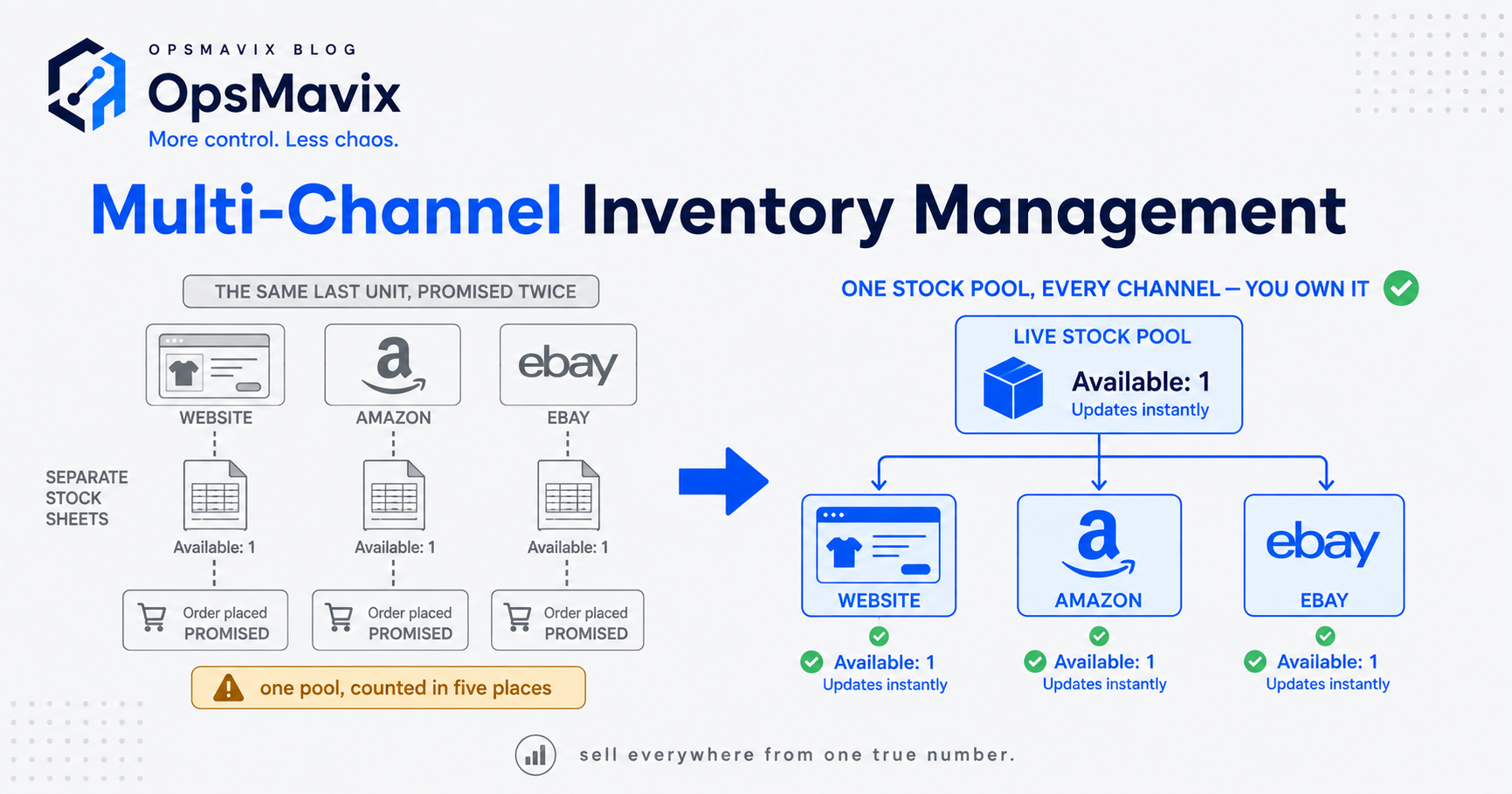
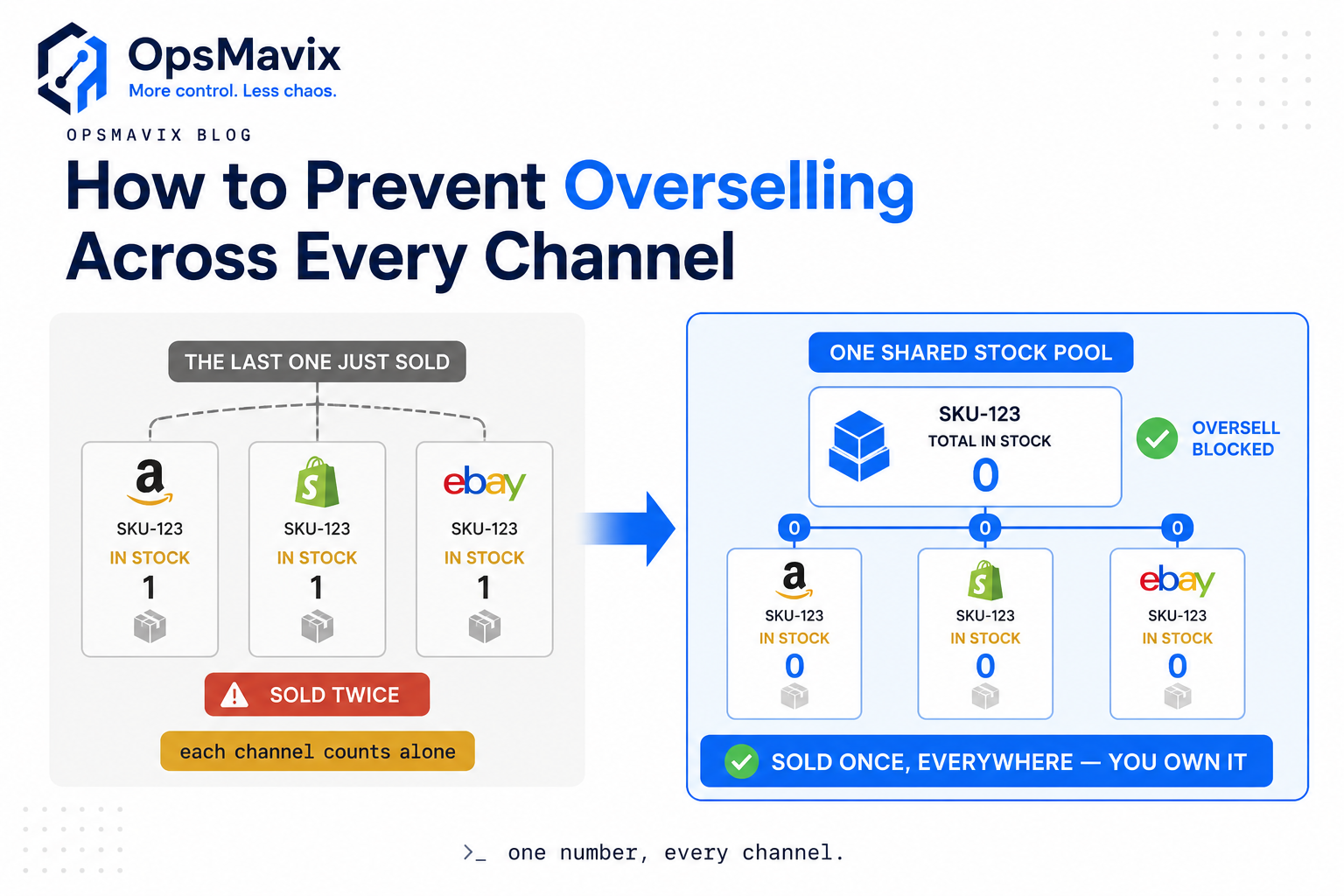
The alternative is to stop having several truths. In one operations system, inventory is a single ledger. An order on any channel decrements that one number in real time, and every channel reads availability from it. There is no “in-between the syncs” moment because there is nothing to sync between. Stock is not being copied; it is being held, once.
That is a different shape of tool. Not a connector bolted onto QuickBooks, but a system where orders, inventory and fulfilment sit together and your accounting connects to that, rather than being the place your stock secretly lives. If you want the fuller picture of what that looks like end to end, see a fully automated inventory system.
A concrete before and after
Picture a homeware seller doing solid volume across Shopify, Amazon and eBay, running Connex into QuickBooks Desktop.
Before: a flash sale hits. The bestselling item sells through on Amazon and Shopify within the same two-minute window. Connex has not synced yet. Both orders confirm. The next morning is spent cancelling one, apologising, eating the Amazon metrics hit, and manually correcting stock because the sync now shows a negative that upsets the rules. Multiply that by a handful of SKUs across a busy month and you are losing hours of staff time plus the harder-to-price cost of account health and customer trust.
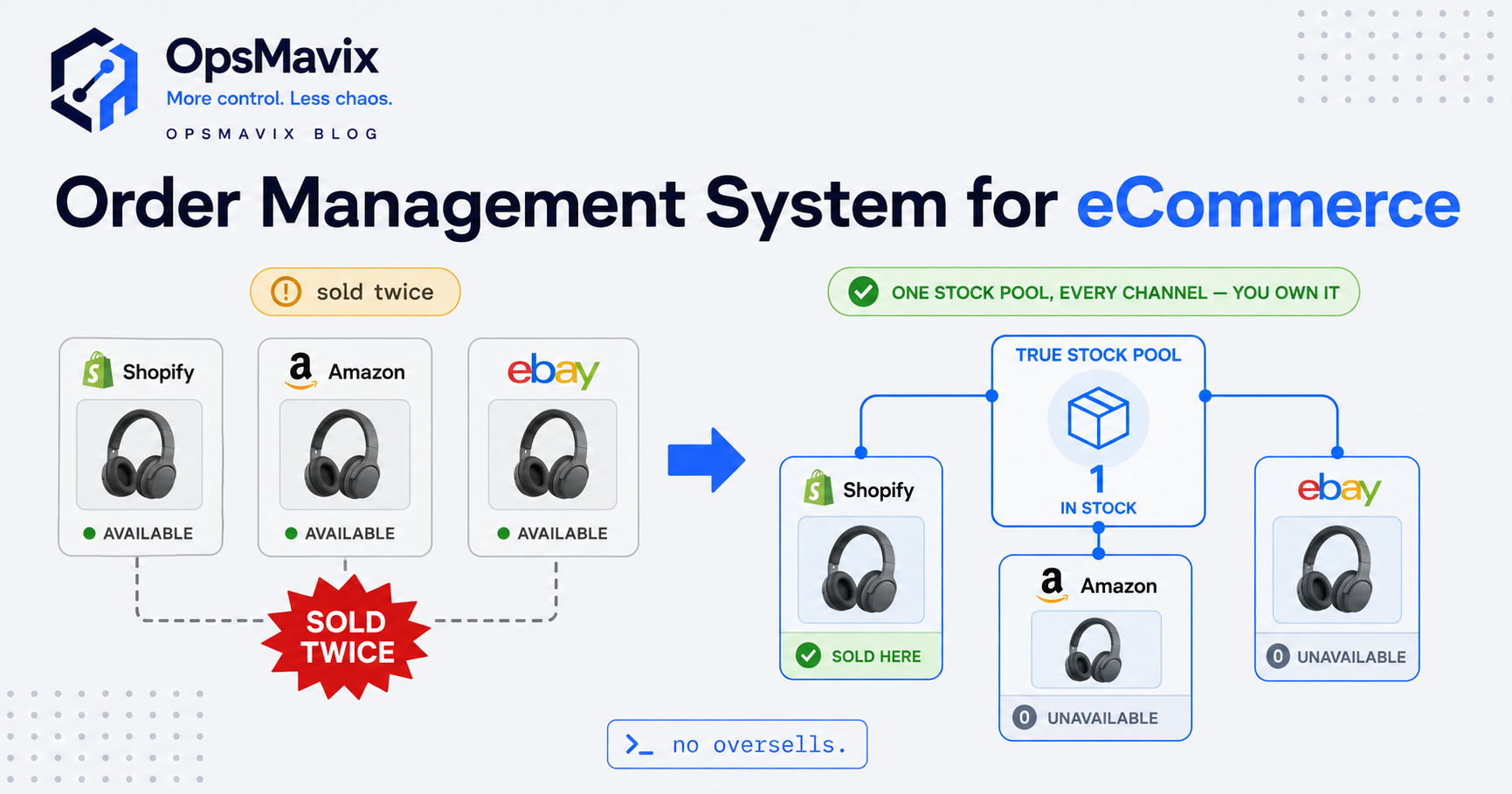
After, on one operations system: the first order anywhere takes the unit. The second customer sees “out of stock” before they can check out, because both channels read the same live number. No cancellation, no apology, no manual correction, no rule to babysit. The accounting system still gets its clean order feed, but it is downstream of the truth instead of pretending to be it.
That is the difference between narrowing the overselling window and removing it. If you want to understand the different failure modes that hide inside stock data, the common types of stock discrepancies is a useful companion read.
“But I do not want another full ERP”
Fair. And this is the important line: the alternative to Connex is not an ERP, and OpsMavix is not selling you one.
An ERP asks you to move your whole business onto its rails and adapt how you work to fit it. That is a large, expensive commitment, and for most multichannel sellers it is more than the problem needs. A connector like Connex sits at the other end: cheap, light, but structurally unable to own your stock.
The middle is one operations system built around how you already run, where inventory has a single home and your channels read from it. You own it. It shapes to your process rather than the reverse. That is the practical layer between a spreadsheet full of manual corrections and a full ERP you will spend a year implementing.
If you are weighing connectors and inventory tools more broadly, our look at Mintsoft competitors covers the wider landscape of where these tools stop and an owned system begins.
Build, buy, or own the system
Honest take, because you deserve one before you switch anything.
Keep Connex if your real pain is getting orders into your accounting software and overselling is rare enough to absorb. It is a solid tool doing a legitimate job, and replacing a working connector out of restlessness is a waste. You have simply not outgrown the box yet.
Buy a bigger platform or ERP if you genuinely need finance, manufacturing, HR and procurement in one suite and you have the appetite to implement it. That is a real path, just a heavy one.
Choose an owned operations system when overselling has started costing you money, account health and staff hours, and no amount of faster syncing has closed the gap. At that point you do not need a better translator between apps. You need to stop keeping several versions of the truth.
The tell is simple: if your team spends its mornings reconciling stock instead of shipping it, the connector has quietly become the thing you manage rather than the thing that manages the work. That is the moment the middle path pays for itself.
Keep reading
Getting value from OpsMavix? Add us as a preferred source on Google — you'll see more of our operations content in your AI Overviews, AI Mode and Search.